
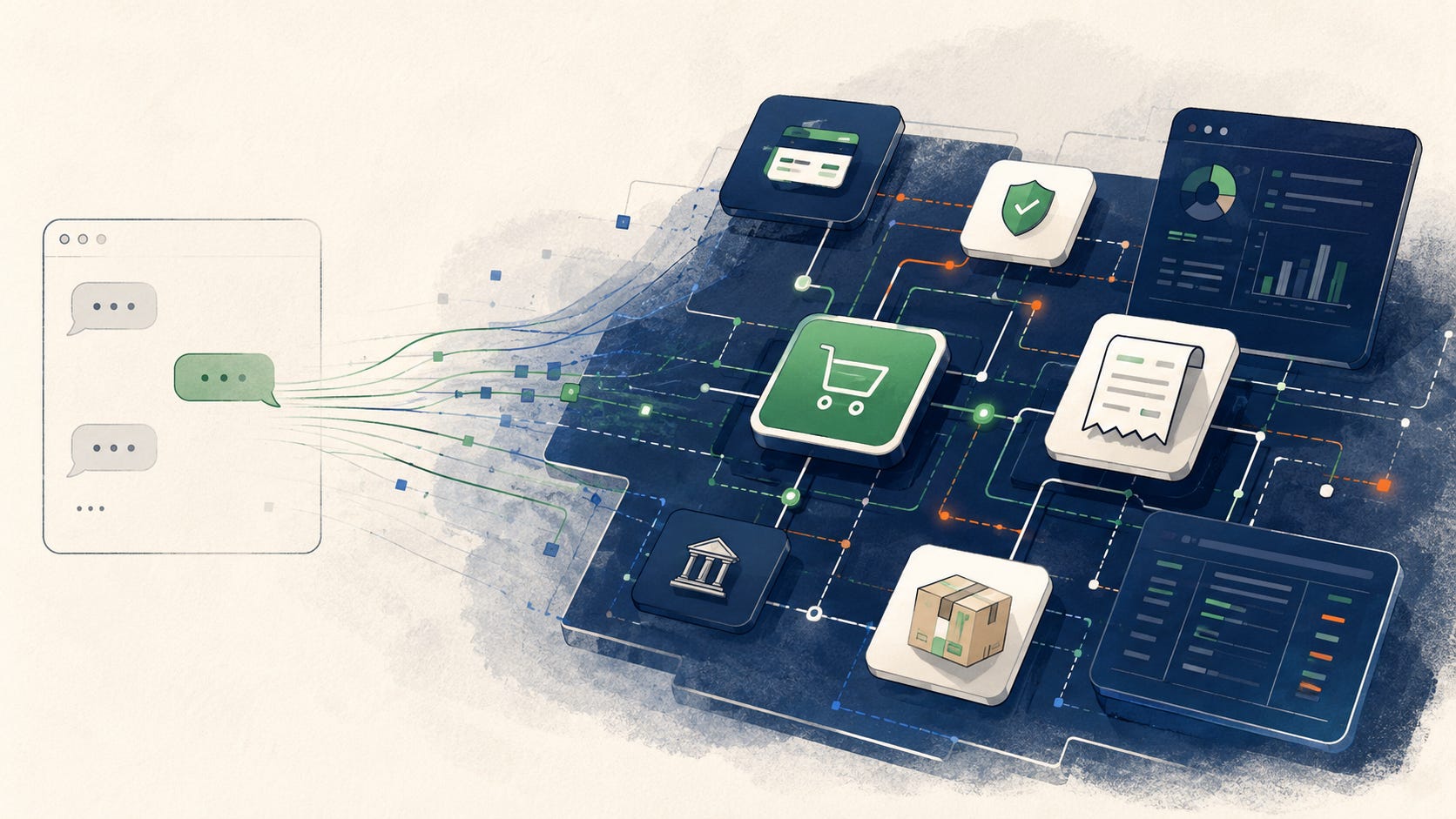
When we started Neurotech, the clean story was that we were building an AI company.
That was the easy version to explain.
We were building conversational AI for African businesses, AI agents that could answer customers, automate support, handle bookings, guide purchases, and help companies operate across channels like WhatsApp, SMS, web, and voice.
Once we started deploying AI into real businesses businesses that sell, collect money, and serve customers every day we realized something important:
Conversations are not the business.
Execution is the business.
A customer completing payment is the real signal.
The completed workflow is the product.
That realization is why we ended up building payments inside an AI company.
At first, we treated WhatsApp like most people in technology treat it: as a communication channel. A place where customers ask questions. A place where businesses respond.
But the more businesses we worked with, the more obvious it became that WhatsApp was not just a messaging layer. For many African businesses, WhatsApp is the storefront, the CRM, the sales desk, the support channel, and the place where relationships are built, orders are placed, and customers return.
One example made this especially clear.
One of our customers does over TZS 2 billion annually through WhatsApp chatbot.
Not through a mobile app. Not through an e-commerce website. Through WhatsApp.
When people talk about WhatsApp commerce, they often describe it as informal or temporary something a business uses before it eventually graduates into a “proper” digital system. That is wrong. For many businesses, WhatsApp is already where serious commerce is happening.
The problem is not that demand is small. The problem is that the infrastructure around that demand is weak. A business can be doing billions in annual WhatsApp-driven revenue and still depend on manual confirmations, screenshots, scattered customer records, and disconnected payment flows. That is the gap. And that gap is where AI and payments started to merge for us.
A lot of chatbot products look good in demos. They can answer FAQs, collect customer names, recommend products, say the right things. Then the customer says, “I want to pay.” And suddenly the automation collapses.
“Please send payment to this number.”
“Send us a screenshot.”
“Our team will confirm shortly.”
That is not automation. That is a prettier waiting room. The bot did not complete the sale it only moved the customer from one manual process to another.
In commerce, the space between interest and payment is where revenue dies. A customer may want the product. But if the payment process feels slow, uncertain, or inconvenient, they disappear. The business loses the sale not because demand was absent, but because execution was broken.
If an AI agent is going to help a business sell, it cannot stop at answering questions. It has to help close the transaction.
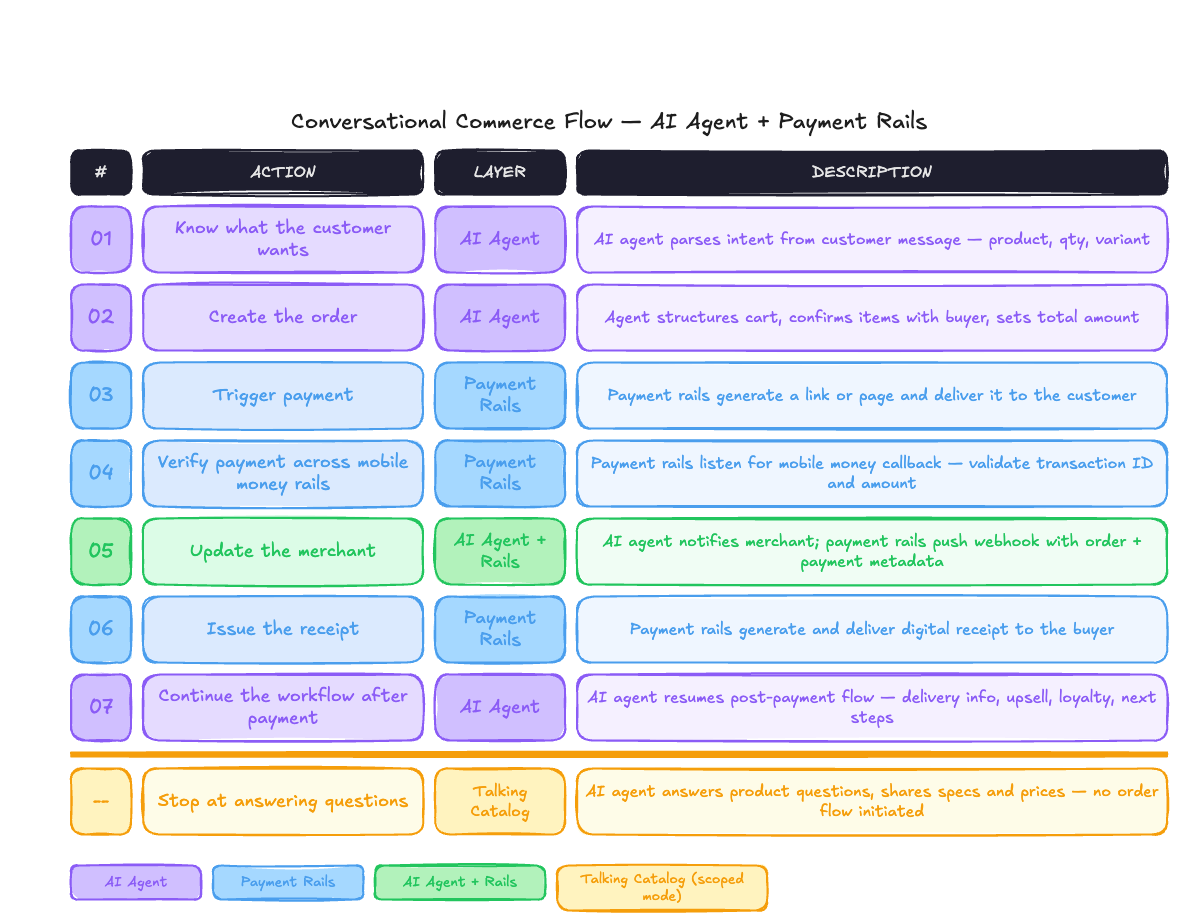
Without transaction rails, an AI agent is a talking catalog. And talking catalogs are not enough. Payments in Africa are fragmented mobile money is everywhere, but every rail behaves differently. Banks, wallets, aggregators, QR systems, card processors, and settlement providers all have their own rules, limitations, downtime, and integration complexity. The merchant does not want to understand that complexity. The customer definitely does not. So we had to build the infrastructure.
The obvious question: why build anything around payments at all? Why not just integrate existing PSPs, banks, and mobile money providers? The answer is that we do. But a payment API is not the same thing as a business workflow. Moving money is only one part of the job.
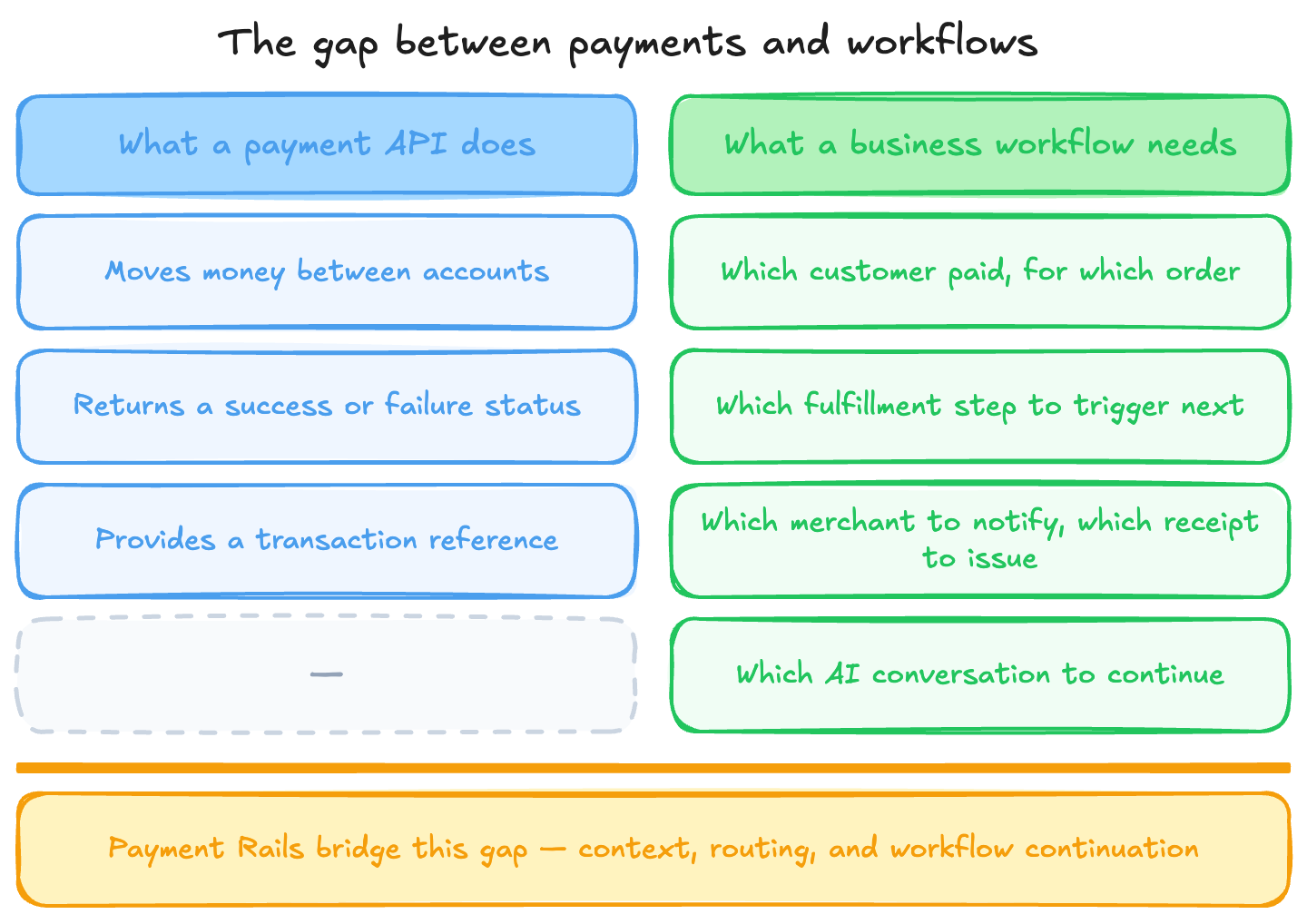
Without context, a transaction is just a financial event. With context, it becomes part of the business operating system. That is the layer we needed to build not because payment providers are useless, but because AI agents need payments connected to conversations, customers, orders, receipts, merchants, and next actions
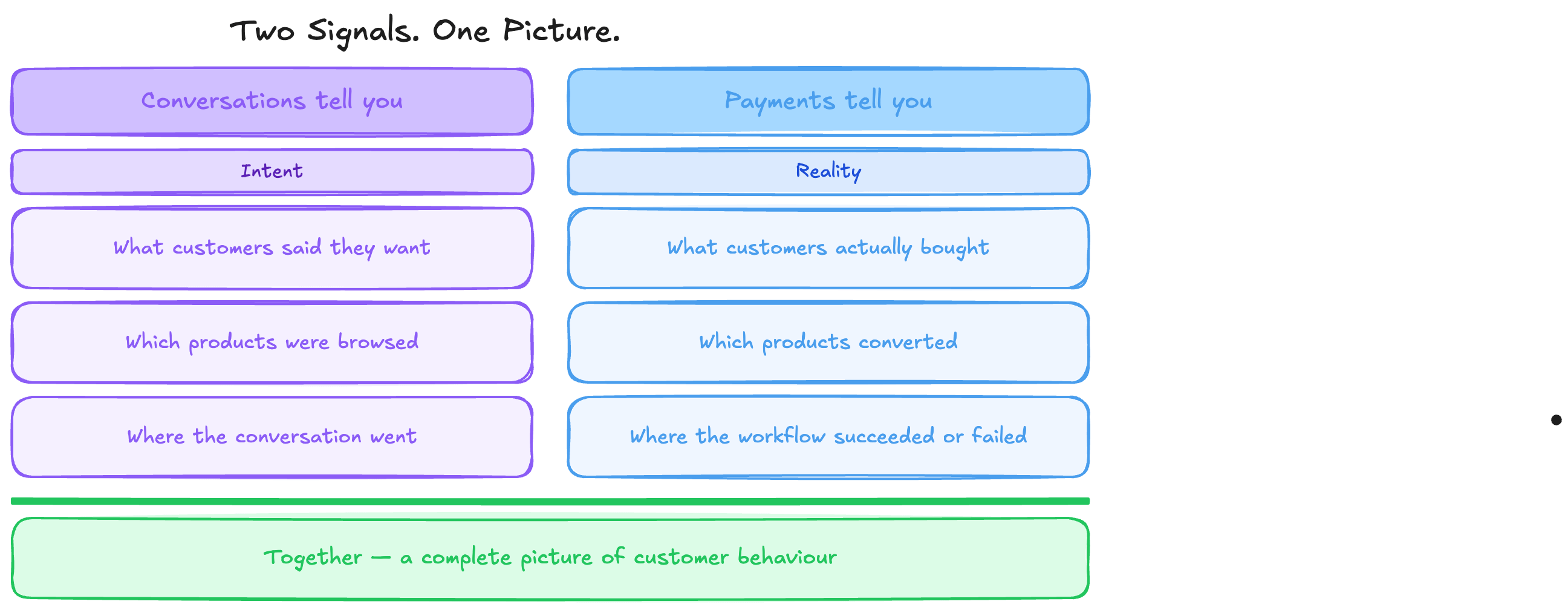
Without payments, you are optimizing the conversation in isolation. With payments, you can optimize the business outcome. That is a completely different company. One is trying to make chat better. The other is trying to make commerce work. We are building the second one.
Building payments also changed our culture. AI products can sometimes hide behind impressive demos. Payments cannot. Money either moves or it does not. A payment is either confirmed or it is not. A merchant either trusts the system or they do not.
There is no vague success. That forced us to become more disciplined about reliability, fraud, reconciliation, provider downtime, support, compliance, and trust. And that made our AI thesis stronger. Because if AI is going to run real business workflows, it has to inherit the seriousness of business infrastructure. It cannot just be clever. It has to be dependable.
Some people may look at this direction and ask: are you still an AI company, or are you becoming a payments company? But that question assumes the categories are clean. They are not.
In our market, useful AI often has to become infrastructure. If the AI cannot connect to payments, it cannot close commerce. If it cannot connect to customer records, it cannot personalize intelligently. If it cannot connect to receipts, it cannot support serious merchants. If it cannot connect to operations, it cannot drive real productivity.
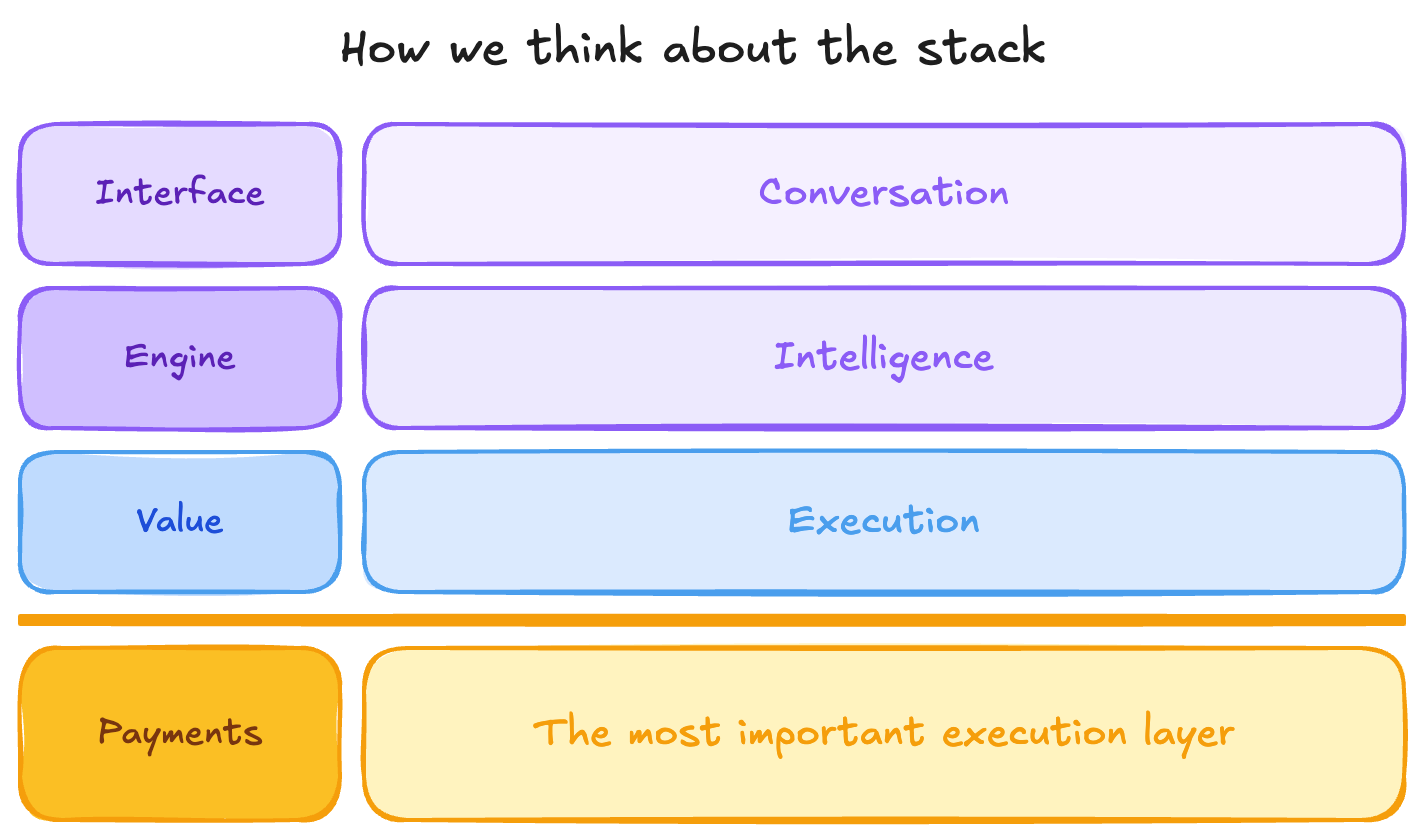
So no, we did not stop being an AI company. We became less naive about what an AI company has to build for our market.
The long-term vision is not to build a chatbot company with some payment features. It is to build AI-native commerce infrastructure for African businesses.
A business should be able to sell where its customers already are.
A customer should be able to ask, order, pay, receive confirmation, and get support without jumping through broken systems.
A merchant should be able to see what is happening, reconcile payments, manage customers, fulfill orders, and grow without needing a technical team.
An AI agent should not just answer questions. It should help run the workflow.
That is the future we are building toward. And that is why we built a payments company inside an AI company.
African businesses do not need AI that only talks. They need AI that helps them get paid. Once you understand that, payments stop looking like a distraction. They become part of the core thesis.
No posts
Comments
Nothing yet. Say the first thing.
Sign in to join the conversation.