
There’s a word for it now: tokenmaxxing. And it’s spreading fast
This is output over outcome in its most naked, absurd form
The problem isn’t that people are gaming the system, it’s that the system asked for the wrong thing
AI used well looks completely different. It starts with the outcome, not the tool
Hey folks,
Amazon is tracking how many AI tokens their employees consume. Meta and Shopify are factoring it into performance reviews. Google is telling non-technical employees to use AI in their workflows, any workflow, just use it.
And so, predictably, people are doing what people always do when you measure the wrong thing. They’re gaming it.
Amazon employees are reportedly creating extraneous AI agents, not to get anything done, but to eat up tokens. There’s even a name for it now: tokenmaxxing. The goal isn’t to solve a problem. The goal is to register activity on a leaderboard.
I’d laugh if I hadn’t seen this exact pattern before. Just with features instead of tokens.
A few months ago I wrote here about teams that tripled their ship rate with AI and couldn’t answer the question: what actually changed for customers? The bottleneck moved from execution to judgment, but nobody moved with it. Teams kept measuring what they could count: features shipped, sprint velocity, lines of code, because those numbers went up and up felt like progress.
Tokenmaxxing is the same trap, one layer deeper. We went from measuring outputs to measuring the inputs that generate the outputs. We’re not even pretending to measure outcomes anymore. We’re measuring tool usage. We’re measuring the hammer swings.
This is what happens when leadership asks “are we using AI?” instead of “are we getting better because of AI?” The question you ask determines the behavior you get. Ask for token consumption, get token consumption. Ask for features shipped, get features shipped. Ask for customer outcomes and that’s where it gets hard, because those are slower to measure and harder to fake.
I was planning a trip to China recently. A tour guide sent me 16 screenshots of Apple Maps, hotel recommendations for Beijing. My wife was about to open each one individually and spend the morning going down a research rabbit hole.
I took every screenshot, dropped them into Claude and asked it to find current rates, rank them by price, flag the best options for a family of four and summarize the tradeoffs. Two minutes. Comparison chart. Done.
My wife looked at it and said: I would have lost three hours this morning.
That’s the difference. Not “did you use AI today?” but “what would have taken three hours that now takes two minutes and what did you do with the time you got back?”
The tool didn’t matter. The outcome did. And I knew what outcome I was after before I opened the tool.
That’s the habit that tokenmaxxing destroys before it even forms.
The Amazon story isn’t really about Amazon. It’s a leading indicator. Here’s how to know if your organization is heading the same direction:
1. You’re measuring AI adoption, not AI impact.
Usage dashboards, weekly active users, token consumption — these are all proxy metrics. They tell you nothing about whether the work is better, the decisions are sharper, or the customers are getting more value. If your AI scorecard looks like an engagement dashboard, you’re measuring the wrong thing.
2. The pressure to use AI is louder than the question of why.
When “are you using AI?” becomes a performance question, people stop asking “should I use AI for this?”. That reflects a lack of judgement. The best use of AI is sometimes not using it. That distinction disappears the moment usage becomes the goal.
3. You have no baseline for what “better” looks like.
My wife knew she’d saved three hours because she knew what the alternative was. Most teams don’t have that baseline. They can’t tell you if AI made their decisions better, their products more valuable, or their customers more successful, because they never defined what success looked like before they started.
Tokenmaxxing is output over outcome in its most naked form. But before you shake your head at Amazon, ask what your own AI scorecard is actually measuring. If the answer is only focused on usage, adoption, or consumption, you’re one leaderboard away from the same problem.
The pivot for smart organizations now should be from “are we using AI?” to “what’s measurably better because we are?”
Last month we ran a free webinar on Outcome-Centered AI. If you missed it, the recording is available here.
And in June, we’re going deeper. Ben Yoskovitz, co-author of Lean Analytics, joins Joshua Seiden and me for a free webinar on rethinking product metrics for AI products. We’ll walk through what AI is actually doing to your metrics, why cost belongs on your dashboard and which numbers you should stop trusting.
Register for free here.
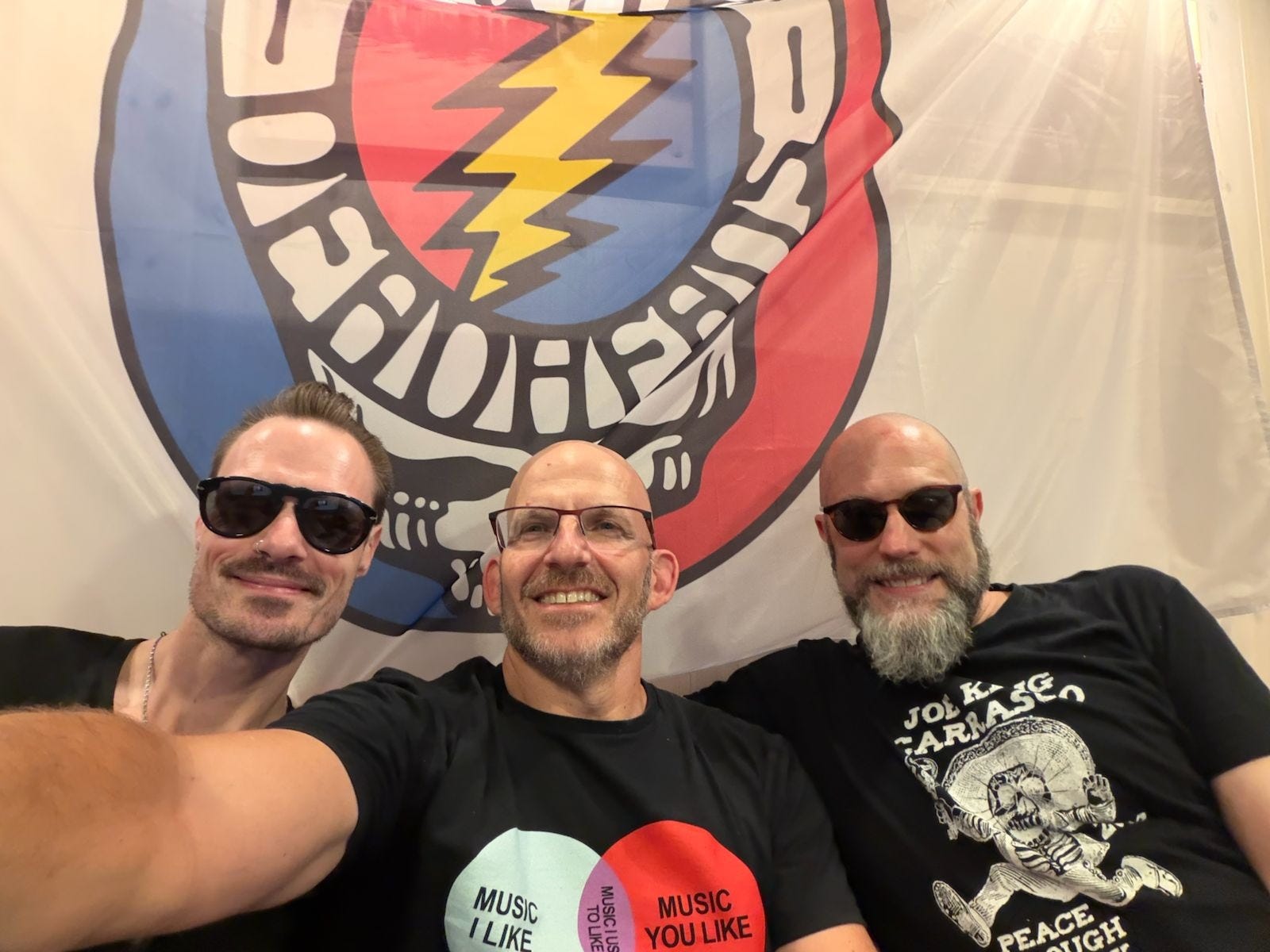
I played a gig in Berlin last weekend with a Grateful Dead cover band called the EuroDead Orchestra. A local guy I know told me they needed a keyboard player and I'd never played in Germany before, so I said yes. I spent the last 2 months doing a lot of self-study on the 35-song set (2 nights, 2 sets each night, nearly 5 hours of music).
This band was formed from people coming from 4 different countries so the first time we played together was the day of the show. A couple of flubs aside, it was an incredible evening of music and warm, friendly vibes from the crowd. I was super happy. Hope to see you at the next show.
with Mihai Olaru & Florin Manolescu | 💬 Romanian
June 2nd
📍 Live Online
Register here
with Simon Flossmann | 💬 German
June 22nd
📍 Live Online
Register here
with Mihai Olaru & Florin Manolescu | 💬 Romanian
June 8, 15, 22 & 29, 2026
📍Live online (Zoom)
Register here
with Federico Zuppa | 💬 Spanish
June 24, July 1 & 8, 2026
📍Live online (Zoom)
Register here
View all upcoming workshops.
Interested in working together? Please reach out.
In case you need it, here's a description of what I do.
Comments
Nothing yet. Say the first thing.
Sign in to join the conversation.