
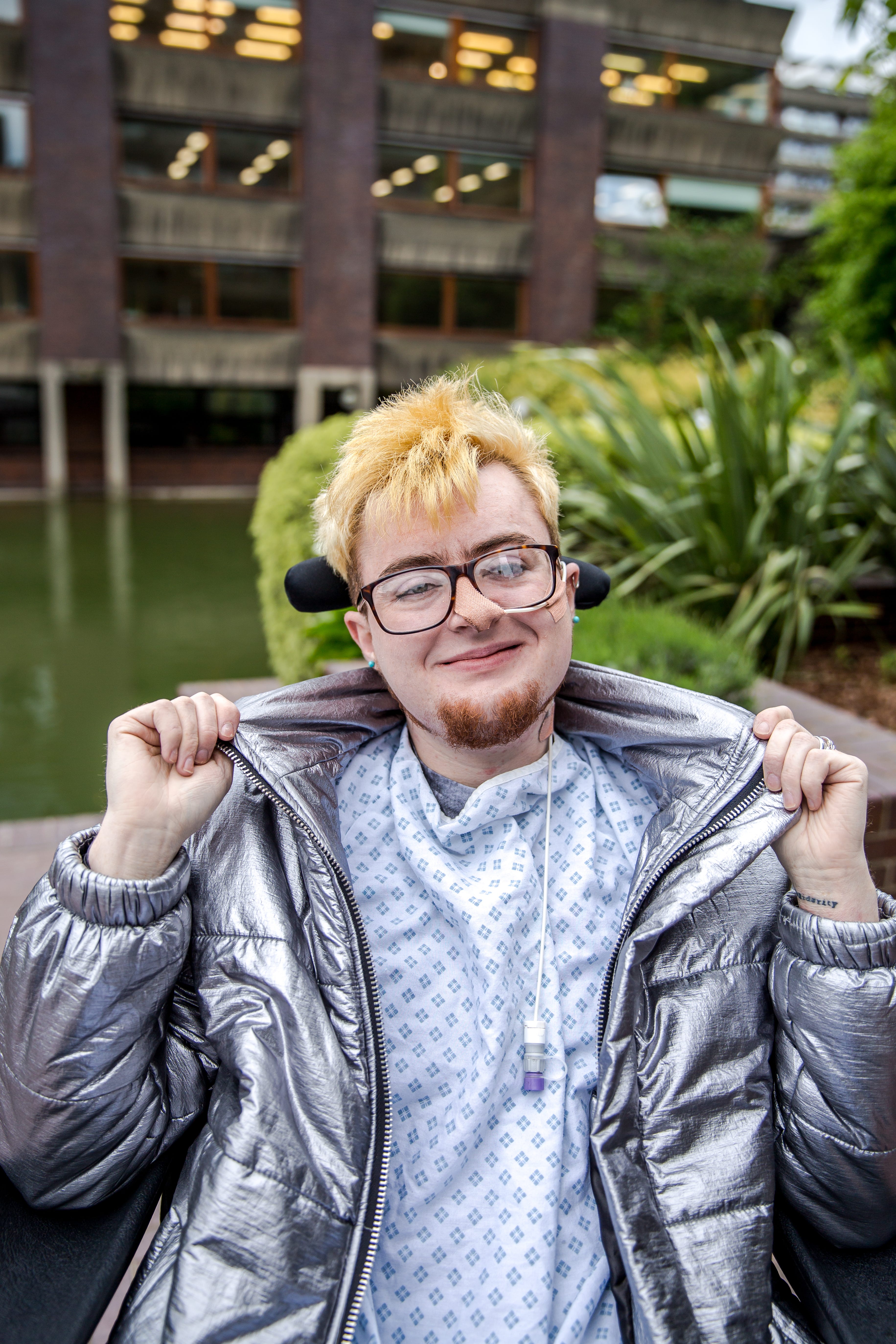
When we think about disability, we construct a set of artificial divides and false dichotomies. We separate mental and physical, or visible and invisible, or indeed well and ill. All of these dichotomies have value as lenses through which we can look at disability, but all of them also create flawed models. I’m particularly interested in what it means to think about illness and wellness in the context of disability, what that means for disabled people, and how that framing serves us - or doesn’t.
The Social Model of Disability
When the Social Model of Disability, the model with which I am most in agreement, was established, it deliberately separated disability, the social oppression we face, from impairment, the bodily fact. This was a rupture from previous thinking, wherein “disability” referred to the medical category - what was wrong with your body, how far it deviated from the norm, and what its prognosis was. The definition of disability developed by the Union of the Physically Impaired Against Segregation relocated how we understand disability - that it is disability is the oppression we face on top of the limitations we might already face from our conditions (known as our impairment). This definition did not overwrite the problems that might come from impairments, but set a political focus on challenging the barriers that were affecting us in society.
In a revolutionary manner, this made disabled people the experts on our own oppression. We weren’t going to patients - and be assessed, managed, and rehabilitated into a normal world. Instead, disabled people had a coherent political identity: a movement of people who didn’t have bodies to be fixed. Instead we had a society to change. This matters enormously.
The medical model, which saw us as broken and in need of treatment - was both intellectually wrong and materially harmful. It justified institutionalisation and the removal of disabled people from public life because they needed specialist care. It made disabled people’s lives understandable only by looking at what they couldn’t do. The social model of disability was the counter to all of that.
To some degree, the social model assumes a stable body: one that provides the impairment society refuses to adapt for. Illness introduces a complication here in the form of a body that is actively changing.
Finding Space for Illness
When you’re ill, the challenge isn’t only steps, inaccessible buildings, or ableist assumptions; some of the problems facing an ill person emerge from being ill itself. These often feel set aside when we’re talking about disability from a social model perspective. This was seen as a political and tactical decision, since the political work of establishing disabled people as an oppressed group required a clear focus, rather than simultaneously unpacking the nuance of where to put illness in that.
I understand the logic for doing this. At the time, we needed a framework that could establish us as a marginalised group, and the social model gave us that. However, people who have chronic illness, significant pain, fluctuating conditions, or degenerative conditions find that our experiences don’t map cleanly onto a model which feels like it is designed more around people facing consistent, predictable barriers and stable impairment. The social model explain why a building is inaccessible, but you might not be able to get to the building - accessible or not. Sometimes the problem isn’t the inaccessibility alone, but a combination of that and the body itself.
Throughout the 1990s, theorists like Jenny Morris and Liz Crow wrote to create space for illness within the social model. They recognised that while the architects of the model chose to focus on disability, the model spoke from the beginning about the barriers placed on top of our impairments - suggesting our impairments also had an impact. Room for those impairments has been re-emphasised in the social model, yet it is still often not experienced that way. These feminist disability theorists reminded us that acknowledging pain and impairment doesn’t necessitate a return to the medical model, something which is often forgotten.
This post is by no means an attack on the social model. I hope you know by now that I consider myself very committed to it. However, I still find myself grappling with how a model that gave us our political language, and our sense of ourselves as a disabled community, is also unable to hold everything that we are, and can only ever be a lens rather than a complete explanation.
Being Disabled, Being Ill
Sometimes I’m solely disabled. Those are the easier days: the days when I wake up with energy, when my caregivers arrive on time and ready to work, and when I’m able to just be myself. I might be on my ventilator, I will be on my tube feed, and I will be in my wheelchair, but these are days when nothing is acutely wrong, except the barriers I’m facing. On days when I am simply existing, the social model speaks most clearly to me. What’s hard for me then is all the societal barriers I face - the failures of access and services.
On these days, my identity as a disabled person feels solid, political, and something to organise around. When I say I am disabled, I’m making a statement about how the world is arranged, not a medical declaration. Those are powerful days.
There are also days when I’m acutely unwell in ways the social model doesn’t reach. On days where it’s symptoms I’m struggling with more than society, the difficulty is between me and myself, not me and the world, and that’s harder to bear. My body is not cooperating in ways that have nothing to do with what the environment has or hasn’t done, but everything to do with the reality of my physical embodiment.
On those days, I feel ill as well as disabled.
This makes me feel like I’m moving outside the security of the social model, as I just want an end to whatever that particular suffering is. I wonder sometimes whether reaching for illness language is a concession to the medical model that I shouldn’t be making, and whether I’m betraying something I profoundly believe in.
However, I know that there is room for both. I remind myself that the social model is there to organise around the facet of our shared experience that is barriers imposed upon us, but that there is space within it to for me to also hold the impacts of illness.
Treatment and Cure
Illness is a strange word. It implies temporariness. It implies a movement towards or away from a baseline. If I am very ill now, there is a “me” that is less ill at other times. “Disability,” on the other hand, implies permanence. It suggests an identity, not something I would move through. “Disabled” is what I am as someone who faces disabling barriers, not just my current physical state.
For people whose reality involves both stable disability and fluctuating illness, neither frame feels fully accurate. Framing my condition as illness feels like regression, and like I’m giving up on the political ground of the social model. Framing it solely as disability can feel, on the worst days, like I’m actively denying something real and vital and losing the opportunity to name my situation.
I find the pressure to choose between being ill and being disabled interesting, because for me illness and disability can sit together, I just have to be willing to think around the words in a range of ways.
The illness/wellness binary assumes some degree of cure. Illness deviates from wellness; wellness is the endpoint. Disability politics rejects this, and rightly so. The idea that our lives are problems to be solved, or incomplete versions of non-disabled lives, has caused profound harm: from the history of eugenics at its most extreme to the everyday assumption that disabled people must want to be otherwise.
However, wanting things to be different is also a normal, human experience. Wanting medicines to work, treatments to be effective, acute episodes to end, to feel less pain, to have less brain fog - none of this means accepting the cure narrative.
Disability politics doesn’t always differentiate between wanting to be non-disabled - to leave the category entirely, and wanting particular symptoms to improve, particular things to change, particular support to be available. Many people, disabled or not, politically aligned with the social model or not, want the latter for themselves and the people they love. When the idea of wanting effective treatment is assumed to align with not wanting to be disabled, ill people are left adrift in disability spaces.
Space for Cure in our Community
Disability politics struggles to hold the tension between resisting the idea that disabled lives need to be fixed in order to be worthwhile, and the very different claim that any desire for change is therefore politically suspect and suggests people have internalised ableism.
Disability is often framed as the thing that must be overcome for a good future to be possible. The non-disabled future is the default good outcome. This makes disabled lives legible only as tragedies awaiting solution. Disabled people rightfully resist this, but that resistance can make it hard to say, honestly: I want to feel better. I want to have more capacity tomorrow than I have today. Not because I want to be someone else, but because I want to feel able to be myself.
The way I work through these two contrasting pressures is to ask “on whose terms do I want this”? If I want to be in less pain so I can live my life, that is very different from society investing in ways to reduce the number of disabled people. An individual wanting to ease their symptoms is very different from a culture trying to eliminate disability.
These are not the same desire. They have different objects, different roots, and different relationships to power itself. They can look similar from the outside, and both medical and social models of disability can conflate them, but that doesn’t make them the same.
It’s hard to maintain this distinction in practice, but it’s what makes it possible to want care without wanting to disappear as a disabled person. And it’s a distinction that disability politics needs to make space for, if it wants to speak honestly to people who primarily experience life as ill.
Thanks for reading! This post is public so feel free to share it.
Comments
Nothing yet. Say the first thing.
Sign in to join the conversation.