
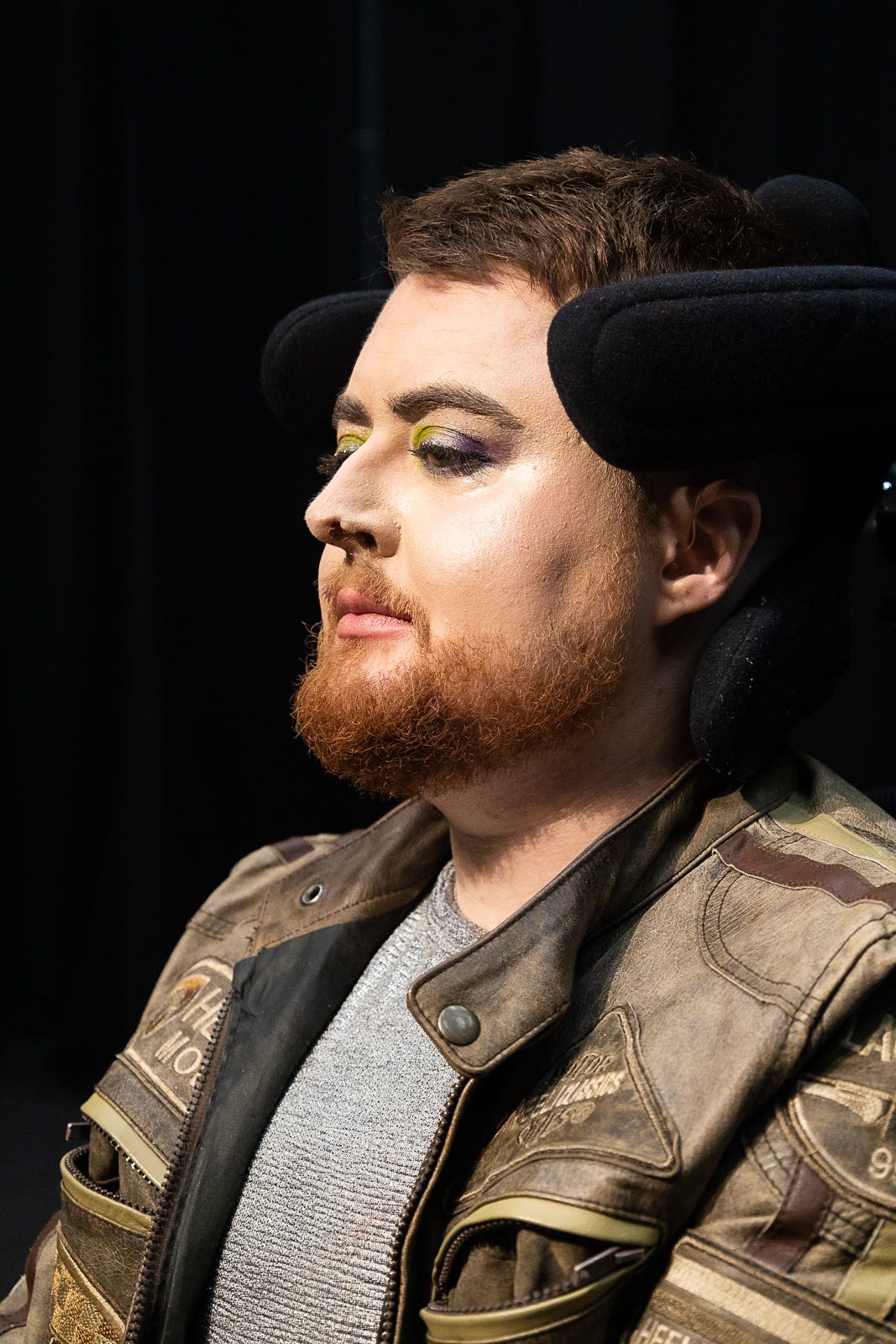
Someone called me inspirational in the supermarket last week, and I said: “Thank you”. She was clearly kind, and meant nothing bad by it, and I didn’t want to tread on her, didn’t want her to feel bad for a one-off remark, and it was easier, in the end, just to thank her. I’ve done this tens of times before, and I’ll do it tens of times in the future, no matter that it leaves a bitter taste in my mouth to do so.
There’s a word for that type of experience with the woman, and it isn’t mine. Stella Young, in 2014, talked about Inspiration Porn, and this is an example of that in action. Disabled people are made into props for a non-disabled audience - wheelchair users pictured climbing mountains, for example. No engagement with the real physical skill that might require, instead it’s based on the assumption that our lives are so obviously worse than those of non-disabled people that living them at all is an achievement - “if that disabled person can do it, what’s your excuse?” - and actually, if what’s stopping the rest of us being like those inspirational disabled people, then maybe “the only disability is a bad attitude” and we’re disabling ourselves when we say we can’t do things. It’s not the stairs that are the problem; it’s my attitude.
Stella Young naming this and talking about it has been revolutionary for disabled people, who are being shown by this that these things that look like compliments and feel bad - maybe they’re not compliments at all. And if we’re being told we can do anything, just because another disabled person could, we’re being blamed for the societal barriers that are stopping us.
I want to defend the orthodox line of “I’m not your inspiration, I’m just living my life”. When I get called an inspiration, I experience a series of harms. The bar for my success is set on the floor; praise is given for a very low level of work. The right to an ordinary day is stolen from me; suddenly, that unremarkable day is inspirational. The feeling is for the person calling me an inspiration, not me - it’s a private “at least I’m not them”. All the actual barriers I face are excused - because, after all, I’m inspirational. These harms grate at me, because they presume a series of things that aren’t, for me, true, and in doing so they harm me, leaving me boxed into a place where I exist to make the watcher feel good, rather than existing in the world on my own terms.
But can we argue against being called inspirational too much - and therefore do we miss out on space to actually be inspirational? Sometimes the thing that I’ve achieved is hard, and the work is good, and I’ve achieved it all while facing disableist barriers that few other people face. And at times like that, is it okay for me to be called inspirational? And if people avoid doing so, does that actually take something from me, the right to have my achievements recognised on the terms that they were achieved, not only for what they are, but also for what society’s barriers have done to me. It’s the difference between being admired for existing - where admiration had to invent its object, make a whole set of assumptions about me- or being recognised for doing something, where my years of labour count for something. And it’s also about what the inspiration is for. Seeing me in the supermarket, the inspiration is about the gap between my life and yours, and you feeling impressed by the misery that is my life - calling me inspirational to make yourself feel better. Seeing me performing on stage, the inspiration is about bringing attention to me, calling me inspirational as a compliment for my work and effort.
And how do I acknowledge that I also lean into this far more than I feel I should?
I reach for the inspirational arc when writing funding bids, because this gets the money and the money funds me making the work I want to make, and the benefits to this are real. Doors open, work gets made, and reaches people. I always thought of that as being harmless, but it’s not really, is it?
If I trade on being inspirational, then that makes even heavier an expectation on the next disabled person to do the same. Even as I clear the low bar I talked about earlier, I am also setting it up to be enforced against the next set of people. I trade on being the good, marketable, against-the-odds disabled, even when other people’s lives don’t bend into a fundable arc. And yet, it is not as if the benefits are accruing to me; they’re accruing to the work that I’m doing for the community.
And that’s the story I tell myself, to give me agency - that I am trading on being inspirational out of choice. And actually I don’t have that agency at all. I will be perceived by funders as the inspirational kind of disabled whatever I do. I don’t have a route through which I can opt out of being seen as inspirational, so I can either accept it, or I can despise it, but it’s the framework through which my work will be taken to exist, regardless of what I think of that.
I’m not reclaiming the word inspirational or creating a list of ways that you can call disabled people inspirational that are genuinely complimentary. I’m not saying you have to use it, or you can’t use it. I’m not saying we have full agency to market ourselves that way, or that we can refuse to market ourselves that way. It’s too complicated for that.
What I am saying is that disabled people aren’t here to play a bit part in the story of non-disabled people, and that if you find yourself creating a story around us and using that story to make yourself feel better, or worse, then you’re objectifying and dehumanising us, and that’s the wrong way to find and acknowledge inspiration.
Thanks for reading! This post is public so feel free to share it.
Comments
Nothing yet. Say the first thing.
Sign in to join the conversation.