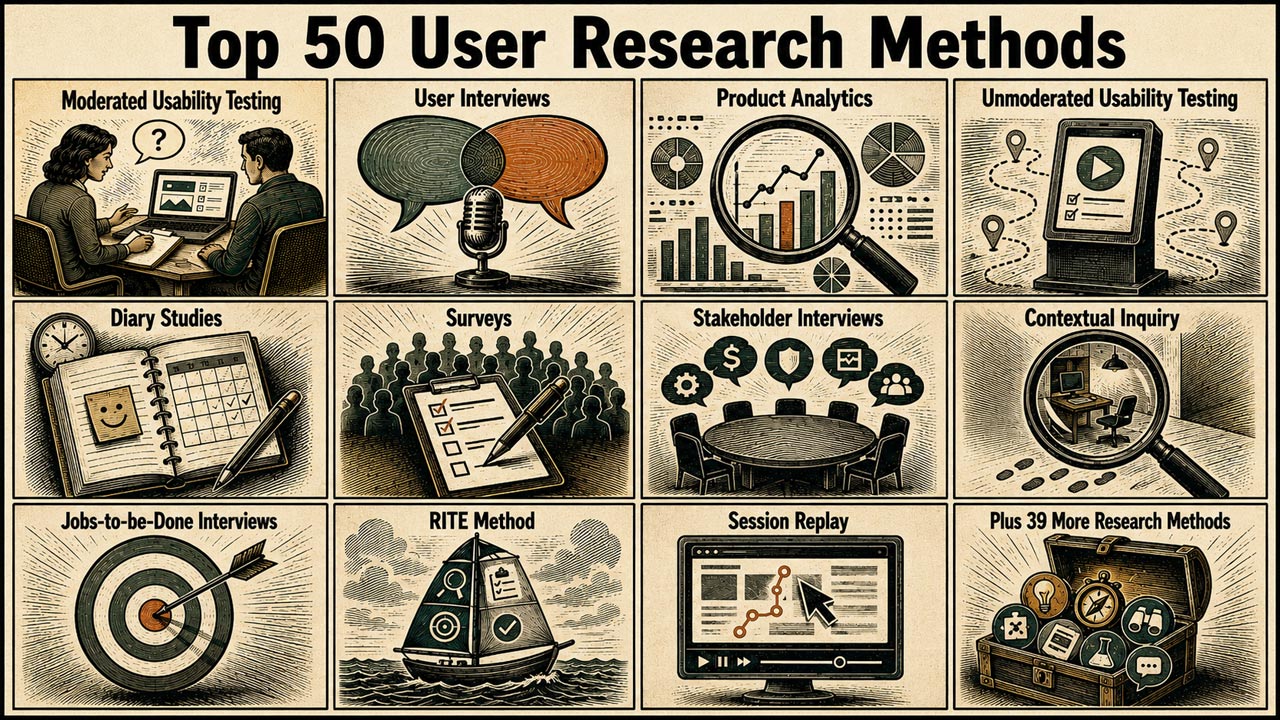
The 50 Most Common User Research Methods, Ranked by Value
The 50 most common user research methods scored on breadth of scope, depth of insights, remote suitability, and cost, then ranked by total value.

New articles about user experience and usability, often about the intersection of AI and UX.
Live Last read · last published · next check
The 50 most common user research methods scored on breadth of scope, depth of insights, remote suitability, and cost, then ranked by total value.
AI spending growing 75% per year at the median firm | An AI agent that argued back against design ideas helped designers improve | A design is a hypothesis: try to defeat it | AI can generate superior accessibility when it prioritizes communication density over narrative completeness | Skeleton screens buy patience, not speed | Checkout design dials the pain of paying up or down
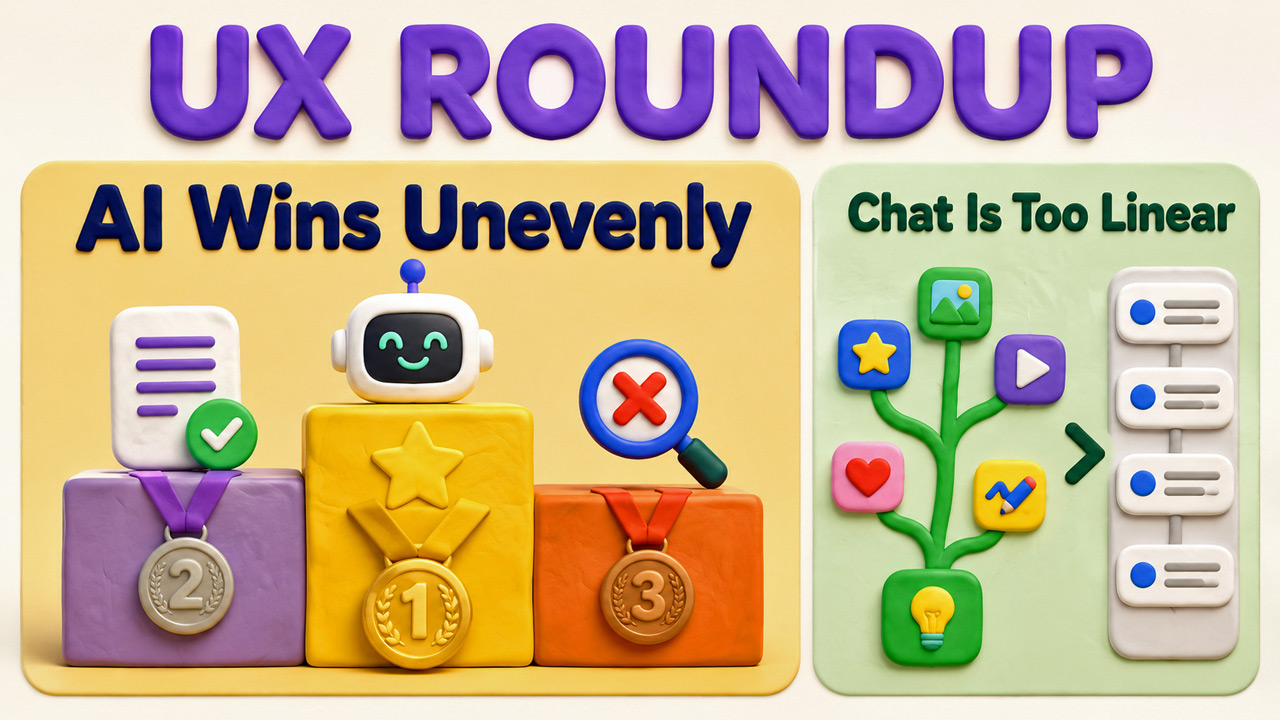
New music video about hedonic adaptation | AI better at some forms of knowledge work than at others | AI increasingly used for sensemaking among corporate users | Users want to approve certain autonomous actions | For exploratory creation, a branching UI beat the traditional linear chat interface to the AI backend model | Base-rate neglect: one vivid anecdote outweighs a thousand statistics | The…
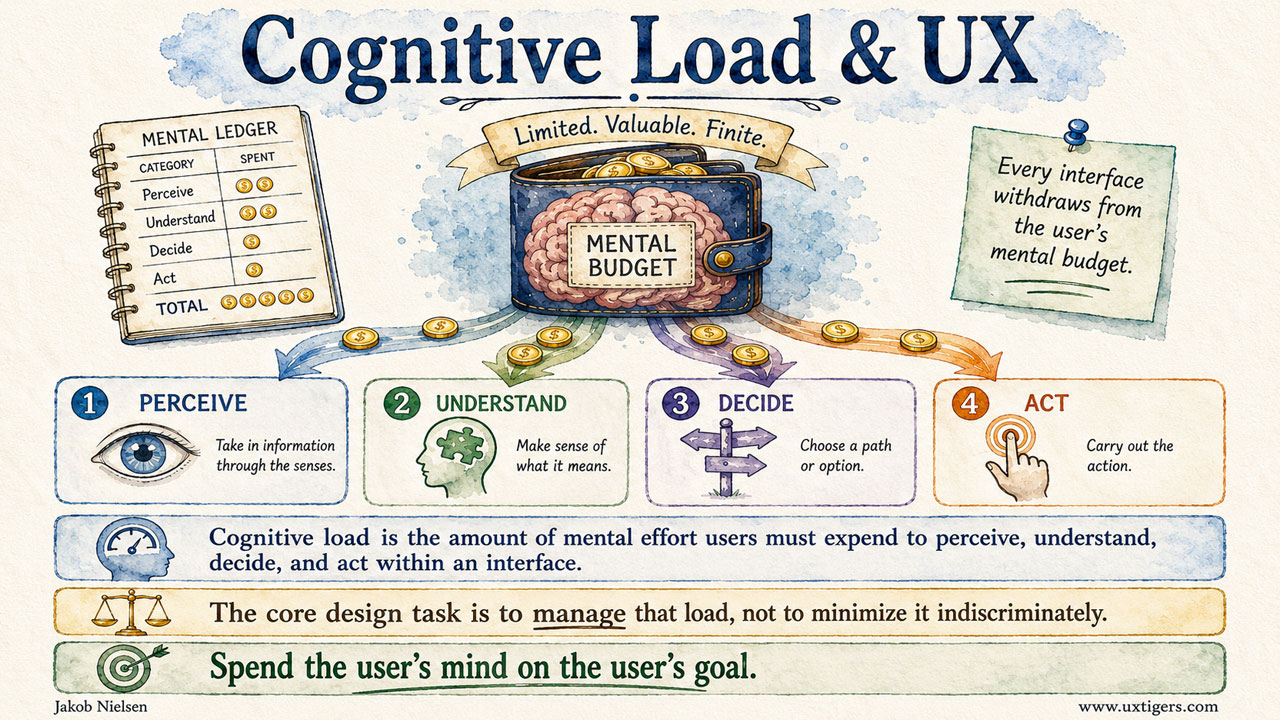
Cognitive load is the mental effort users spend to perceive, understand, decide, and act within an interface, drawn from a working memory that holds roughly 4 chunks. The design task is allocation: spend that scarce budget on the user’s goal, cut everything else, and mind the new debts run up by open loops and Slow AI. 26 design guidelines show how
AI technical capabilities are exploding, but sophisticated use crawls | Progress bars make waits bearable | Synthetic personas exaggerate demographics | AI hurts education when used wrong | Professor Brad Myers is a UX hero | In the future, we’ll all be Agatha Christie | Mental accounting gives users separate budgets for separate expenses | Grok releases upgraded image model
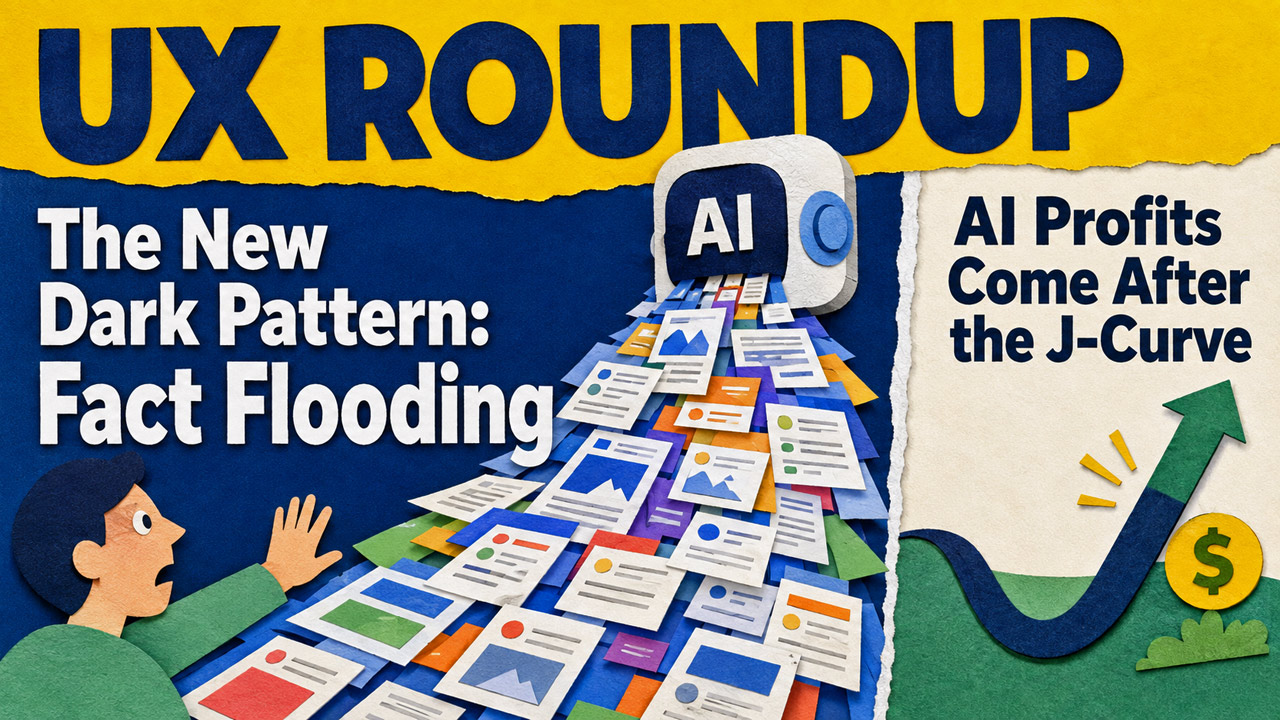
Keep It Simple | AI uses fact flooding to overwhelm users and persuade them | Deep AI integration in business processes | 5 personas for adopting AI | The framing effect | Using AI to change the tone of voice of your writing | Timelines: a chrono-based UI | AI improves cybersecurity | Increasing use of AI agents for online shopping
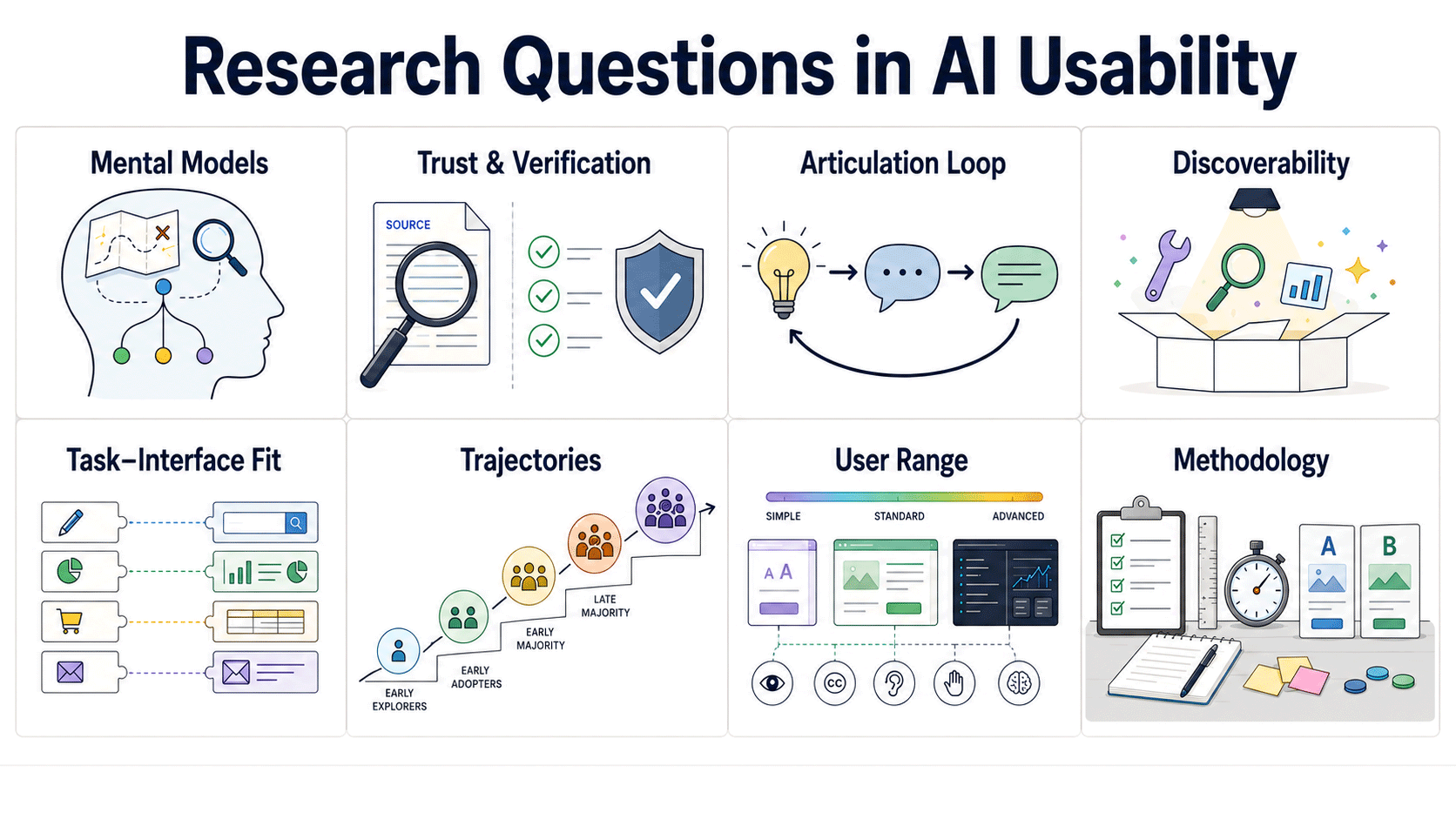
AI is the biggest change to UX design in 60 years, yet we know embarrassingly little about how people actually use it. Here are 76 open research questions, organized into 7 lists sized for everyone from high school students to the big AI labs. Students who complete a research challenge gain the two qualities employers now screen for: agency and demonstrated AI experience.
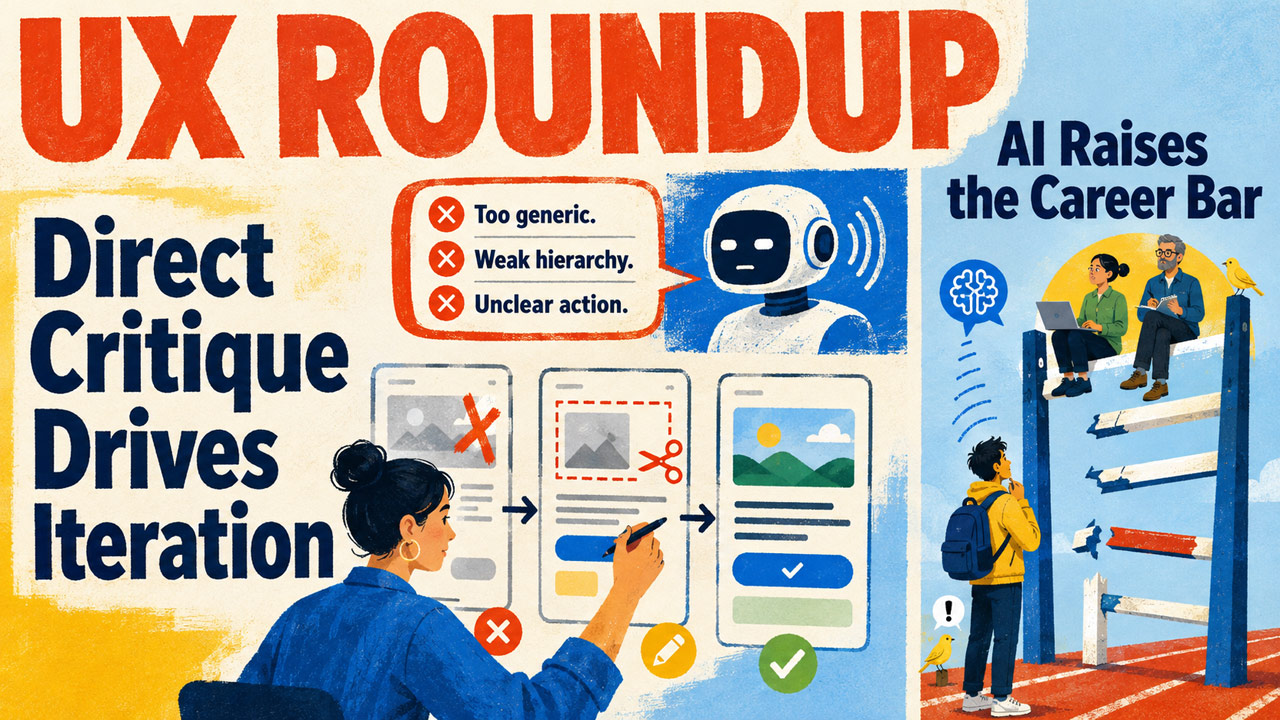
Design guidelines held steady for 30 years but are shifting with AI | Users who are anxious about AI use it more, not less | A toggle is a light switch, not a form field | The same design scores lower every year | What are the Erdős problems and why are they relevant for AI? | An ambient monitoring interface with glanceable feedback on agent progress cut errors in half
Agent-ready web design lifts AI task success | Shoppers now pick AI assistants over brand websites, 41% to 38% | Learn from reality: build and iterate | AI getting better at business strategy, but still not good enough to run your company | AI raised the floor but lowered the ceiling in children’s storytelling | Infinite canvas as a UI space for organizing and collaborating on unstructured…
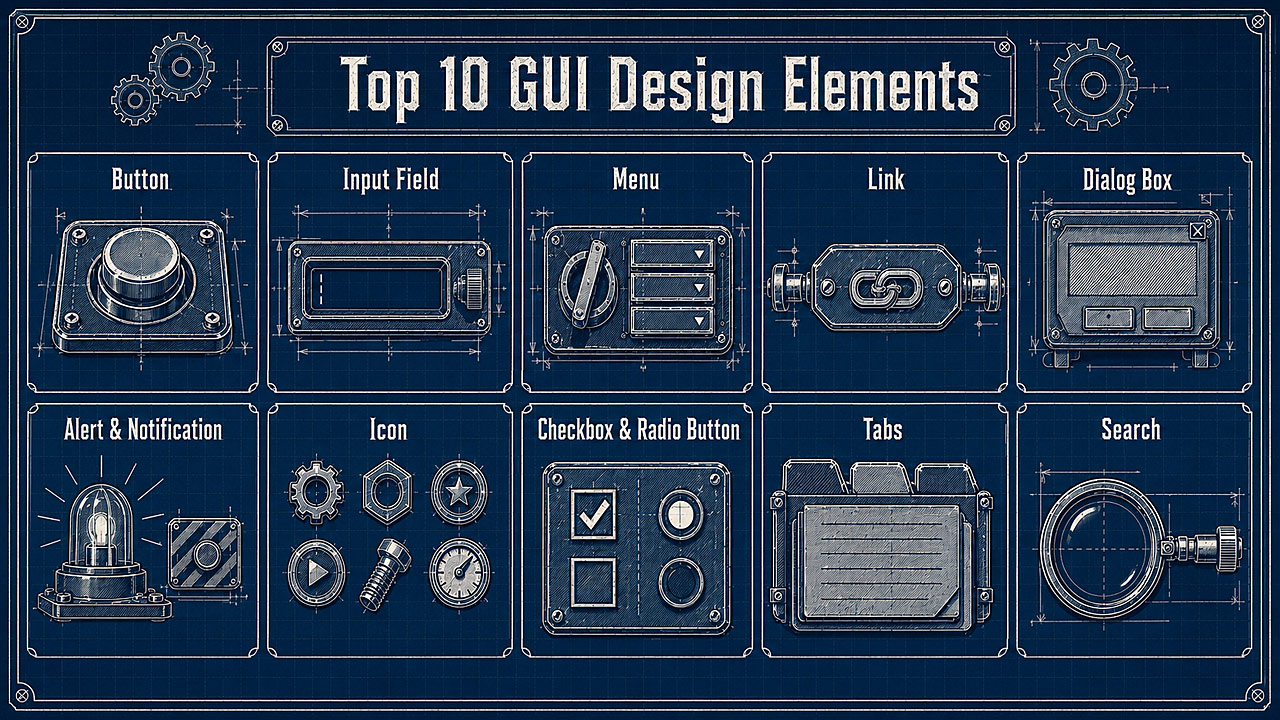
Almost every screen you design is assembled from 10 basic interaction elements: buttons, forms, menus, links, dialog boxes, alerts, icons, checkboxes and radio buttons, tabs, and search. Each is decades old but still misused daily. This article defines the GUI design alphabet, traces its history, and distills 86 evidence-based design guidelines, plus bonus coverage of windows and the pointer.