
In March, I published an essay called “How Organizations Lose Their Minds.” I argue that the company firing employees the fastest in the name of AI redundancy is going to fail the fastest.
That’s because I’ve seen it in Circuit City, which ran exactly the same approach all the way back in 2007. At 8:15 a.m. on March 28, 2007, Circuit City fired 3,400 of its most experienced salespeople. The store managers across the country, coast to coast, literally read from a script that headquarters handed to them.
“You’re terminated, effective immediately.” Security would walk these veterans with 20 years of service out of the building to the parking lot. Curiously enough, Wall Street applauded initially. The stock even closed up that very same day. But then, 19 months later, Circuit City was bankrupt.
And in 2026, we see the same approach getting repeated all over. When I hit publish, the count was 45,000 tech layoffs during that earlier quarter. Six months into this year, the count stands at about 139,000, up 83% from last year.
The most curious thing of all is that most layoffs are made by companies registering record-high business results. Cloudflare, for one, had a record quarter and proceeded to cut one in five of its people on the very same day. Yet something subtle has shifted. The stock fell by 24%. Somehow, what used to work stopped working, and the financial markets’ mood is turning.
As I was watching all these numbers unfold, more than 180 comments came in from my previous essay, and they sparked additional thinking. One reader who worked at a big-box retailer said that when his company was adopting a brand-new AI inventory system, he was told to trust AI, not his lying eyes. He saw the AI system was clearly mislabeling the items in a warehouse.
I wanted to find an alternative. I decided to do something that a written-form essay wouldn’t be able to do. I sat down with Hubert Joly, the former CEO of Best Buy, who helped turn the company around by not laying off people. Instead, he staved off job cuts as much as possible and treated redundancy as the last resort. He ended up reversing a death spiral, and the company still stands strong today, growing alongside Amazon and e-commerce.
He told me about the very danger of being enthralled by a shiny AI pilot while your workforce is scared. When people don’t feel safe reporting false positives and when bosses are too excited about the future, that gap is the most dangerous thing a company can fall into.
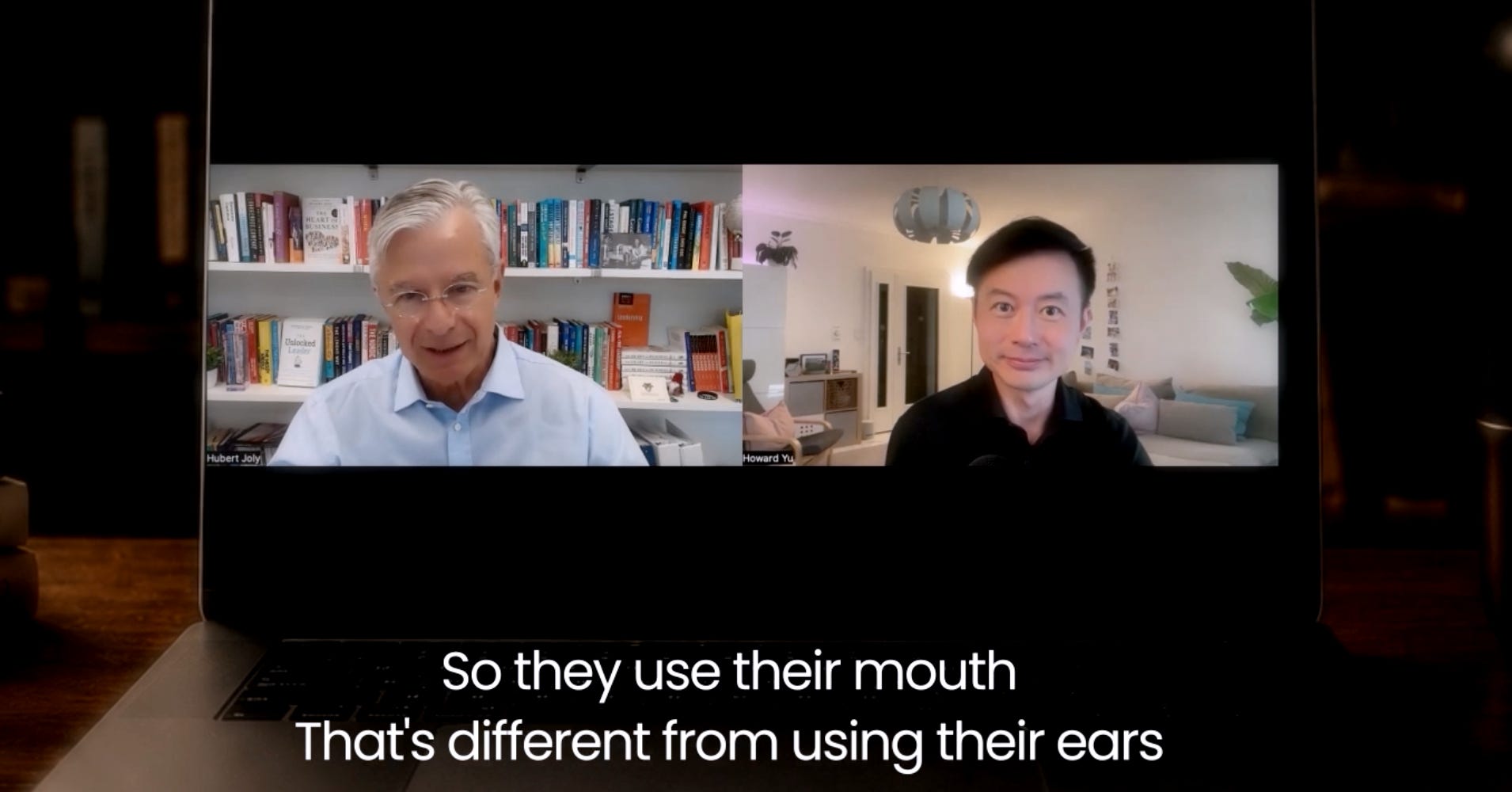
The video above is the entire argument in one sitting. I have reviewed four books written by insiders of these management teams. How did smart companies collapse because of the three stages of a corporate disease? That is the disease that killed Circuit City and Blockbuster, and almost killed Honeywell before a CEO came to the rescue. Hubert Joly, of course, described how he rebuilt the company literally from the ground up by showing up on the shop floor.
We all have different ways of learning. If reading text is not your strong suit and you prefer to listen or even watch for better retention and memory, this is exactly the piece you would enjoy.
Will your organization survive its own AI transition, or any big transformation for that matter? Circuit City didn’t. Best Buy did. After watching the video essay, you should be able to predict which one your company will become.
Comments
Nothing yet. Say the first thing.
Sign in to join the conversation.