
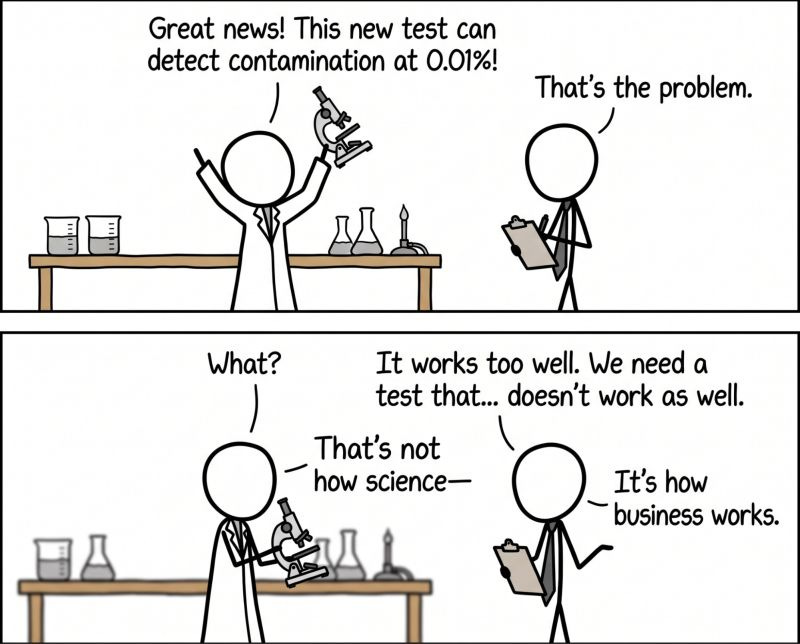
In early 2026, OpenAI began placing advertisements in the free tier of ChatGPT. The ads were modest at first and appeared underneath the answers, like sponsored links in old search engines. Around the same time, one major AI lab raised the price of its budget model line for the fourth time in under 18 months. Another AI lab reserved its longest-context queries for top-tier customers at double the price.
It was a familiar pattern: A product that had once seemed magical was starting to feel like a tollbooth.
The phrase on everyone’s lips was “enshittification.” It was a term that Cory Doctorow had coined for the life cycle of platforms that first delight users, then betray them, and finally squeeze everyone until the thing that they’re offering becomes utterly unlovable.
But why?
I want to know why every shitty company starts off being cute and innocent enough. Is it power that corrupts? How do starry-eyed founders and executives end up in scandals and disgrace? I don’t believe that brilliant people begin with a plan to go to jail. There must be bigger forces naturally at work.
And if we aren’t careful, if we don’t put the guardrails in place and tie ourselves to the mast ahead of time, we’ll always end up listening to the siren song of the financial markets, only to look back later and wonder how we came to lose our soul.
Jeff Skilling, the McKinsey consultant who would eventually run Enron and become its CEO one day, had a single non-negotiable condition of his employment in 1990: mark-to-market accounting. Sign a 20-year gas contract today, estimate its lifetime profit today, and book all of it today. In other words, decades of hoped-for future earnings could show up as profit on this year’s books.
Amazingly, on January 30, 1992, the SEC agreed not to object. On that afternoon, Skilling’s staff celebrated. Champagne was offered, as McLean and Elkind would write in The Smartest Guys in the Room, “to toast an accounting change!”
Twelve days later, Enron asked to apply the same method retroactively to the year that had already ended. Through paperwork, Skilling’s division conjured some $25 million—half of what it had earned in 1991.
The method has a defensible logic but also a fatal side effect. Every quarter essentially starts at zero, because the future’s revenue is already booked on day one. Growth turns into “a treadmill that becomes faster and steeper as the company gets bigger.” Enron’s filings began carrying the phrase, “recognized, but unrealized, income.”
By decade’s end, 35% of Enron’s assets were valued this way. When a quarter ran short, calls went out from the top floor at headquarters: “We need an extra $15 million!” According to Enron’s own in-house risk-management manual, “Risk management strategies are directed at accounting, rather than economic, performance.”
The Enron scoreboard would select and retain people of a particular type, and Skilling reflected his company’s culture. “I’ve thought about this a lot, and all that matters is money,” he explained.
“Champagne to toast an accounting change!”
Find the number your company celebrates before the cash arrives. That is where the decoupling will start.
By 1999, all controls were coming off. On June 28, the board waived Enron’s code of ethics so that its CFO could run private funds trading with the company. The meeting was over in about an hour. On October 12, the board waived the code again. Why? So Enron could unload troubled assets that it wanted off its books to a fund run by its own CFO, at prices no independent buyer would pay, in deals ultimately backstopped by Enron’s own stock.
While the stock kept climbing, the arrangement worked out just fine. Meanwhile, its traders found gold in California, in the electricity market that Enron itself had lobbied hardest to deregulate.
On May 24, 1999, Tim Belden, Enron’s top power trader on the West Coast, scheduled 2,900 megawatts. It was enough power for a city the size of Fresno, across a rural line built to carry 15 megawatts. The schedule was physically impossible, and Enron knew it. The rules of the just-deregulated market had no mechanism to safeguard a rogue trading order. State prices jumped more than 70% the next day. On tape with the grid operator, Belden explained, “We did it because we wanted to do it,” and then, “It makes the eyes pop, doesn’t it?”
Enron got a measly fine of $25,000. Belden was promoted, and in 2001 alone, he collected over $5 million in bonuses. Enron proceeded to trade even harder and rake in more money while electricity prices shot through the roof. The company’s own head of litigation said of the trading desk, “To them, it was a big video game.”
In the winter of 2000–01, California traffic lights went dark and elevators stopped between floors. The West Coast trading desk had its best month ever, earning $254 million in January 2001. CEO Ken Lay told the head of Los Angeles’s utility, “I’ve got smart guys out there who can always figure out how to make money.”
If you enjoyed this article so far, subscribe now. It’s free and takes just seconds to sign up.
You’ll join 18,000+ other ambitious executives receiving research-backed insights delivered straight to their inboxes. Let’s keep you one inch ahead.
Now, don’t assume that these executives weren’t working hard. They were so hardworking that they ignored their families, abandoned their health, and made themselves available to Enron 24/7.
Not everything is fake at Enron. The gas pipelines were real, so was the trading floor. It’s the earnings that were largely manufactured. Enron then went on to trade not just energy but broadband, metals, pulp, and paper. For anything new, or at the cusp of deregulation, Enron would buy its way in and book tomorrow’s revenue today. As one Enron executive explained, the company “borrowed from the future until there was nothing left to borrow.”
And because the structures hiding its debt were collateralized with Enron’s own stock, the whole edifice needed the share price to rise forever. The moment the market turned, the moment the dot-com bubble deflated and the stock fell, the debts came home all at once, and every shenanigan was exposed to the public.
Once the public understood that the scoreboard had failed to describe anything meaningful, the end swiftly arrived.
Enron ended in criminal court, which makes the whole story comfortable, especially in today’s world. Jeff Skilling was sentenced to more than 24 years. Ken Lay was convicted and died six weeks later, before he could be sentenced. Andy Fastow, the CFO for whom the ethics code was waived, gave his version to a conference audience in 2013, after prison: “I knew that what I was doing was misleading. But I didn’t think it was illegal. I thought, that’s how the game is played.”
Every company on this curve starts the same way. Good, then great, then amazing. Somewhere along the way, the scoreboard detaches from whatever it was invented to measure: stock price from customers, booked profit from cash, the safety claim from the patient, or dwell time from the wellbeing of the person using the app.
Organizational sociologists have a name for this. That is, the gap between what a company professes and what it practices. It’s called decoupling. The graph below is the moral version. A company keeps steering by the scoreboard, the score keeps rising, and everyone below deck gets paid to keep it rising. As long as the music plays, the gap keeps widening, and the catastrophe is postponed, addressed later to someone else. Maybe it’s patients. Maybe taxpayers, or employees, or retirees.
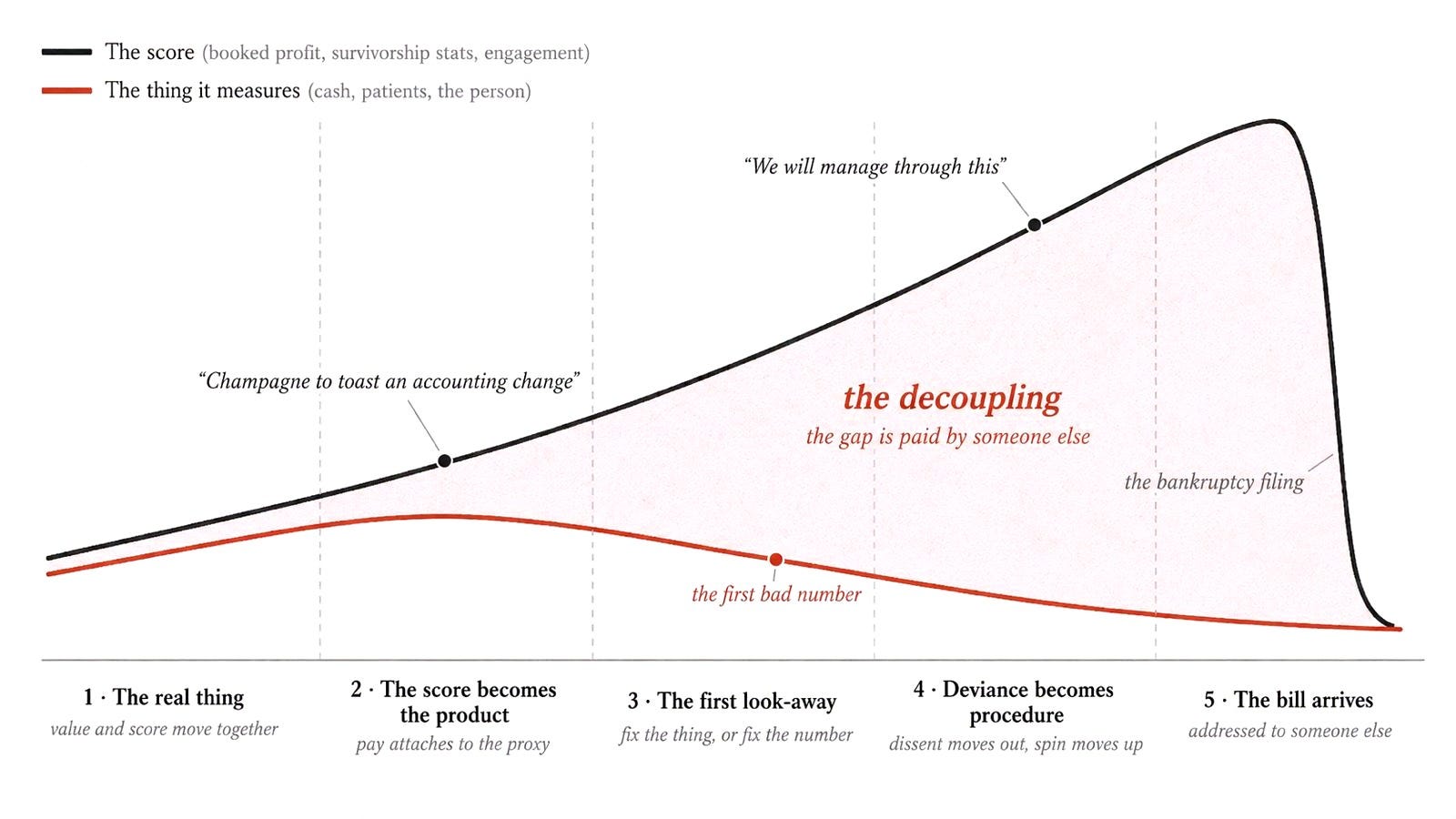
Enron ran through the entire curve, which makes the case both useful and scary. The autopsy is complete.
And yet, moral decoupling is a staged disease. Early on, it’s hard to detect and easy to fix. Later, it’s easy to detect and almost impossible to fix. And decoupling hides well, because leaders can always doubt the bad number, celebrate the good one, and read the ambiguous one kindly.
Always watch out for a beloved company that fell into the same trap but remains beloved while hurting people.
Johnson & Johnson is America’s beloved brand. The smell of its baby powder conjures the most powerful loyalty there is: the memory of a mother’s touch. The company’s credo was written in 1943 and etched in stone at headquarters, begins “We believe our first responsibility is” not to shareholders but “to the patients, doctors and nurses.”
In 1982, when a murderer laced Tylenol capsules with cyanide, J&J pulled 31 million bottles at a cost of $100 million. Business schools canonized the recall as the gold standard of corporate ethics. I have quoted it that way myself.
Then I came across Gardiner Harris, the longtime drug-industry reporter for New York Times who wrote No More Tears (2025). Harris found the Tylenol story retold inside the company so often that he described it as becoming “something of a prayer.” A 1999 internal deck even listed the benefits of such faith. Among them is that consumers “will forgive missteps and brand crises.”
Now watch what the license is used for. Harris calls the effect corporate gaslighting on an epic scale. Let’s start with the birth control pill.
The pill form of the contraceptive has one weakness: People forget. Skip a day, and protection fades. That’s why J&J built Ortho Evra. It was a weekly skin patch, which meant that there was no daily pill to remember and, as the company suggested, less estrogen, too. It involved an actual medical problem, with an elegant fix, and an avalanche of sales if the technology worked.
In March 1999, the results of its own comparison study, PHI-017, arrived. The blood estrogen levels of women who wore the patches were three times higher than those of women on two popular low-dose pills and twice the amount found in users of a third brand. At the top end, the patch behaved like a 76-microgram pill, which contained a dangerous dose so high that had been abandoned decades earlier. Now J&J had four options:
Disclose the risk,
warn doctors,
redesign the product, or
abandon the project.
Amazingly, J&J picked a fifth option, which, in Harris’s words, meant “willfully deceiving the FDA about the patch’s estrogen problem.”
J&J’s lead scientist applied a “correction factor” to the estrogen data, shrinking every number by 40%. The adjustment appeared once in a 435-page application, inside a mathematical formula. The study reached the FDA one month before approval, buried in the pile.
The FDA never noticed. In November 2001, the agency approved Ortho Evra with a label claiming the same estrogen as a low-dose pill. The company knew the claim was untrue. And it did show PHI-017 to the European reviewer, but only after he had already recommended approval. He told J&J to disclose it to both the European Medicines Agency and the FDA. The company did neither.
The launch was bungled even more. For six months, J&J could not manufacture a patch identical to the one it had tested. Being “more concerned with sales than safety,” it began selling a version that released even more estrogen than the trial version did and only told the FDA about it years later. The ad campaign showed young women tugging down the waistband of their panties to reveal what looked like a wishbone-shaped Band-Aid. Ortho Evra quickly took 10% of the contraceptive market.
Then the reports began arriving. Heart attacks, strokes, and clots in legs and lungs. Zakiya Kennedy, an 18-year-old college freshman in New York, died in 2004. Stephanie Rosfeld, a 25-year-old assistant volleyball coach in peak health, died after one month on the patch.
Not until November 2005 did the FDA force a label warning: at least 60% more estrogen than the pill. Prescriptions fell 87%, from 10 million to 1.3 million.
“This was the kind of choice,” Harris writes, “that would be made repeatedly.” The hip division filed FDA paperwork one business day after its new metal implant, the Pinnacle, fell apart in its own simulator (“Yikes!” a senior scientist emailed. “What about regulatory issues?”). A sister implant, the ASR, followed it to market and was recalled in 2010—93,000 hips worldwide—and $2.475 billion settled the first 8,000 replacements.
Risperdal went to elderly dementia patients and to children while J&J sat on the risks. The guilty plea cost $2.2 billion. Baby Powder stayed on American shelves until 2020, six decades after the company learned that its talc could carry asbestos.
Of J&J’s seven best-selling drugs in 2003, legal proceedings showed illegal marketing behind six of them, by Harris’s tally. Even OxyContin ran on J&J’s supply. Its Tasmanian farms bred a mutant poppy for the key ingredient in oxycodone, and the Noramco unit sold Purdue Pharma the raw material, under a promise to provide everything Purdue needed to sell OxyContin around the world.
All in all, J&J supplied the active ingredient for about half of the opioid pills sold in America.
This should bother you more than Enron. For Enron’s decoupling destroyed the firm; J&J was lauded on Fortune’s most-admired list for the twenty-first straight year in 2023.
So how does all of this keep happening?
Let’s start with the prosecutors. In January 2002, James Comey, then the new U.S. Attorney in Manhattan and later the head of the FBI, asked a room full of career prosecutors, “Who here has never had an acquittal or a hung jury?”
Hands shot up, proudly. “Me and my friends have a name for you guys,” he said. “You are members of what we like to call the Chickenshit Club.”
A prosecutor who never loses is someone who only picks safe fights. A high-paying executive defended by the best law firms is never a safe fight. The journalist Jesse Eisinger borrowed the phrase for his book. After accounting firm Arthur Andersen died because of its Enron indictment, the government had all but stopped trying executives. They settled with companies instead.
White-collar prosecutions have fallen from almost 11,000 a year in the mid-1990s to about 4,300 last year. The regulators are captured, too. The FDA’s drug reviews run largely on fees paid by the companies under review. Agency officials call the industry their “main customer.” Harris, the investigative journalist we saw earlier, found the prosecutors from the Risperdal case later working at law firms that count J&J as clients.
And who was the fastest to learn these old tricks? The AI super-PAC network Leading the Future raised $125 million in its first months to unseat politicians who ask hard questions. The first target that it announced was the New York assemblyman who wrote the state’s AI safety act.
Look at the graph of decoupling one more time. It is hard to study the widening gap in 2026 and feel calm. I don’t. But remember, backslides get stopped all the time, and they get stopped by people. By citizens who keep paying attention. By leaders willing to fix the thing in the quarter when they could just spin the number. Some of us get to be both.
Which brings me back to the charters. The AI labs have written the most Credo-like documents. OpenAI’s charter, still posted after its restructuring, declares that its “primary fiduciary duty is to humanity.” Anthropic incorporated itself for “the long-term benefit of humanity.”
I believe the people who wrote those lines meant them. But remember that Enron’s board waived its own ethics code in about an hour. A charter you can waive is a market slogan. A mast is a promise with rope on it. You tie yourself before the singing starts, while your hands still obey you.
Ryan Holiday wrote a book whose title is the whole discipline: Right Thing, Right Now. In it is Harry Truman, days out of the White House, carrying his own suitcases up to the attic in Independence, Missouri. The board seats and paid endorsements came calling; he turned down every one, writing later, “I could never lend myself to any transaction, however respectable, that would commercialize on the prestige and dignity of the office of the presidency.”
Two thousand years earlier, Marcus Aurelius framed the same discipline in eleven words, in a journal meant for no one: “Just that you do the right thing. The rest doesn’t matter.”
The score will be forgotten either way; every score is. What stays is the story you will have to tell about yourself, and whether you can tell it out loud.
The right thing, at the right time, especially in the dark, is the only decision anyone remembers warmly. Including you.
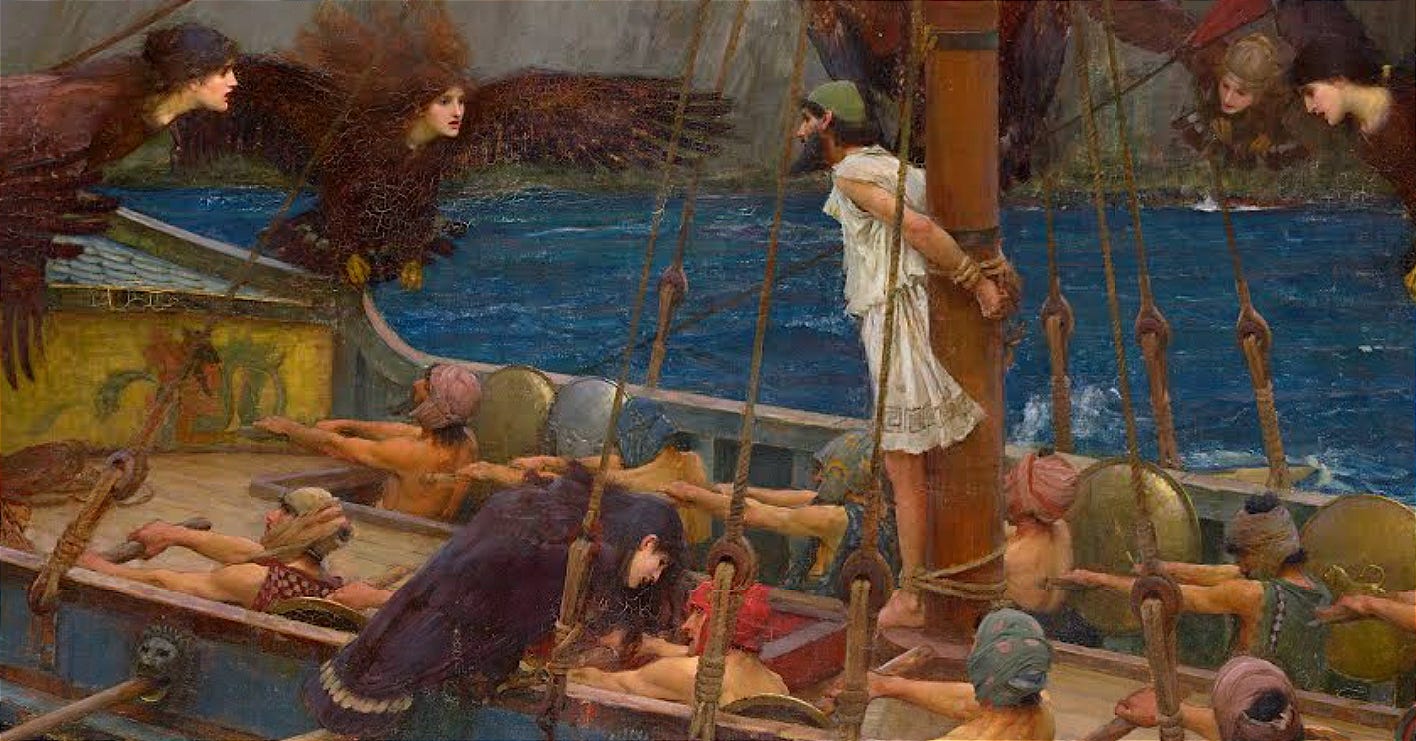
Tie the knots now, before the music begins.
Comments
Nothing yet. Say the first thing.
Sign in to join the conversation.