
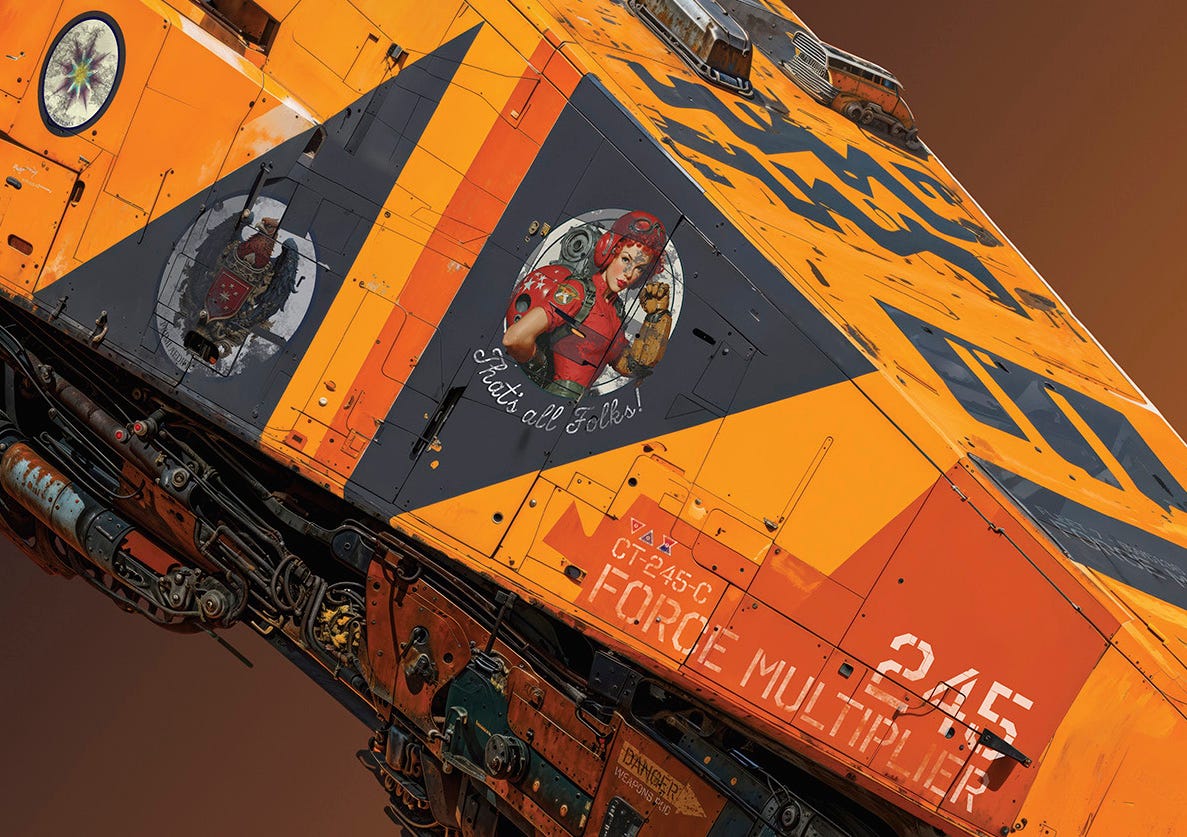
Detail from the Blackwater Strand Cutter / Multi-Roll ‘Force Multiplier’ showing (from left to right) the Cartography Department logo; the Blackwater Strand emblem; the Foss mark; the ship registry number; the ship name, and the hull number. A classic example of official markings identifying the ship, while the Foss Mark tells you something rather different about the people aboard it..
Over the last two weeks I’ve gone rather further down the nose-art rabbit hole than I expected. I started with Greek ship eyes, figureheads and Second World War bombers, then ended up with Ron Cobb’s Bug Stomper emblem from Aliens.
All of that research began with a much simpler Fleet Obscura problem: what should the crews of Fleet Seven paint on their ships?
Every vessel already has plenty of graphics. There is a ceremonial name, a short exterior hull code and a much longer technical registry recording owner, fleet, class, shipyard and production history. Add warning symbols, access markings and whatever corporate branding the owner insists upon, and the hull is hardly a blank canvas.
But none of those things really belongs to the crew.
Captain Mairead Foss does.
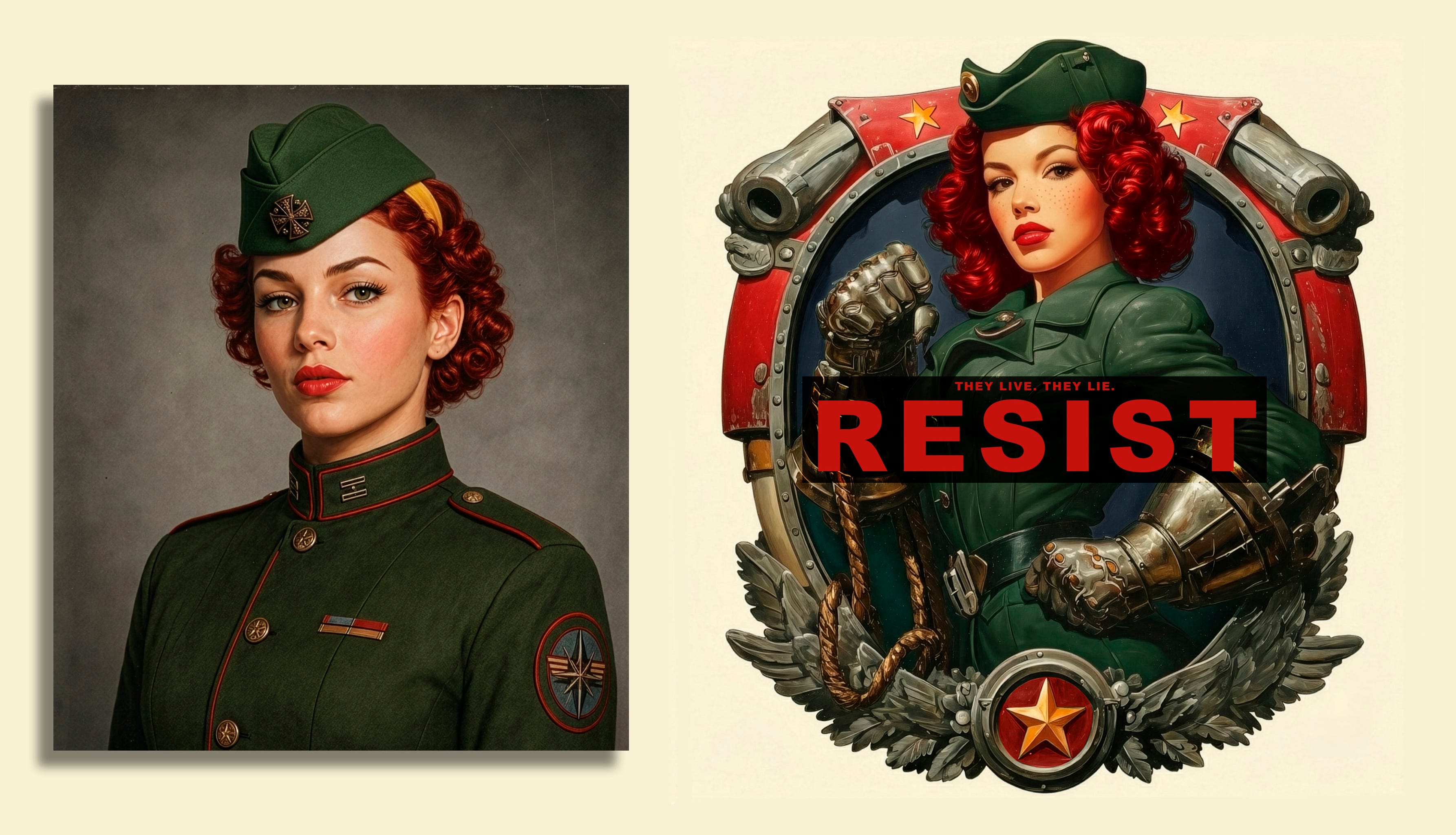
The court-martial photograph intended to condemn Foss (left) eventually became the basis of the first recorded ‘Cinder Girl Resistance’ poster (right and below).
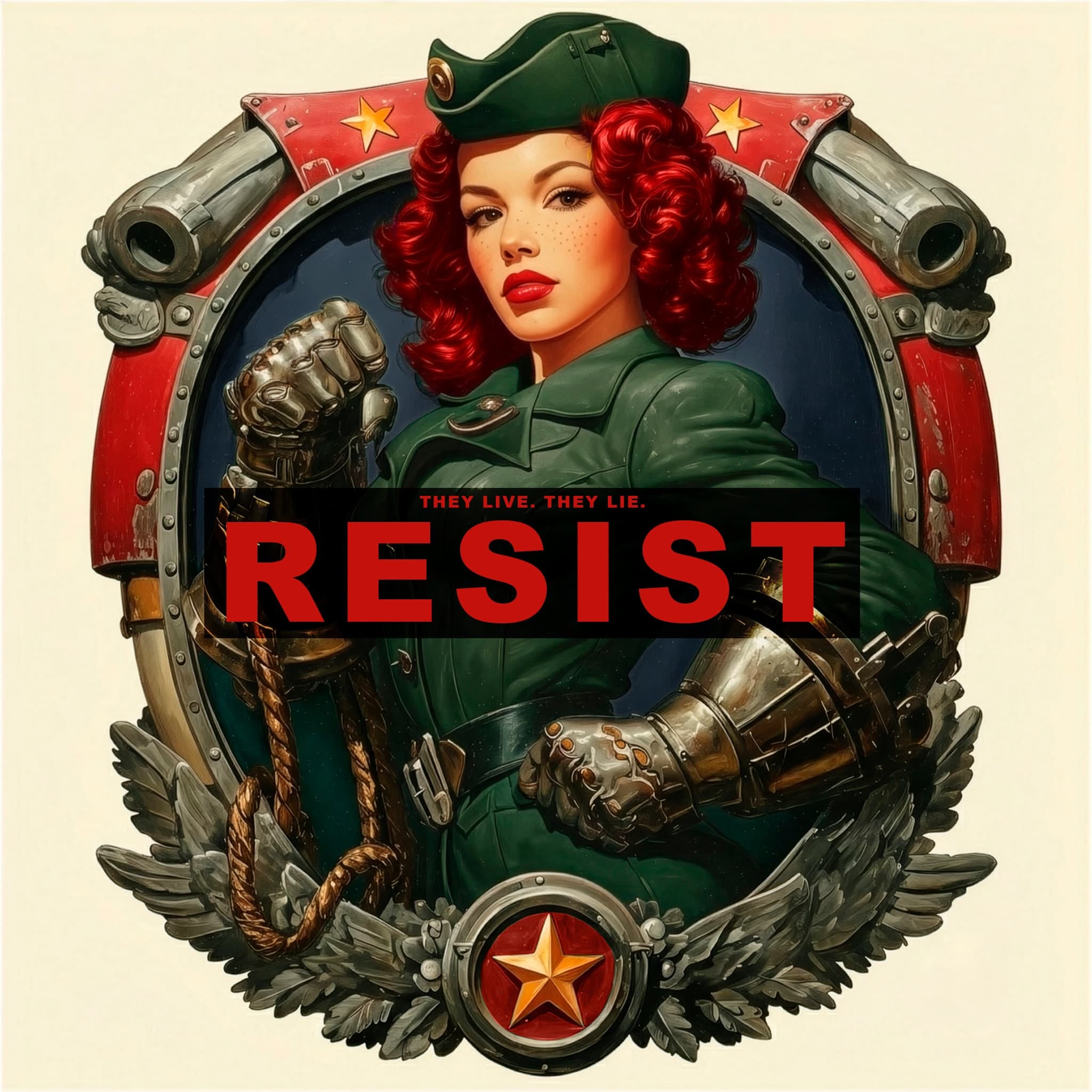
Foss has Friends Everywhere
I’ve written about Cressida before, so the short version is this: more than a century before the main Fleet Obscura stories, Ross led an assault on an industrial habitat to free civilians and restore ‘order.’ During the operation she authorized the use of a corridor-denial weapon that relied upon corrupted (intentionally?) data. Marines and civilians died; Foss survived, losing both legs, her right arm and her hair.
The institutions needed a scapegoat, and Foss fit the bill. At her court-martial she used bright red prosthetics under her drab green uniform. The courtroom photographs were supposed to identify the failed officer responsible, instead, resistance groups started copying them.
Her face appeared on underground publications, habitat walls, protest banners and illegal transmissions. The image became simpler and more exaggerated as it travelled. The feeds had already called her “Cinder Girl”; Foss eventually dropped the “Girl” and kept the rest.
What interested me when I first developed this part of her history was that the image stopped belonging to Foss or the corporations that abused her. People who had never met her could use it to mean institutional corruption, survival, defiance—or whatever else they needed it to mean.
There is a useful real-world parallel to this inversion and re-use of a public / social / political image.

David Lloyd designed the modern Guy Fawkes face for V for Vendetta. It eventually acquired a life far beyond the page.
The Guy Fawkes face most of us recognise today is David Lloyd’s stylised design for V for Vendetta. After the film adaptation, replicas began appearing at real protests and became particularly associated with Anonymous. Lloyd later said the mask worked for Anonymous because it could hide an individual identity while also standing for the group.
I love the strange circularity of that. A fictional image became a real political symbol because enough people decided that it said something about them.
The Foss Mark has a similar problem of ownership. Blackwater-Strand didn’t invent it. By the time versions begin appearing on Fleet Seven ships, Foss’s face has already spent decades being copied, simplified and argued over.
So I don’t think there should be one approved version.
In fact, the quickest way to kill the whole idea would be to issue an official vector file and Pantone references.
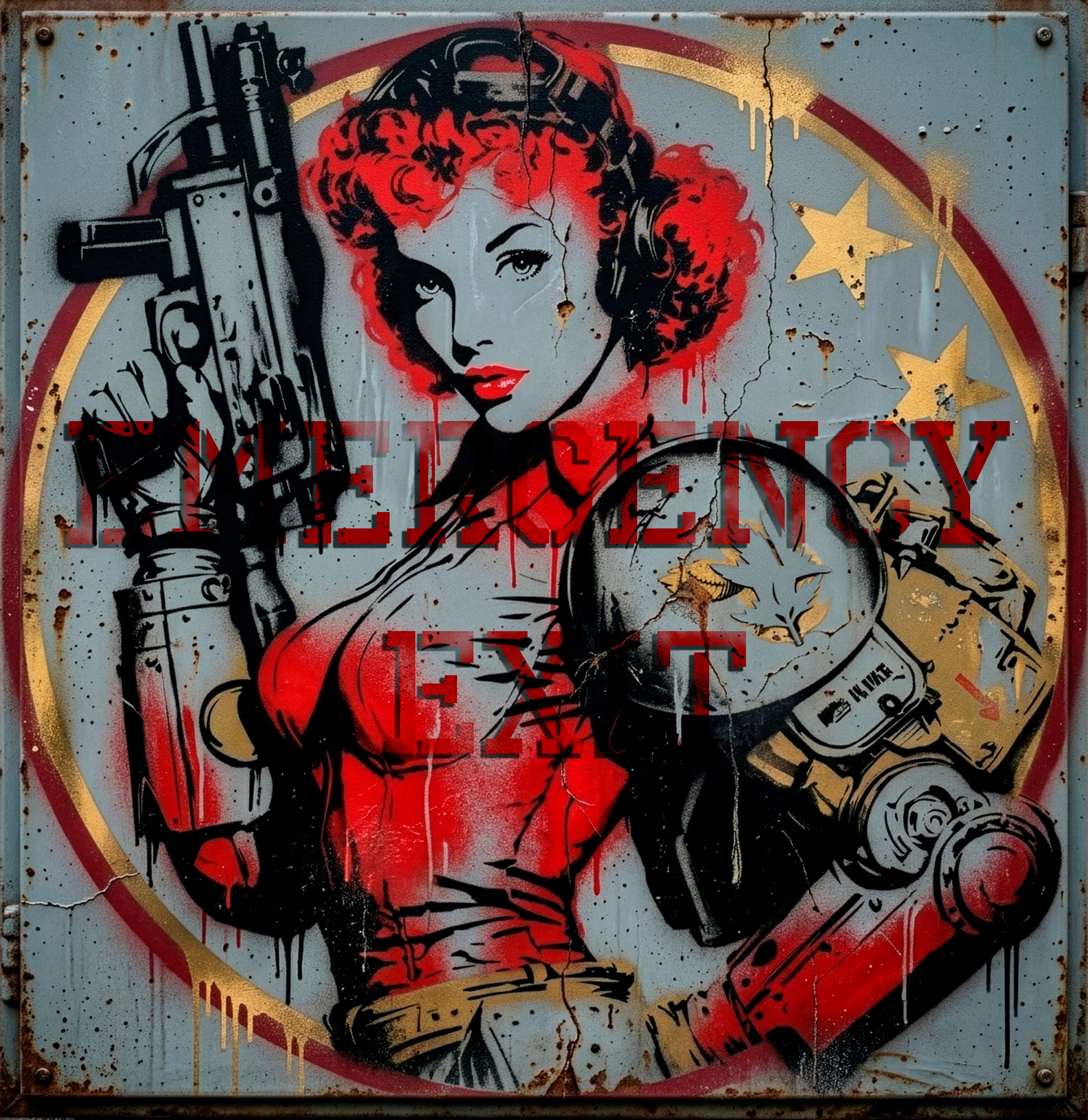
Different styles for different ships. Such variations tell us a lot about the crews that painted them. (Foss HATED the use of her in any form of religious imagery and forbade their use on Fleet 7, the only time she ever commented upon her likeness being reused)

One ship might carry a carefully painted Cinder portrait. Another might have a crude stencil that looks as though somebody made it in a machine shop after a night shift. An older vessel may have a version repaired and repainted so many times that nobody is entirely sure what the original looked like.
I’m still deciding which details have to survive every variation. The red hair probably does. The mechanical arm almost certainly does. Beyond that, I would rather let the image drift and evolve with the project.
It’s also worth remembering a perfectly repeated emblem looks like branding, whereas small differences make it look inherited.
There’s also the practical question of where you put “nose art” on a spacecraft that may not have anything we would recognise as a nose.
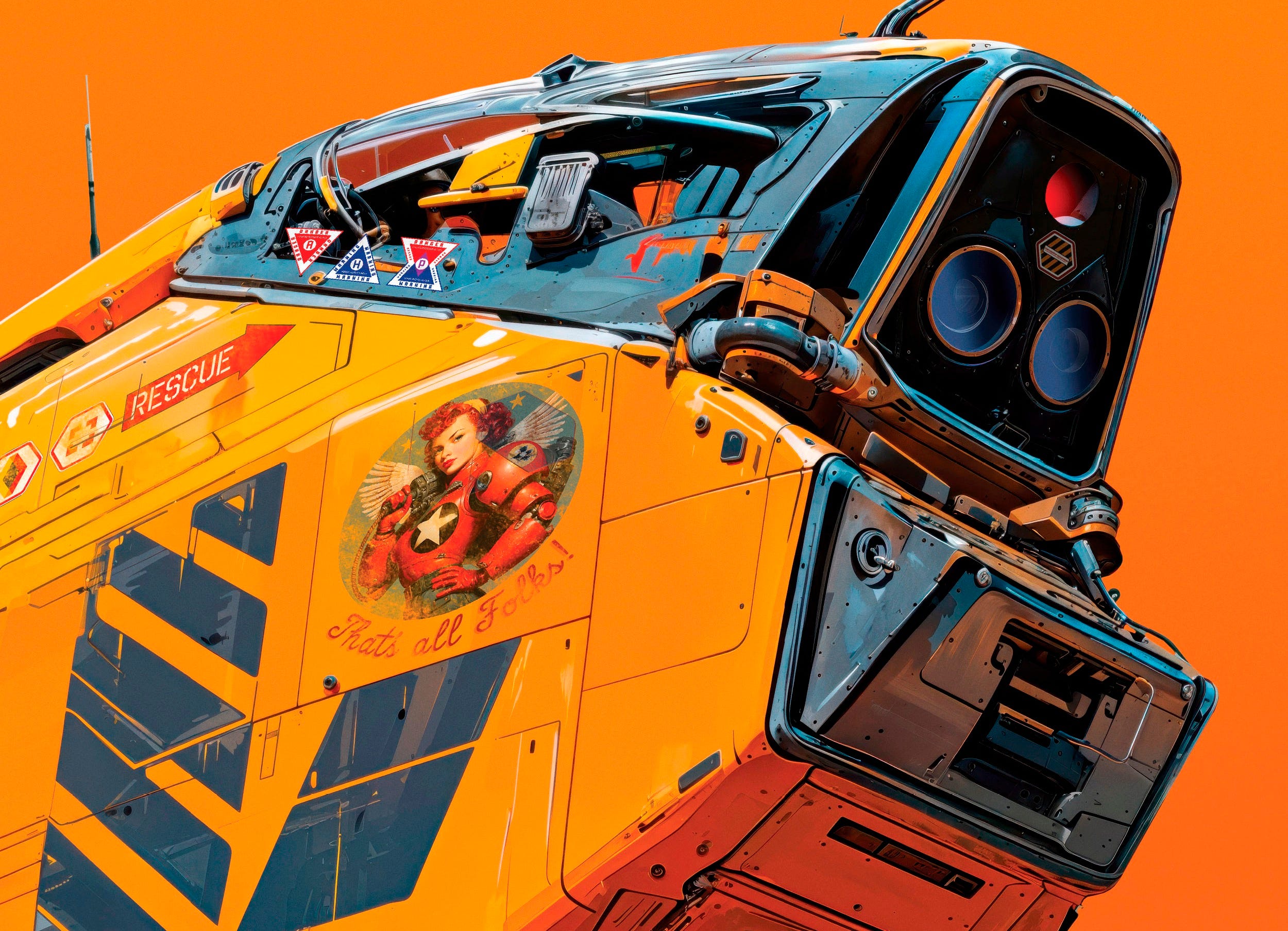
The cockpit access may be a better place for art than the nose, as it gets the most traffic and eyeballs (though I admit in this image its also on the nose, kinda …)
I keep coming back to the main boarding hatch as a great place for the Foss mark. It’s somewhere the crew passes on the way out and, if the day has gone well, they pass Foss again when they come home.
That feels closer to the old idea of the figurehead than simply putting a large portrait on the front of the ship because that is where twentieth-century aircraft put theirs.
I also suspect the official response would be bureaucratic rather than dramatic. Nobody wants to start a mutiny over paint, so unofficial markings are tolerated provided they stay clear of registry codes, thermal surfaces, sensors and emergency access.
Fleet Seven would obey those rules with exactly as much enthusiasm as required.
And that brings me back to why I started this three-week detour into nose art in the first place. A ship’s official markings can tell us who built it, who operates it and where it sits in the fleet.
The Foss Mark is less tidy. It began with an image meant to condemn her, was changed by people who rejected the official story, and eventually found its way onto ships commanded by Foss herself.
No branding department could manufacture that kind of loyalty.
Next: What cuttlefish can teach us about spaceships. Yes, really.
Comments
Nothing yet. Say the first thing.
Sign in to join the conversation.