
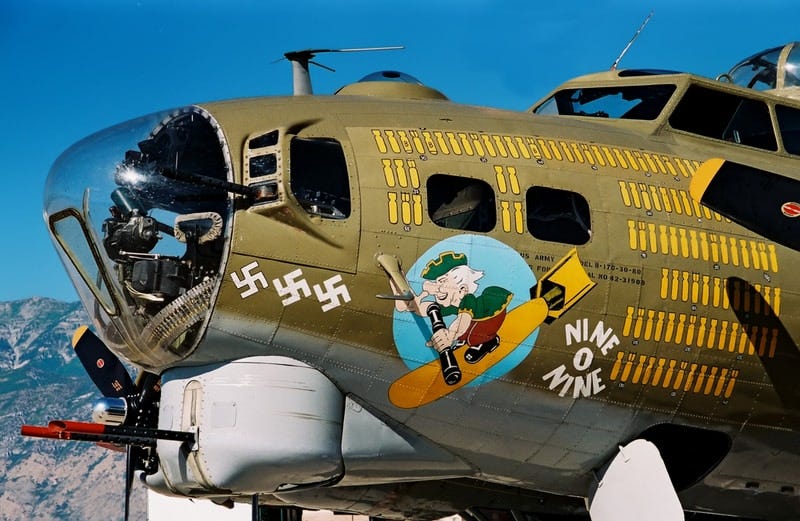
Before branding departments took control, aircraft crews made their machines unmistakably their own.
Airports have a peculiar talent for making astonishing machines look like office stationery.
Stand at almost any terminal window and the aircraft outside follow much the same formula: white fuselage, logo, tail graphic, registration number. Airlines spend fortunes making their brands distinctive, but the individual aircraft are not expected to develop personalities.
That contrast became useful while I was working out why the ships of Fleet Seven carry portraits of Captain Foss. The answer seemed obvious at first: crews mark their ships because Foss matters to them. But that only led to a larger question. Why do people keep giving vehicles faces, names and characters of their own?
A photograph of an American bomber from the Second World War offers a good place to start. There might be a pin-up beneath the cockpit, a cartoon character, a snarling animal or a joke that made sense only to the crew. Bomb silhouettes recorded completed missions. The official serial number was still there somewhere, but it was rarely the part anyone remembered.
The Second World War became the great age of aircraft nose art. Some was crude, some surprisingly accomplished, and quite a lot would never survive a modern approval process. It gave crews a shared identity and made one aircraft different from the dozens parked beside it.
The habit did not begin with bored airmen in the 1940s, and there is no neat historical line from ancient ships to wartime bombers. What history gives us instead is a recurring instinct: when people depend on a vehicle, especially in dangerous conditions, they begin to treat it as more than equipment.
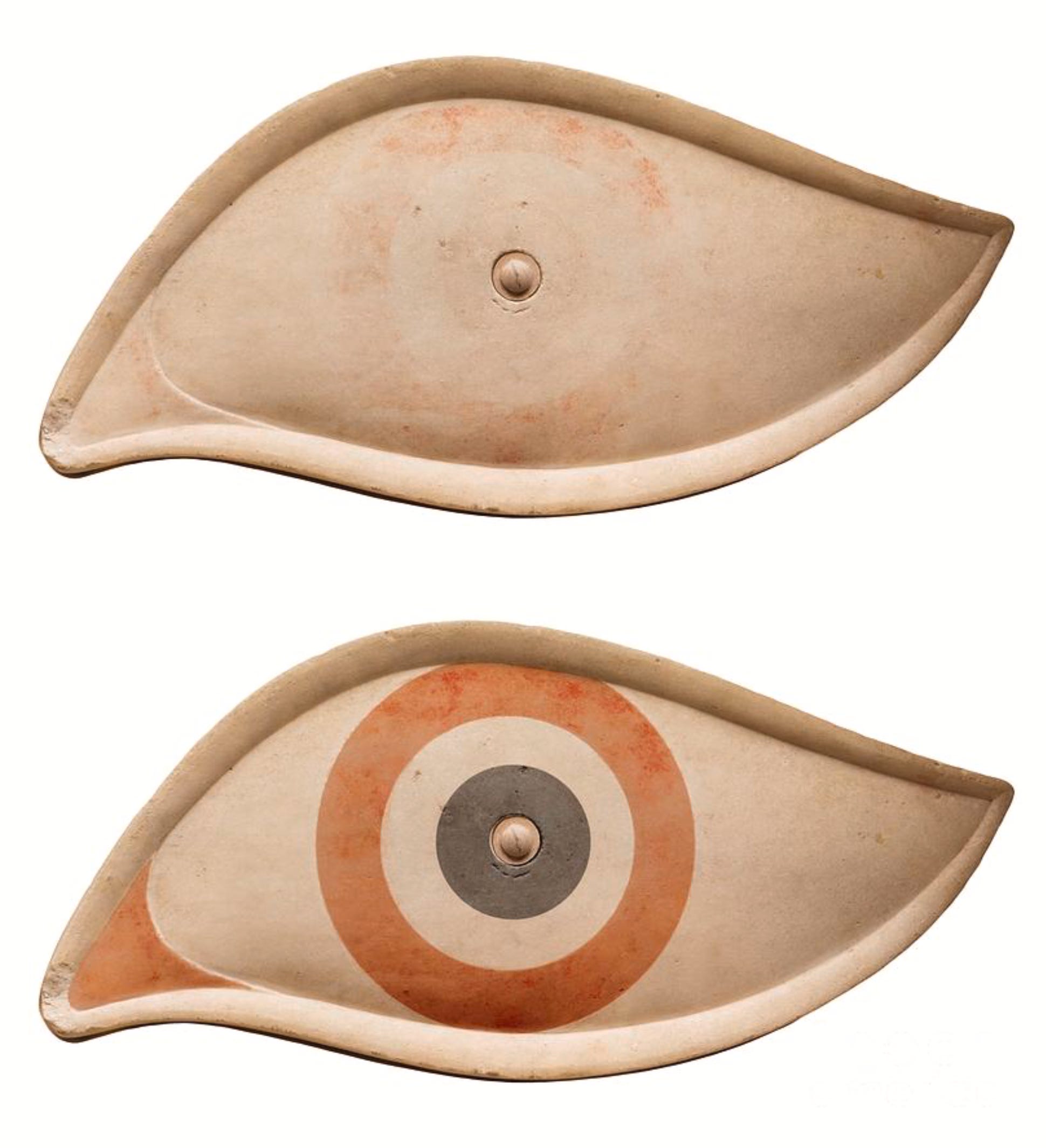
Greek ships carried ophthalmoi—eyes intended to give the vessel sight, identity and protection. These photographs are of talismanic eyes from the ancient Greek harbour of Zea, Piraeus, c.500 BC. Made of Parian marble, they once decorated the bow of a trireme. The top image is how the original eye looks today, the bottom image suggests how the eye may have looked when painted.
The ancient Greeks were unusually direct about it. Their ships carried ophthalmoi: eyes painted onto, or physically attached to, the bow. The tradition goes back at least to the Late Bronze Age, and archaeologists have found marble examples that once belonged to real vessels.
The precise meaning is difficult to recover. The eyes may have offered protection, helped the ship find its way, or simply made the bow seem alive. Whatever the explanation, the ship had a face.
European sailing ships later carried carved figureheads—rulers, heroes, animals, saints or figures associated with the vessel’s name. Owners used them to display power and identity. Sailors often expected rather more from them: luck, protection and, ideally, a safe return.
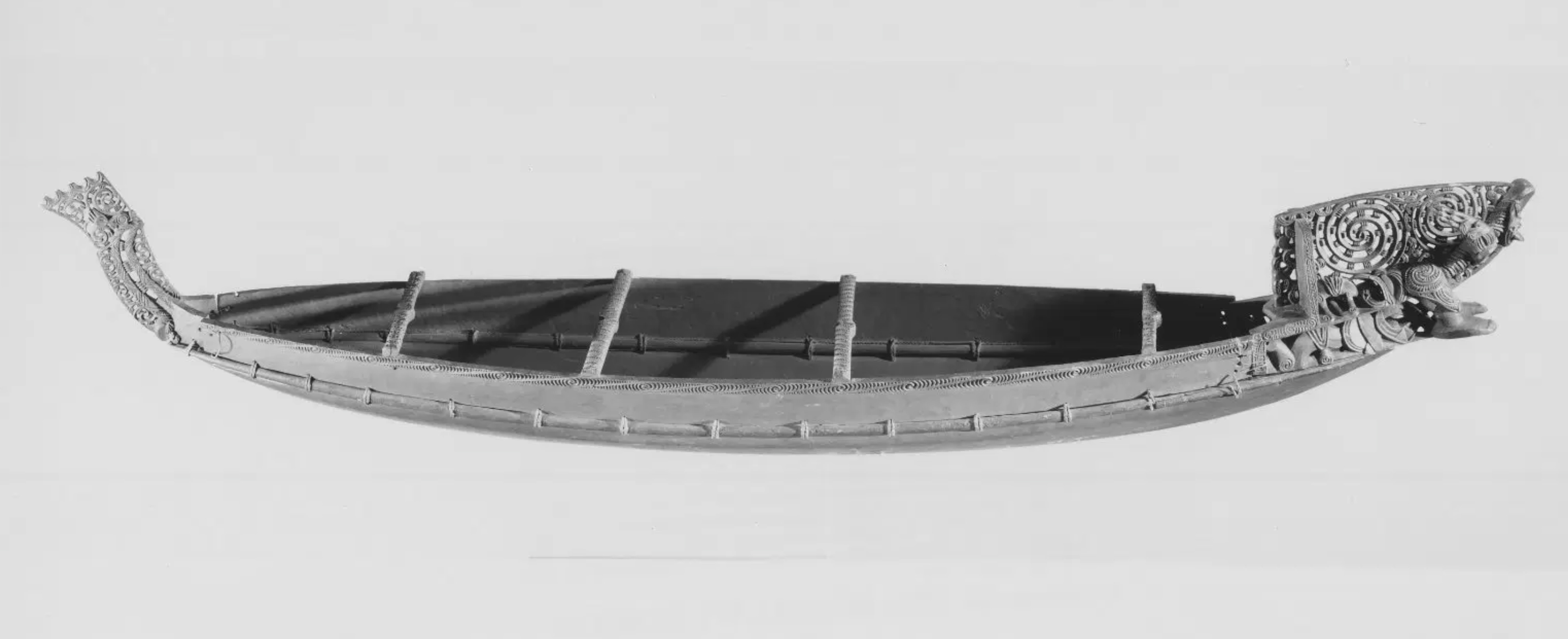
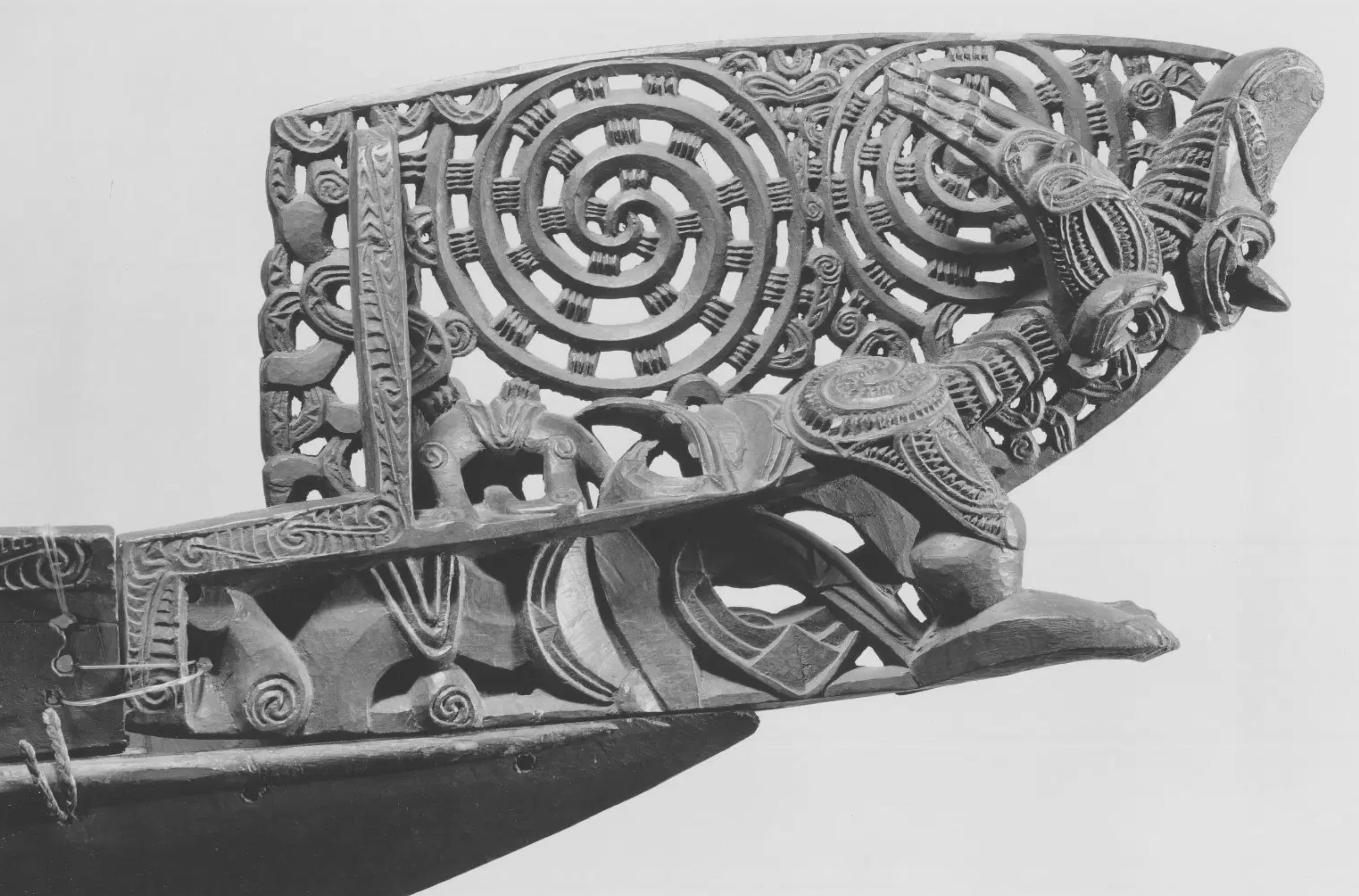
The carved prow of a Māori waka taua could express ancestry, spiritual protection, prestige and military power.
The same broad instinct appeared far beyond Europe. Māori waka taua carried elaborately carved tauihu at their prows. One surviving example represents Tūmatauenga, the god of war, warning Tangaroa, the god of the sea, that humans are entering his realm.
A waka was not merely transport. It could be a public declaration of ancestry, prestige, spiritual authority and military strength.
These objects did not all serve the same purpose. Some were guardians. Some were warnings. Some announced rank, ownership or tribal identity. What they share is the urge to give a vehicle a presence of its own.
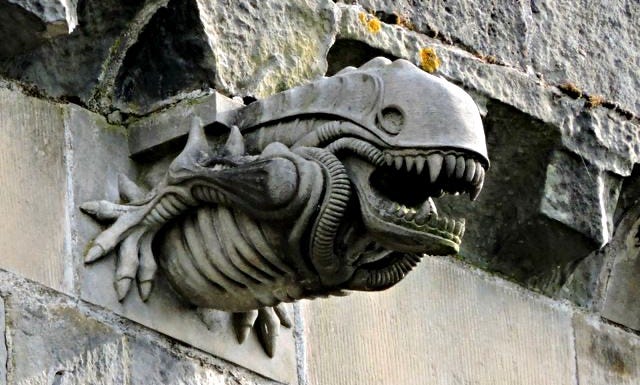
Paisley Abbey’s most famous modern gargoyle is based on H. R. Giger’s creature from Alien. It also performs the perfectly respectable architectural job of directing rainwater away from the building, which is nice.
As an architect, I am particularly fond of the fact that buildings attract exactly the same behaviour.
During restoration work at Paisley Abbey in Scotland in 1993, stonemason David Lindsay helped develop twelve new gargoyles inspired by contemporary culture. Having watched Ridley Scott’s Alien more times than was probably advisable, he included a sketch based on H. R. Giger’s creature.
He expected it to be rejected.
It was approved.
The result is a fully functioning stone Xenomorph directing rainwater away from a medieval church. Contrary to the story that circulates online, it was not secretly smuggled onto the building. The client saw the drawing and apparently decided that an acid-blooded extraterrestrial killing machine was perfectly suitable ecclesiastical drainage equipment.
They were right.
A Gothic cathedral does more than keep out the weather. It projects faith, mystery, authority and occasionally terror. A courthouse tells you to take the institution seriously before anyone has spoken. A bank would very much like you to believe it will still be there on Monday morning.
Buildings start communicating before we enter them. So do vehicles.

The modern airliner still carries an identity, but it is usually the identity of the company rather than the crew.
Modern transport has not lost this visual language, but it has placed most of it under institutional control. Figureheads and personal guardians have largely given way to liveries, logos, typefaces and branding manuals.
An airline may give individual aircraft names, but visually they belong to the company. Passengers are meant to recognise the airline, not wonder what the ground crew at Gate 23 have painted beneath the cockpit.
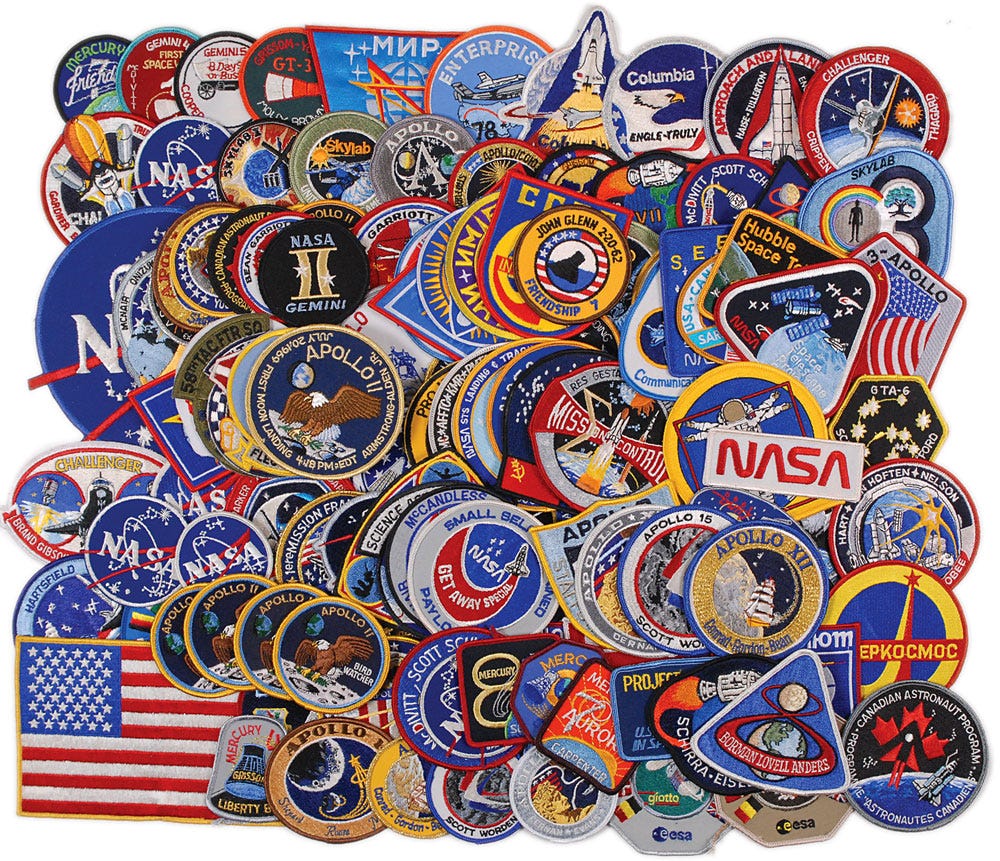
Mission patches and squadron badges allow tightly controlled institutions to preserve a small area of collective identity.
Military crews have never entirely surrendered the older habit. Squadron badges, unofficial names, mission markings and small pieces of artwork still appear whenever regulations and commanding officers leave enough room.
Astronauts do something similar with mission patches. Each one gives a particular crew and journey an identity beyond the hardware and mission number.
The attachment is practical before it becomes sentimental. Your aircraft, ship or vehicle is the thing expected to bring you home. Naming it, marking it and giving it a character is one way of making an industrial object feel like part of the group.
Nose art is not just decoration applied after the engineers have finished. It is the point where a standard machine acquires jokes, memories, loyalties and a reputation.
Next week, I’ll look at one of the best examples ever put on film: a battered military dropship named Bug Stomper, and the small patch of artwork that makes it feel more convincing than many spacecraft given considerably more screen time and money.
Comments
Nothing yet. Say the first thing.
Sign in to join the conversation.