
Hello from Brooklyn! Today, I wanted to pull back the curtain on my writing process and talk about how I build a character from the outside in.
The worldbuilding usually comes easily; I can design a ship, decide who manufactured it, work out how the engines operate and establish the political system that sent it into space. The people are harder. I often need to begin writing a story before I properly understand who they are, how they speak or what they believe.
One thing that has helped is character symbolism: using a physical object, costume, habit or recurring visual detail to express something about a character without explaining it directly.
Walter White’s black pork-pie hat in Breaking Bad marks the emergence of Heisenberg. Batman’s cowl and armor turn Bruce Wayne’s trauma, fear and need for control into something physically visible. The object does not simply belong to the character; it carries part of the character for them.
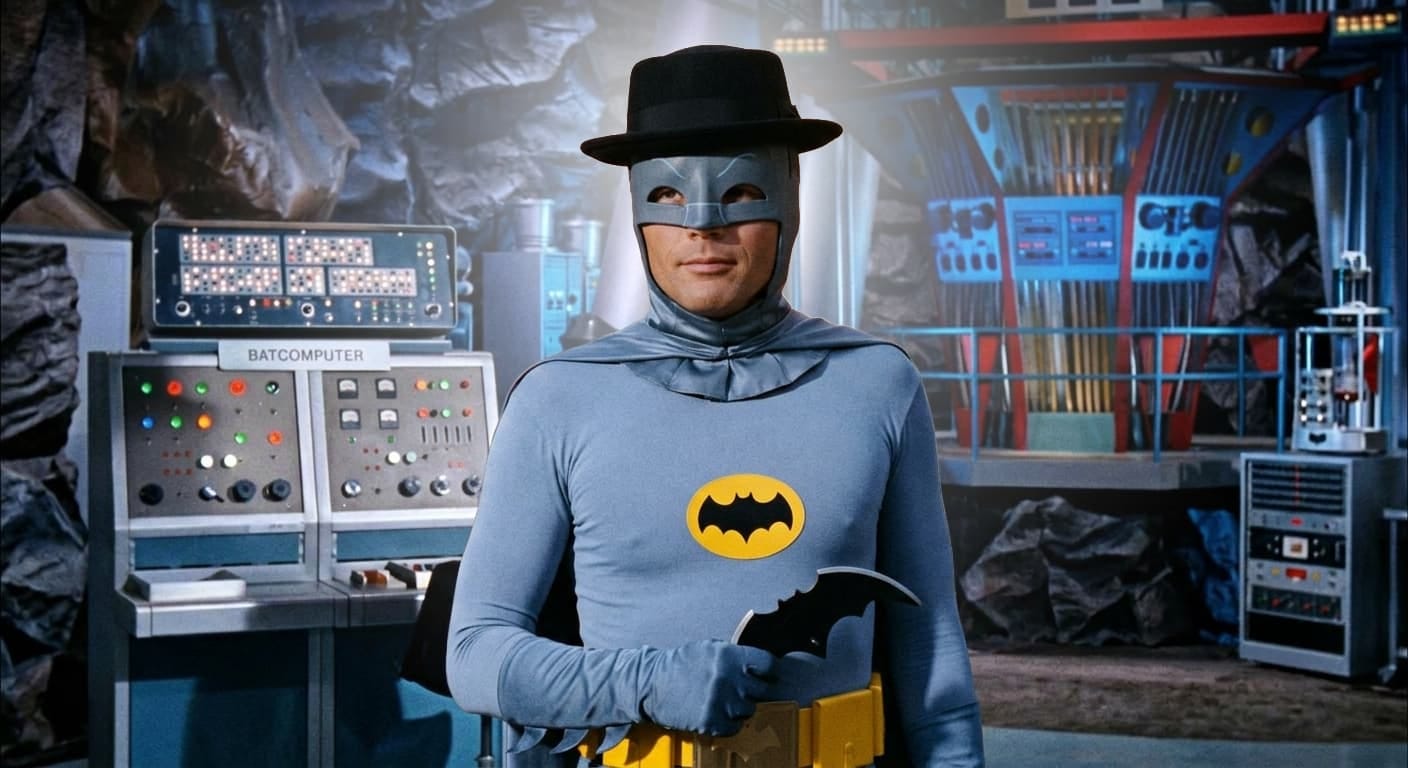
Walter Wayne - where Batman’s money really comes from.
When I began thinking about who should captain the Skunk Buzzard, I had a role but not yet a person. I knew the ship was old, modular, battered and still working long after a more sensible owner would have replaced it. Its captain needed to feel as though she belonged there.
I began to picture someone who had suffered catastrophic injuries but rejected the opportunity to have them concealed by future technology. She could have had her scars removed. She could have replaced her machinery with seamless biological reconstruction or prosthetics designed to imitate an undamaged body. Instead, she chose to remain visibly rebuilt.
That decision gave me the beginnings of Captain Mairead Foss, along with a physical object around which I could build her appearance, history and personality: her obsolete red mechanical limbs.
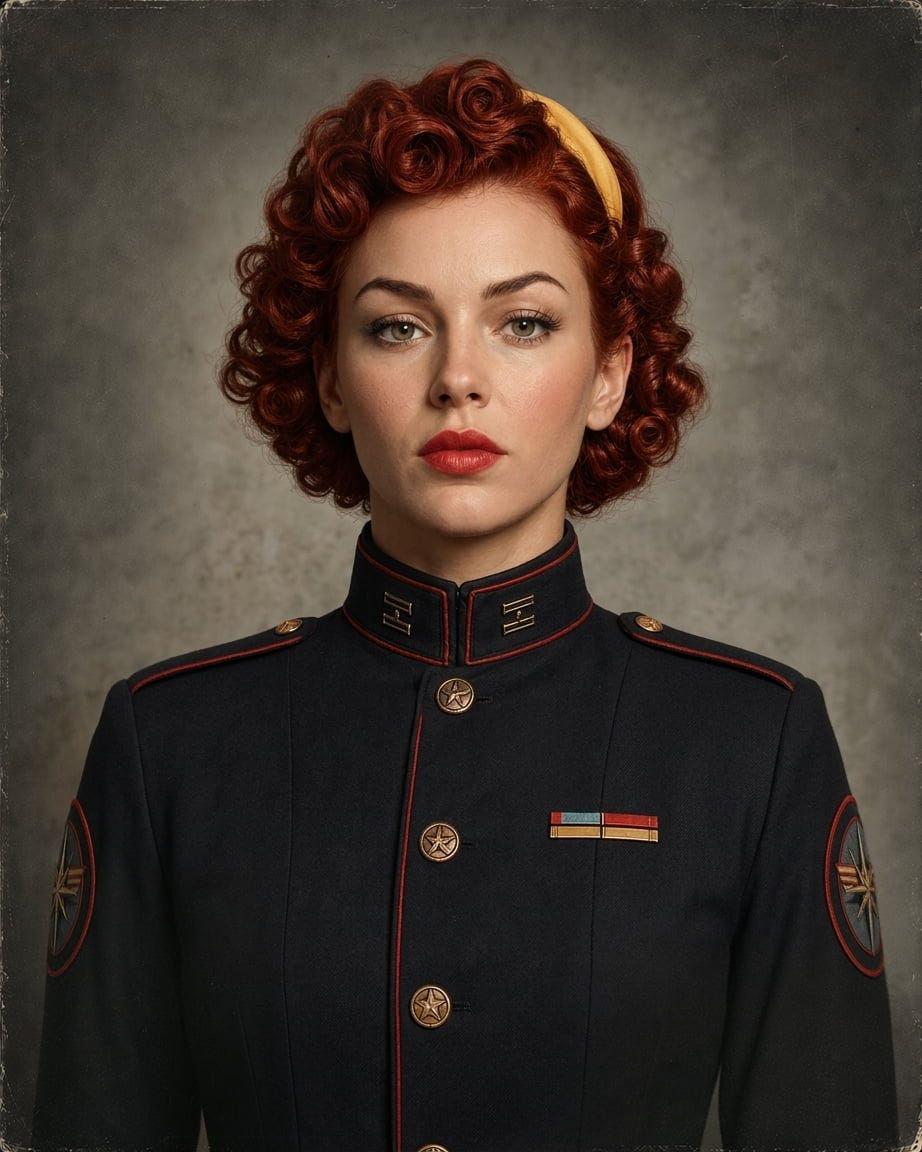
Second Lieutenant Mairead Foss after completing orbital assault training; before Cressida, before she became ASH-1
The visual design of her arm was partly inspired by General Electric’s Hardiman exoskeleton program from the 1960s:
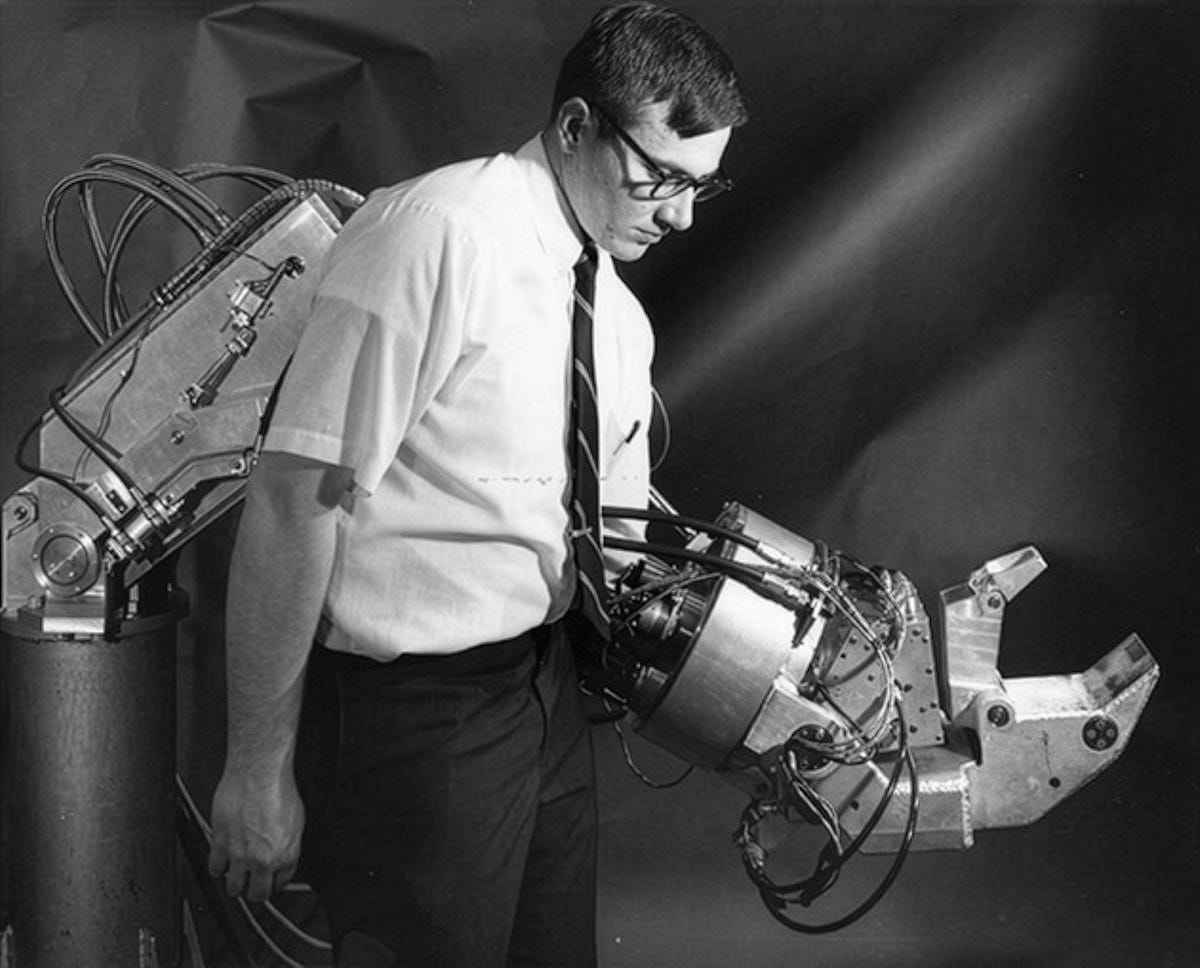
An unpowered General Electric development rig was used for kinematic studies during the Hardiman exoskeleton program from 1971. Unfortunately, the exoskeleton never progressed beyond the prototype stage due to its weight, instability, and power supply issues. Interestingly, a 1971 report on the project described some unexplained bugs, including what was referred to as “violent and uncontrollable motion by the machine,” which is what the phrase “no shit Sherlock” was invented for.
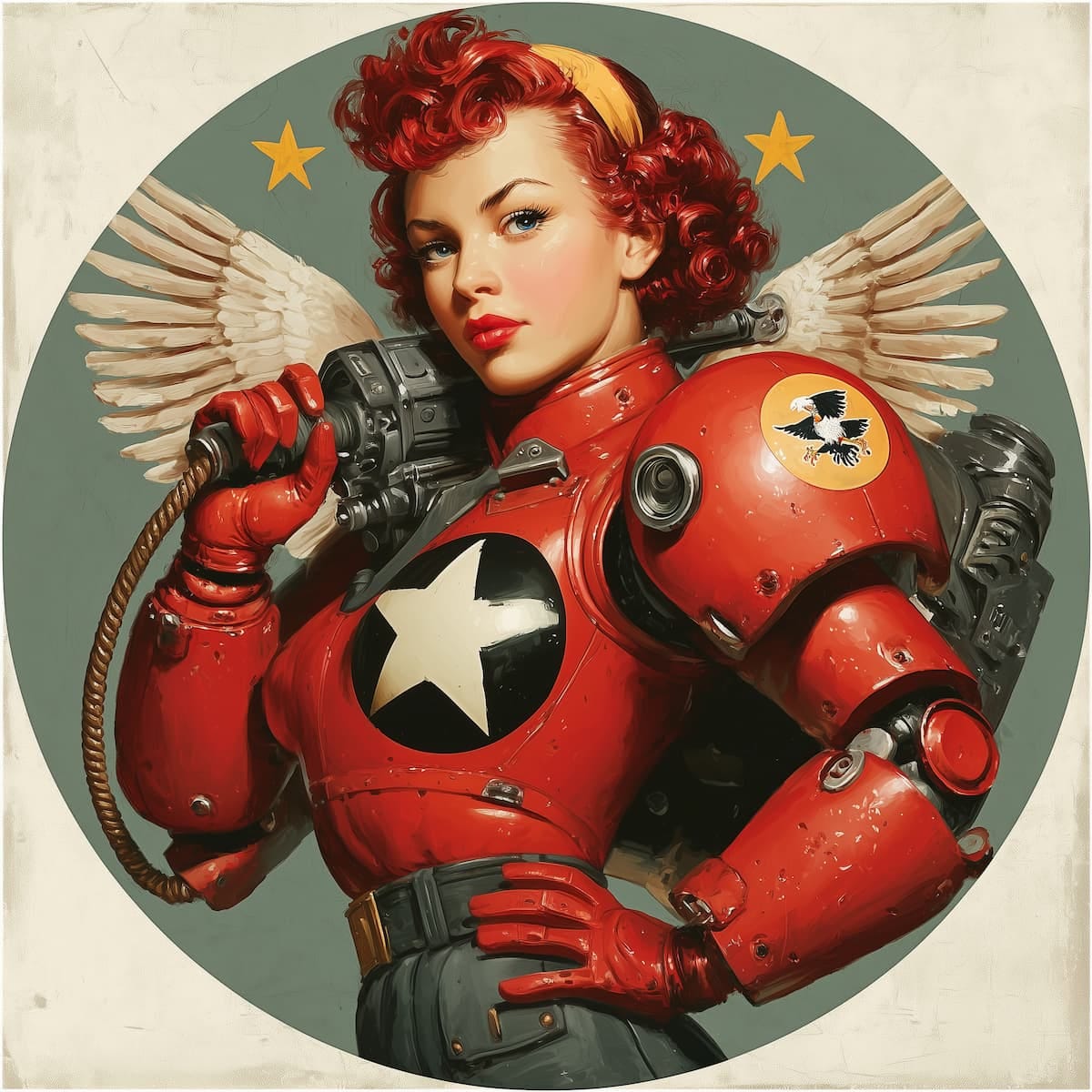
Captain Mairead Foss as public mythology remembers her; the look which became ASH 1’s calling card—younger, cleaner and more heroic than the reality.
What interested me was not simply the promise of mechanical strength. It was the bluntness of the design. The machinery is all outside: the joints, hinges, cables and structural members are exposed. There is no convincing attempt to make it elegant or human. You can see where the force travels and, at least broadly, understand how the mechanism is supposed to work.
It looks engineered rather than styled.
Science fiction has always loved powered suits and exoskeletons. They usually offer a fairly straightforward fantasy: place an ordinary human inside a machine and make them stronger, faster and substantially more difficult to kill.
Foss’s machinery needed to do something different. Her prosthetics are powerful, but their more important function is symbolic. They do not allow her to escape what happened. They ensure that neither she nor anyone around her can pretend it has disappeared.
More than a century before the main Fleet Obscura stories, Foss was a young officer in the orbital assault Marines during a scarcity war around Europa. She led a breach operation into an industrial habitat called Cressida. The mission relied on maps and targeting information supplied through Cartography. The maps were wrong before the operation began.
Foss authorised the deployment of a corridor-denial weapon known as Glassmaker. It was intended to clear a contained section of the habitat. Instead, faulty mapping data and Cressida’s own environmental systems transformed the deployment into an atmospheric firestorm.
Foss’s Marines died. Civilians died. Large sections of the habitat burned. Foss survived, although not intact: she lost both legs, her right arm and all her hair. She was pulled from the wreckage and rebuilt using what was then state-of-the-art military prosthetic hardware, clad in gloss red titanium.
The machinery initially replaced what the fire had taken. Over time, it became something much larger.
The military and political systems behind the operation needed one recognisable person to blame. The weapons contractor, the intelligence structure, Cartography and the senior command hierarchy could remain conveniently abstract if the public were given a single damaged body to associate with the disaster.
The feeds called her Cinder Girl. It was the perfect tabloid name: short, cruel and simple enough to reduce a complicated political and military catastrophe to one burned young woman. Foss eventually removed the word Girl and kept the rest. She became Cinder.
By the time we meet her, the original prosthetics are old, scratched and technologically obsolete. They are no longer the best equipment available. Medicine and human reprinting could provide her with replacement limbs indistinguishable from those she lost. She refuses, because the red machinery is not evidence that future technology failed her. It is evidence that Foss made a choice.
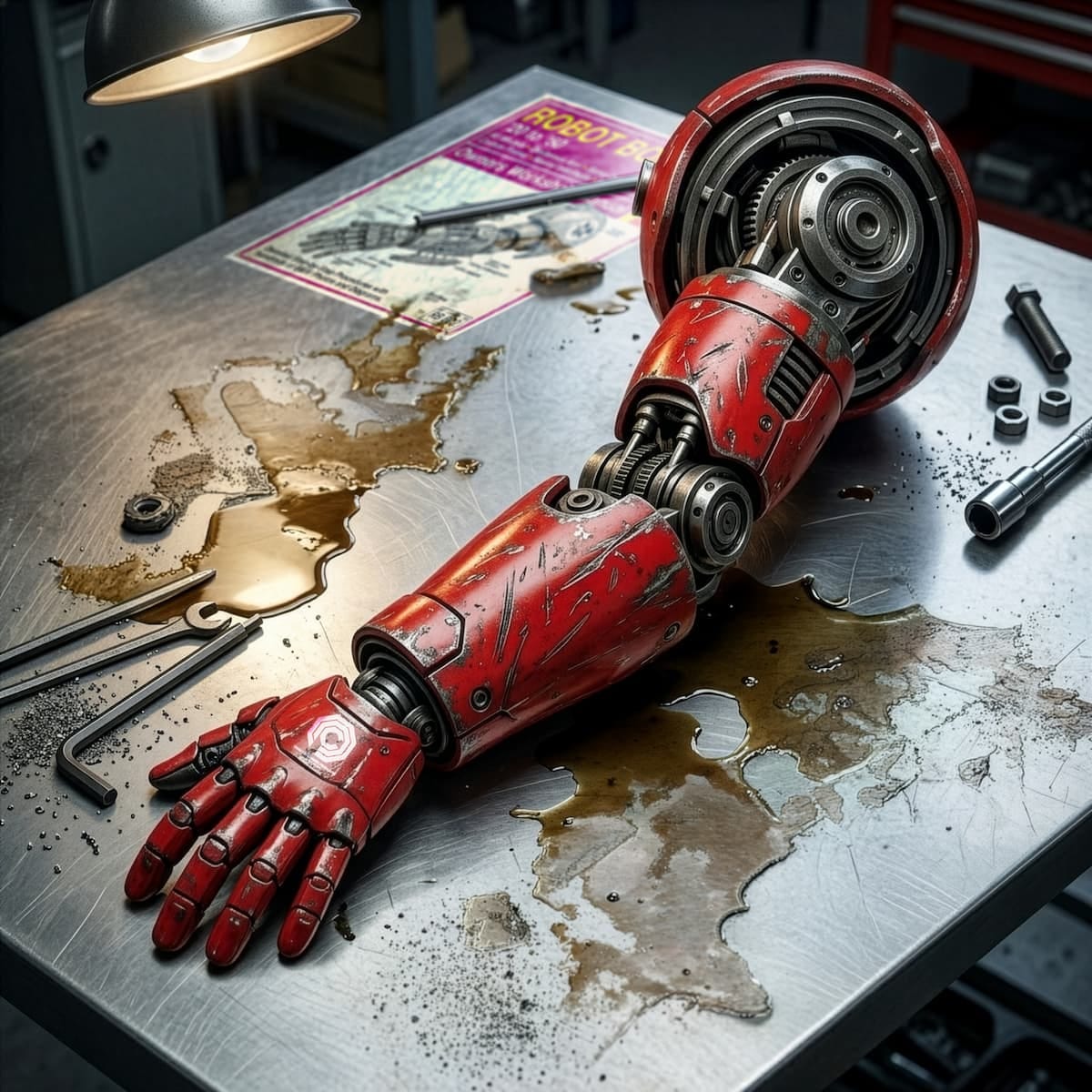
Just a little lube job
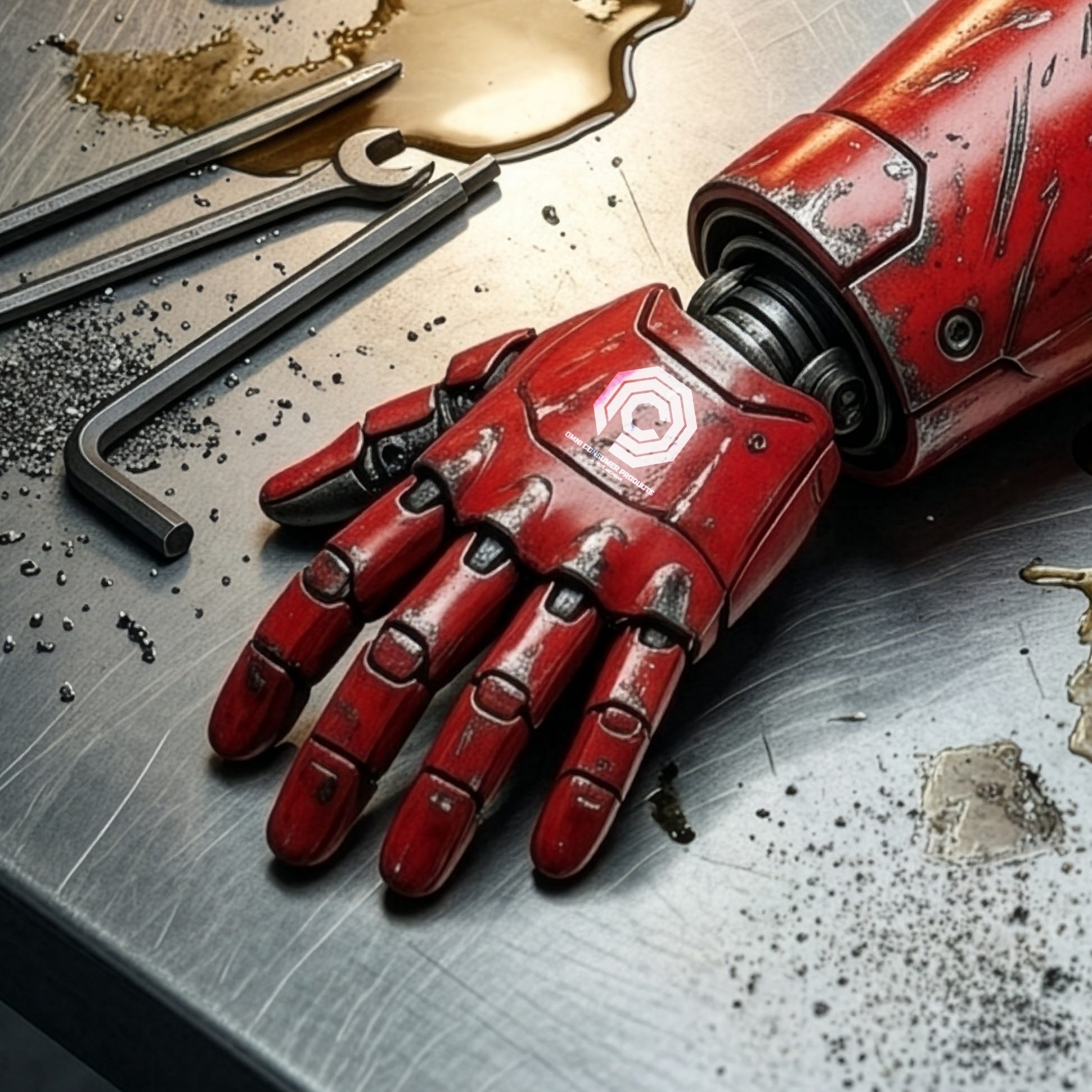
Arms brought to you by Omni Consumer Products (OCP) - Detroit’s premier robot construction and police replacement corporation
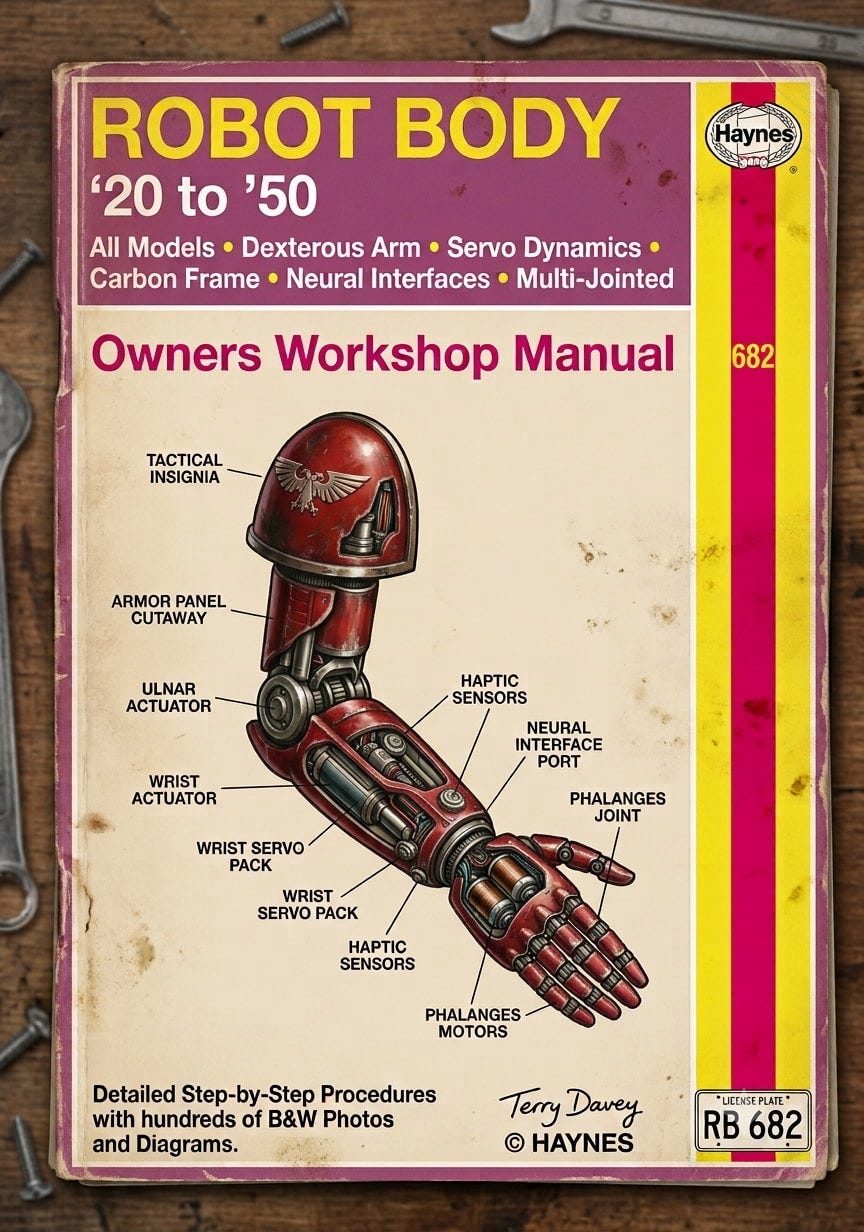
Everything you need for a self service
She wears her past where everyone can see it. The limbs remind her of the Marines who followed her into Cressida, and they remind her that the information she received had been manipulated. They also remind her of the part she cannot comfortably assign to anyone else: however corrupt the system was, she was still the officer who gave the order.
That contradiction became the centre of her character. Foss was scapegoated, but she was not innocent. The maps were wrong, the mission was compromised and the institution abandoned her afterwards. None of that changes the fact that her voice authorised the weapon.
At the court-martial, she was asked about the failure of Glassmaker. Her answer was:
“The weapon functioned as designed.”
The line was reported as arrogance. It was really an accusation.
Foss does not hate machines. Quite the opposite. She admires their lack of moral camouflage. A machine does not invent an excuse after the event, revise its memory or quietly transfer responsibility down the chain of command. It processes the instructions, categories and parameters it has been given.
The corruption happens before the output. It happens in the language used to frame the problem: altered maps, dishonest classifications, selective data and technical descriptions designed to make a human decision appear inevitable.
The machine may produce an honest result from a dishonest premise. That is what Foss distrusts.
A predictive model can turn death into a percentage. A briefing can rename civilians as environmental obstructions. A map can redirect a ship while allowing the person who changed it to remain millions of kilometers from the consequences.
Foss’s own machinery does the opposite of concealment: it makes consequence visible. Her prosthetic limbs are red. Her artificial hair is red. The machinery strikes the deck plating when she walks, and she makes no attempt to hide the sound. She could make herself appear uninjured, but that would allow other people to treat Cressida as something safely concluded. She has no interest in making the past comfortable.
The image of Foss at her court-martial became almost as important as the event itself. She was photographed in her new red military prosthetics: young, visibly reconstructed and surrounded by the institutions that had decided to place her on trial.
The official image was intended to show the person responsible for Cressida. It presented Foss as the failed officer, the damaged survivor and a warning to anyone else who might challenge the official account.
Instead, resistance movements and underground groups began using the image for themselves.
Copies appeared on underground publications, habitat walls, protest banners and illegal transmissions. The image was simplified and exaggerated until Foss became less a specific person than a symbol: a woman physically dismantled by the institutions she had served, rebuilt by the same system and then punished for surviving it.
The authorities had intended the image as condemnation. Their opponents turned it into an accusation.
The process is similar to the way the stylised Guy Fawkes mask moved beyond V for Vendetta and became a widely recognised symbol of resistance and anti-establishment protest. Many of the people using Foss’s image knew very little about Cressida. Some probably misunderstood it completely. That is what happens to powerful symbols: they stop belonging to the person at their centre.
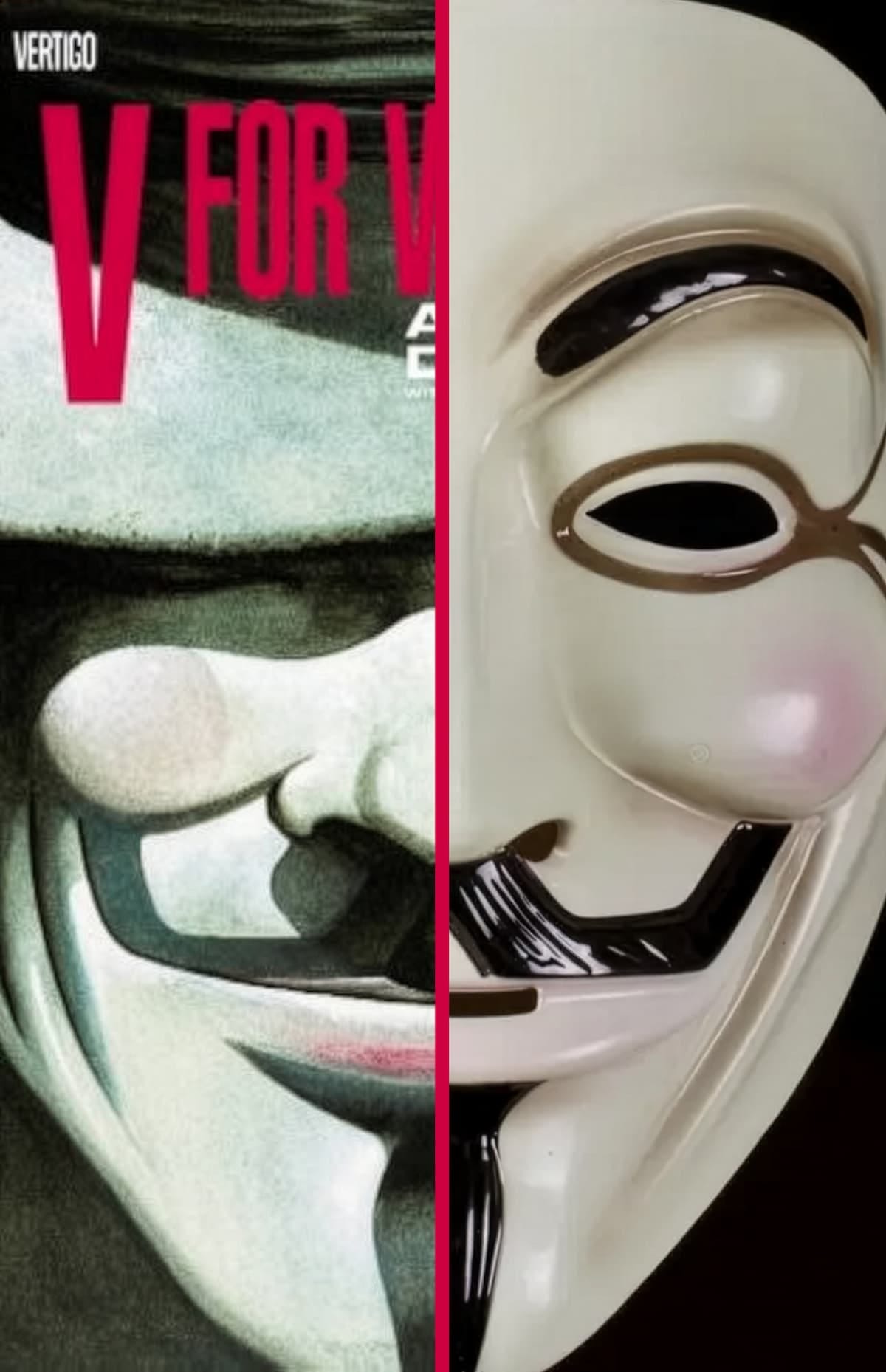
Growing up in the UK I loved Guy Fawkes night long before Alan Moore dived into the history to create the magnificent V for Vendetta. I’m sure he was as surprised as me to see the mask become such a symbol of resistance (while being produced by mega corporations in china factories ... such is life)
The feeds gave her the name Cinder. She kept it. The military gave her replacement limbs. She refused to replace them. The court-martial gave the public an image intended to destroy her. Resistance groups turned it into an emblem of what institutions can do to an individual when their machinery, language and authority all point in the same direction.
Foss never asked to become that symbol. She would probably be deeply suspicious of anyone who treated her as one. But she understands why the image survived.
Once I had that, I understood how she would command the Skunk Buzzard—and, eventually, Fleet Seven. She would be blunt, suspicious of polished explanations and fiercely protective of anyone serving beneath her. She would trust a machine to follow an instruction, but interrogate every word used to construct that instruction. She would read the underlying data rather than accept the summary and assume that missing information had been removed deliberately.
Most importantly, she would never allow a junior officer to be sacrificed as neatly as she had been.
The General Electric exoskeleton helped me find the physical language for Captain Foss: visible joints, exposed machinery and strength that looks industrial rather than magical. Character symbolism gave that machinery meaning.
Foss could have erased almost every visible trace of Cressida. Instead, she kept the red limbs, the artificial hair and the name intended to destroy her.
Captain Foss does not remain visibly mechanical because the technology cannot repair her. She remains visibly mechanical because other people would prefer her history to disappear.
She has no intention of allowing that.
What do you think of Captain Foss’s choice? Does her refusal to hide her scars make her a stronger leader, or is she letting her past compromise her future?
If you write or create, how do you use physical objects to tell your characters’ stories? Let’s talk about it in the comments.
Comments
Nothing yet. Say the first thing.
Sign in to join the conversation.