
I still remember the chicken burrito that ended it all in 2015. I used to love chicken: usually covered in fat such as chicken Kiev, chicken cordon bleu, but also chicken breast in a stir fry. For sure it was my go-to in tacos, casseroles, and salads. So I didn’t think twice when I ordered a burrito at a famous Costa Rican joint in Chicago. I got my regular to-go option that I took with me to eat in my car while waiting 20 minutes for my niece to descend the escalator of the train station.
I parked with my eye kitty-corner to the station escalator waiting for her arrival. Then I opened my still-warm burrito: chicken, rice, cheese, onions, tomatoes, spices. I took one bite and thought, ‘Huh, I remember this as tasting better.’
I took another bite and I bit on something that was an undeniable mash of joint, knuckle, and/or cartilage that made my stomach contract and my gag reflex kick in. It reminded me why I never ate drumsticks. I didn’t like having to eat around all those ligaments, remnants of something living, moving, breathing.
I put it behind me. I had swallowed other thoughts before about what I was really eating. I had made mediocre peace pretending I didn’t know what was in that burrito, nugget, or salad. Oddly, salad was the easiest when pretending: it usually looked all rosy-white and pristine. But sometimes I could see those red veins in those processed chicken chunks, revealing what I really already knew in the pit of my stomach. But I was a resilient soldier eating chicken like a good girl because chicken is as all-American as that other “don’t ask, don’t tell” food: hot dogs.
I would poke around the chicken with my fork, distinctly off-put, but continue eating around it, moving on…because chicken is healthy, right?
So, per my habit, I forged on, bringing the burrito back up to my mouth for a third bite, but the smell was suddenly overwhelming. All I can say is that it smelled like rotting flesh, stewing with blood and feces and oil, and my body couldn’t do anything but start to throw up. I whipped myself out of the car and threw up in the garbage can, luckily available right next to the car.
It was quick and visceral and a total expulsion.
I was immediately physically fine afterwards. No lasting food poisoning or sickness, just a rapid, complete rejection of having that smell, that taste, that experience, that feeling anywhere near me.
Although physically fine, as I gained my composure, my brain had registered the experience and I wondered, “What the heck was that? What just happened here? What is going on?”
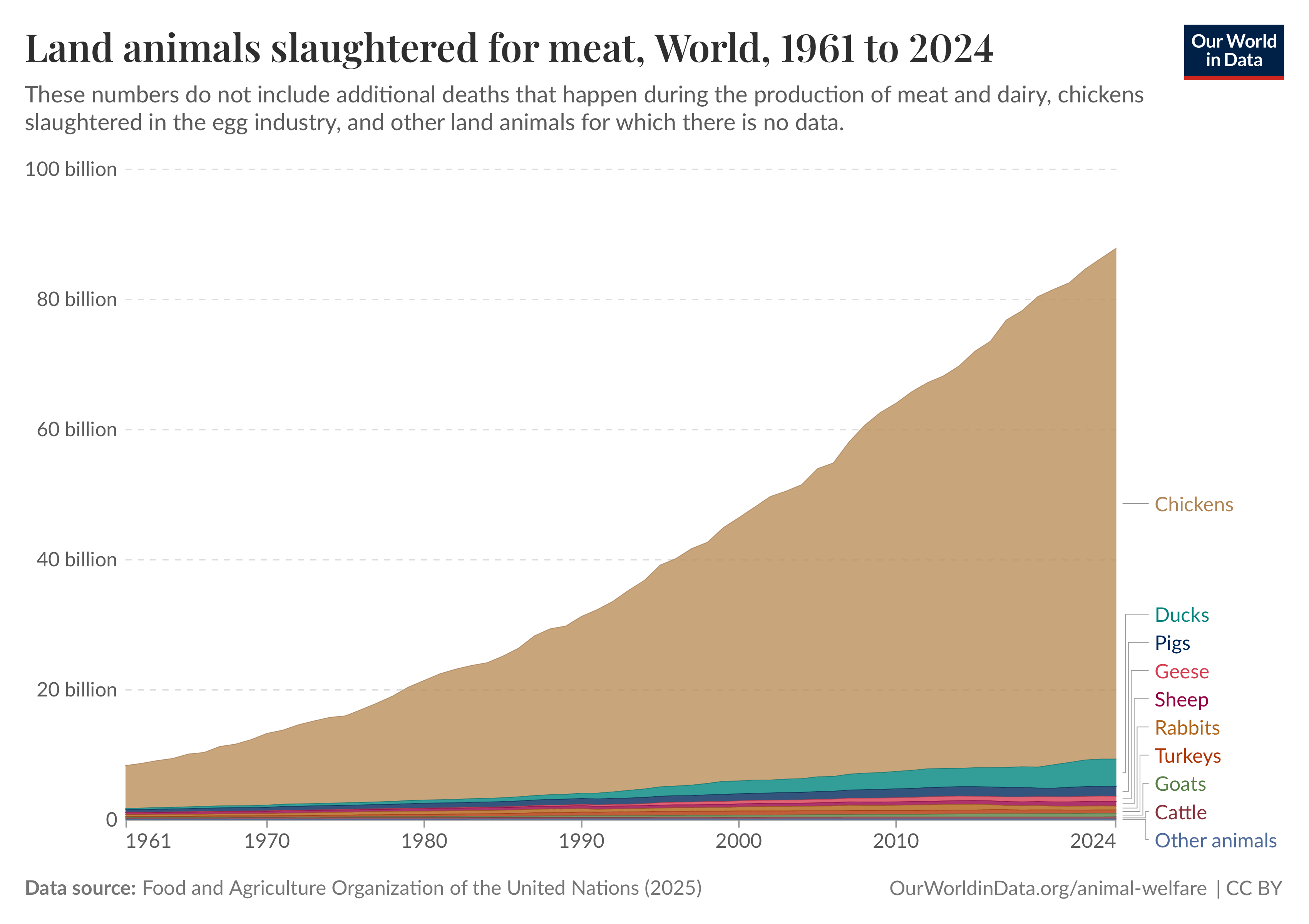
Our World In Data showing the scale of the chicken problem which is its main reason for unhealthy birds leading to unhealthy outcomes for people.
Fast forward and a study of 2,117 U.S. adults taking GLP- by the Acosta Group in April of 2026 found that they were buying 31% more fresh chicken. As GLP-1 users flock to this kind of protein, it raises the question: is chicken really all that healthy?
It begs the question, what is really going on?
There’s a lot of misinformation about what meat is and isn’t. Let’s take look.
1.Salmonella: 31% of ground chicken has Salmonella according to a study by Consumer Reports in 2022.
“CR found salmonella in 31 percent, or 23 of the 75 samples of ground chicken it tested. Nine of the 25 products CR tested from Perdue had salmonella. Samples from Trader Joe’s and Wholesome Pantry, which source their chicken from Perdue, also had salmonella, as did some samples from Isernio’s, Walmart and Whole Foods. Overall, no single brand stood out as being statistically better or worse than another, and CR found no difference between ground chicken from organic and conventionally raised birds. (Emphasis my own.)
All of the salmonella from the ground chicken samples was resistant to at least one antibiotic, and 78 percent were resistant to multiple drugs. People handling raw meat contaminated with antibiotic-resistant bacteria could get sick with serious infections that can be hard to treat. More than 212,000 people each year are sickened with antibiotic-resistant salmonella in food, and 70 die, according to the CDC.”
2. Feces. The Physicians Committee for Responsible Medicine (PCRM) sued the USDA over fecal matter in 48% of chicken in 2019.
Poultry Slaughter Procedures, a USDA training video, reveals that the chicken slaughtering process ends with carcasses soaking in cold water—”fecal soup”—for up to one hour before being packaged for consumers. The Physicians Committee obtained this video through the Freedom of Information Act.
Fecal matter means the E. coli bacteria is on the meat, and cutting it means that it is then on thaeknives. Washing it means that it is then splattered about the kitchen. Yes, cooking it thoroughly is a way to eradicate it, but it’s good to know what you are dealing with to see if you really want to eat…something with fecal matter.
Right about now, someone usually says, “But there is fecal matter in lettuce, so there!” Yes, but that fecal matter is from animal agriculture manure run-offs into our waterways and that can get onto our veggies. We are back to the basic truth that animals go to the bathroom and when 80 billion factory animals (78.5 billion chickens) don’t have indoor plumbing, their bathroom is our land and water, which ultimately gets directly or indirectly into our food.
3. Avian Flu and Pandemics.
According to the United Nations (UN), the top two reasons for the next pandemic are related to the intensification of animal factories. This makes sense. Per Our World in Data, there are 78.5 billion chickens in factories-a frightening ratio of 10 birds for every human on earth. Animals living beak to snout in their own feces are, of course, a breeding ground for disease.
The NIH confirms the transmission of avian flu from birds to humans and humans to humans and has concerns that this could lead to a deadly flu epidemic such as the Spanish Flu. Many Asians have died from this and globally, the World Health Organization has recorded 478 human deaths out of 997 confirmed cases of avian influenza A (H5N1) across 25 countries since 2003, reflecting a case-fatality rate of roughly 48%. Most human infections occur via direct contact with infected animals or contaminated environments. And with so many birds (78.5 billion), direct contact with a bird by factory workers is inevitable.
Ugh, who wants another COVID?
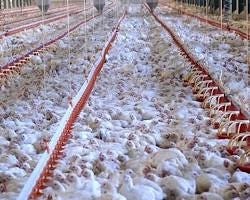
This images shows the scale and density issue of chickenn farming. Courtesy World animal Protection.
4. Antibiotic Resistance. Think that chicken is clean-label? What about the antibiotics and the filler/additives listed below that aren’t listed on the label.
The biggest use of all antibiotics on the market is by the livestock industry for the production of meat and dairy. “Of all antibiotics sold in the United States, approximately 80% are sold for use in animal agriculture; about 70% of these are ‘medically important’ (i.e., from classes important to human medicine),” notes the National Library of Medicine.
It goes on to say that, “Antibiotics are administered to animals in feed to marginally improve growth rates and to prevent infections, a practice projected to increase dramatically worldwide over the next 15 years. There is growing evidence that antibiotic resistance in humans is promoted by the widespread use of non-therapeutic antibiotics in animals. Resistant bacteria are transmitted to humans through direct contact with animals, by exposure to animal manure, through consumption of undercooked meat, and through contact with uncooked meat or surfaces meat has touched.”
These factors, among others, have led to a situation in which antimicrobial resistance is rising at an alarming rate, threatening our ability to treat common infectious diseases, resulting in prolonged illness, higher medical costs, and increased mortality. Some experts note that we are headed towards a 70% antibiotic inefficacy rate. “One in six laboratory-confirmed bacterial infections causing common infections in people worldwide in 2023 were resistant to antibiotic treatments, according to a new World Health Organization (WHO) report. Between 2018 and 2023, antibiotic resistance rose in over 40% of the monitored antibiotics with an average annual increase of 5%-15%.”
This spells trouble.
5. Increased Climate Temps Mean More Disease. “There is recent research from Oxford that the diseases that you get from chicken are going up with Climate Change. Because [with the increased heat] the bacteria that you get from chicken is increasing, so you have food safety issues,” states Cambridge Professor Paul Behrens. It stands to reason. Remember, we are talking about 78.5 billion birds in limited space in factories.
The scale is tremendous, almost incomprehensible. Americans eat almost 270 pounds of meat a year, so the math quickly adds up to such a massive number of animals that disease is rampant.
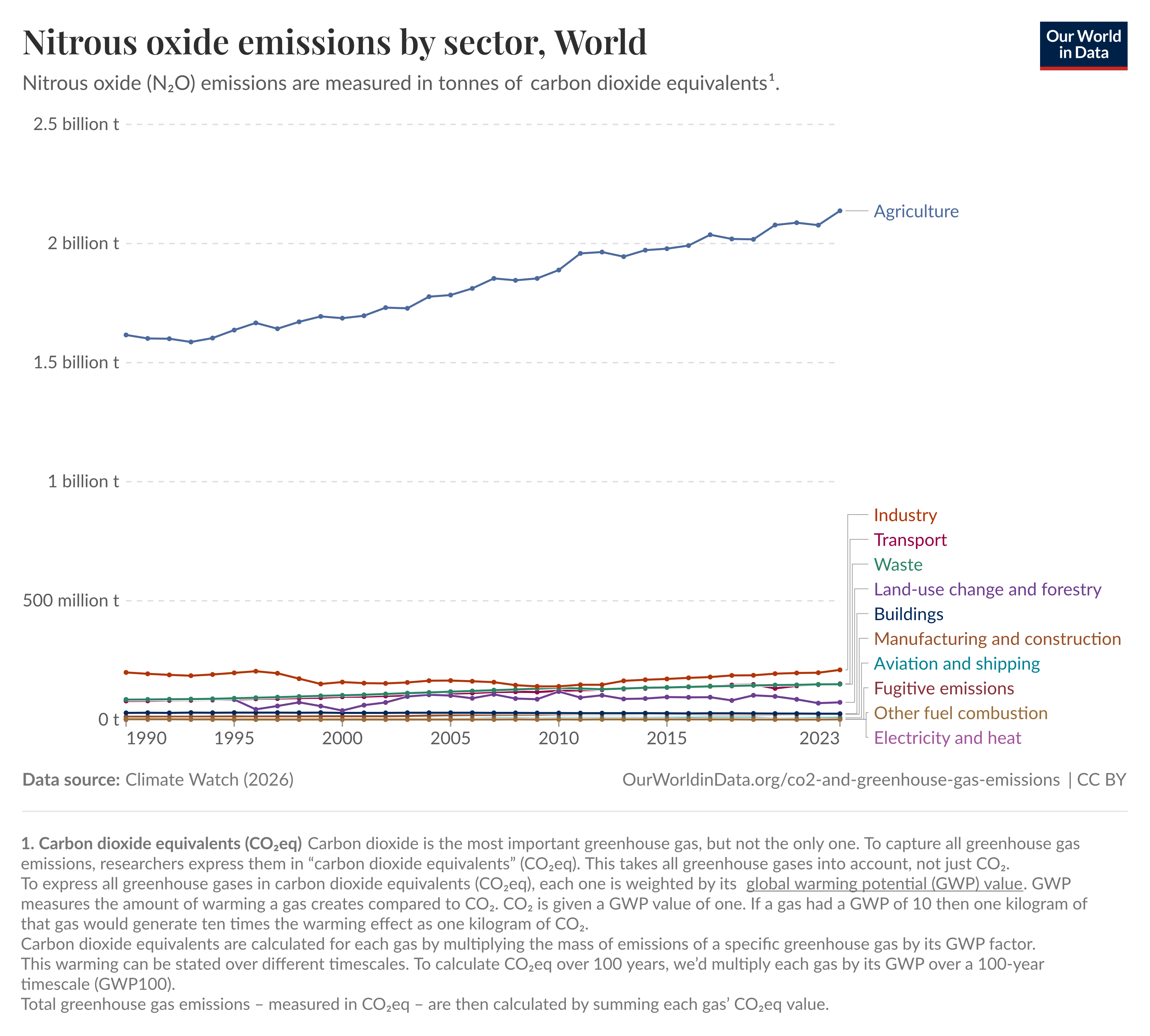
This image from Our World in Data shows the nitrous oxide emissions from agriculture coming in large part from intensive chicken farming. According to the National Library of Medicine, “Animal agriculture emissions contributed ~30% to the global anthropogenic N2O emissions in the decade 2010-2019. Cattle contributed the most (60%) to the increase, followed by poultry (19%), pigs (15%), and sheep and goats (6%).”
1. Fillers and Additives. According to Consumer Reports from June 23, 2026, “Chickens are injected with a solution (brine) containing salt or sodium ingredients, such as sodium phosphate,” and, “Brines often contain other ingredients, such as sugar, natural flavors (which aren’t much different from artificial flavors), and carrageenan (to help with moisture retention). Some research has linked carrageenan to the development of inflammatory bowel disease and ulcerative colitis.”
Don’t be fooled by the short ingredient list…that chicken is processed and those birds are sick.
2. Sick, Unhealthy Birds. There is so much to discuss here that I will let AI sum it up best, with its links to sources, to deliver just the facts: In industrial broiler chicken farms, up to 90% of birds suffer from detectable walking difficulties or leg deformities, 25% to 70% develop chemical skin/hock burns from ammonia-soaked litter, and nearly 100%of egg-laying hens or specific flocks undergo beak trimming. [1, 2, 3, 4, 5]
Leg Deformities and Lameness
90% of fast-growing broiler chickens display an abnormal or impaired gait (difficulty walking) by the time they reach slaughter age.
19% to 30% of these birds suffer from moderate-to-severe clinical lameness, often leaving them unable to reach food and water easily. [1, 2, 3, 4, 5]
Ammonia and Contact Burns (Hock/Breast Burns)
25% to 70% of commercial meat chickens show varying degrees of footpad dermatitis or hock burns (chemical skin erosion caused by prolonged contact with uric acid and ammonia in wet litter). [1, 2]
Investigative spot-checks on standard intensive farms reveal that specific low-welfare or crowded houses can push hock and skin burn rates above 70%. [1, 2]
Sitting and Inactivity
75% to 90% of a modern broiler chicken’s final weeks are spent sitting down because their artificially heavy breasts outpace the strength of their skeletal and leg structure. [1, 2]
Beak Trimming (Cutting)
Nearly 100% of intensive commercial egg-laying hens (and many breeder flocks) are subjected to beak trimming (infrared or blade beak-cutting) as chicks to prevent cannibalism and feather pecking induced by extreme crowding. [1]
Respiratory Issues
While precise whole-industry percentages vary by ventilation quality, elevated indoor ammonia levels frequently exceed recommended limits (10–25 ppm), causing widespread mucous membrane irritation, chronic respiratory stress, and high vulnerability to airsacculitis across entire enclosed flocks. [1, 2]
Eating sick animals is hardly the basis for a model of health.
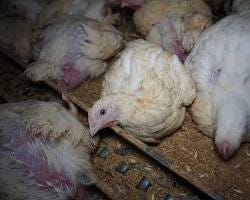
Birds in animal factories. Courtesy of Animal Equality.
Industrial chicken farming is helping the spread of Campylobacter, the world’s most common bacterial cause of diarrhea, according to a new study.
Researchers from the University of Oxford’s Ineos Oxford Institute for Antimicrobial Research found that as chicken farming has grown, the exchange of Campylobacter strains between wild birds and chickens has increased sharply.
“As the chicken population has exploded, they’ve increasingly picked up strains from different wild birds and become a cauldron of bacterial evolution,” says senior author Professor Sam Sheppard of the University of Oxford.
“Lots of strains come together and hybridise. We do not want that, because that’s where new Frankenstein monster bugs emerge.”
The study also suggests that large, crowded chicken farms can act like “pathogen sponges,” allowing bacteria from different sources to gather, multiply, and spread.
So, is that chicken really the healthy option? Maybe not.
But then what do we do? If chicken isn’t the answer to everything, now what? The world isn’t going to stop eating meat, obviously, so what do we do?
Here’s Harvard Medical School’s suggestion for getting non-sick, disease-free, lean protein, even if you choose to do it only some of the time. Or keep doing what you are doing. Either way, your choice. But at least now you know.
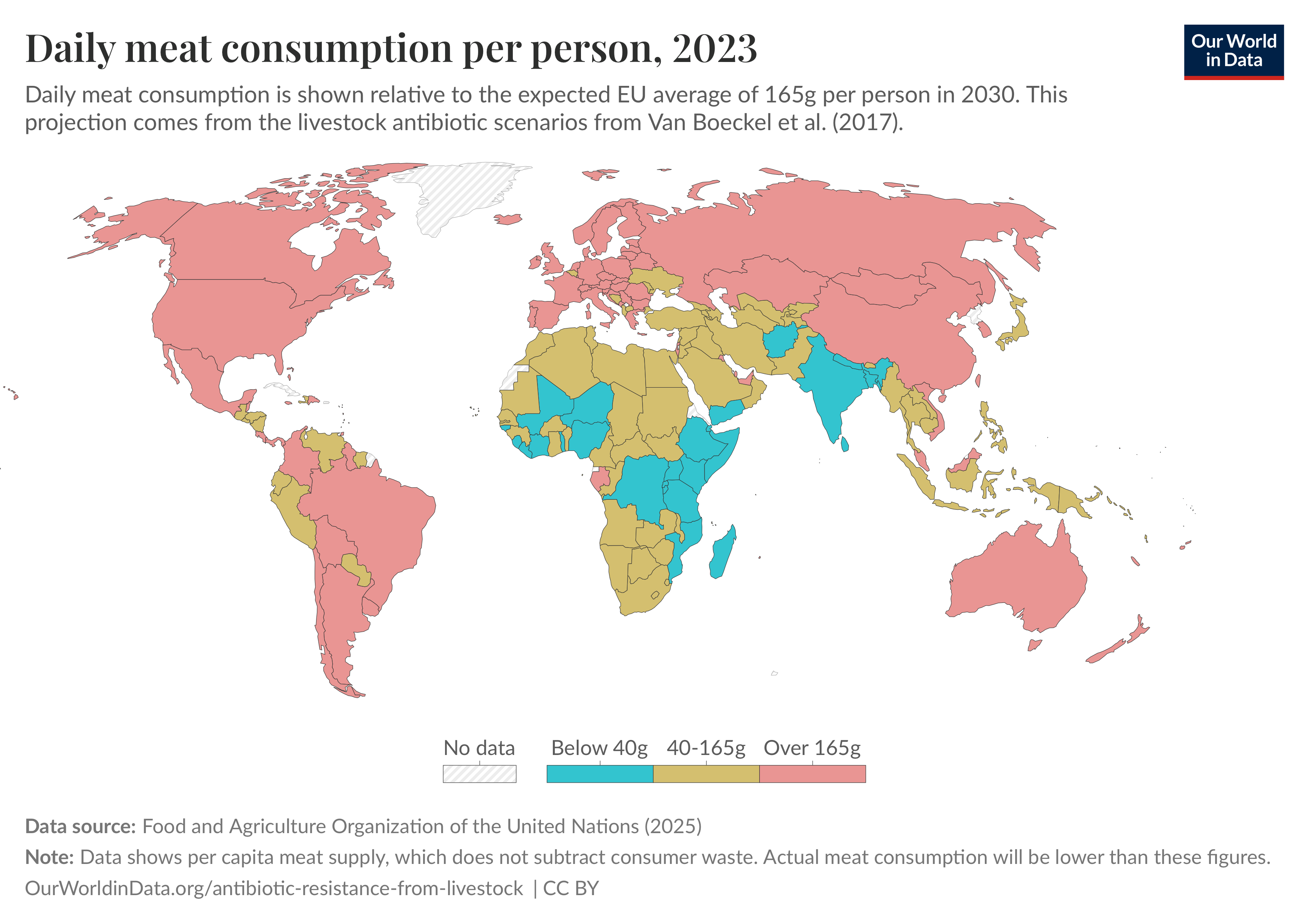
Image from Our World in Data showing the daily meat consumption per person in 2023. For the US it is 3/4 pound per day on average, or 340g.
#
For press and consulting inquiries, you can reach me at elysabeth@ElysabethAlfano.com .
For my article Can Americans Even Afford a Burger Anymore?, click here. For my article, Our Food System is Fragile, Fractured and F-Bombed, click here.
What I am reading: I suggest FoodFix by Helena Bottemiller Evich if you want to stay updated on the madness that is strategy-barren, food politics.
I also suggest The End of the World Is Just the Beginning by Peter Zeihan, and Merchants of Doubt: How a Handful of Scientists Obscured the Truth on Issues from Tobacco Smoke to Climate Change, by Naomi Oreskes and Erik Conway.
Thanks for reading today and see you next Thursday.
Elysabeth
#
Subscribe to my Substack. Follow me on LinkedIn. Live and interactive content coming soon-ish. Potentially.
This Substack goes dark on all major holiday weeks and if the Cubs are in the World Series.
About Elysabeth Alfano
Elysabeth Alfano is a business and policy advisor on efficient food system transformation. She speaks globally on the intersection of food security, resiliency, efficiency, and our global food supply system, including recently at the United Nations Global Compact Leaders Summit, COP27, COP28, SXSW, BloombergTV, FintechTV, Bloomberg Radio, WGN Radio, WGN-TV and more. She has written for Sustain Finance, Chartered Alternative Investment Alliance (CAIA) and Advisorpedia among other publications. She has hosted two podcasts, The Plantbased Business Hour and Upside & Impact, for the New York Stock Exchange’s podcast platform. She is the former CEO of VegTech™ Invest which was the Advisor to the food systems ETF, EATV.
No posts
Comments
Nothing yet. Say the first thing.
Sign in to join the conversation.