
A recent Politico article had me both dizzy from an insane Catch-22 and in disbelief at the lack of foresight surrounding something as vital as our food supply. Above all, it made me realize that the topic that I have been talking about in board rooms and political theaters for years - the demise of the global food supply - is finally showing the tip of its iceberg.
According to the article, Trump is in the doghouse for announcing that he would “exempt from tariffs 300,000 metric tons of imported ground beef.”
This political initiative is attempting to address the continued rising beef prices. As discussed in another article on this Substack, according to a February 13, 2026, Food Ingredients First article, ground beef hit $6.69 per pound in December 2025 — up 19.3% year-over-year and 72% since 2020 — with the USDA forecasting a further 6.9% wholesale increase in 2026. Meanwhile, the U.S. cattle herd fell to a 75-year low of 86.2 million head as prolonged drought and animal-borne pandemics gutted supply.
While criticizing President Joe Biden, Trump claimed his plan “will reduce prices for Americans while giving space for our Great American Beef Herd to grow again,” he wrote on Truth Social,” reported Politico.
Not everyone agreed. Pushback was immediate.
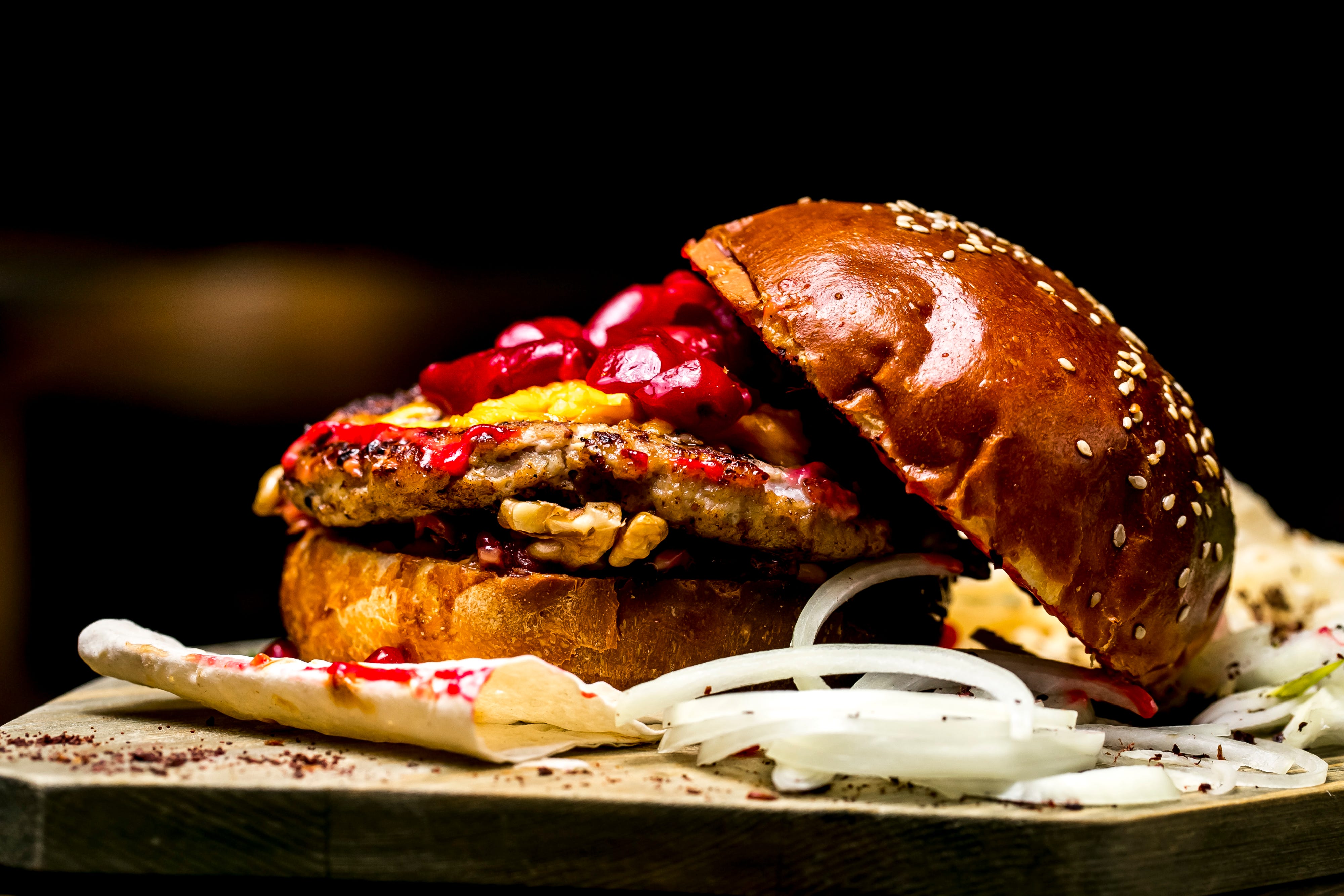
Image courtesy of Magnific.com
“The beef inflation numbers coming out in the next round must be really bad,” said one agriculture industry representative, who was granted anonymity to speak about sensitive discussions. “We heard Trump was watching beef prices almost as closely as gas prices at one point.”
Cattle Ranchers and those embedded in the agricultural sector aren’t buying the proposal that reducing or eliminating tariffs will do anything to lower domestic prices. As Politico noted, industry leaders are unsure which countries even have 300,000 metric tons of beef trimmings available.
“Everybody we’re hearing from in the supply chain is like, ‘What extra meat?’” said the source.
In other words, ranchers aren’t just resisting foreign competition, they are pointing out the harder truth: there is no extra beef to be had. Quite literally, where’s the beef?
They are right. Beef is in short supply globally. But, why? Why can’t we just have more cows in the world, make more beef and lower prices?
Let’s get into it.
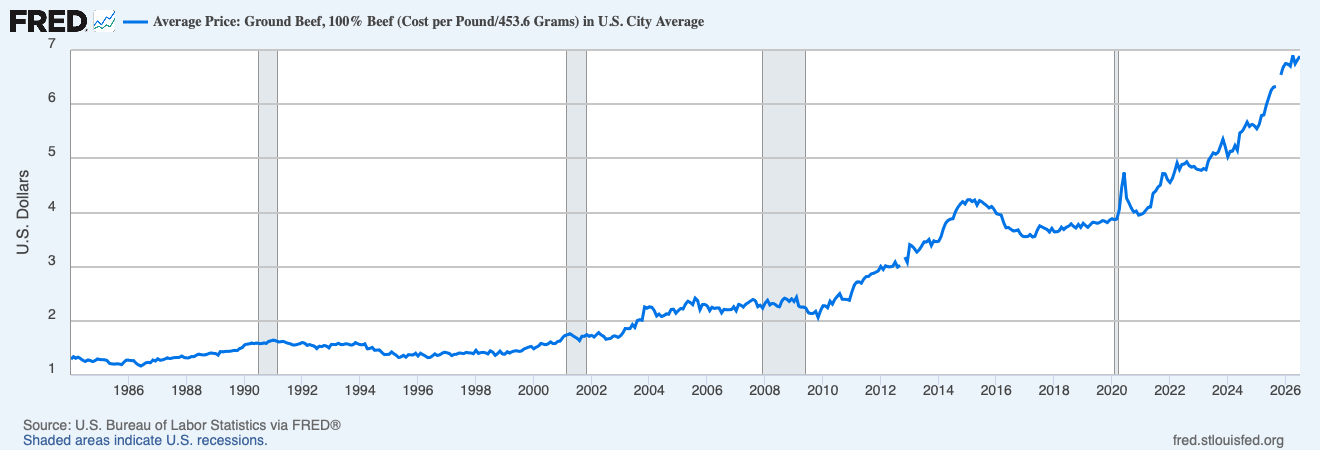
Federal Reserve graph showing rising U.S. beef prices.
Climate and Natural Resources Realities. Droughts around the world - U.S., Australia, and South America- have shrunk herds. So, we are starting from a global herd low point. This is also why other countries don’t have extra beef to sell.
Biological Constraints. Cows are mammals, like us. They have a 9-month gestation period, like us. They give birth to one newborn at a time, like us (usually.) So the repopulation process is slow.
Not All Cows Are Beef Cows. Some Are Mothers. To maintain a factory line of the mother cows, you can’t sell them for beef. You have to keep them impregnated on a continual basis to churn out their young, the product. So these cows don’t go towards beef production as they are needed in the newborn production line. This furthers the difficulty of expanding the beef supply.
Risky Business Model. With a 9-month gestation period and then 17-24 months of growing (with the help of hormones as the natural process is 18-36 months), that means years of feed, labor, drugs, financing costs, land, water, and more. This makes it expensive and risky since Mad Cow disease or screwworm can wipe out herds or global trade wars can wreak havoc. As a result, this means some ranchers just end up getting out of the business altogether, again making it difficult to build up herds.
Rising Demand. Global demand is up, but herd sizes, per the above, are down. This stresses the supply even more.
Continued Disease and Drought. Disease and droughts aren’t one-time events. They continue perpetually which keeps herd sizes small. Disease in particular is worse as the herd size grows, intuitively working against the rebuilding process. This is also why other countries don’t have extra beef to sell.
Okay, so we see that it is difficult to build up herds from all-time lows. But, if we can get through this difficult moment, can we have big herds again to bring down the prices and, if so, when?
As mentioned above, the production chain is long and expensive, and with inflation looming, prices won’t be coming down any time soon… if they ever do. And that’s the true Catch-22.
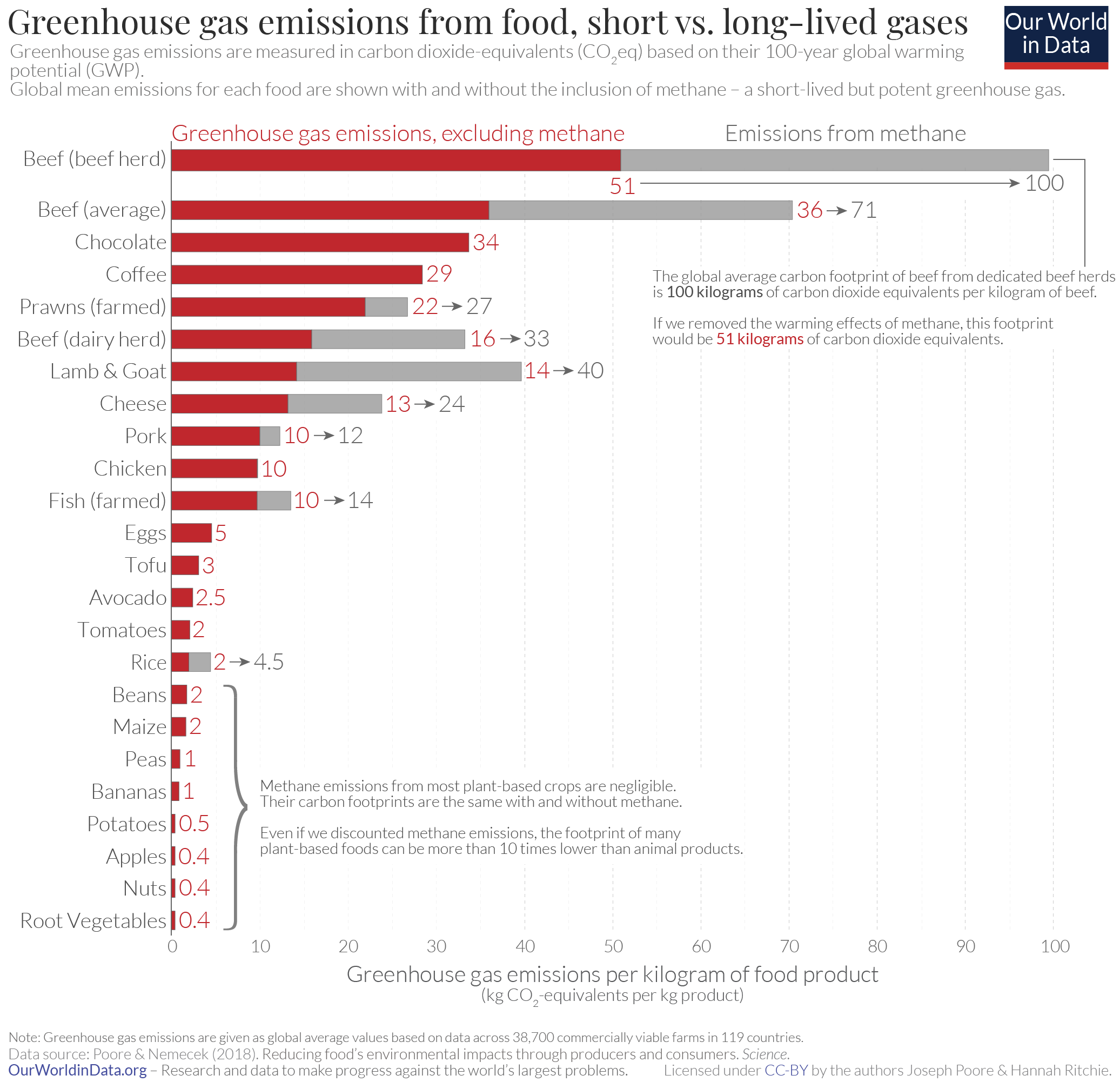
Courtesy of Our World in Data
As explained in a previous article on this Substack, cow herds contribute dramatically to climate change and rising Earth temperatures.
1. Cows Increase Climate Temperatures. Cows are responsible for a large swath of global methane emissions, a greenhouse gas emission much more powerful than carbon dioxide. Per the graph above, while the total greenhouse gas footprint for one kilogram of beef from non-dairy herds is 100 kilograms, methane makes up 49% of its emissions. This directly contributes to rising temperatures.
2. Cows Negatively Impact Our Carbon Sink, Reenforcing Their Impact on Rising Temperatures . Cows are responsible for 41% of the world’s tropical deforestation, thus limiting the carbon sink potential of the planet, and thereby again, contributing to rising temperatures.
3. Cows Require a Disproportionate Use of Natural Resources like Land and Water. Cows require excessive amounts of land and water (460 gallons of water used for just a single hamburger, inclusive of watering crops for feed per the U.S. Geological Survey) from a planet short on both due to a population projected to grow by 20% by 2050 and climate change impacting water supplies.
Thus, we’re screwed.
While requiring large amounts of water, cows push up global temperatures. Growing herds mean driving up temperatures which then create more droughts. Drought is what got us here in the first place as herds and feed crops were decimated by not having enough water during excessive heatwaves. This resulted in rising beef prices given the smaller supply and the rising demand. Trying to increase the herds will just put us back in the cycle of more higher temperatures, and then more droughts and more decimated herds, and so on and so on.
If we are caught in a vicious downward spiral of wanting more of the thing that creates less of what we want, what do we do?
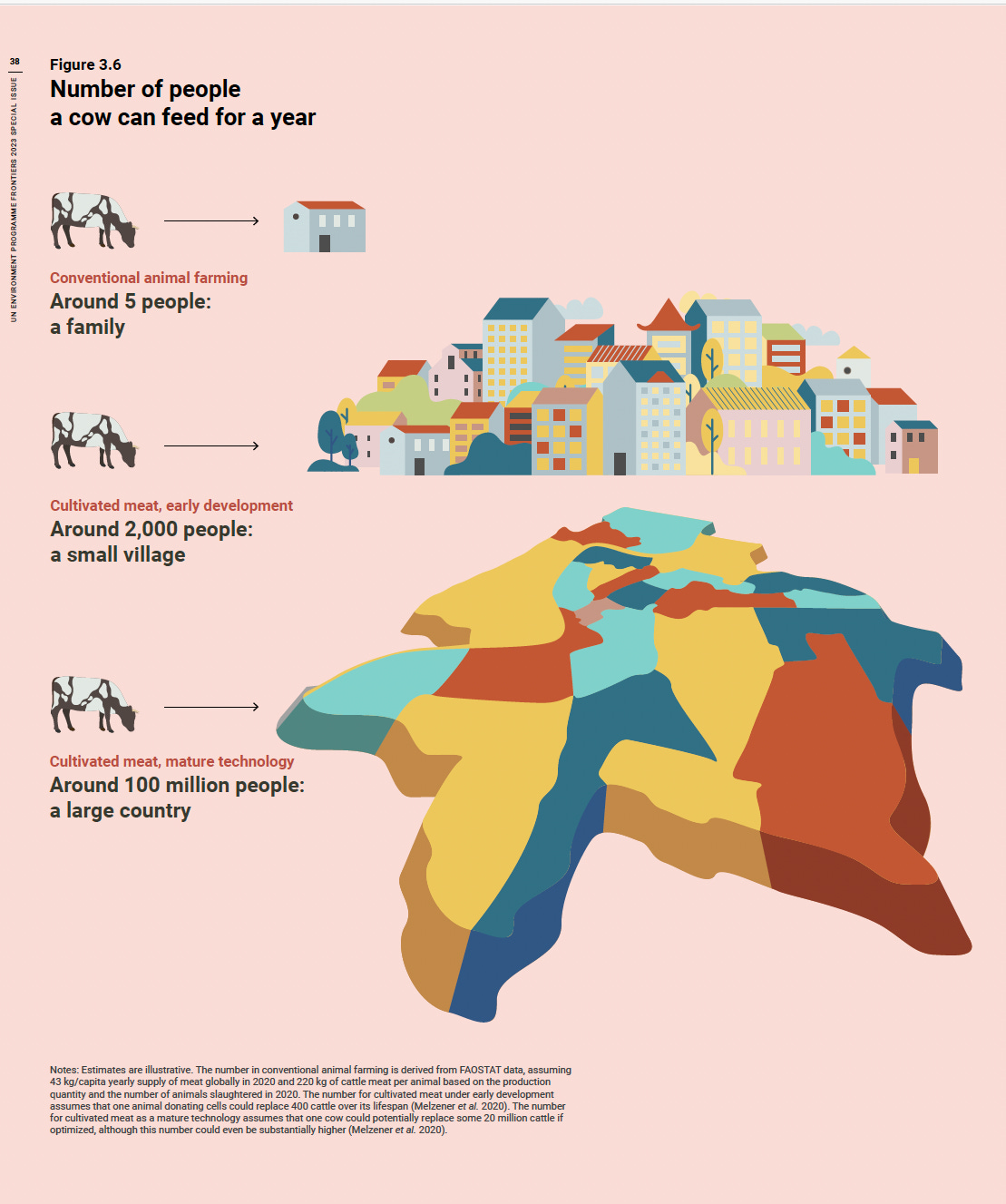
A UN Environment Programme image showing how one cow with the cultivated meat process at maturity (Innovation!! What’s more American than that?!), once cow could feed an entire country. This same cow nows feed 5 people.
The most logical step is to not be so reliant on beef and to diversify the protein supply chain so that it is more resilient and more plentiful. Diversifying the protein supply will bring down prices, mitigate rising climate temperatures and provide more supply for better food security.
So how can we diversify the protein supply chain so it is less dependent on the resource-heavy cow, bring down prices and continue to feed the planet?
Invest in innovation. No country in the world innovates like the United States. Our realitvely open markets and open society structure puts us at an incredible advatage to succeed with innovation, as we have always done in the past. It is odd that we would be slow to innovate, or even against innovation in this case, on something as critical as our food supply.
We need to put capital investment (philanthropic, government, and VC) into a diversified protein supply chain, and the technologies that support more efficient farming. And we need to to do it now. In short, we need to finance food fast.
-Invest in plant-based, fermented and cultivated proteins to provide an alternative to the resource-intensive middleman. NASA has already shown interest in funding some of these advancements.
-Invest in hybrid products blending meat with umami vegetables like mushrooms for a meat-tasting burger made with half the meat. This is an easy, win-win solution.
-Invest in farmers to rewild their land, at least in part, rather than graze animals, while also growing more plant proteins. This will help us rebuild our carbon sink, bring down rising temperatures will secure the livelihoods of ranchers..
-Invest in the AI technology to render farming more efficient in our strange new world: vertical farms, methods for reducing food waste (such as more cold chain storage), and technologies enabling less pesticide use for healthier and nutritious soil that yields healthier and nutritious food are just a few of the innovations that can move the needle.
-Invest (through tax dollar subsidies) in the Meat and Dairy Giants to refit their production facilities to scale these new innovations. These corporations already have your tax dollars via extensive subsidies ($38 billion U.S. yearly, although in extreme drought years I expect it to be more) to prop up the current system that isn’t working. So stop subsidizing what isn’t working and start funding innovation that will lessen the extreme pressure that our current protein system puts on our climate and, thus, on us.
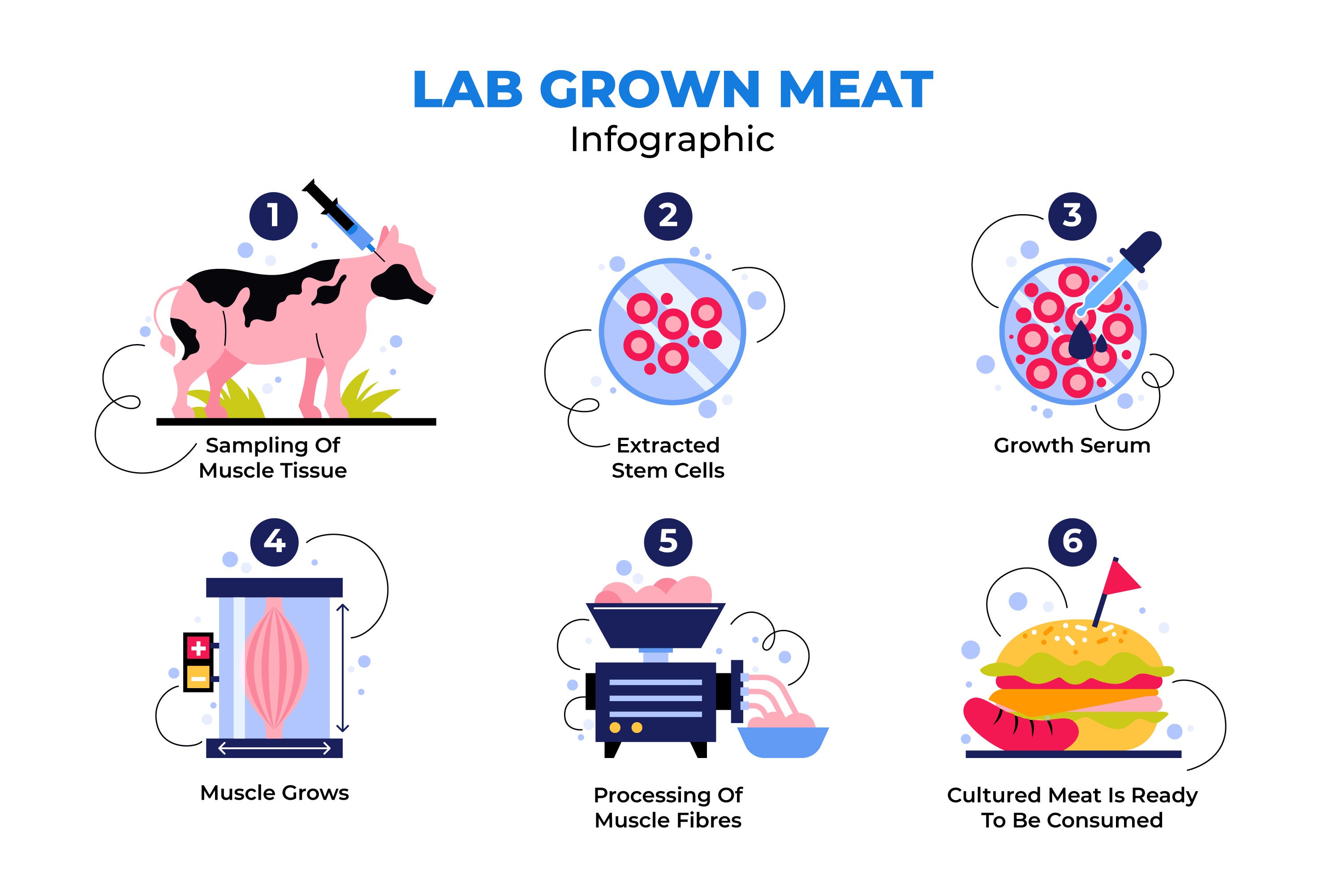
Although no longer called Lab Meat, but now called Cultivated Meat, the process can a) erradicate the need for huge doses of antibiotics in herd animals, b) lower pandemic risk to people from sick animals, c) diminish large amounts of land and water use by animals and the land and water given over to growing food to feed them, d) dramatically reduce methane from animals and e) feed more people. It’s an obvious win and doesn’t replace our current system. It complements it so we have enough food to feed people, thus avoiding social unrest. Image courtesy of Magnific.com
In short, as a spring on the classical political slogan goes: “It’s spending, stupid.” It’s time to spend big on diversified protein innovation in order to have more protein options or pay the price of more heatwaves, food insecurity and larger food inflation.
As the Politico article illustrates, it’s just not as simple as trying to get more beef and plugging a shortage with foreign beef that is also in short supply. We are out of options. We can no longer only feed the world protein solely with resource -intensive, inefficient animal factories that are a massive contributor to climate change.
This isn’t a choice. This is an imperative.
Our last hope is to invest in food innovation, and fast. If food insecurity takes hold, civil unrest will follow and it’s a completely different kind of ballgame from there on out.
This article was written by me and AI corrected the typos.
###
For press and consulting inquiries, you can reach me at elysabeth@ElysabethAlfano.com .
For my article Can Americans Even Afford a Burger Anymore?, click here. For my article, Our Food System is Fragile, Fractured and F-Bombed, click here.
What I am reading: I suggest FoodFix by Helena Bottemiller Evich if you want to stay updated on the madness that is strategy-barren, food politics.
I also suggest The End of the World Is Just the Beginning by Peter Zeihan, and Merchants of Doubt: How a Handful of Scientists Obscured the Truth on Issues from Tobacco Smoke to Climate Change, by Naomi Oreskes and Erik Conway.
Thanks for reading today and see you next Thursday.
Elysabeth
#
Subscribe to my Substack. Follow me on LinkedIn. Live and interactive content coming soon-ish. Potentially.
This Substack goes dark on all major holiday weeks and if the Cubs are in the World Series.
About Elysabeth Alfano
Elysabeth Alfano is a business and policy advisor on efficient food system transformation. She speaks globally on the intersection of food security, resiliency, efficiency, and our global food supply system, including recently at the United Nations Global Compact Leaders Summit, COP27, COP28, SXSW, BloombergTV, FintechTV, Bloomberg Radio, WGN Radio, WGN-TV and more. She has written for Sustain Finance, Chartered Alternative Investment Alliance (CAIA) and Advisorpedia among other publications. She has hosted two podcasts, The Plantbased Business Hour and Upside & Impact, for the New York Stock Exchange’s podcast platform. She is the former CEO of VegTech™ Invest which was the Advisor to the food systems ETF, EATV.
No posts
Comments
Nothing yet. Say the first thing.
Sign in to join the conversation.