
While prices to normal people are what goods and services cost, to economists, prices include the price of money and the price of labor, respectively, the interest rate and the wage rate.
This past week saw the continuation of problematic trends in both variables. Wage growth, on a yearly basis, lagged inflation for the fourth month in a row, and key interest rates climbed. Just like the other price problems I’ve documented in the affordability context, these two prices are also highly germane in that space, though not only that space. In an economy carrying 100% of GDP in public debt, higher rates pump up the debt service, and in an economy that’s 70% consumer spending, lower real wages have negative growth implications.
Both these variables are complex functions of many economic and political dynamics, and the fingerprints of reckless Trumpian policy are, once again, heavily in the mix. So let’s see what we can unpack, starting with interest rates.
Elevated Rates
Here’s the 5-yr, 10-yr, and 30-yr yield on US Treasury debt:
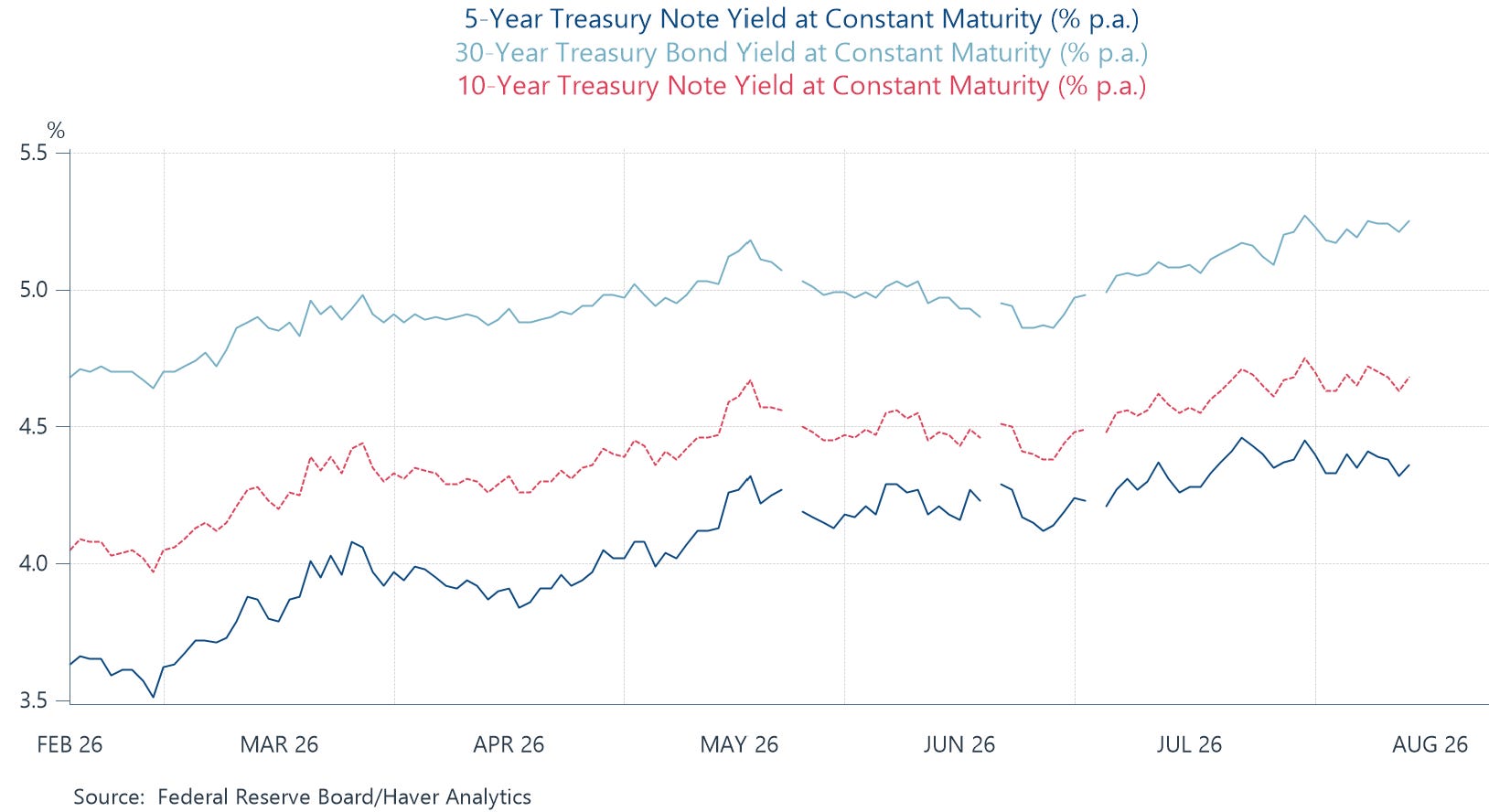
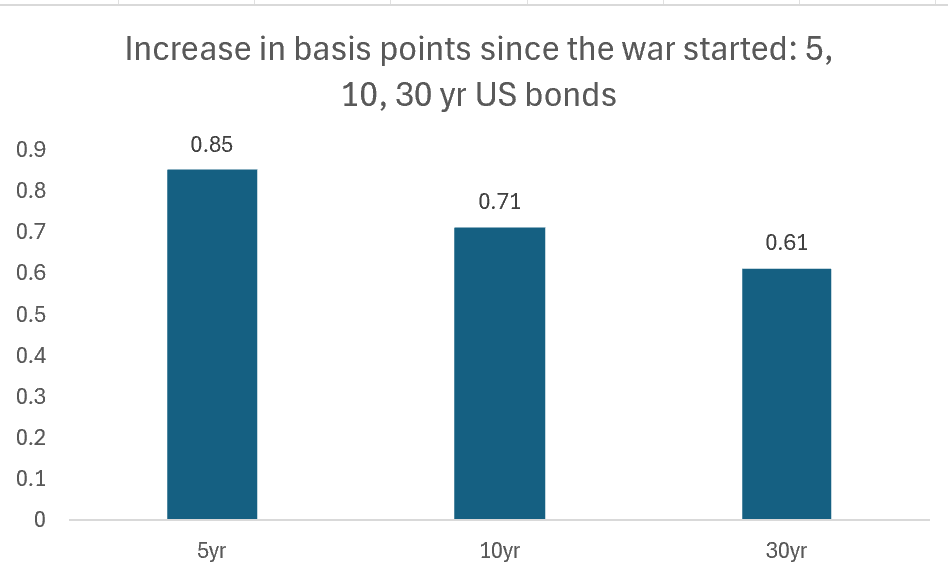
FTR, the latest 30-year nominal rate is the highest its been since the mid-2000s. Here’s the increase in basis points (hundredths of a percentage point) since the Iran war started:
What are the forces juicing interest rates? Let me count the ways.
—First, higher real yields, driven up most recently by something I worry a fair bit about up in here: the real term premium, or the inflation-adjusted, extra yield investors require if they’re going to lock up their $ for the long-term. The real 30-year yield is back up to levels we haven’t seen since the early 2000s:
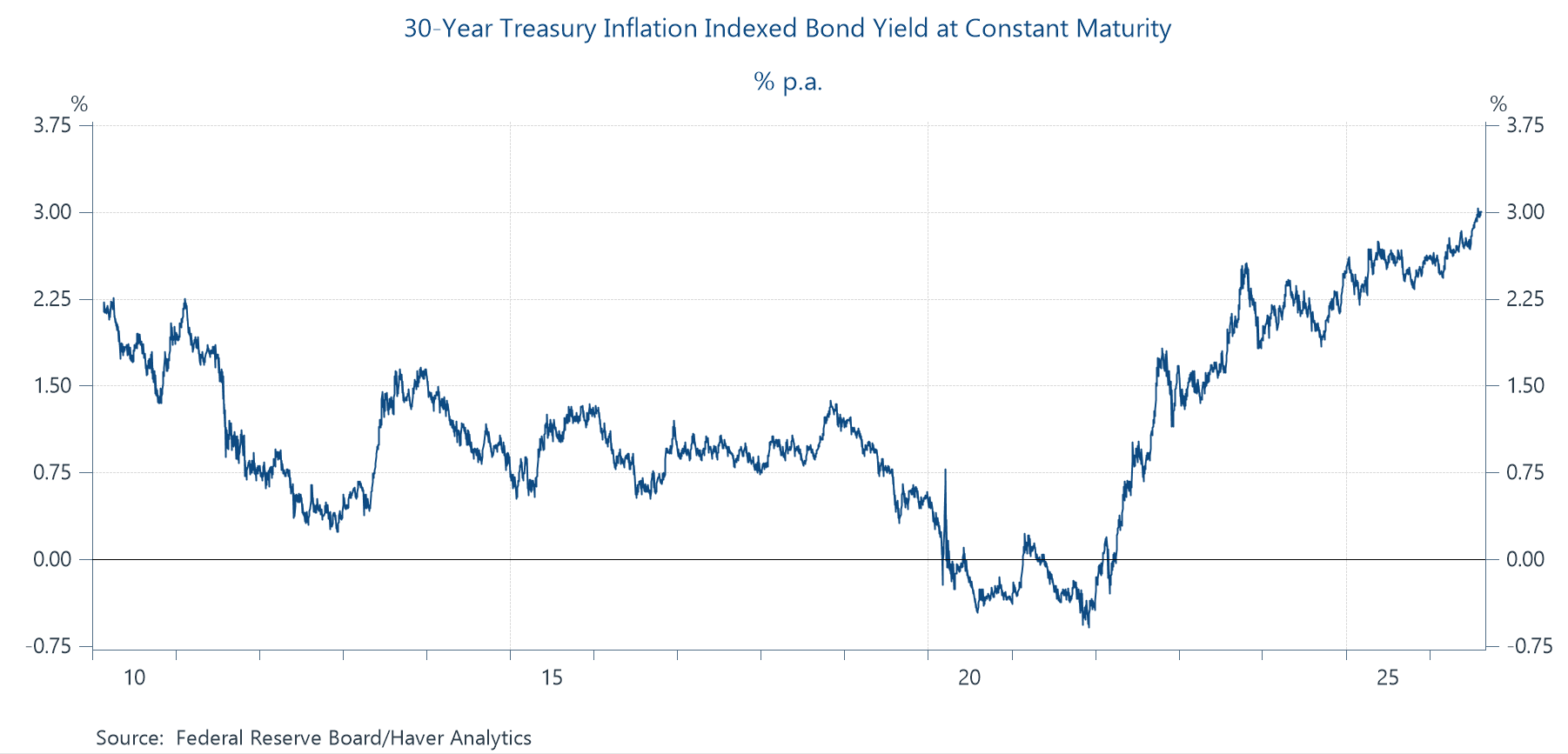
The title says that the above series is the yield on a 30-yr inflation-indexed bond, which you can think of as the real—after-inflation—return that investors get when they buy this inflation-protected debt.
If a lender thinks short-term rates will be higher over these many years, she’ll want extra compensation for that—after all, she could just repeatedly invest and reinvest in short-term debt. Same if she thinks the long run looks more uncertain than usual. EG, just pulling a few random ideas out of the air, a new Fed chair who’s reluctant to say anything about the path of monetary policy, or a fiscal outlook where the supply of gov’t debt issuance will have to be through-the-roof (technical term) to finance the debt (bond math: higher supply, lower price, higher yields).
The bigger factor pushing up rates right now comes from longer-term worries (the elevated term premium)—debt sustainability, Fed opacity, Trump finds new things to break.
—Second, for those not buying inflation-adjusted bonds, Trump’s inflationary regime—tariffs, the war—means investors want an inflation risk premium added to the rate. In other words, we’re talking pure policy blunders leading to higher interest rates from a president who says he wants lower rates.
Of course, the other side to that complaint is that he could stop with the tariffs and end the war, but I don’t see it. He’s stuck in a battle of wills with the Iranian leadership, wherein that regime is happy to abandon its people to keep the Strait shutdown and pressure the American economy. But Trump fears nothing more than losing, so on we go. On tariffs, the admin has shown time-and-again that they won’t stop doubling down.
BTW, it’s true that last week’s two inflation reports came in pretty soft, but the level of inflation is still well above the Fed’s target (e.g., 3.4% yr/yr for the July CPI) and neither investors nor consumers are comfortable with that, nor are they confident that future reports will be so friendly.
—Finally, while I noted Warsh-generated uncertainty helping to nudge up the term premium, that’s worth a few more words. It’s not that his actions have de-anchored inflationary expectations. Somewhat surprisingly, market-measured inflationary expectations remain pretty much in check. The problem with Warsh and debt investors is that he seems to disbelieve that the Fed sets the short-term rate, which also, as noted above, means that its fingerprints are also on the long-term rate. Therefore, his man-of-mystery schtick—”don’t watch me, watch the markets!”—kinda falls apart in this space.
Again, this seems fixable, and we should all give the guy a chance to find his legs. But he needs to find them soon.
Whatever their source, there are at least four problems with these rate pressures. One, they make life more expensive for borrowers, exacerbating affordability stress. Two, they slow overall growth as they make borrowing and investment pricier. Three, they imply higher debt service on gov’t debt, leaving fewer resources to spend on healthcare, childcare, housing. Four, they feedback on themselves: to the extent the debt concerns bump up the term premium, rates get nudged upward.
Real Wage Losses
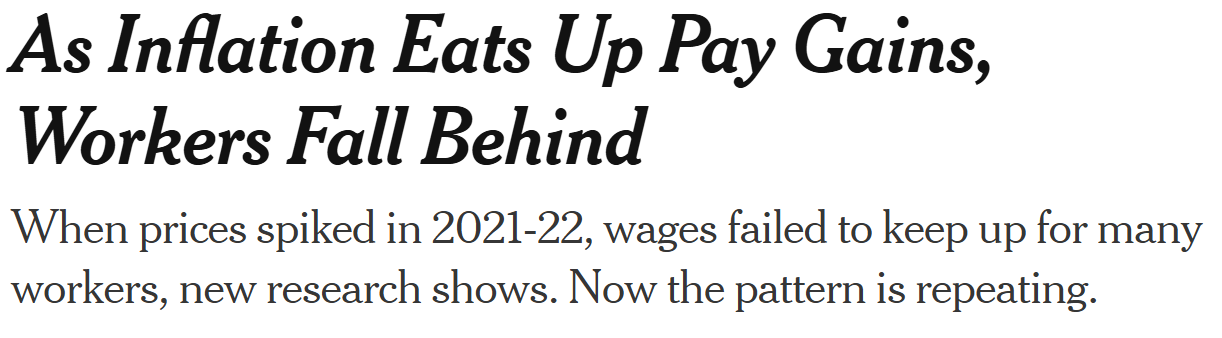
I discussed this a bit in my CPI review, and even better, the NYT’s excellent Ben Casselman just pubbed a useful deep dive on the issue.
Here’s the real-wage-growth figure I printed the other day, showing that since the war, yearly wage growth started sliding down fast, and crossed zero (meaning real wage losses and reduced-paycheck buying power) four months ago.
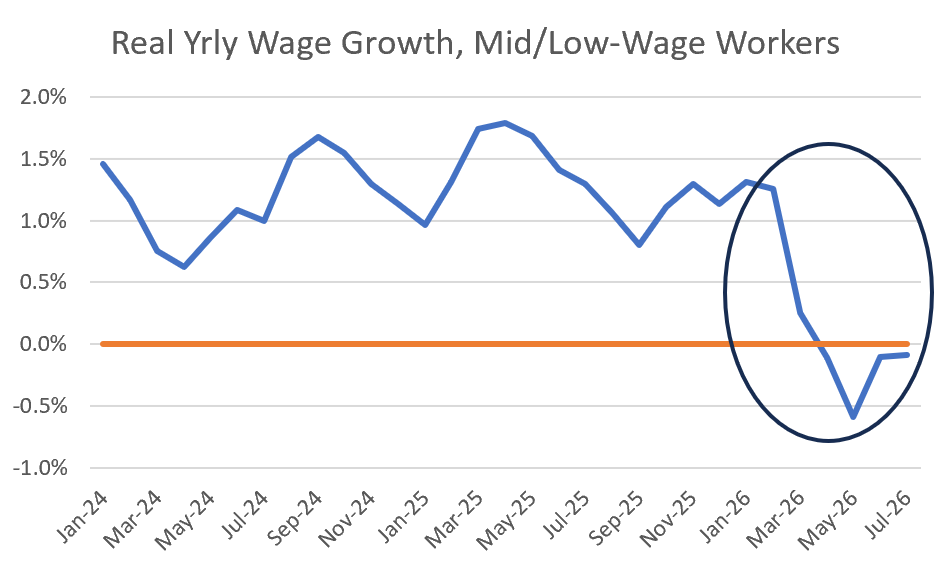
To be clear, and this is important, the problem facing most wage earners is not only faster inflation. It’s the one-two punch of faster inflation and slower nominal wage growth. And this implicates an underlying weakness in the job market, even at relatively low (4.1%) unemployment.
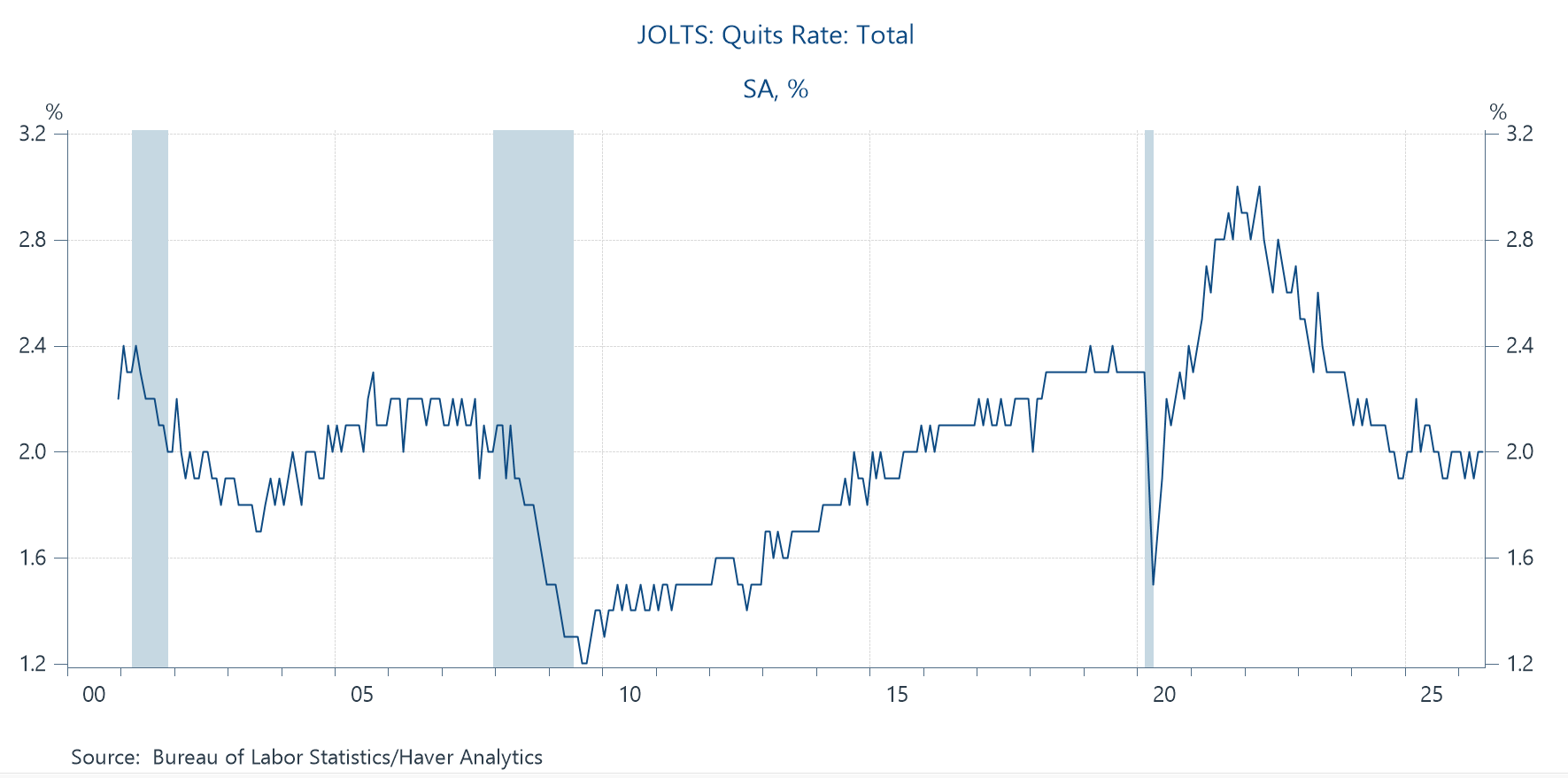
The problem is that unemployment is low because layoffs are low (and because labor market growth has slowed), not because hiring is robust. In this climate, you get much lower quit rates (see figure), which in turn means that fewer workers can take advantage of the tight labor market to upgrade their job and their wage.
Pursuing this reasoning, Ben cites an interesting new paper that tracks this part of the wage-growth/inflation story (my bold):
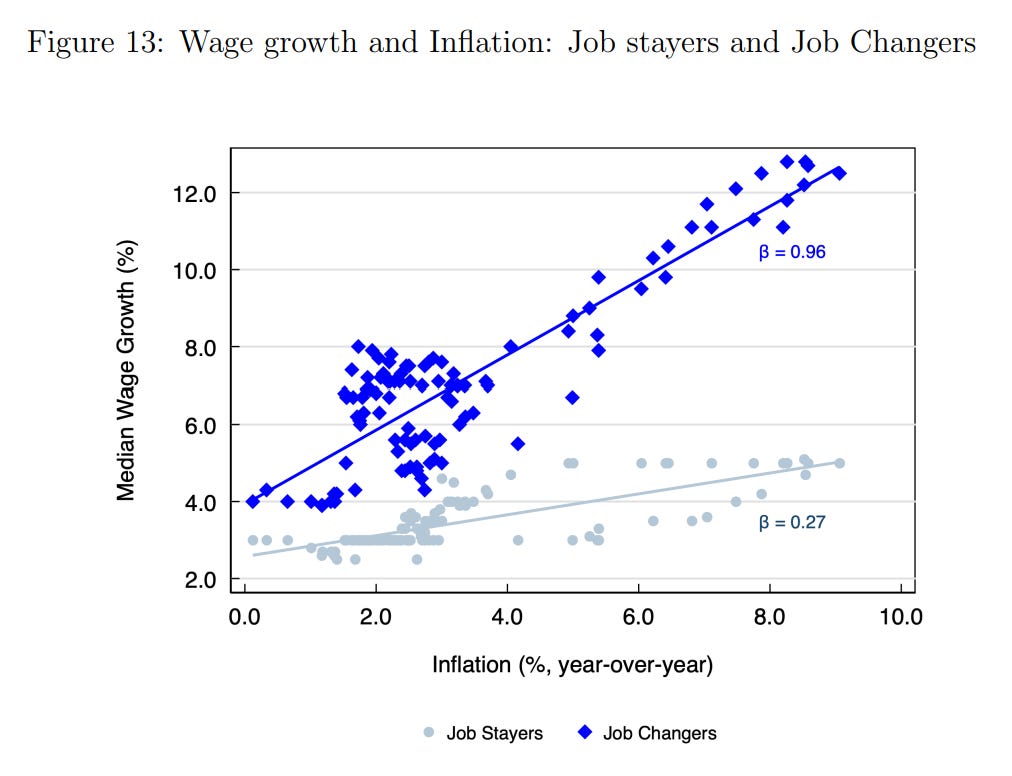
When inflation jumped in 2021 and 2022, however, companies offered only slightly better annual pay increases, meaning most workers fell behind. The only way to get a bigger raise, at least for many workers, was to change jobs. Unsurprisingly, workers did so in droves — the number of Americans quitting their jobs hit a record high in 2021 and 2022, when inflation was at its peak.
As this scatterplot from the paper shows, only by changing jobs could median wage earners find insulation against higher inflation (the paper stresses that this was a partial solution; not every job changer ended up ahead).
This current combination of higher inflation and a low-hire, low-fire job market with fewer upgrading opportunities is costly to workers and their families. As some hack says in the Casselman piece: “The real hourly wage is absolutely the fundamental building block of working Americans’ living standards. When it’s falling in real terms, that’s a huge problem for folks who are already stressed by affordability concerns.”
Affordability ain’t just about the price of eggs. It’s also about the interest rate and the real wage, and both are moving in the wrong direction, in no small part because Trumpian policy is pushing them that way.
No posts
Comments
Nothing yet. Say the first thing.
Sign in to join the conversation.