
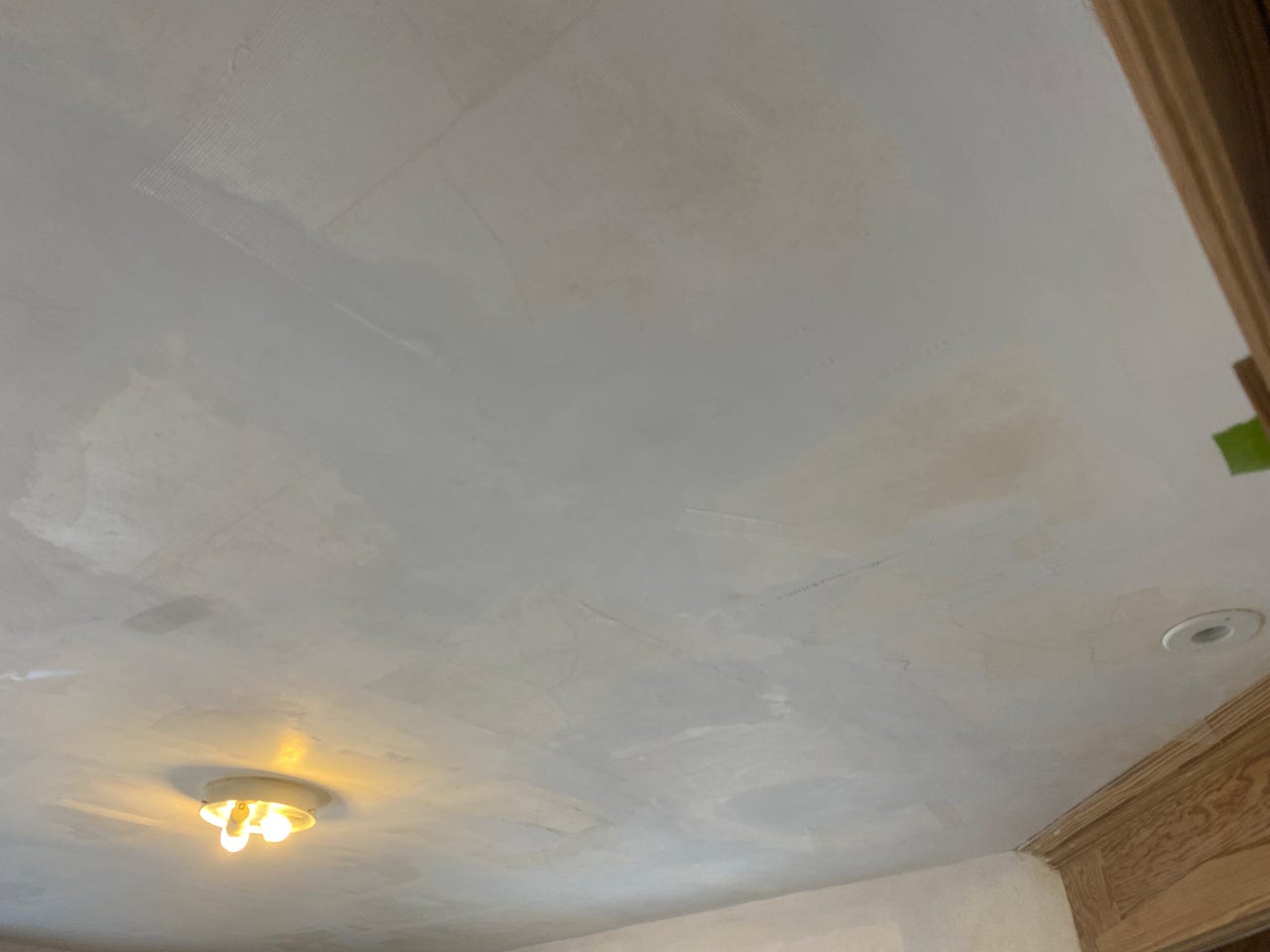
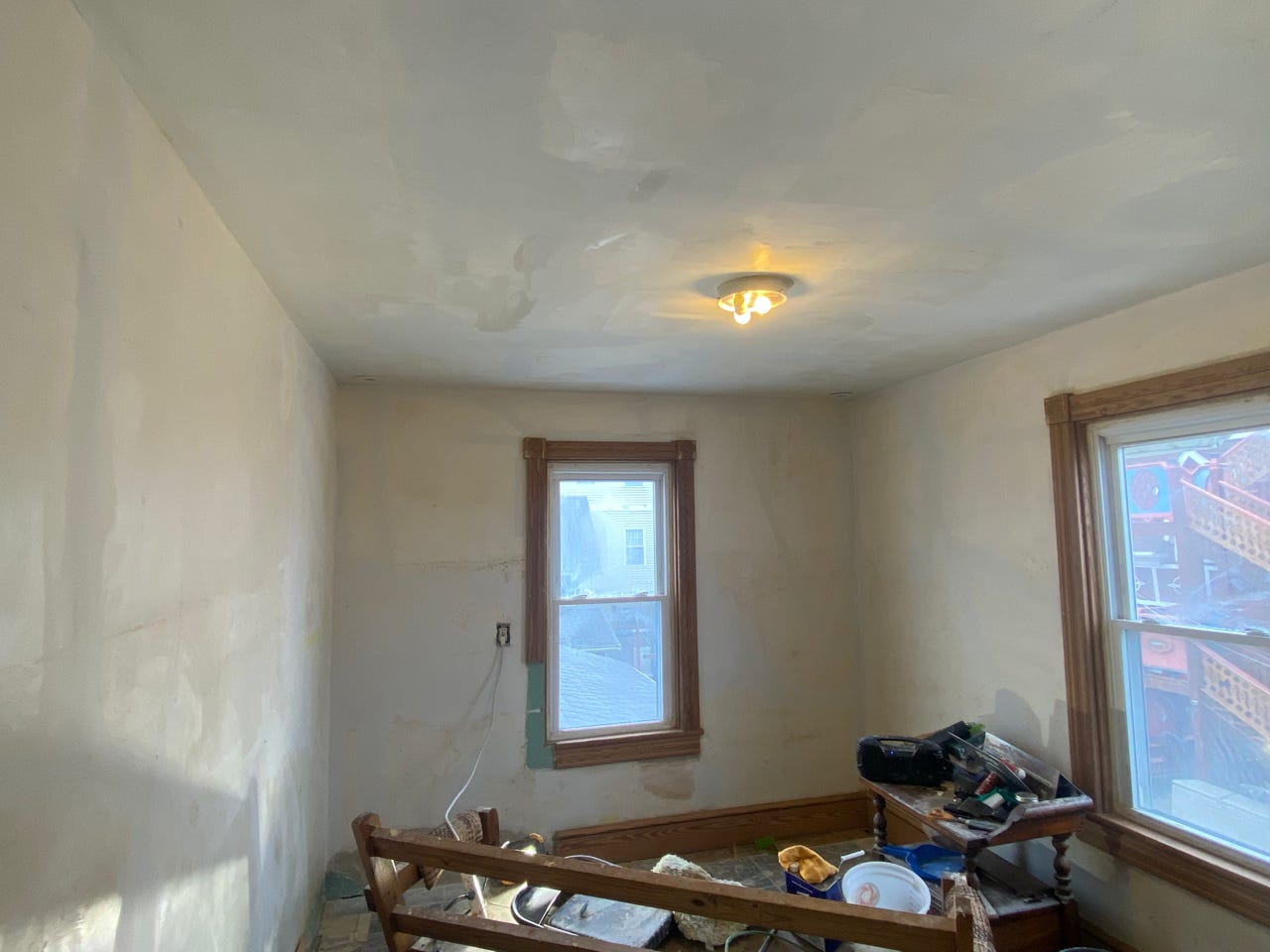
It’s always a balancing act to figure out when to plaster versus when to stain and varnish the wood. Similar to TSP, if you drip plaster on bare wood, it darkens the wood and since I’ve bleached the dark spots out, I’m going to shoot to stain before I plaster. But one exception is the ceiling which I’m able to plaster without dripping on the baseboards. I also hate plastering the ceiling because it’s tiring to work above your head. So I figure I’ll get the first coat down while I get ready to stain the wood. I’ve completed all of the plaster washers and Durabond. I make my way across the ceiling with the plaster trying to cover up the mesh tape and any washers. The first coat goes OK, but there’s a lot of strands of the mesh tape poking through the plaster. I didn’t fully switch over to the heavy duty mesh so a lot of the standard tape shreds when you run a trowel over it a few times. I let the plaster dry and keep misting it with water.
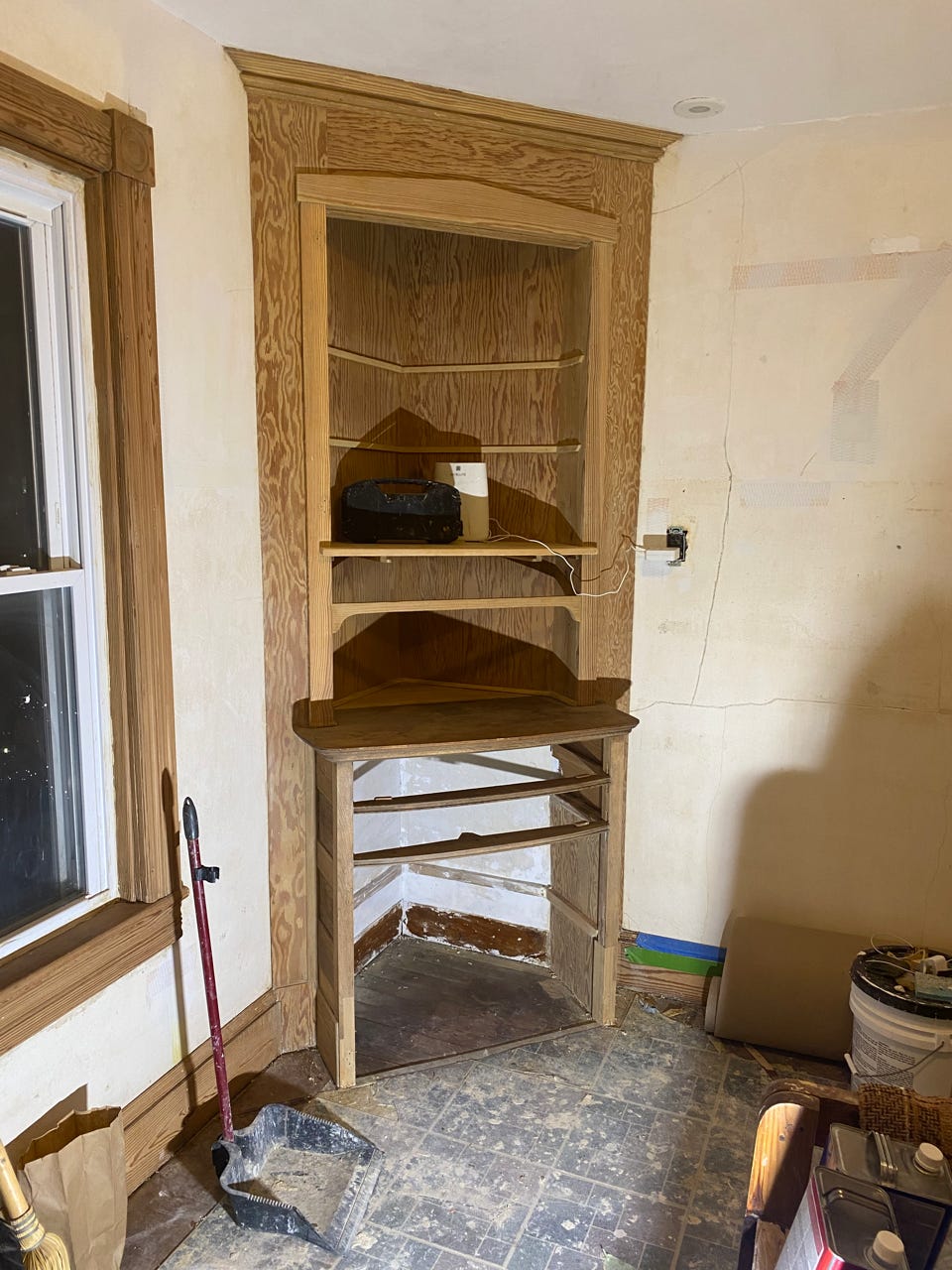
I want to move to the staining, but I still have this built-in to deal with. This is the worst part of the wood refinishing where most of the paint is off, but now you have this white haze and little pits stuck in corners and joints to remove. It’s tedious and you spend hours on a section and it doesn’t look drastically different. It’s the old last 20% takes 80% of the time.
The bottom section is still rewarding because that is still covered with paint. Turns out the baseboards down here were shellacked so the heat works well to remove the paint. The walls I wasn’t sure if they were wood, after some exploring, turns out they are just plaster. The paint looks like cheap latex, so that starts coming off easily with the chemical stripper.
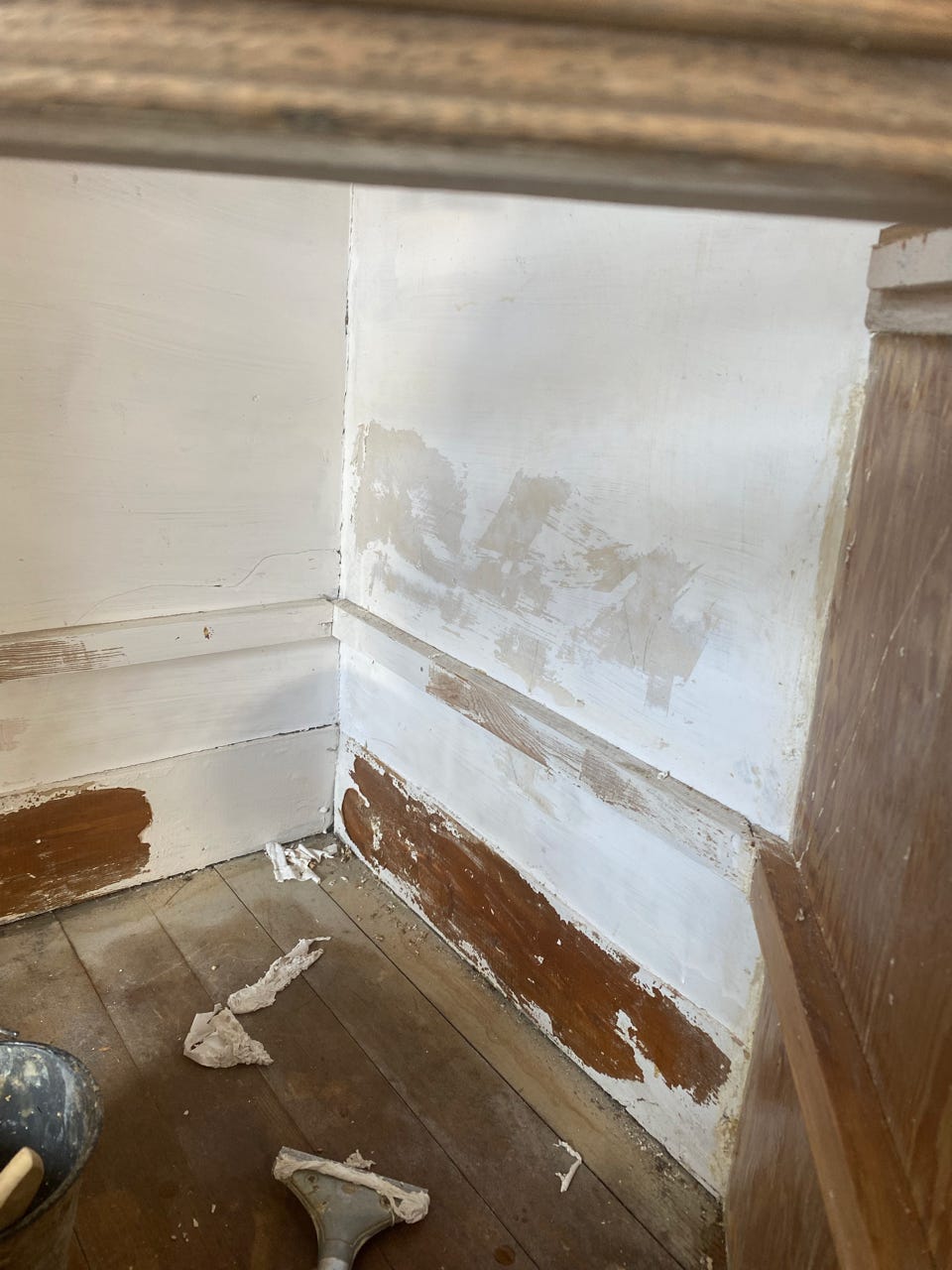
The process to remove the haze and paint caught in the nooks and crannies is to coat everything with the chemical stripper and then lots of scrubbing with various stripping pads. The dental picks are used to dig out the caked in paint. I then use brass and steel brushes for the final pass to remove the remaining paint. After that it’s all rinsed with denatured alcohol that I also apply with scrub pads and clean brass brushes.
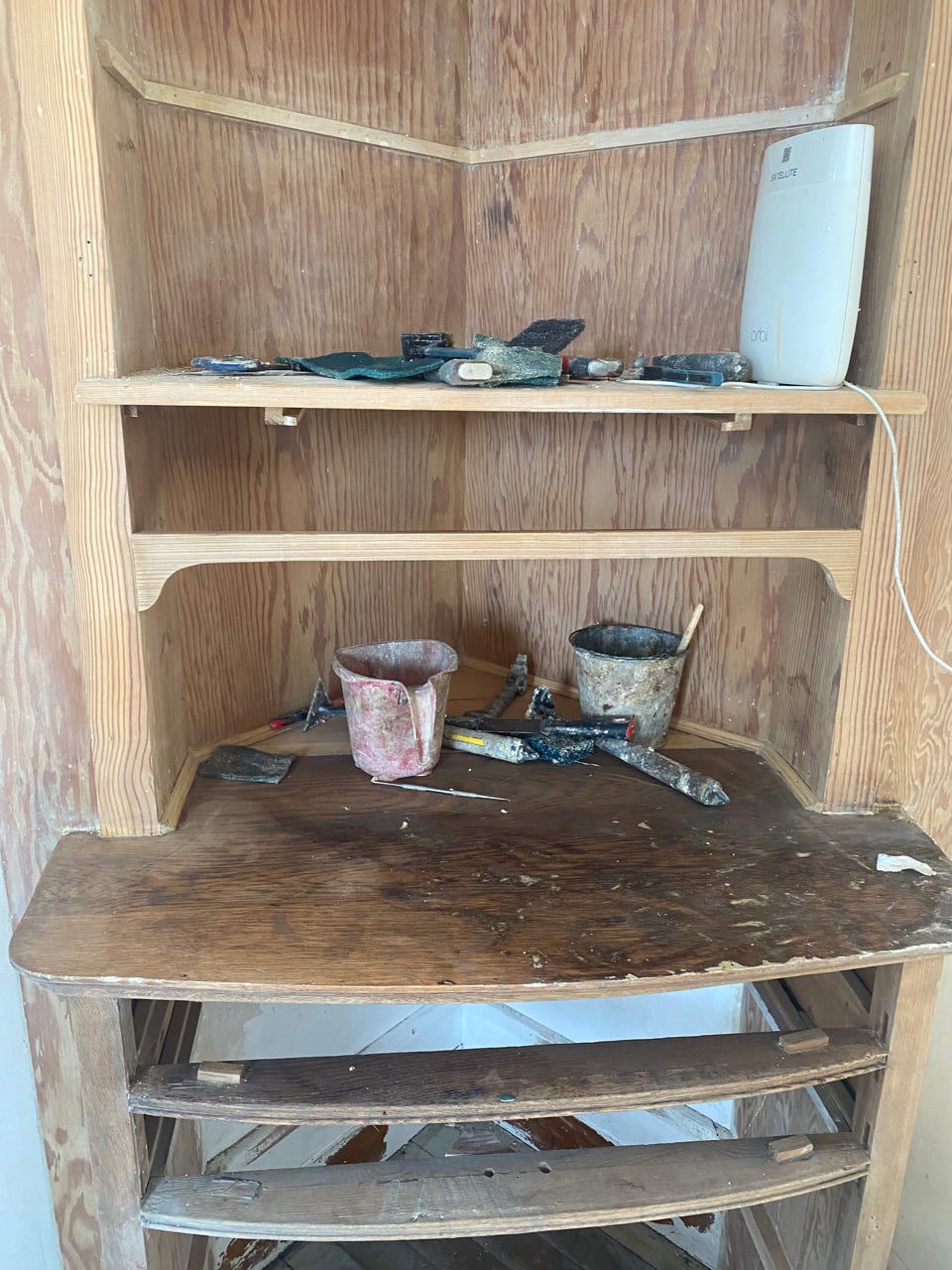
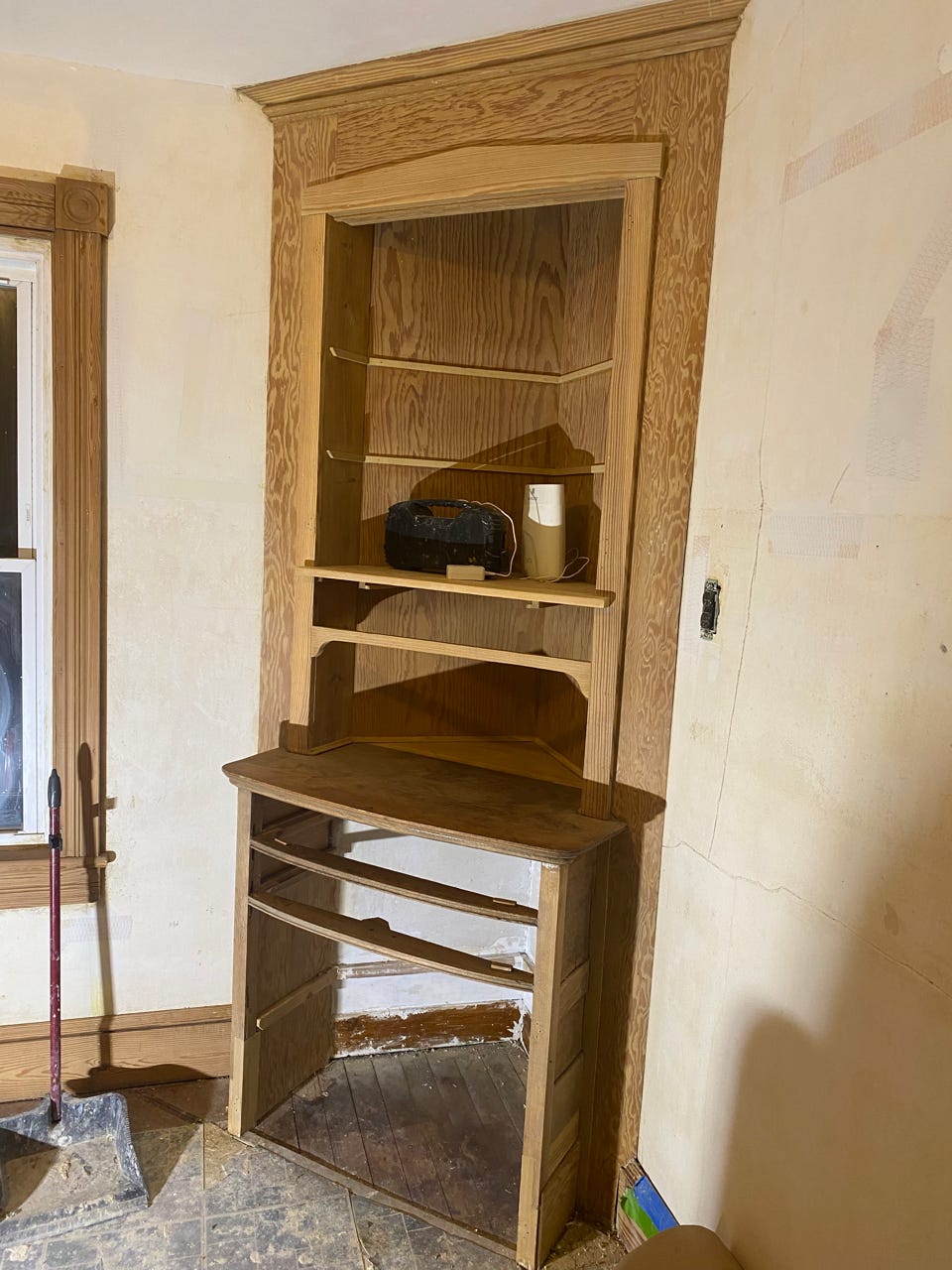
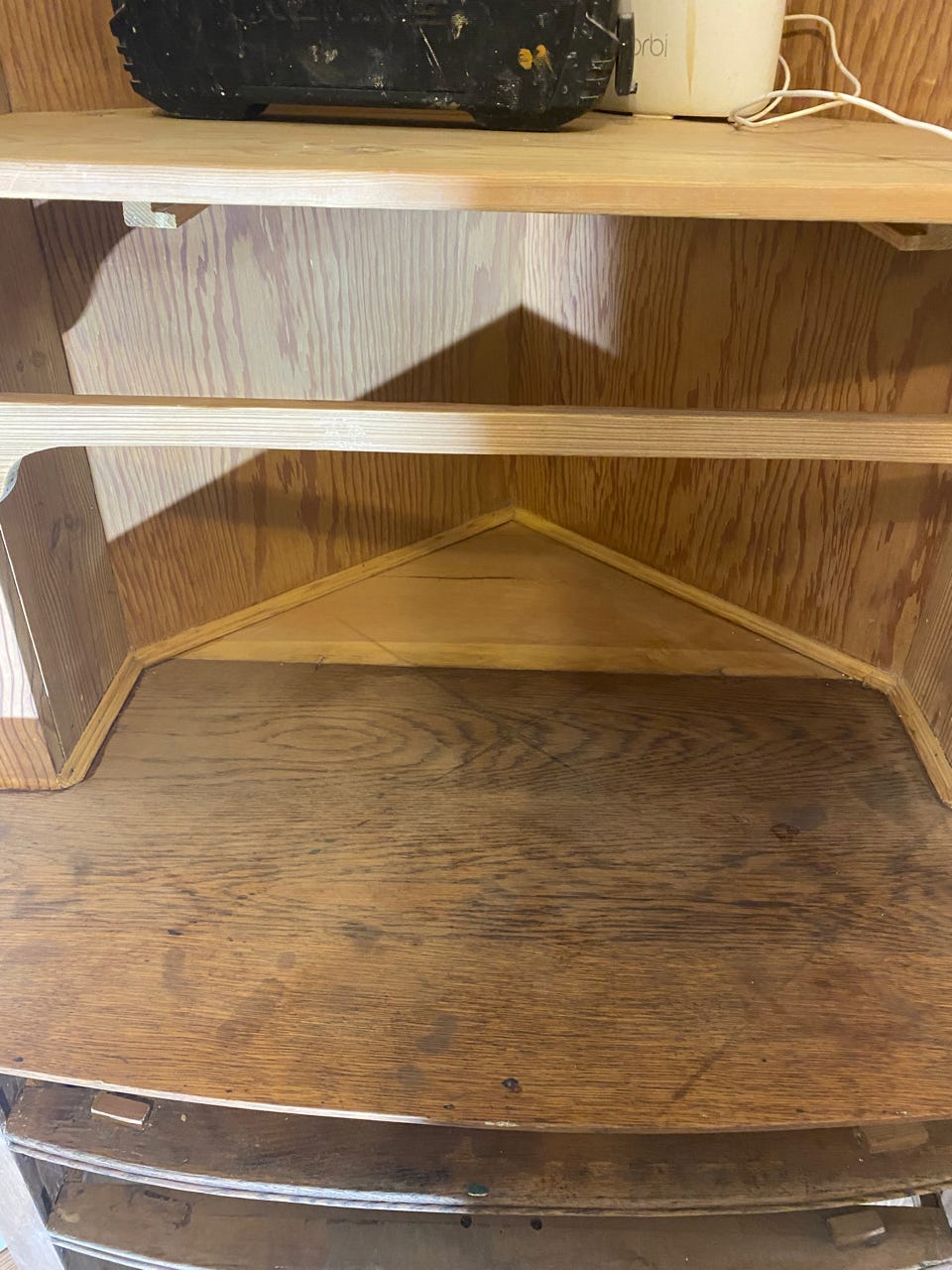
The oak wood top gets another pass and it seems like the alcohol wash is taking up most of the color at this point which means that it was probably originally shellacked. There’s lots of blotches in the wood and some stains from the old tiles so I think I’ll need to bleach this to see if I can even out the color.
Comments
Nothing yet. Say the first thing.
Sign in to join the conversation.