
While I struggle stripping all the remaining paint from the nooks and crannies in the built-in, the rest of the molding is moving towards staining. I completed the final stripping of the woodwork by doing a final application of chemical stripper and scrubbing that off. I’m mostly trying to get rid of the white haze left over from the paint for the last stripping but also running the dental picks over the seams and cracks to dig out any last bits of paint. There’s always some more to find, but at this point it’s close enough to move to the next step. First I do a final scrub down with naphtha to remove any residue from the stripper. I used to do a scrub down with TSP and then linseed oil soap, but I was having issues with TSP blotching the wood and the linseed oil soap is pretty mild so I wasn’t sure if that combo was effective. I go with a dryer solvent to not flood the wood with water too much because the next step is bleach the wood with oxalic acid dissolved in water. I do this to clean up any dark marks caused from drips when washing the walls with TSP and any discoloration exposed after removing the paint. For example, one of the window sills has a lot of dark blotches on it. After I scrub the oxalic acid, I neutralize the acid using a wash of Borax mixed in with water. Then it’s a final rinse with clean water and then I apply a water based “Antique Pine” dye to the wood. The dye helps hide any of the remaining white haze and also even out any blotching.
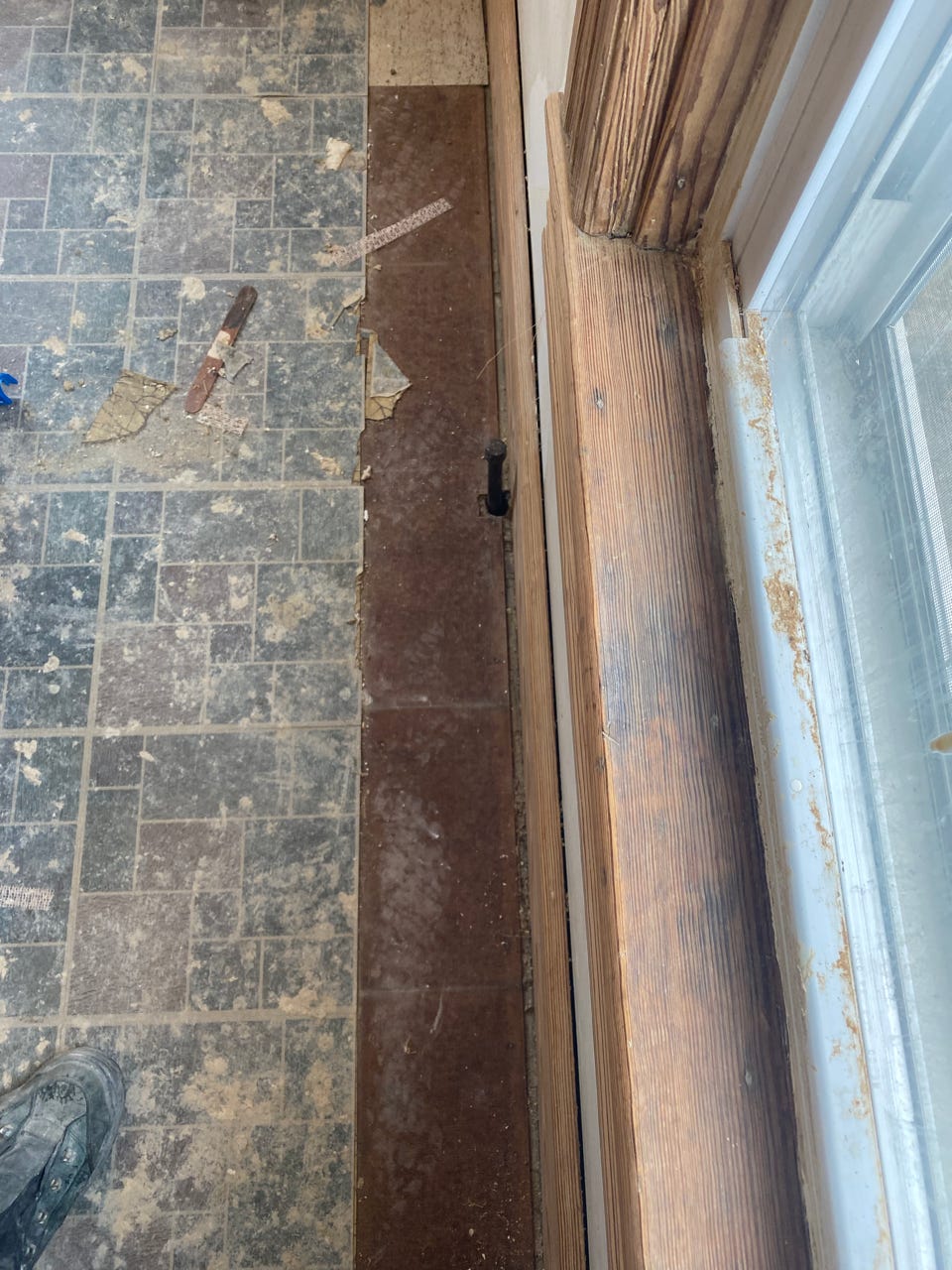
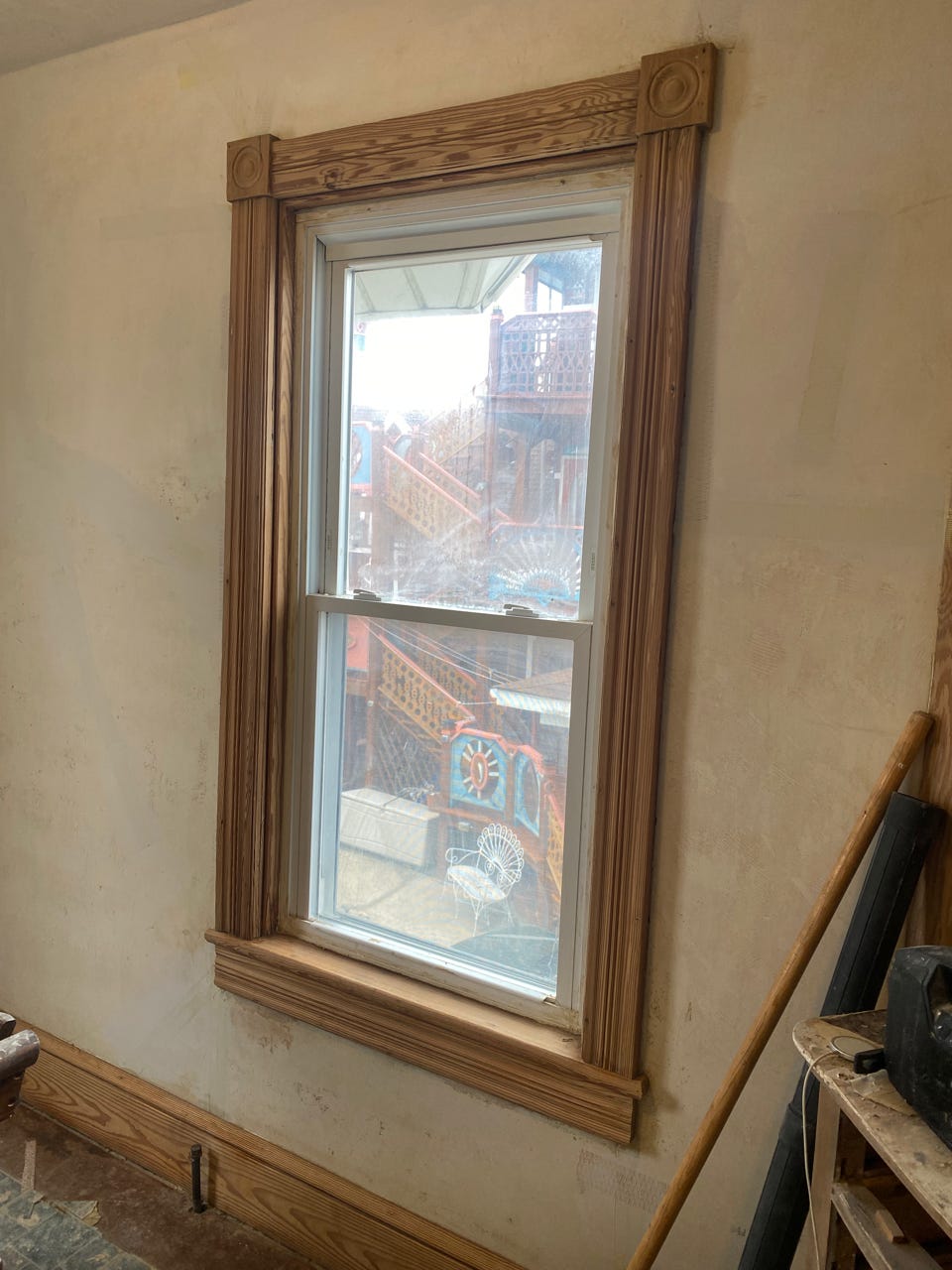
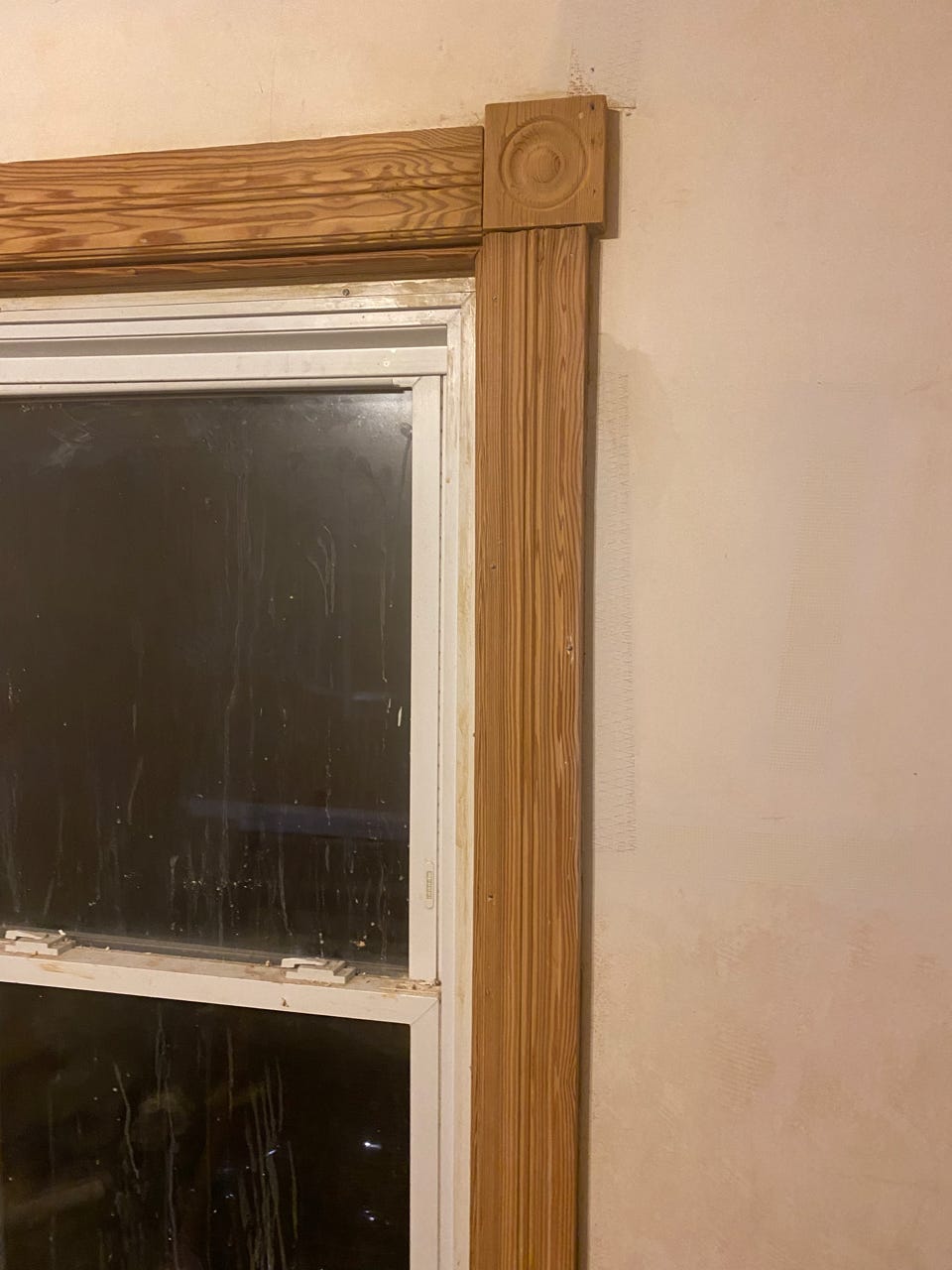
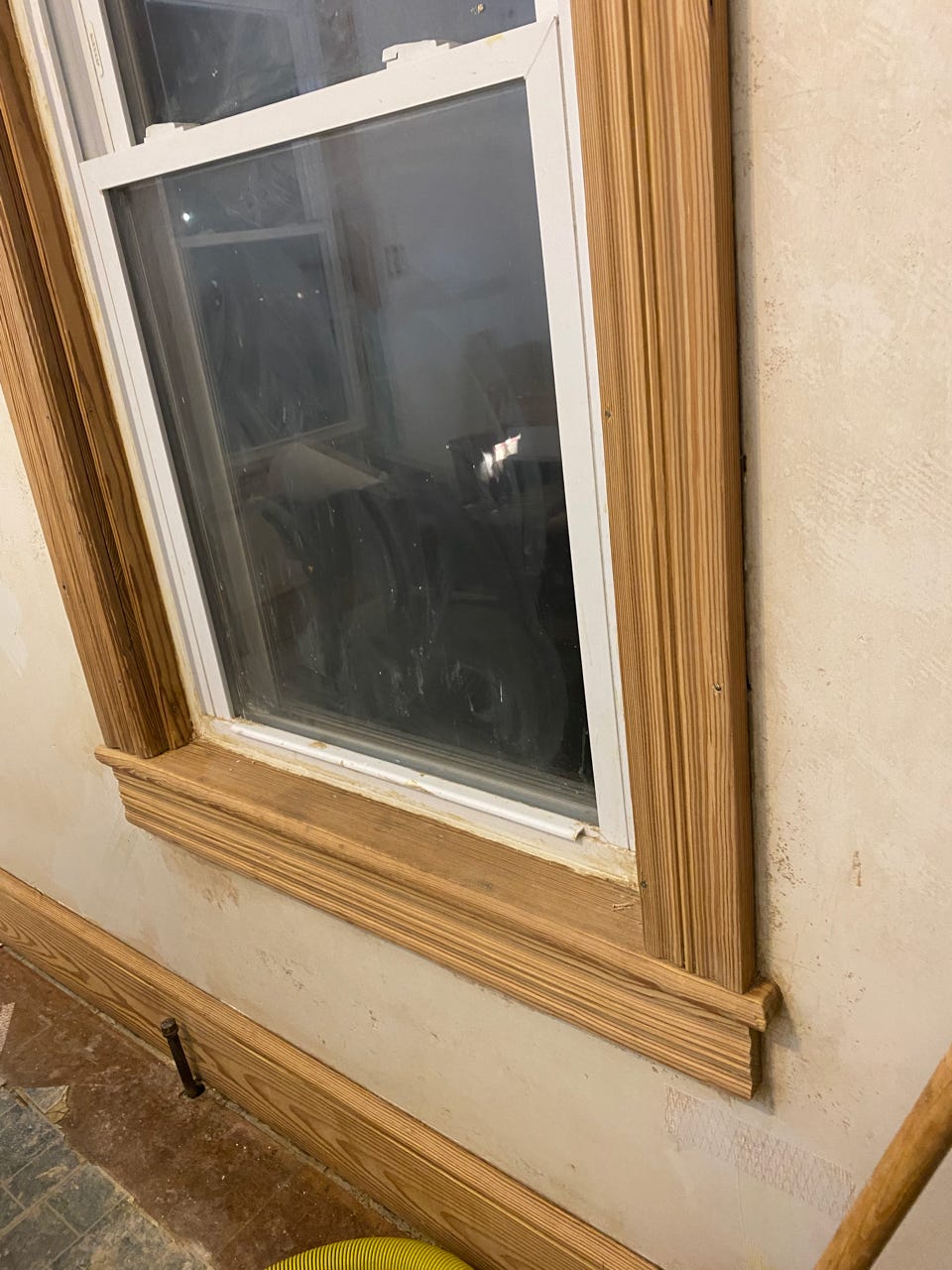
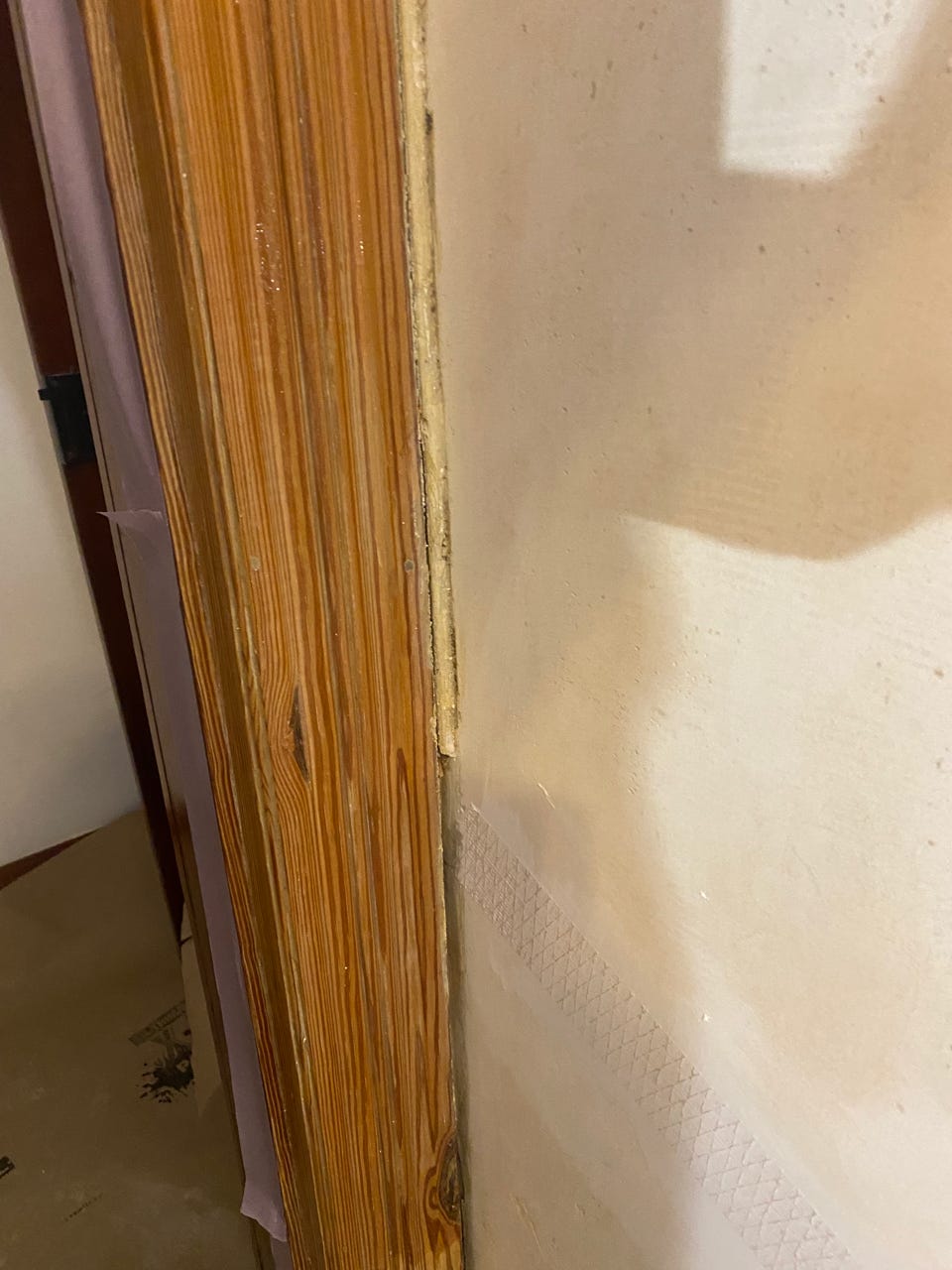
I continue around the room working on any final touch-ups with stripping, followed by the Naphtha pass, then the bleach, borax scrub, and the clean water rinse. At the doorway there’s a little gap between the plaster and the door frame that the previous owners patched with a type of joint compound. The repair is cracking and coming loose from all of the removal of the Linowall along with the scraping so I decide to rip it out. I see behind the crumbling joint compound is rolled up newspaper to fill most of the crack. I’m able to date a fragment to 1940 which seems to make sense with when they put the Linowall over the plaster. I chip out all of the newspaper/joint compound filler. I fill the gaps with my old stand-by Durabond90.
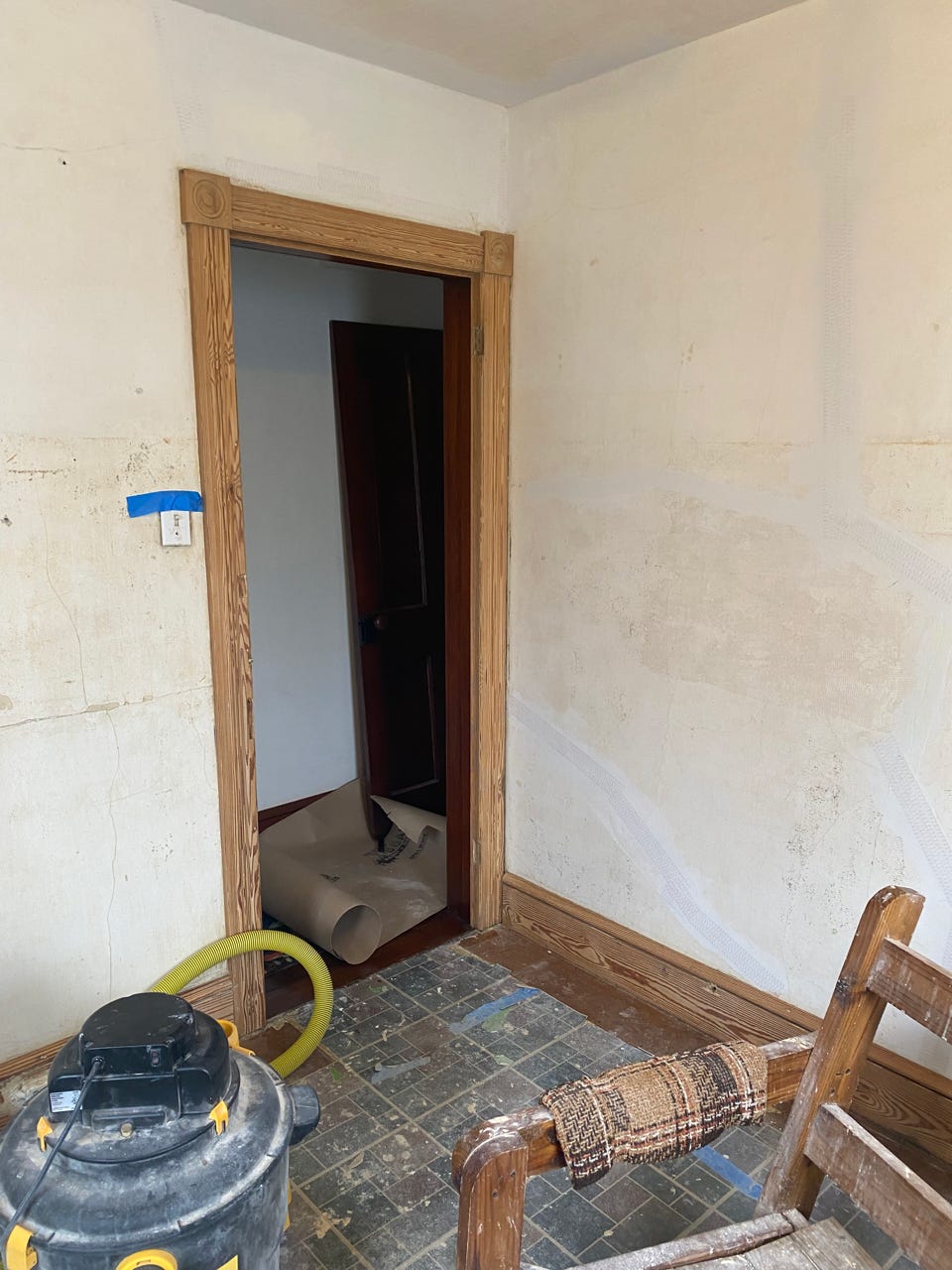
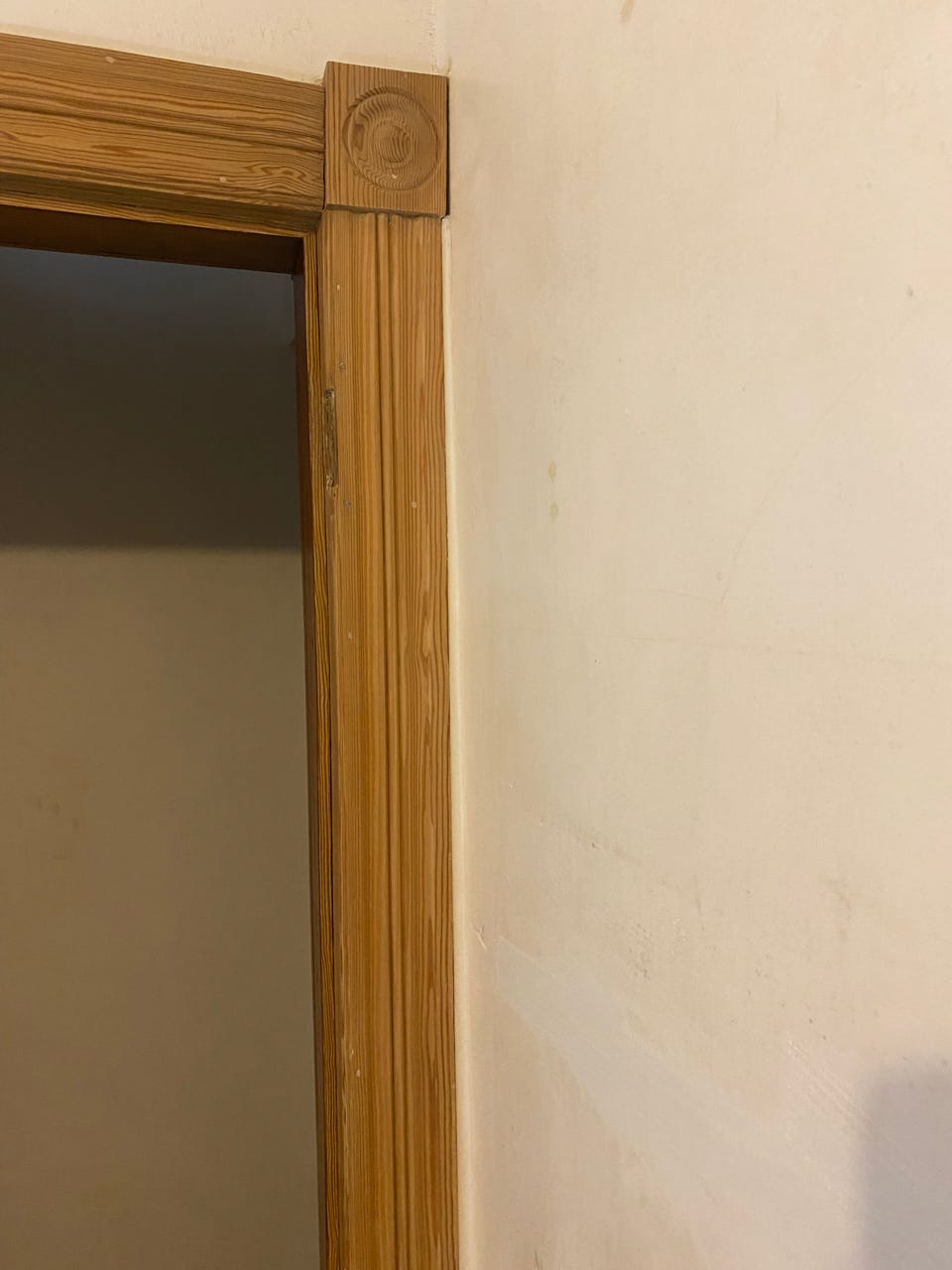
I continue going around the baseboards with the bleach and borax combo. The baseboards need a bit more of the bleaching because even though I taped them off, a lot of TSP dribbled down from the walls when I was scrubbing the plaster clean. I use a scrub brush and let do a few applications of the acid to try and get rid of the dark drips. There’s also an old gas line like the rest of the rooms that I continue stripping down to the bare metal.
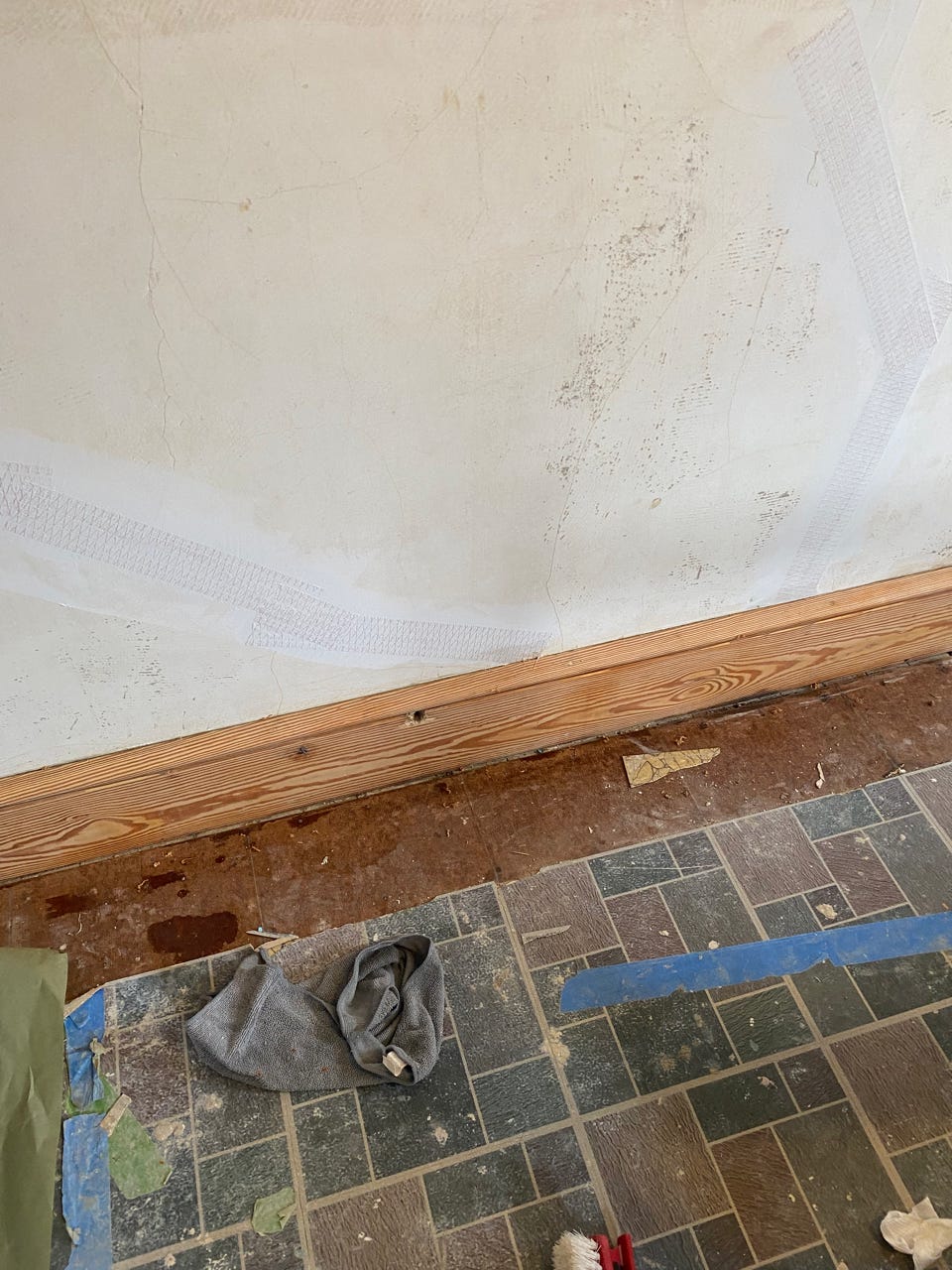
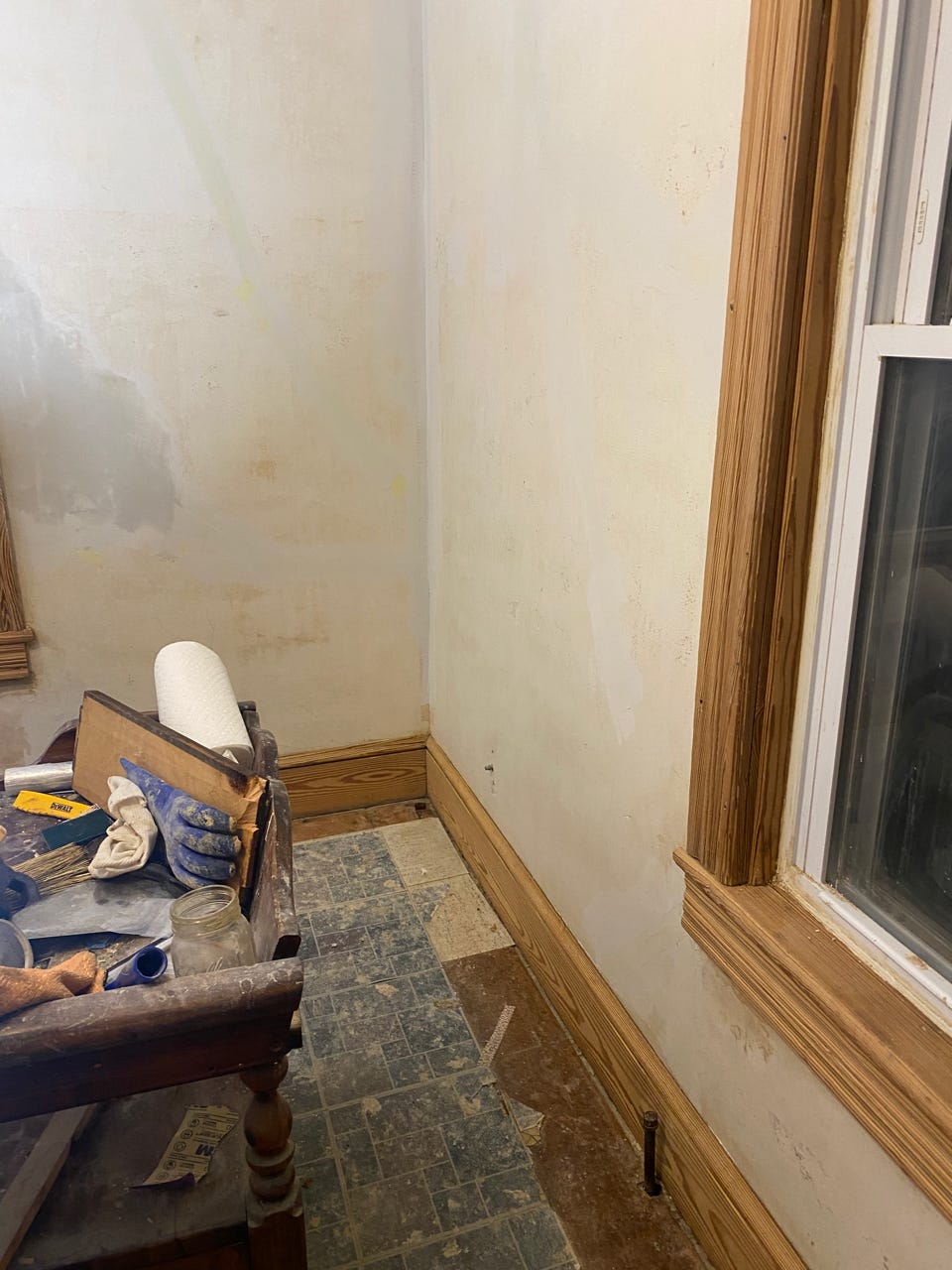
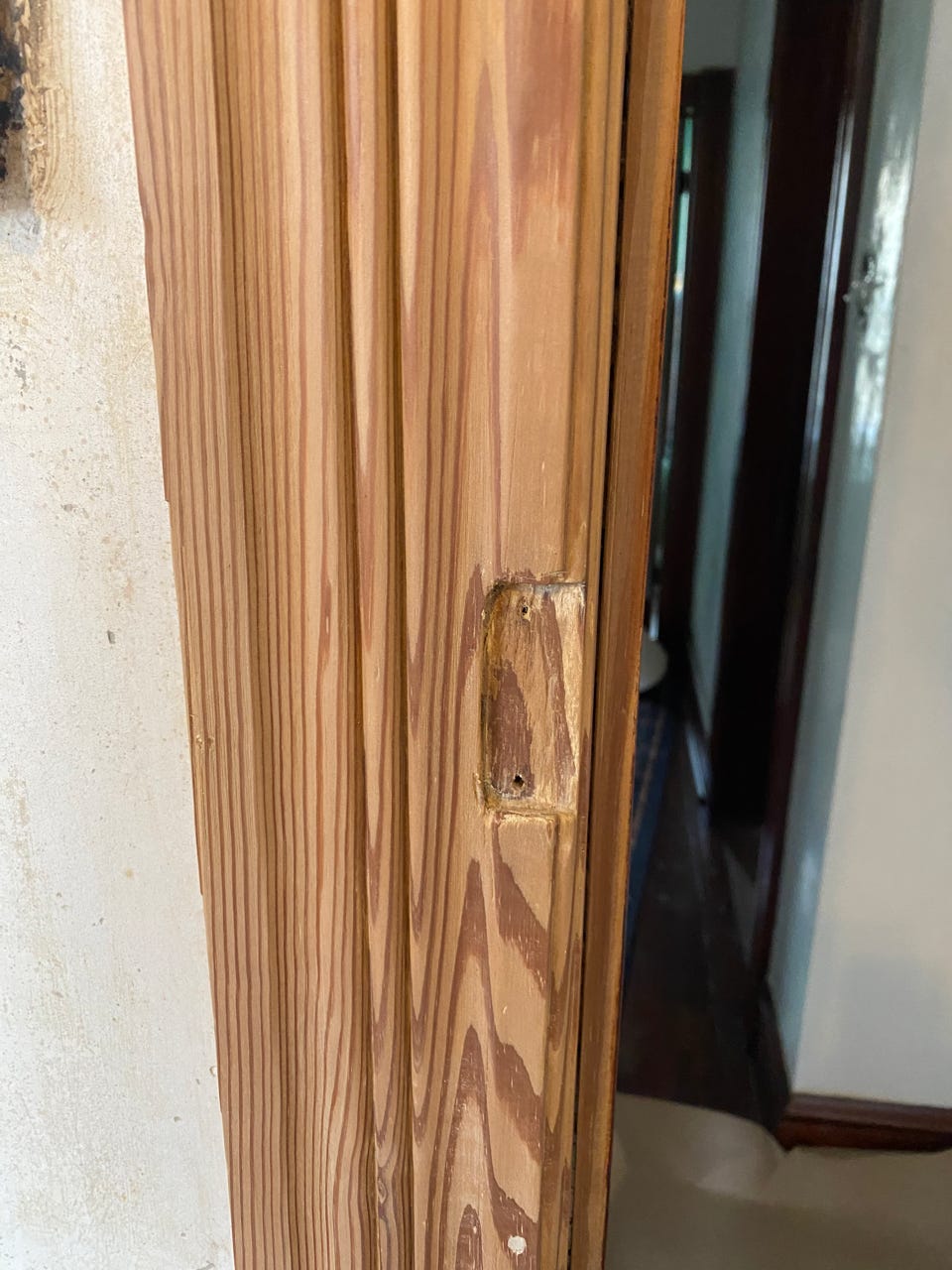
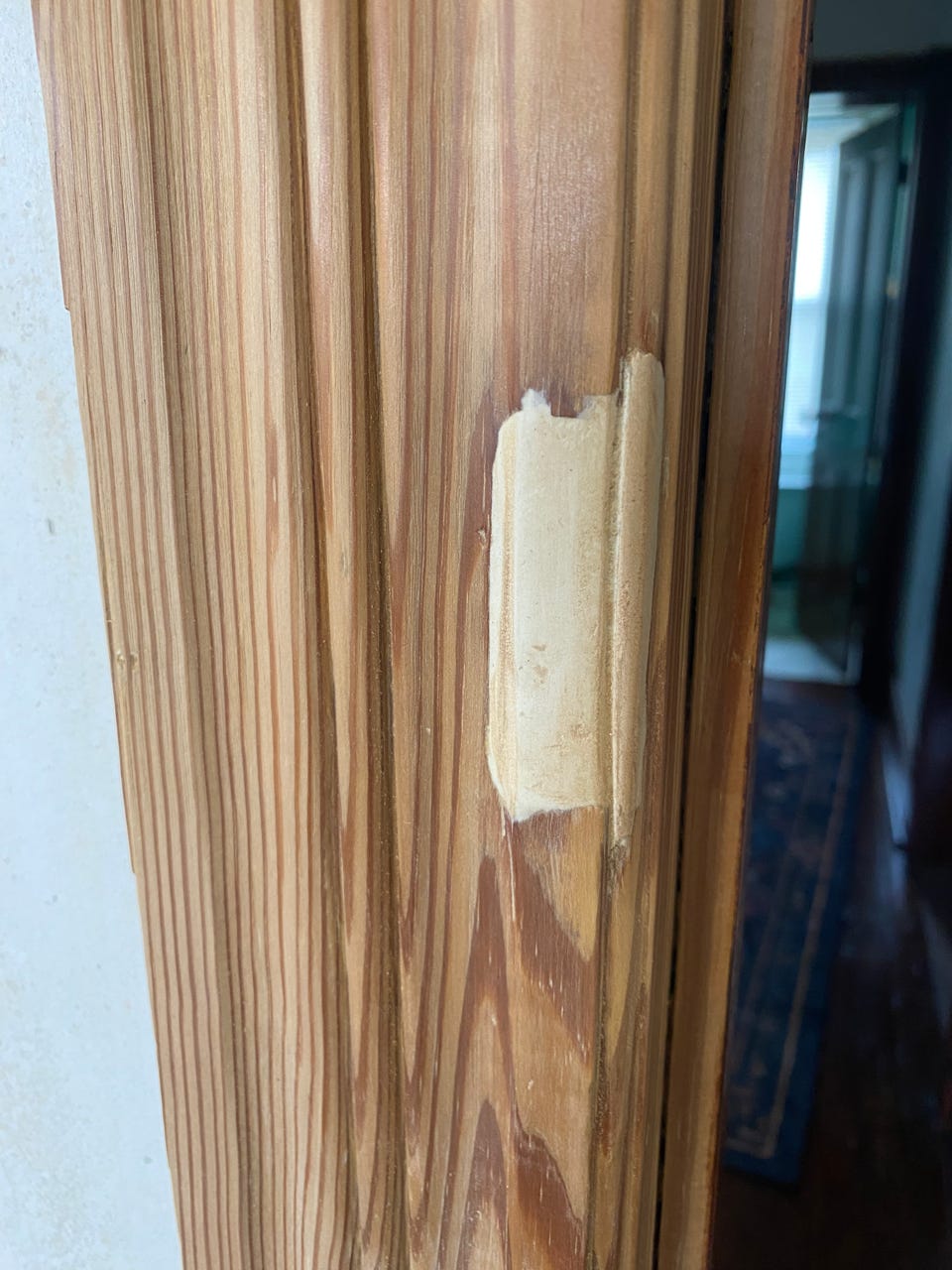
The next bit of work on the wood is fixing any holes and cracks. Some of the rosettes have split with cracks going along the entire block. There’s also a hole drilled in one of the baseboards, but the biggest repair is a chunk removed from the door frame for a heavy lock. I’ve made a bunch of these repairs because every room had a chunky lock installed when the place was a boarding house. Like the other repairs, I go with the Abatron wood epoxy to replace the missing wood. I use a putty knife and my hands to fill the gap and then I dip the putty knife in acetone to cut off the excess epoxy. The acetone dissolves the epoxy to the knife can cut through like butter, otherwise the epoxy is a little sticky and will adhere to the metal knife. After the repair dries, I then use sandpaper over contoured sanding grips to match the curves of the original wood. I get a decent enough approximation of the original shape using 220 and 400 grit sandpaper.
Comments
Nothing yet. Say the first thing.
Sign in to join the conversation.