
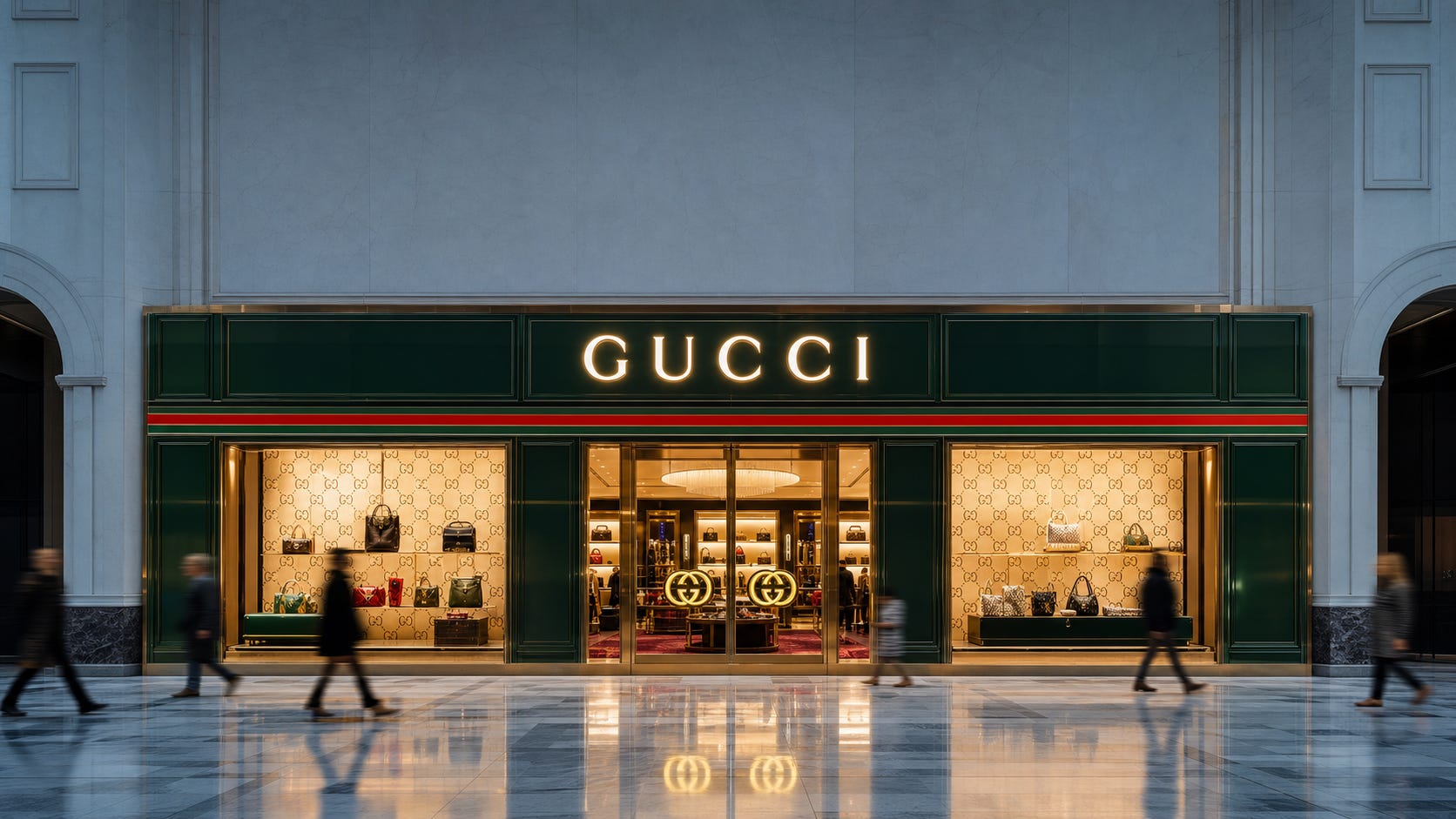
Kering’s latest first-half results triggered one of the sharpest single-day rallies the luxury sector has seen in years. The shares rose roughly 16 percent. Analysts raised targets within hours. The narrative formed almost instantly: the turnaround is working, and Gucci is coming back.
I have spent more than two decades advising luxury brands and measuring what drives their value. My guidance to anyone reading these results is simple. Respect the execution. Question the interpretation. The two are different things, and the difference will decide whether this recovery holds.
Before assessing the recovery, the starting point deserves precision, because the market has largely stopped talking about it.
In 2022, Gucci generated €10.5 billion in revenue with a recurring operating margin of approximately 36 percent, producing €3.7 billion in operating income. It was among the most profitable brands in the history of the industry. In 2023, revenue slipped to €9.9 billion. In 2024, it fell to €7.7 billion. The first half of 2026 came in at €2.76 billion, which annualizes to roughly €5.5 billion. The margin now stands at 17 percent, producing €468 million of operating income in the half.
Read those numbers slowly. In about three years, Gucci lost close to half its revenue and roughly three quarters of its operating profit. Kering’s market capitalization fell from above €90 billion at its 2021 peak to roughly a third of that level, even after the recent rally. This ranks among the largest value destructions in luxury history, and it was almost entirely self-inflicted. No pandemic closure, no war, no regulatory shock explains it. The Chinese slowdown hurt every house. It did not cut any comparable competitor in half. Clients left because the brand gave them reasons to leave, year after year, decision after decision.
That is the base against which the current numbers must be judged.
Credit first, because the credit is earned. Group revenue in the second quarter reached €3,652 million, up 2 percent on a comparable basis, the first quarterly growth in twelve quarters. Gucci’s decline narrowed to 2 percent, a seven-point sequential improvement in retail. Operating expenses fell 5 percent to €4.2 billion while advertising and promotion investment was held at around 9 percent of revenue. Net debt dropped from €8.0 billion to €3.3 billion. Inventory discipline released cash. Eighty-four net store closures were completed in six months against a full-year target of one hundred. Luca de Meo promised operational rigor, and on every lever inside management’s control, he has delivered ahead of plan. That deserves recognition, and in my assessment it reflects one of the more disciplined first phases of a luxury restructuring in recent memory.
Now the caution, because the same release contains numbers the applause skipped.
The growth arrived against a collapsed base. The comparison quarter, the second quarter of 2025, saw group revenue fall 15 percent on a comparable basis, with Gucci down 25 percent. Growing 2 percent on that base restores very little in absolute terms. Gucci declining 2 percent against a quarter in which it declined 25 percent still leaves the brand at roughly half its former size.
The bottom line halved. Net income attributable to the group fell to €189 million from €474 million, with earnings per share dropping to €1.54 from €3.86. Non-recurring charges of €223 million absorbed much of the operating result. Those charges cover store closure impairments and restructuring, and the closure program runs to 2030 with 250 doors targeted. Costs attached to a five-year program will recur for five years, whatever the accounting label says.
Gross margin contracted. It fell from 72.7 percent to 71.6 percent, with cost of sales rising in absolute terms on lower revenue. Every basis point of the group’s margin improvement came from operating expense reduction below the gross line. Product economics moved in the wrong direction, and management has signaled they will continue to, through higher quality investment and a corrected price architecture.
The deleveraging is a disposal story. The €4.7 billion debt reduction is fully explained by the €4.0 billion sale of Kering Beauté to L’Oréal and €729 million received for the via Monte Napoleone building. Kering also converted fifty years of Gucci beauty economics into a license. These are rational moves for a stretched balance sheet. They are also one-time moves, and they trade future brand-adjacent income for present flexibility.
The cash flow improvement leans on working capital. The €863 million year-on-year swing in working capital exceeds the entire underlying free cash flow improvement. Destocking releases cash once.
And traffic remains negative. Management confirmed that client traffic declined across most regions, offset by higher conversion and higher average tickets. Fewer clients paying more is mix management. It is worth noting that this is the opposite of what a desirability recovery looks like, which shows up first as more clients walking in.
None of this makes the results bad. It makes them early. One quarter of modest growth against a deeply depressed base, funded by cost discipline and asset sales, with gross margin down and traffic down, is stabilization. Stabilization is a genuine achievement after twelve quarters of decline. It should be named accurately, because the actions appropriate to a stabilization differ from the actions appropriate to a recovery.
On the results call, de Meo made the single most important disclosure of the entire release, and it received almost no analysis. Explaining Gucci’s price corrections, he said that in some categories the price elasticity “was not exactly linear: it was exponential.”
Luca Solca at Bernstein, whose work I respect, read this as vindication of a pricing thesis, calling the more realistic approach to pricing the main driver of the stabilization and lifting his target from €220 to €270. Here I offer a different interpretation, and my team and I have two decades of proprietary quantitative research across the United States, China, Japan, Germany, and France behind it.
Price elasticity is a measurement of desire. A brand with a strong desire field has almost none. Hermès raises prices annually and volumes do not respond, because clients are buying meaning for which no substitute exists. When a brand discovers that modest price moves produce exponential volume moves, it has learned that clients were comparison shopping. Comparison shopping only happens when the brand has entered a comparison set. And a luxury brand only enters a comparison set when it has stopped giving clients a reason to see it as incomparable.
Gucci’s growth from 2015 to 2021 was built on exactly that incomparability. Under Alessandro Michele, the brand owned an idea: freedom of self-expression, ornament without apology, the permission to break conventions. Clients paid prices the product alone would never have justified, because they were buying a point of view. Our research consistently shows that this is how desire works in luxury. Storytelling that inspires clients creates the emotional surplus that carries the price. Remove the story and the surplus collapses to the level of the leather.
The De Sarno era removed the story. The brand that had won by breaking conventions repositioned itself around conventions: product, restraint, craft, quiet elevation. Each of those qualities is admirable. Each of them placed Gucci in direct comparison with houses that had spent a century earning that exact position. The moment clients could line a Gucci bag up against three credible alternatives, price became the deciding variable, because nothing else distinguished the offer. The greedflation-era increases did not create the fragility. They landed on a brand that had already surrendered its immunity. The exponential elasticity de Meo measured is the receipt.
This matters because it defines what the fix can and cannot be. Corrected pricing and improved leather quality are answers to a comparison-set problem, and they accept the comparison set as the terms of engagement. Gucci does not win a craft contest against the incumbents of craft. It wins by making the contest irrelevant. The critical success factor still missing from the plan, as disclosed, is a point of view powerful enough to inspire clients again and pull the brand out of comparison altogether. Formula One platforms, beauty licenses, and faster newness cycles extend reach. Reach and desire are different assets.
One caution deserves its own paragraph, because it carries the highest client risk in the entire program. If price realignment extends to like-for-like reductions on existing references, the clients most damaged are the ones who bought at the previous prices. They are, by definition, the most committed clients the brand retained through the decline. A visible markdown on an object they own converts their purchase into a penalty and their loyalty into a lesson. My guidance for any house facing this situation is to realign through new references and visible value transfer, better materials and better construction at the new price, while protecting the price integrity of everything clients already own. The realignment of price to Gucci’s current perceived value is necessary. How it is sequenced will determine whether it rebuilds trust or completes the alienation.
De Meo has fixed, faster than most expected, everything a world-class operator can fix. Costs, stores, inventory, debt, supply chain, organization. The half-year results prove it, and the market was right to reward the execution. What no operator can engineer is the reason a client wants the brand more than its comparables. That asset was built once through storytelling and conviction, it financed a decade of extraordinary growth, and it was given away by choice.
The numbers to watch from here are full-price sell-through on new collections, new client recruitment, and whether traffic turns before average ticket does. Those will reveal whether desire is returning or whether discipline is simply slowing the decline.
So here is my question to every brand leader reading these results as a template: does your recovery plan restore what clients can compare, or what they cannot? Only the second one compounds.
Thanks for reading! This post is public so feel free to share it.
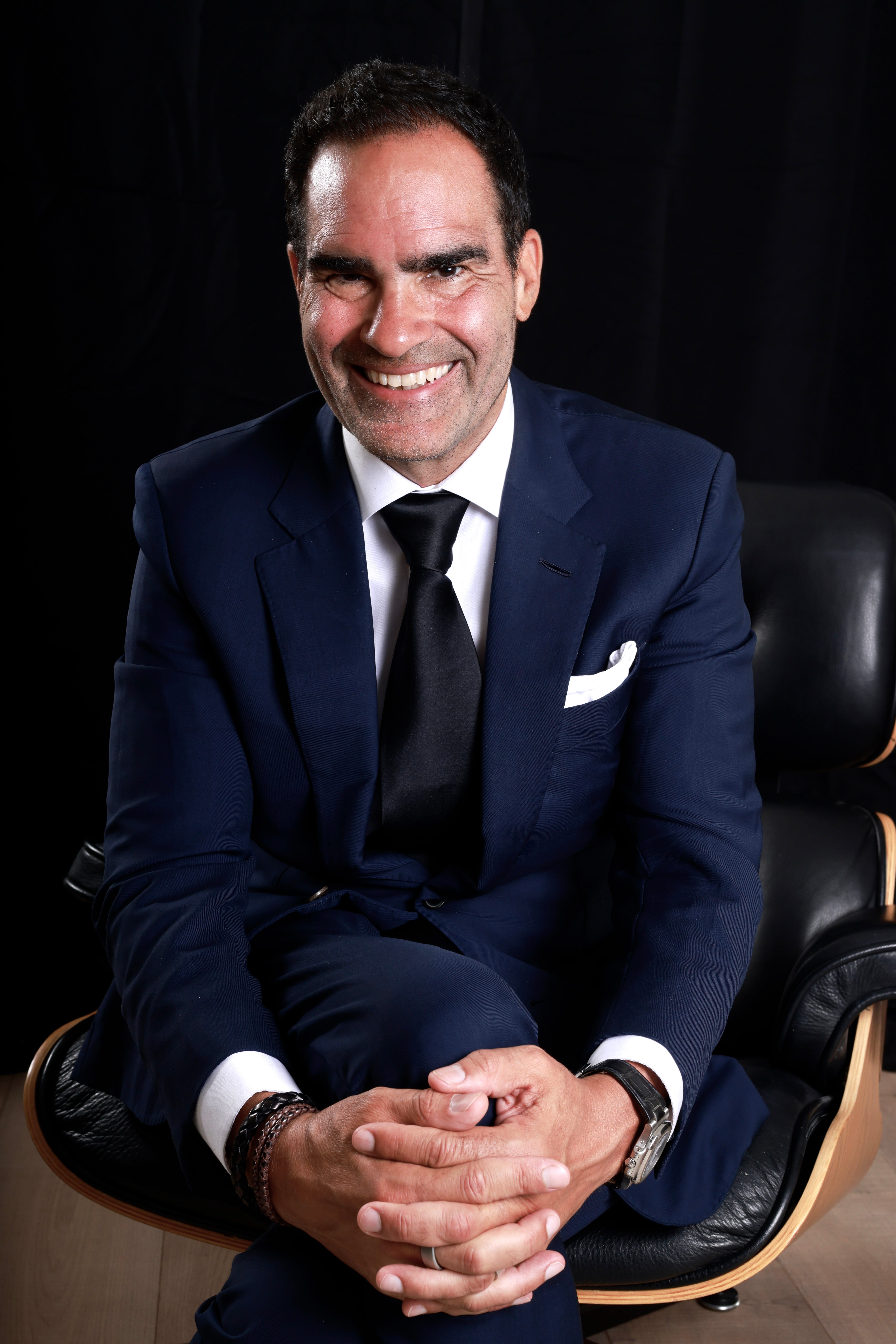
Langer on Luxury is a weekly in-depth analysis by Dr. Daniel Langer, published every Friday. He is the CEO of Équité, a global luxury brand strategy firm advising the world's leading luxury brands across jewelry, watches, fashion, automotive, aviation, hospitality, and luxury experiences, and serves as the executive professor of luxury strategy and pricing at Pepperdine University in Malibu and as a professor of luxury at New York University, New York. A best-selling author of luxury management books in English and Chinese, he is recognized as a global top-five luxury key opinion leader, named an authority in luxury by the Economist, and awarded Top Keynote Speaker in Luxury by the WLCC for two consecutive years. He is featured as a luxury expert in The Wall Street Journal, Financial Times, The New York Times, Forbes, Vogue, and Robb Report, and is the author of the Équité Luxury Report 2026-2030, "The Cost of Waiting," a five-year outlook for the industry. Follow him on LinkedIn and Instagram, listen to his podcast, The Future of Luxury, and explore Équité Intelligence, the on-demand digital platform for luxury learning.
No posts
Comments
Nothing yet. Say the first thing.
Sign in to join the conversation.