
Every luxury brand knows its market share. Share of handbags, watches, or suites, tracked to the decimal, benchmarked against the competitive set, reviewed every quarter. Almost no brand can answer a different question: what is your share of your best client’s life? The number does not exist. Nobody measures it. Nobody owns it. And in that gap sits, in my analysis, one of the most significant strategic blind spots in luxury today.
Here is the reality behind the question. The ultra-wealthy client is one person. The same individual buys watches, commissions residences, books longevity programs, charters aircraft, collects art, and reserves the best tables. One person, one life, one set of evolving priorities, and one budget of attention and meaning that is far more scarce than their budget of money. But the industry serving this person is organized into categories, and each category sees only its own slice. Watch businesses track watch markets. Hospitality tracks occupancy and rate. Automotive tracks deliveries. Many industries, each convinced it serves its own customer, when in truth they are all negotiating for share of the same life.
This is why we built the Équité Luxury Report 2026 to 2030 the way we did. For the report, my team and I modeled second and third order effects across regions and categories, precisely because the same client purchases across all of them, and an event in one region or one category propagates into the others. You cannot understand the interconnectedness of the forces shaping luxury from inside a single market. You have to zoom out to the level where the client actually lives.
And when you zoom out, the numbers of this year stop looking like separate category stories and resolve into one picture.
Consider what our forecast shows side by side. Personal luxury goods contracting two to four percent. Wellness and longevity growing eight to twelve percent, sustaining ten to fifteen percent through 2030, the only major category with double-digit structural growth. Experiences and travel growing. Jewelry as the most resilient category in personal goods, four to seven percent a year through 2030, while the categories most exposed to the aspirational recalibration decline by mid to high single digits. Read as category reports, these are disconnected data points, some hopeful and some grim. Read at the level of the client, they are a single decision. The wealthiest people on earth are re-deciding what their wealth is for. Away from accumulation. Toward transformation. Away from more objects. Toward health, time, meaning, and those few objects that endure. The money did not leave. It moved, inside one life, from some categories to others.
Now here is the thought I want to plant, because it changes how a leadership team should see its own numbers. If the client allocates across one life, then your true competitor is not the maison across the street. Your true competitor is everything else your client loves. A watch is not competing with another watch. It is competing with a longevity program, with a safari alongside grandchildren, with a foundation, with one more week at the summer house. When a client hesitates in your boutique, the money rarely goes to your category rival. It goes to another part of their life. Category thinking cannot see this, which is why category thinking keeps producing strategies that win the competitive set and still lose the client.
This is what I mean by life share. Not share of a market. Share of a life. The portion of your client’s attention, meaning, and allocation that your brand genuinely occupies. In my analysis, it shapes your future far more than market share does, and it is a number almost no brand measures, manages, or designs for.
This is also why brand audits are so crucial, and why they are so often not done completely enough. When we conduct brand audits, we assess whether the role in the life of the client is defined clearly enough. In most cases, it is not. The audit examines the storytelling, the experience, and the positioning, and finds them internally consistent, yet built entirely on a category logic. The one question with the power to reorder everything, what role does this brand play in the client’s life, was never asked with rigor. An audit that stops at category benchmarks confirms what a brand already believes. An audit that tests the role in the client’s life reveals what a brand needs to become.
Let me show you what seeing through this lens reveals, because three consequences follow immediately.
The first consequence: the brands winning right now are winning life share, and their category numbers are the effect rather than the cause. Look at why jewelry holds through the contraction. A great jewelry house occupies the moments a life is actually made of: engagements, births, anniversaries, achievements, and what passes from one generation to the next. Pieces mark a biography and hold value across generations. That is a deep, structural position in the client’s life, and the category resilience follows from it. Look at why wellness compounds. Health is the ultimate self-directed allocation, the client investing in their own future, and a brand embedded in that project is embedded in the client’s identity. These categories are not lucky. They occupy positions in the life that the contraction cannot touch.
The second consequence: many struggling brands are not weak in their category. They are shallow in the life. A brand can hold commanding market share and occupy nothing beyond the transaction: no role in the client’s rituals, no presence in their milestones, no contribution to who the client is becoming. That position feels safe as long as the category grows, because the tide fills every boat. In a market where growth must be earned, shallow positions drain first. This, I would argue, explains much of the divergence defining this earnings season, one brand growing while another in the identical segment declines by double digits. The market is the same. The depth of position in the client’s life is not.
The third consequence, and the one with immediate practical value: a significant expansion opportunity in luxury is neither geographic nor demographic. It is biographical. Deeper into the life of the client you already have. The industry spends fortunes acquiring new clients into thin relationships, while the existing client’s life is full of moments and transitions that the brand never touches. The client who buys the watch also celebrates, travels, recovers, and educates their children. Every one of those is a potential point of presence. Many of them go unclaimed.
So what does a leadership team actually do with this? My guidance, in three moves, and each one is concrete enough to start this quarter.
First, map the life, not the journey. Every brand has a client journey map, and nearly every one begins at awareness and ends at repurchase, which means it maps the transaction from the brand’s side. Build the opposite artifact. Take your twenty most valuable clients and map a year of their life: transitions, celebrations, pressures, and ambitions, where their time went, where their meaning came from. Then locate your brand on that map. For most brands the honest result is a presence measured in minutes per year, surrounded by white space. That map may be worth more than most competitive analyses, because the white space is your growth plan.
Second, redefine the role before you extend the offer. The reflex response to life share is to add services, and the reflex is wrong. A watch brand opening a spa is a category tourist, and clients read it instantly. The question is not what else can we sell. The question is what role does this brand play in the client’s life, stated in one sentence that has nothing to do with product. And defining that role is exactly what great brand storytelling is. A brand story worthy of the name is a point of view on life. When the story reaches that level, it enables brands to expand their portfolios significantly while maintaining a consistent emotional connection and value add with the client, because every extension expresses the same role rather than chasing a new category. In my view, one of the most consequential mistakes in brand positioning work is defining the brand through the category lens instead of through the emotional role in the life of the client. I have applied this principle with my clients in every single project, and it remains the absolute exception in the industry. It is a central reason so many brands underperform, and so many line extensions fail. A house that answers “we mark the moments that matter” can extend into anything that marks moments, and nothing else. A house that answers “we restore our client” has a different map entirely. The role defines which white space is yours to claim and which belongs to someone else.
Third, instrument the relationship, because what is not measured is not managed. If life share shapes your future, someone in the organization has to own it. Start simple: for your top clients, how many distinct life contexts does the brand appear in? Only the purchase? Or also the milestone, the private experience, and moments shared with family? Does that number rise year over year? A brand tracking only transactions is flying on one instrument. The brands that will define the next decade will know their depth in a client’s life with a precision comparable to how they currently know their share of a market.
I will say this as directly as I can. The luxury industry is entering an era in which the client invests in their own life with more intention than ever, and allocates to brands accordingly. In that era, market share tells you who won the category. Life share tells you who will still matter in ten years. The first is a scoreboard. The second is a future.
So the question to take into your week is simple to ask and demanding to answer. Not how large is your share of the market. How large is your share of the life. If you cannot answer it yet, that is not a measurement gap. That is the strategy.
Langer on Luxury arrives every weekend, one story the industry discussed all week, analyzed properly. Subscribe to receive it.
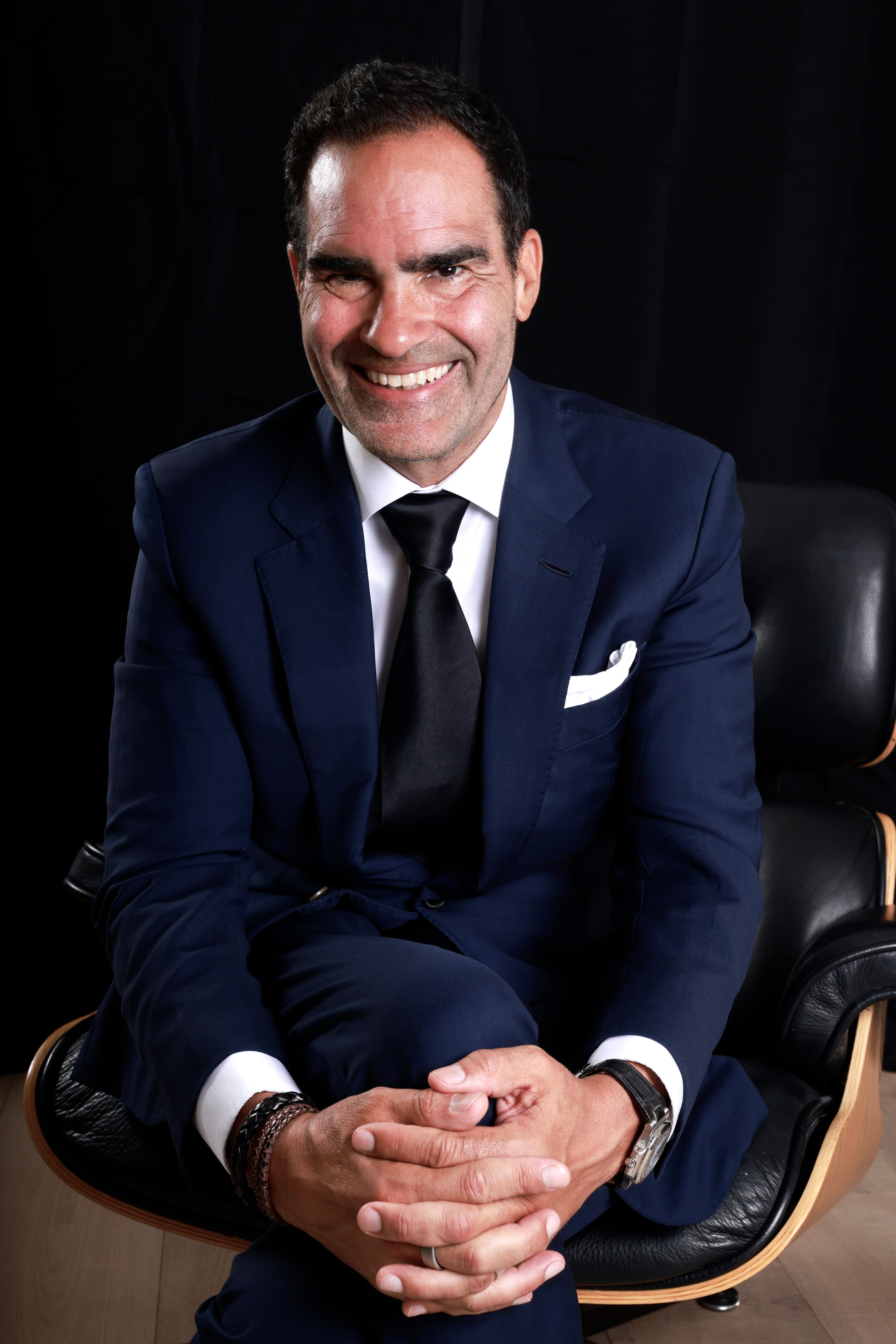
Langer on Luxury is a weekly in-depth analysis by Dr. Daniel Langer, published every Friday. He is the CEO of Équité, a global luxury brand strategy firm advising the world's leading luxury brands across jewelry, watches, fashion, automotive, aviation, hospitality, and luxury experiences, and serves as the executive professor of luxury strategy and pricing at Pepperdine University in Malibu and as a professor of luxury at New York University, New York. A best-selling author of luxury management books in English and Chinese, he is recognized as a global top-five luxury key opinion leader, named an authority in luxury by the Economist, and awarded Top Keynote Speaker in Luxury by the WLCC for two consecutive years. He is featured as a luxury expert in The Wall Street Journal, Financial Times, The New York Times, Forbes, Vogue, and Robb Report, and is the author of the Équité Luxury Report 2026-2030, "The Cost of Waiting," a five-year outlook for the industry. Follow him on LinkedIn and Instagram, listen to his podcast, The Future of Luxury, and explore Équité Intelligence, the on-demand digital platform for luxury learning.
No posts
Comments
Nothing yet. Say the first thing.
Sign in to join the conversation.