

Welcome to Langer on Luxury. Every Friday, I will take the one story the luxury industry discussed all week and give it the analysis it actually deserves: deeper than the coverage, closer to the numbers, and with the strategic meaning the headlines missed. No summaries, no recaps, one analysis worth your weekend attention. This week, that story is Richemont.
Richemont opened luxury’s reporting season with a number built to be misunderstood. Group sales up twenty percent at constant rates for the quarter ended June 30. Jewelry up twenty-four percent, a seventh consecutive double-digit quarter. The print nearly doubled the analyst consensus of eleven percent. Within hours the interpretation hardened into consensus: the luxury consumer is back, the correction is over, plan for growth.
I read the same release and saw something almost opposite. Not a market recovering. A market concentrating.
Let’s start with what the twenty percent is measured against. The comparable quarter, the three months ended June 30 of last year, grew six percent. Inside that base, Japan fell fifteen percent, watches fell seven, Asia Pacific was flat. When you lap a soft and uneven quarter, the percentages that come back look spectacular while describing very little new demand. Japan at plus thirty-six this quarter laps minus fifteen. On a two-year view it has barely moved. It is oscillating around yen-driven tourist arbitrage, not building anything.
Now let’s look at where the strength is significant, because some of it is. The Americas grew twenty-seven percent, and this is the third consecutive strong quarter there, not a base effect. Jewelry’s twenty-four percent is extraordinarily strong. And here the analysis has to get specific, because the whole story lives in one fact the headline erases.
The growth is driven by two houses. Cartier and Van Cleef & Arpels. Both in jewelry.
Before I get to why that concentration matters, three mechanics deserve the scrutiny much of the coverage skipped, because a sales print of this kind is built as much as it is earned.
The first is price versus volume. Richemont discloses no bridge between the two, and that absence is itself informative. The company attributes jewellery growth to the desirability of its iconic creations while citing measured price increases taken against record gold prices. RBC attributed a large part of the prior year’s jewelry growth to price. Read those together. A company growing jewellery twenty-four percent on genuine unit demand would likely say so, because volume is the strongest claim available. The framing stays on desirability, which is brand language rather than volume language. Some meaningful share of the twenty-four percent is price effect rather than new clients, which is what the market heard.
The second is channel mix. Retail now represents seventy-one percent of group sales and grew twenty-four percent, while wholesale grew in the high single digits. As Richemont keeps shifting sales into directly operated boutiques, it books the full retail price where it once booked the wholesale price. Reported growth structurally accelerates from this migration alone, independent of end demand. Part of the twenty percent is not the consumer buying more. It is the same consumer being booked at a higher price point through a different door.
The third is the cash, and here the numbers are genuinely strong. Net cash reached 9.1 billion euros, up 1.7 billion year over year. Strip out the 0.4 billion from the Avolta disposal and the underlying cash build is still roughly 1.3 billion. That confirms the business is authentically cash-generative, with no sign of growth financed through receivables or channel loading. Hence, the quality of the cash flow is excellent. The open question is entirely about the composition and durability of the sales sitting on top of it.
Which brings the analysis back to the two houses, because that is where the durable part lives. Jewelry has been the strongest category in personal luxury for the better part of two years, and the reason is the trust erosion in many personal luxury goods categories, like fashion and leather goods. When a luxury client no longer believes a five-thousand-euro handbag will feel worth it in two seasons, that person moves toward objects they believe hold value. A Cartier piece is understood, rightly or not, as something closer to a store of value than a purchase that depreciates the moment it leaves the boutique. In a market where confidence in brands has thinned and inflation is still live, demand does not disappear. It migrates. It runs toward the few names that combine desirability with the belief that the object will endure.
That is what Richemont captured. Not a recovery of the luxury consumer. A flight to quality inside luxury, driven by extraordinarily strong brand equities of Cartier and an Cleef & Arpels.
This is worth sitting with, because it is the most important thing brand leaders can take from the quarter. Richemont did something incredibly difficult over the last several years. They built Cartier and Van Cleef into brands with such desirability and such perceived permanence that the pieces function as both adornment and reassurance. That brand power is now proven in a volatile luxury environment, it appears, for now, durable, and it is doing the heavy lifting in times in which weaker brands are stalling or declining. The lesson is not that the luxury industry is healthy in a blanket assessment. The lesson is that brand power and perceived value retention have become the price of entry for growth when trust is scarce.
Which brings me to the number that deserves the hardest scrutiny, and the one almost every report repeated without examining: the Middle East and Africa “returned to growth.”
Look at the coverage period. This quarter runs April through June. Richemont’s own full-year release stated that the regional conflict disrupted the Middle East in March, producing a decline in the prior fiscal quarter. So the acute shock landed in the quarter before this one. This quarter is the aftermath. And in the aftermath, the region grew three percent, against a comparable that was plus seventeen a year ago. A deceleration from seventeen to three is being narrated as a rebound because it is no longer negative.
Let’s have a closer look at the composition Richemont disclosed. The three percent came entirely from local demand, which “more than offset the significant drop in tourist spending owing to the conflict.” The United Arab Emirates, the region’s flagship luxury market, recorded lower sales. So the recovery is this: resident buyers in a handful of markets bought enough to drag a war-affected region barely into positive territory, while the tourist economy contracted and the most important market went backward. That is not a region healing. That is a region carried across the line by its most loyal locals while everything cyclical in it weakens. Anyone building a Gulf expansion case on a plus-three headline is reading the wrong signal.
A quarterly number is a message as much as it is a measurement. Companies choose what to lead with, which base to lap, which framing to give a soft region. Richemont framed a price-and-base-driven quarter as broad strength, and framed a war-hit region’s stall as a return to growth. Both framings are defensible. Yet, both are also chosen.
The houses reporting over the next weeks will complete the quarter picture. If the sector prints broad growth, the question to ask is where it sits. If it concentrates in few extremely well managed brands and in jewelry, the flight-to-value thesis holds and the caution stands.
Here is what brands need to take from this. The market is not returning to business as usual, and building 2027 plans on that assumption that the sector is back in automatic growth mode is the most expensive mistake available right now. What the Richemont quarter proves is narrower and more useful. In a low-trust, inflationary, volatile market, growth flows to the brands that have built genuine desirability and the perception that their objects hold value. Cartier and Van Cleef earned that position over years and they are putting tremendous work in to continue earning it. Desirability cannot be assembled in a season.
So the most critical question for every brand leader reading their own numbers this month is whether your brand is one that demand moves toward when buyers get cautious, or one it retracts from. That answer depends on whether your clients believe your product will still be holding value over years.
Langer on Luxury arrives every Friday, one story the industry discussed all week, analyzed properly. Subscribe to receive it.
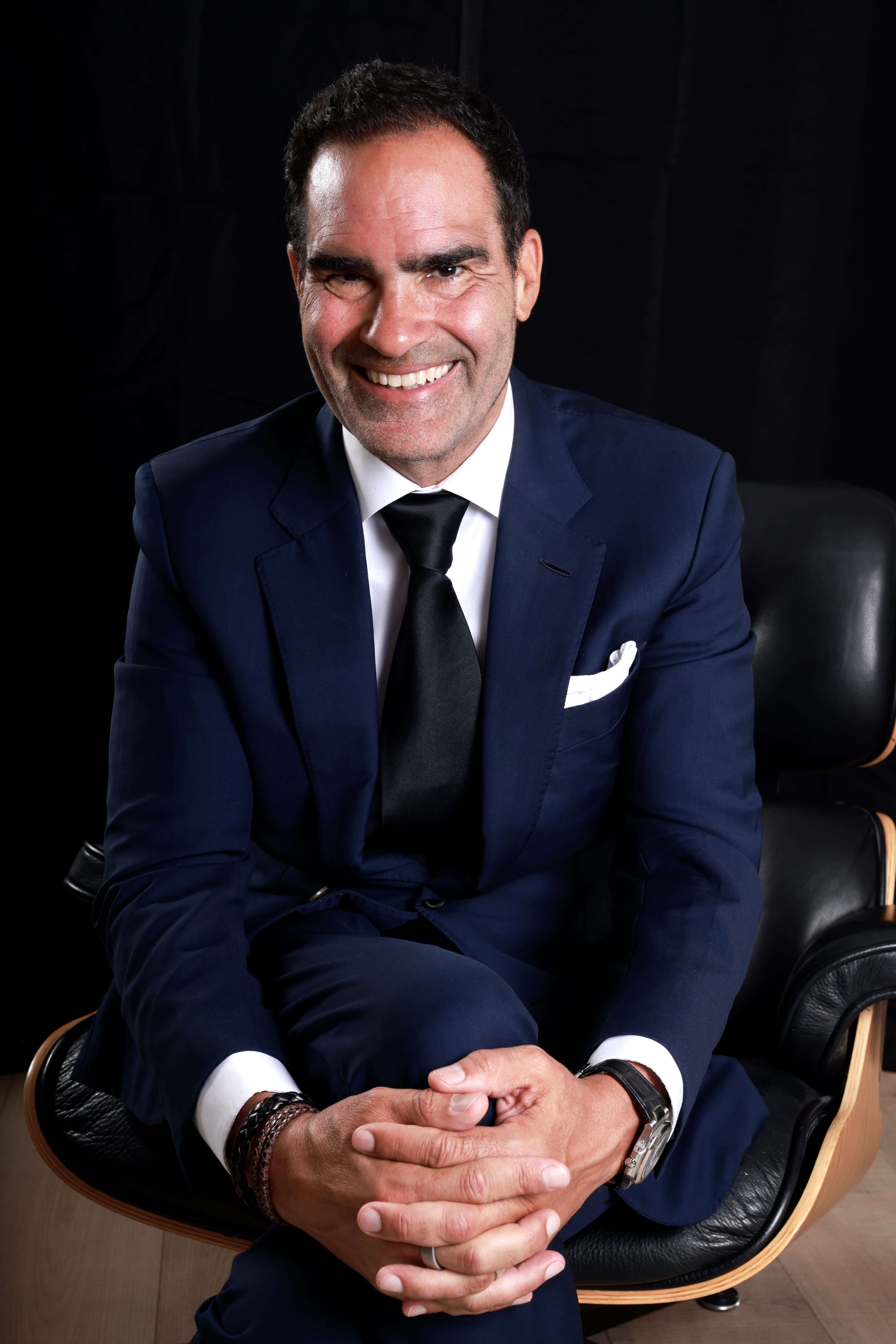
Langer on Luxury is a weekly in-depth analysis by Dr. Daniel Langer, published every Friday. He is the CEO of Équité, a global luxury brand strategy firm advising the world's leading luxury brands across jewelry, watches, fashion, automotive, aviation, hospitality, and luxury experiences, and serves as the executive professor of luxury strategy and pricing at Pepperdine University in Malibu and as a professor of luxury at New York University, New York. A best-selling author of luxury management books in English and Chinese, he is recognized as a global top-five luxury key opinion leader, named an authority in luxury by the Economist, and awarded Top Keynote Speaker in Luxury by the WLCC for two consecutive years. He is featured as a luxury expert in The Wall Street Journal, Financial Times, The New York Times, Forbes, Vogue, and Robb Report, and is the author of the Équité Luxury Report 2026-2030, "The Cost of Waiting," a five-year outlook for the industry. Follow him on LinkedIn and Instagram, listen to his podcast, The Future of Luxury, and explore Équité Intelligence, the on-demand digital platform for luxury learning.
No posts
Comments
Nothing yet. Say the first thing.
Sign in to join the conversation.