
TL;DR AI tools are transforming marketing production, but hyper-realistic visuals can backfire when they fall into the uncanny valley: The unsettling feeling people get from almost-human images. When that happens, audiences lose trust, engagement drops, and brand perception suffers.

We wrapped up our AI slop blog, hinting at the fact that consumers have a more pronounced negative reaction to AI-generated marketing images, and with people’s eyes getting “smarter” to spot AI, this puts brands wanting the speed and cost-effectiveness of AI marketing at risk of suffering higher levels of distrust than with copywriting slop. To have all the needed knowledge to overcome the AI crossroad, we’re going to break down the “uncanny valley” phenomenon behind the unsettling feeling we get when we see “almost human” content and how using AI tools for image and video marketing can backfire if marketers abuse AI convenience.
People tend to identify AI “fakeness” faster and have a more emotional (and negative) reaction to it when they’re exposed to AI-generated visuals. This is what we call “uncanny valley effect”, a perceptual phenomenon first coined in the 1970s by Masahiro Mori, which is used to describe the unsettling feeling people have whenever they see a near-human element. This effect, initially used to describe the eerie and alienating reaction people had to video games, animation and robotics, is now used for AI-generated media and has roots in how our brain works.
Evolution equipped our brains with a specialized neural system for processing faces, including two specific regions located in the occipital cortex: the Occipital Face Area (OFA), in charge of the initial phases of face processing, identifying parts such as the eyes, nose or mouth; and the Fusiform Face Area (FFA) that sums up all the visual information the OFA get into one, recognizable and distinguishable unit. We are so primed to recognize faces that we’re prone to pareidolia, a visual phenomenon that makes us detect faces even where they aren’t, for example, when we see a wall with cracks placed in a way that resembles human or animal features.
This “face mapping” our brains make is also quick and has its own neural signature, called N170, that creates electrical activity less than a second after we encounter a face, and it helps us process our surroundings and categorize the visual elements in it. It’s because we’re so good at recognizing faces that when we see one that looks almost human, but has little details that say otherwise, we get the unsettling sensation that the uncanny valley describes. According to Mori’s initial concept, our affinity towards an entity increases the more our brain recognizes it as human, but abruptly decreases and causes discomfort when we realize what we’re seeing isn’t a living being, but a hyperrealistic representation.
Hyperrealism is the key word here: We don’t experience the same aversion with the human depictions we see in most cartoons, because our face recognition process doesn’t label non-realistic cartoon characters as human, but as a symbolic representation with exaggerated features (big eyes, odd proportions) that don’t intent to imitate human traits, hence not allowing our brains to enter in the confusion state that triggers the uncanny valley’s cognitive discomfort. However, in the case of more realistic, computer-generated characters, the uncanny valley activates. Well-known examples of uncanny animated characters in movies are Final Fantasy: The Spirits Within,The Polar Express and Beowulf.
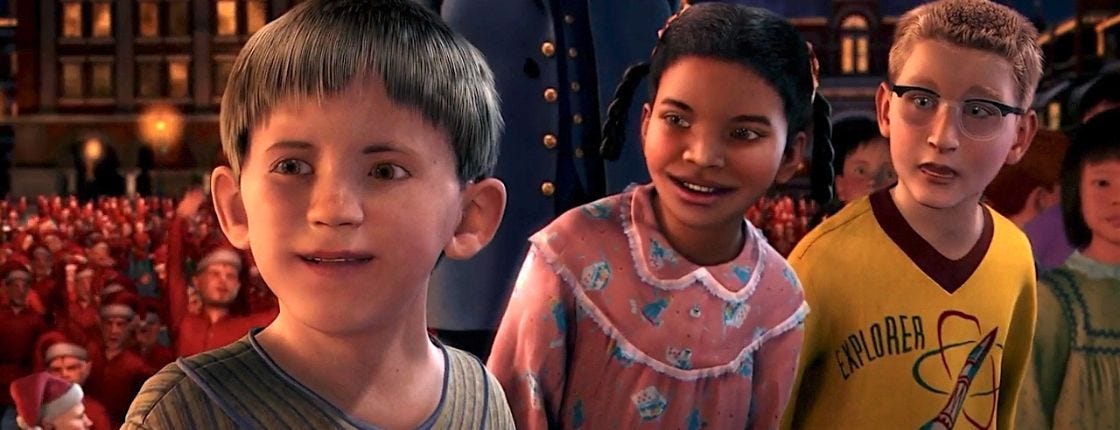
The Polar Express
Generative AI tools are a game-changer for many marketing teams when it comes to image and video production. These tools can ramp-up creative process and output, allowing faster campaign launches, real-time trend adaptation, agile optimization and high-quality production at a fraction of the cost and manpower than conventional visual marketing production, so it’s obvious why their adoption rate is so high:
In a global survey by Canva and Morning Consult, 49% marketers reported using AI daily for generating images and video content.
About 78% of marketing teams distribute AI-generated video content at least every quarter.
Research conducted by Adobe found that 83% of the surveyed professionals use generative AI in their work, and 20% stated that their employers or clients require the use of AI in some way.
However, this landscape isn’t so bright when the uncanny valley is triggered. In our first blog, we mentioned that the uncanny valley effect consumers experience with written content isn’t the same as with visual assets. It is more pronounced and affects the brain in different ways. First of all, the uncanny valley in AI-generated text is a fairly new study field, and the original concept, coined and researched with robotics’ visual stimuli in mind, is helping shape how linguistics is applied to study people’s reaction to AI-written content compared to human writing.
Unlike AI-generated text, notorious for being generic, hollow and repetitive, and that causes a “milder” reaction framed by skepticism, mistrust and disengagement, but without repelling the reader; with AI visual assets our reaction is stronger because beyond the feeling of uneasiness of seeing something looking “off” in the image or video we’re watching, we feel subconsciously threatened. Recent studies have shown that key regions of the brain that are in charge of processing fear, disgust, and emotional responses are activated when we see a human-like agent. Even if we don’t consciously notice it, when we put a video or image in the uncanny valley, we can experience mild anxiety, distrust and discomfort, and in marketing translates into:
Reduced Brand Warmth: Warmth represents a brand’s perceived good faith, sincerity, relatability and trustworthiness, and supports the human-like connection that makes brand anthropomorphism, where consumers treat brands as human-like entities, possible. The emotional distance caused by the uncanny valley weakens brand warmth, jeopardizing engagement, conversions and loyalty.
Undermined Conversion Rate: Conversion depends on making sure the consumer has a clear understanding of the offer, targeting their emotions, motivations, and the pain points the offer will solve, and fueling their desire driven by the anticipation of the “reward” the conversion implies. The uncanny valley hinders all three variables:
Clarity gets clouded because the brain is too distracted by the anomaly it detects in a near-human visual asset.
Trust is eroded because consumers start to question the authenticity of what they’re seeing, and of the brand it represents.
Discomfort replaces desire and reduces dopamine levels, a key conversion-driver hormone.
Long-Term Brand Equity Damage: If a brand keeps exposing its audience to uncanny visuals, it risks being associated with negative adjectives such as cheap, lazy, fake, or AI slop. This negative sentiment will inevitably lead to brand equity loss. In other words, those negative adjectives people use to describe uncanny AI will be associated with the brand itself and its products, regardless of reality.
Furthermore, AI solutions and privacy data concerns are closely related, as it is widely known that AI models need large amounts of data to be trained, and sometimes that information isn’t handled properly or ethically. The way an audience believes their data is being handled will also impact a brand’s equity.
All these consequences are detrimental for businesses in every industry and size, but in these cases, the risk is higher when:
The Asset Relies on Storytelling: Storytelling uses empathy, relatability and parasocial bonding to form an emotional connection between the audience and the story being told and ultimately, the brand. For all that to work, the brain must immerse in the narrative, accept the characters as potentially real and think “this could be me”. If a storytelling marketing asset falls in the uncanny valley, the emotional bridge collapses and immersion fails, leaving the audience wondering what feels off.
The Offer Requires the Target Audience’s Vulnerability: Businesses like coaching, relationship counseling, therapy services, or mentorship, which require the customer’s trust to provide personal and sensitive details, need to convey a sense of safety, perceived empathy, authenticity, and human understanding in their marketing assets to drive conversions. When the audience detects uncanny features, it triggers their skepticism, causes emotional withdrawal, and delays (or halts) their action.
The Brand Positions Itself As “Authentic”: The uncanny valley effect creates an identity contradiction that makes people perceive the brand as untrustworthy and dishonest.
The Product Is High-Ticket: If someone is considering buying an expensive product or service, you can bet they’re going to be extra fussy. When the stakes rise, scrutiny increases, and even subtle authenticity gaps are amplified.
There’s no better way to understand the uncanny valley effects on brands than with real examples, and we have two notorious ones.
Like Coca-Cola, McDonald’s in the Netherlands wanted to experiment with AI during the Holiday season in 2025 and launched a fully AI-generated Christmas commercial.
The ad intended to depict Holiday’s typical chaos in a humorous tone and invite people to escape from the madness at McDonald’s, but it was received with instant backlash by viewers calling out the characters’ unnatural movements, odd and inconsistent facial expressions, distorted background elements and glitchiness.
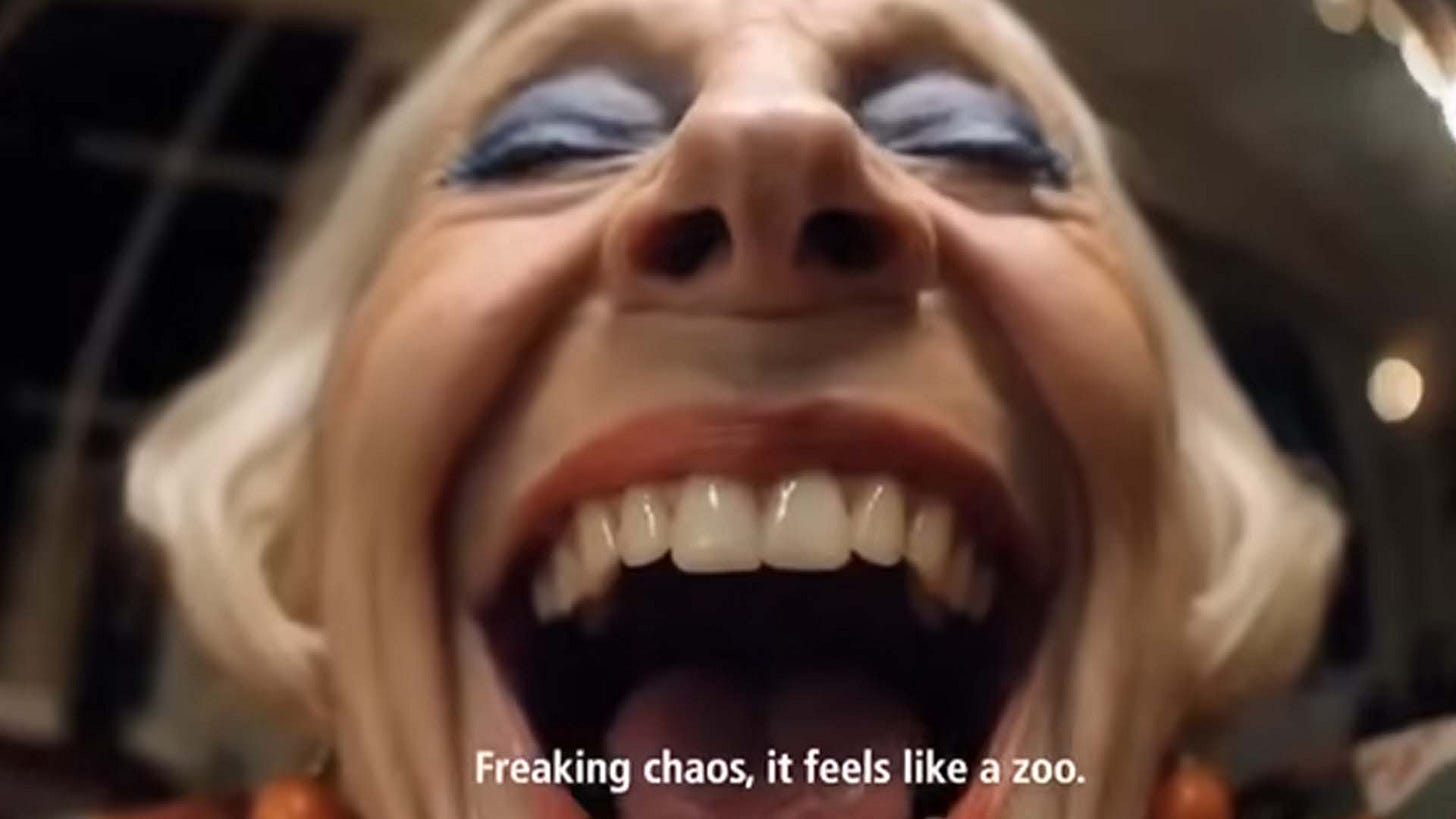
This character’s unnaturally large teeth and mouth, alongside the creepy and odd angle, are one of the most cited uncanny valley examples in this ad.
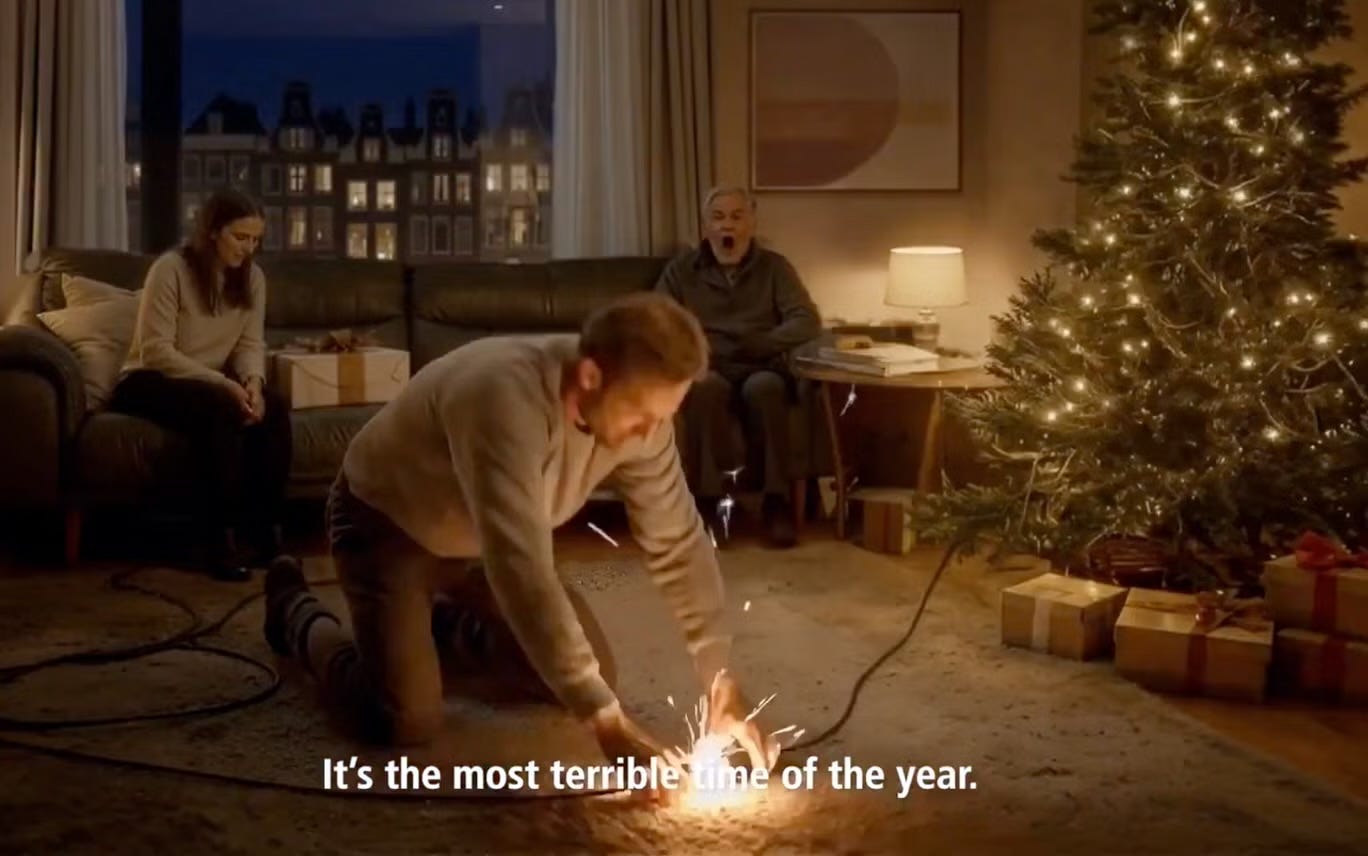
In this scene, viewers called out the fake-looking tree lights, the main character’s oddly calm posture and the feel of detachment the background characters give.
The ad got so bashed online that McDonald’s Netherlands removed it three days after its release (the one above is a reupload.) Besides highlighting the intense reactions the uncanny valley effect can produce on people, it exposed AI’s limitations and weaknesses in replicating human emotional nuances, especially in media to represent human life in one of (if not the) most emotional times of the year.
Also in late 2025, luxury fashion brand Valentino had its quota of controversy after releasing an AI-generated ad to promote the Valentino Garavani DeVain Bag. Since it has a design that, according to the brand,embodies the balance between classic elegance and a modern attitude, Valentino decided to create an AI-generated ad campaign, intended as an experimental collaboration with digital artists using AI tools, part of Valentino’s “DeVain Digital Creative Project.” The campaign was based on surrealism, and Valentino described the project as “a journey through kaleidoscopic geometries and pure imagination,” that wanted to give different interpretations of the handbag.
Even though the campaign consisted of several short films, the one above, which featured morphing bodies and Valentino logo-arms, triggered the backlash. The viewers described the visuals as “disturbing,” “cheap,” and “tacky” (all great adjectives for a luxury brand, btw), especially because the surreal imagery clashed with the expectations people usually have for a luxury fashion ad from an established, traditional brand.
While this case doesn’t fit the classic uncanny valley definition because, unlike the previous examples where the goal was human hyper-realism, Valentino’s video was intentionally surreal and artistic, it can still be used to analyze this effect because the discomfort people felt when they saw the human-like bodies behaving unnaturally, with distorted proportions, or expressions void of emotion in the video fall under the uncanny valley.

This example is also interesting because it caused the brand mismatch we mentioned earlier. Luxury fashion usually emphasizes elegance, heritage, craftsmanship and refined beauty; this isn’t an obstacle to push creative boundaries and adapt to the current times with their marketing visuals. However, Valentino pushed a bit too far, and their AI visuals looked bizarre and synthetic, which clashed with the brand’s established identity.
There are several other examples of brands getting called out on the misuse of AI, and we’ll know of more in the near future as the public becomes more AI-literate. Does this mean AI is the enemy? Absolutely not. AI is a great ally to scale up production and support the creative process in marketing campaigns.
However, the AI advantages can easily turn into a double-edged sword: When people notice something is slightly wrong, they’ll turn on the brand in question. Avoiding the uncanny valley while embracing new technologies to enhance visual marketing’s storytelling and production is not only entirely possible, but we already have big brands doing it with great results. In our next (and final) part of this AI series, we’ll cover practical ways to avoid making marketing that feels synthetic and share real-life cases to bring light to the end of the uncanny valley tunnel.
No posts
Comments
Nothing yet. Say the first thing.
Sign in to join the conversation.