

The ever-growing need of putting out content to not be forgotten by the algorithms made the surge of AI tools feel like a heaven-sent way to scale production and make marketing smarter, faster, and more efficient. However, the misuse (and overreliance) of these tools is flooding the internet with content that feels superficial, interchangeable, and (unfortunately for brands) untrustworthy.
Users are so fed up with low-effort, robotic content that they even coined the term AI slop to vent their frustration whenever they see uncanny ads, images with distorted backgrounds, phoney videos narrated by a suspiciously monotone voice and pieces of text that tell a lot, without actually saying anything. We’re going to dive into why putting out generic AI content is actively damaging brand trust, and how the rush to scale content without human supervision is backfiring. If you’re using AI in your marketing, or thinking about it, this will serve you as a what not to do guide that will help you protect your brand in the age of automation.
Blatant AI content hurts brands where they feel it the most: Engagement, purchase intent, loyalty and credibility. A survey by ad management company Raptive found that people’s trust levels drop as low as 50% if they perceive a content as AI-generated, even if it isn’t. In marketing’s case, the same survey found a 14% decline in both purchase consideration and willingness to pay a premium for a product, if it’s advertised alongside content perceived as AI.
And as people are becoming more aware and quicker at spotting AI traits (77% of consumers can identify if the content they’re consuming is AI-generated), the engagement rates are showing a steep decline: Studies have already shown that 52% of consumers’ engagement reduces with content they believe is produced by AI, this translates into less social share, and worse, loss of brand credibility: 68% of consumers trust less in content that’s 100% AI produced than human-generated content. (I’m among those who disengage the moment I realize content looks phoney, btw.)
But the issues don’t stop there. Relying completely on unedited AI content to represent your business harms your brand consistency. Here’s how:
Generic Output: Most AI tools produce content based on broad patterns rather than specific brand values or identity. The result is “One-Size-Fits-All” content that can make brands sound like everyone else on the market, devoid of personality.
Inconsistent Messaging and Voice: Despite all the technological advances that made AI tools so efficient, most companies using AI for marketing can struggle to deliver a brand-aligned message. An industry survey revealed that 53% of companies have issues to maintain consistent brand messaging across outputs and channels, resulting in a brand identity crisis: Inconsistent (and even contradicting) tone, style, or messaging in each piece of content that can confuse audiences and weaken brand identity. An inconsistent brand will also make it difficult for people to connect with your brand, and less likely to engage, convert, or become loyal advocates.
But this scenario of poor results doesn’t mean you need to get rid of your AI tools. Consumers aren’t against AI per se, what they naturally reject is the generic, inauthentic, low-effort and sloppy features of the majority of AI content without human editing. That’s why when we look at the performance of hybrid AI content, where humans guide with strategy and edit the AI output, we see a whole different picture.
Hybrid AI content outperforms its 100% AI-unedited counterpart, and sometimes outperforms human-only content too: the social media management company Buffer analyzed 1.2 million posts, including AI-assisted and human-only ones, from 15.000 users and across the seven most used social media platforms (Facebook, LinkedIn, Pinterest, Threads, TikTok, Twitter, YouTube.) The study found that the AI-assisted posts had a 5.87% average engagement rate, while human-only posts had a 4.82% engagement rate. Considering that the marketers that used a hybrid approach to create their posts probably did it in a fraction of the time, that extra engagement is a big win.
Human supervision and editing also improves quality and accuracy by 40%, supporting a consistent brand voice and mitigating the risks of falling in the “AI slop zone”, hence preserving your marketing efforts effectiveness at connecting with your audience and encouraging conversions by cutting off the cliché words and fluff phrases, adding insightful commentary, relevant examples and opinions to make the final product feel like something authentic that your audience may expect from your brand.
Even though I believe the numbers are strong enough to convince you to take control of what your AI tools of preference produce, I also think that there are no better cautionary tales than real-world examples of brands getting backlash for putting out AI slop.
Do you think visiting the local food bank is a good idea as a tourist? Apparently the AI Microsoft allegedly used to create a travel guide to Ottawa thought it was an attraction people “cannot miss” when visiting the Canadian capital. The travel guide was published in MSN.com’s travel section in August 2023 and was deleted shortly after the backlash started, but it read: “In Ottawa you will find some beautiful attractions that you just cannot miss! Places like The Winterlude Festival, National War Memorial, and Ottawa Food Bank and many more.”
In the section dedicated to the food bank the guide included a corporate-like description of the work the institution does and closed it out advising the tourists going “on an empty stomach,” which seems to be a distorted version of the phrase “Life is challenging enough. Imagine facing it on an empty stomach,” included in the food bank’s website.
Microsoft never confirmed if the guide was, in fact, AI-generated, but a representative said that they were “investigating how it made it through our review process.” Maybe the fact that they laid off dozens of Microsoft News and MSN’s journalists, editors and editorial workers to replace them with AI in 2020 had something to do with this blunder.
One thing is having a human author using AI as an assistant and “feeding” it with their fact-checked, experience-based prompts to make AI produce a draft piece about a certain real-world topic and editing it, but Sports Illustrated took it too far when they made AI authors write AI product reviews and sports articles.
The magazine’s questionable practice was exposed in 2023 in an investigative report by the science and technology publication Futurism, in which presented proof that two SI authors, Drew Ortiz and Sora Tanaka, had zero presence online as writers (or actual humans), their headshots were for sale on a website that sells AI headshots, and had a fake profile description. This was Mr. Ortiz’s:
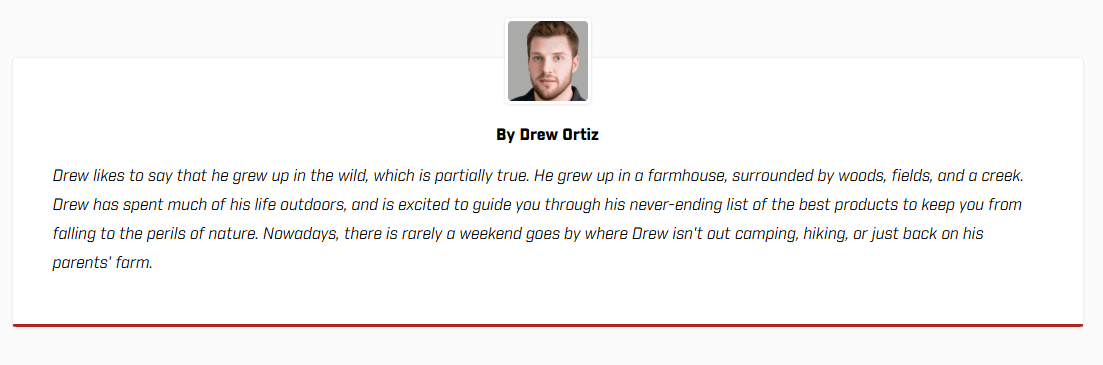
And his writing? Is a good example of how obvious, shallow and lame AI tools’ content can be:
“Volleyball can be a little tricky to get into, especially without an actual ball to practice with. You’ll have to drill in the fundamentals in your head before you can really play the game the way it was meant to be played, and for that, you’ll need a dedicated space to practice and a full-sized volleyball.”
I rest my case.
After Futurism contacted them for comment, Sports Illustrated immediately made the fake authors information disappear from their website, reassigned their articles to another author and released a statement saying said content was “were licensed content from an external, third-party company, AdVon Commerce. (...) AdVon has assured us that all of the articles in question were written and edited by humans. ”
This wasn’t the only publication exposed in Futurism’s report. Other websites by SI’s same parent company, The Arena Group, such as TheStreet and Men’s Journal were called out for engaging in similar practices. The latter even published an AI-penned men’s health article that was found to be plagued with errors. Unfortunately, this is not isolated: AI misuse is now an industry issue with other major publications from other parent media companies. So, next time you read something from CNET, BuzzFeed or Gizmodo you also have to take everything with a grain of salt.
These examples could be seen as a journalistic issue alone, but here comes the marketing part: Most, if not all, of the articles are packed with affiliate marketing links, like the SI’s Volleyball one was. This means that these big publications exploit their consolidated reputation to put out abysmal-quality articles written by robots to make readers buy the stuff they link, all while making them believe they’re buying a product reviewed by a human expert. Sounds like a sure way to make the public lose the trust they have in these websites.
That’s the phrase that marketing guru Neil Patel used in a recent webinar, and he’s 100% right. With a nearly universal (99%) adoption of AI tools in the marketing industry, the technology won’t go anywhere, and it shouldn’t. The problem is that many brands and marketers still don’t understand that AI it’s just another tool that needs human guidance and supervision to give the outstanding results and performance it promises, not a marketing holy grail that can run on autopilot, especially with tech-savvy audiences that aren’t easily fooled and are getting quicker at catching AI’s sloppy patterns, and losing respect in the brands putting out AI slop content in the process.
Now, we mainly discussed written content and copywriting, but what about AI dependence to produce marketing images and videos? There’s where things get even more complicated for brands, but we’ll cover that in our next blog.
In the meantime, you can go check out: The Challenge of Balance AI and Ethics In Marketing
No posts
Comments
Nothing yet. Say the first thing.
Sign in to join the conversation.