
We are all trying to hit our fiber goals, but sometimes it can feel like one more thing to track, count, or overcomplicate.
I like to think of fiber less as a strict number and more as a helpful tool for building better meals.
Fiber helps make meals more satisfying, supports healthy digestion, and encourages us to eat more of the foods we already know are good for us: fruits, vegetables, beans, lentils, seeds, nuts, whole grains, and fermented plant foods.
Here’s the good news: hitting your fiber goals does not require a total overhaul of how you eat. It requires a handful of reliable foods you can keep adding into meals you’re already making. Small swaps, easy additions, nothing that needs a new grocery list every week.
This is the guide I wish I had when I first started paying attention to fiber. It’s a mix of the usual suspects and a few foods that don’t get talked about nearly enough, even though they pull way more weight per serving than people realize.
Save this one. It’s meant to be a resource you come back to when you’re staring into your fridge trying to figure out what to add to your plate.
A good general goal for adults is around 25 to 35 grams of fiber per day, depending on your body, age, appetite, and overall intake. Some guidelines recommend about 14 grams of fiber for every 1,000 calories, which comes out to around 25 grams per day for women and 38 grams per day for men.
But if you are currently eating much less than that, you do not need to jump there overnight.
In fact, it is usually better to increase fiber gradually, drink enough water, and spread fiber-rich foods throughout the day. That way, your digestion has time to adjust.
For me, the goal is not perfection. It is simply asking: What fiber-rich food can I add to this meal?
Oats are one of the most reliable fiber foods out there, and one cup of cooked oats has around 4 grams of fiber on its own, which climbs fast once you start adding to it. The easiest way I use them is overnight oats, since it takes about two minutes to put together and is ready by morning.
I like to ferment mine. Fermenting oats, whether with yogurt, kefir, or a splash of lemon juice, helps break down phytic acid, which is what makes it harder for your body to absorb the minerals in oats when they’re unsoaked. A long soak with something acidic makes the oats easier to digest and the nutrients easier for your body to actually use, on top of the fiber you’re already getting.
Learn How To Make Fermented Oats 4 Ways with my step-by-step video.
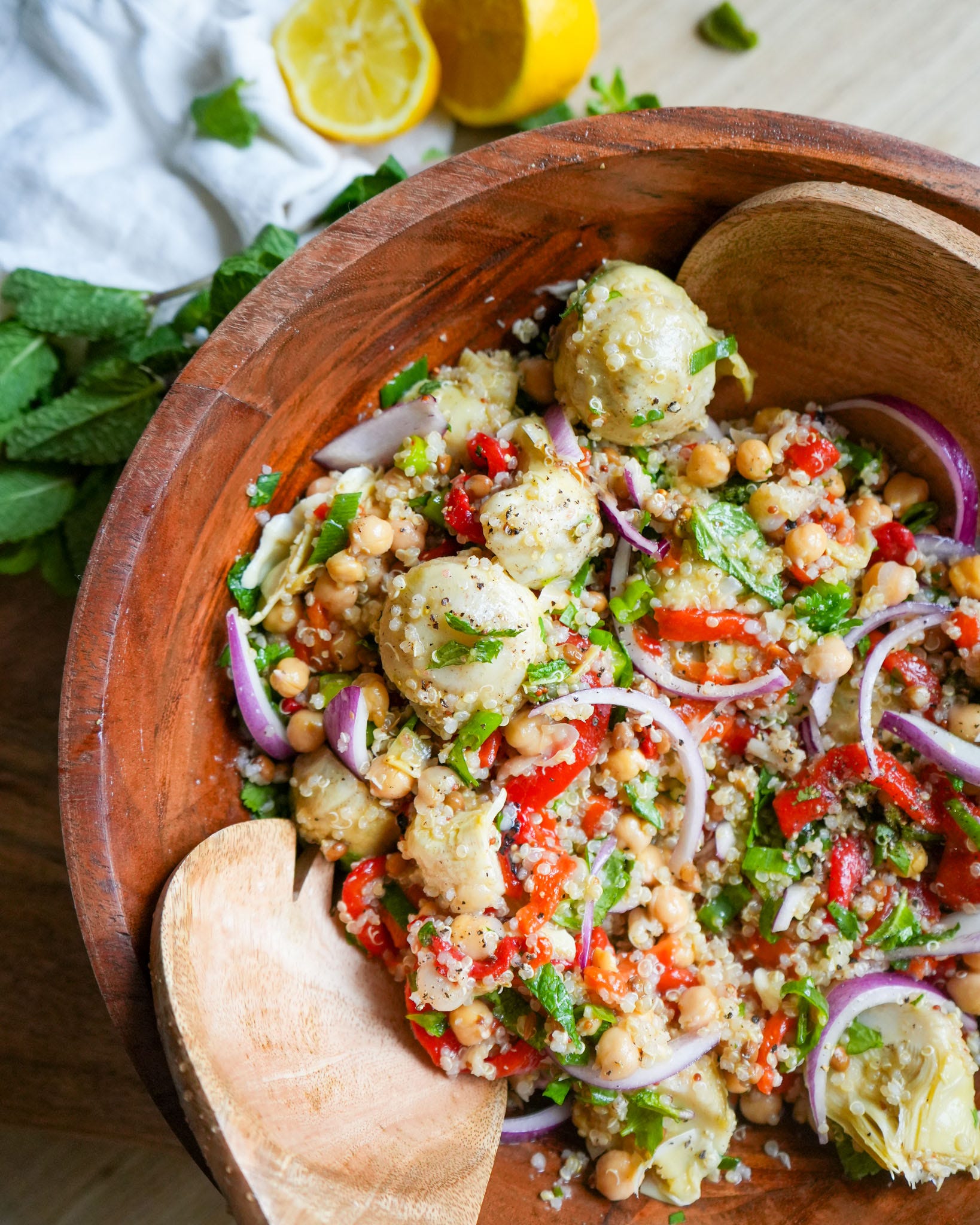
One medium artichoke has close to 10 grams of fiber, which makes it one of the highest-fiber vegetables available, and most people never think to reach for it.
Steam it whole and pull the leaves off one at a time, dipping each one in a little olive oil, lemon, or tahini sauce. It takes longer to eat than most vegetables, which naturally slows the meal down. Canned or jarred artichoke hearts work too if you want the fiber without the extra effort, just look for ones packed in water rather than oil.
Try my Spinach Artichoke Pizza recipe for a fun way to enjoy them. OR, try my amped up high-fiber Artichoke Salad with quinoa and fresh herbs -with 12g fiber + 15g protein per serving.
Psyllium husk is a concentrated soluble fiber that dissolves into liquid and forms a gel-like texture. One tablespoon has around 4 grams of fiber, and unlike most fiber sources, it has almost no taste, so it disappears into whatever you’re mixing it with.
Some people have a glass of psyllium husk mixed with water before a meal, usually starting with 1 teaspoon of psyllium husk powder in 8 ounces of water and gradually working up to 1 tablespoon if tolerated. Because psyllium is a soluble fiber that forms a gel when mixed with liquid, it can help slow the absorption of carbohydrates, support regularity, and make meals feel more satisfying. It’s especially useful on days when you know your meals are lower in fiber and you want an easy way to close the gap without adding a whole extra food group.
You can stir it into water, blend it into a smoothie, or add a small amount to overnight oats. I especially like using psyllium husk in gluten-free baking because it helps mimic some of the structure that gluten usually provides. When mixed with liquid, it forms a gel-like texture that can add elasticity, binding, and softness, qualities that gluten-free baked goods often miss.
Try it in my Buckwheat Bread, the psyllium husk helps give it that soft, gluten-like structure while amping up the fiber, with 7 grams of protein and 8 grams of fiber per slice.
Black beans are a staple for a reason. One cup has around 15 grams of fiber, plus a solid amount of plant-based protein, and they fit into almost any savory meal without changing the flavor profile much.
Add them to tacos, grain bowls, salads, soups, or eggs. Keeping a couple cans in the pantry means you always have a fast way to add fiber and protein to a meal that’s already on the stove.

Jicama looks unassuming in the produce section, but one cup has around 6 grams of fiber and a satisfying crunch that holds up raw.
Slice it into sticks and eat it plain, dip it the way you would carrots or celery, or toss it into a slaw for texture. It’s mild enough to pair with almost any flavor, which makes it easy to work into meals without much thought.
They also are a great base for tacos. In Trader Joe’s You can find jicama wraps already pre-sliced. It is perfect for a fiber-rich, low carb tortilla substitute.
I talk about chia seeds a lot, and it’s because they earn the attention. Two tablespoons have around 10 grams of fiber, and they thicken into a pudding-like texture within minutes of hitting liquid.
Stir them into yogurt, oatmeal, or applesauce, or make a quick chia pudding the night before. If you only add one thing from this list, this is the easiest one to keep on hand and use daily.
Try my Chia Mousse 4 Ways for a creamy, dessert-like treat, or make this High Protein Chia Pudding (29 grams of protein and 23 grams of fiber per serving) for an easy, filling option with no protein powder needed.
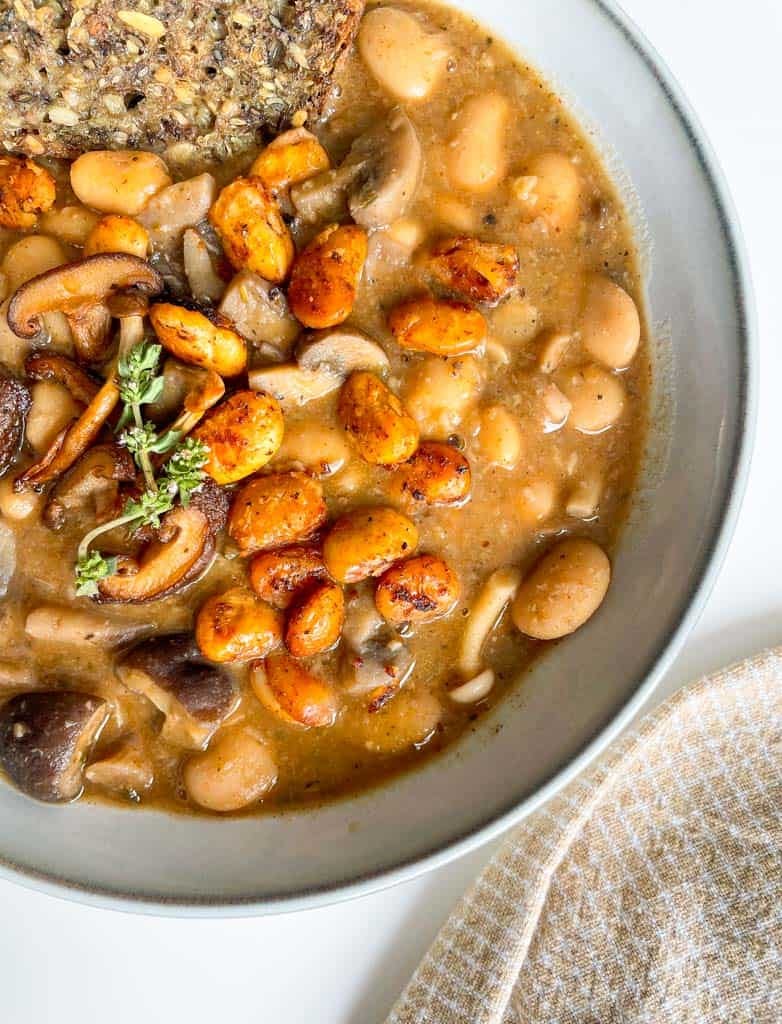
White beans, whether cannellini, navy, or great northern, are one of the easiest fiber sources to work into just about anything because they don’t bring a strong flavor of their own. One cup has around 11 grams of fiber, plus a solid amount of plant-based protein, and they take on whatever they’re cooked with instead of competing with it.
I use them the obvious way first: tossed into soups, stews, and grain bowls, or simmered with garlic and olive oil as a simple side. But white beans are just as good blended, which is where they become more interesting. Blend a can with olive oil, lemon, and garlic and you have a creamy dip that works in place of hummus. Blend them into a soup base and you get a thick, velvety texture without any cream. I’ve even mashed them into baked goods, like brownies, where they disappear completely and just add moisture and fiber.
My go-to bean soup is this ultra savory Mushroom White Bean Soup.
A medium pear with the skin on has around 6 grams of fiber, more than most other common fruits, and the skin is where a large portion of that fiber lives.
Eat it whole as a snack, slice it into a salad, or pair it with a hard cheese for something simple. Leaving the skin on is the entire trick here. No extra prep, just one less thing to peel.
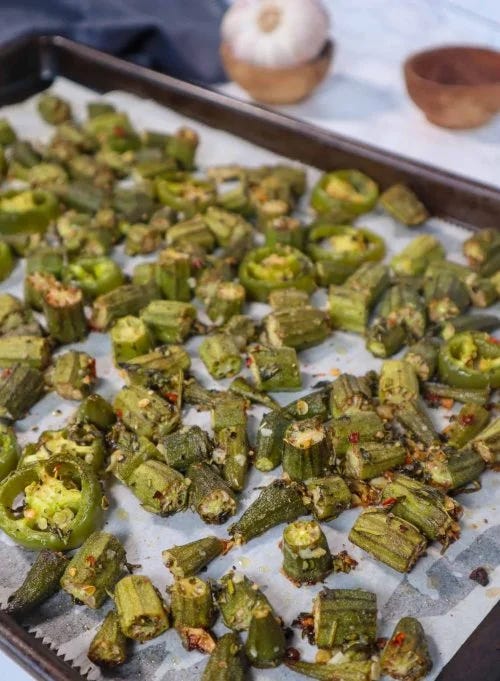
Okra gets a bad reputation because of the texture, but that same “slime” is actually soluble fiber doing its job. One cup of cooked okra has around 3 to 4 grams of fiber, and it works similarly to psyllium husk in the body, forming a gel that helps slow digestion.
If the texture is what’s holding you back, roast it at high heat instead of boiling or steaming it. Toss it whole or sliced with olive oil and salt, then roast until the edges char slightly. The sliminess mostly disappears and you’re left with something closer to a crispy green bean.
Try my Herb Crusted Crispy Baked Okra! It’s so good that sometimes I just make a batch and enjoy them as a snack.
Most people default to berries or apples when they think of high-fiber fruit, but passion fruit quietly outperforms both. One fruit has around 2 grams of fiber in just a couple tablespoons of pulp, which is a lot of fiber packed into a small amount of food.
Scoop it straight out of the shell and eat it as is, spoon it over yogurt, or blend it into a smoothie for a tart, tropical edge. It’s a small addition that adds up fast if you’re eating a few a week.
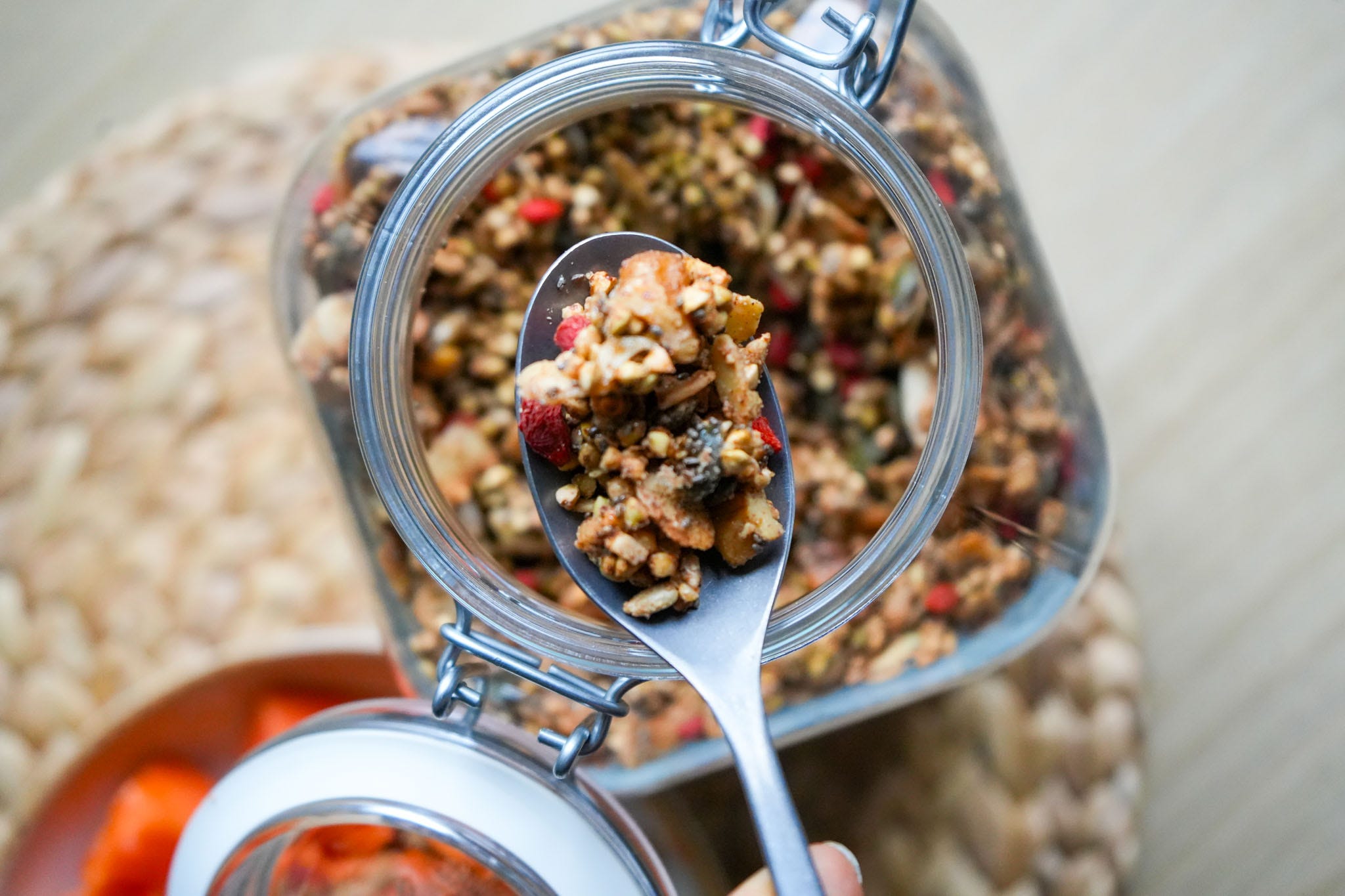
Buckwheat is one of the most versatile foods on this list, mostly because it’s not locked into one form. Despite the name, it’s not actually wheat and it’s naturally gluten-free. One cup of cooked buckwheat groats has around 5 grams of fiber, and you can cook it almost exactly like rice: simmer with water or broth until tender, then use it as a base for grain bowls, a side dish, or a warm breakfast porridge with fruit and cinnamon stirred in.
Where buckwheat gets more interesting is once you take it beyond the pot. Ground into flour, it becomes a nutty, earthy base for baking, and it’s the flour I reach for most when I want something heartier than a typical gluten-free blend. I use it in bread, pancakes, and muffins, and it holds moisture better than a lot of other gluten-free flours, so the texture doesn’t end up dry or crumbly. Same seed, two completely different uses, which makes it one of the easier ways to add fiber whether you’re cooking dinner or baking on a Sunday.
Try my Buckwheat Granola (14 g Protein and 11 g Fiber per serving). Instead of using rolled oats I use buckwheat groats for a grain-free breakfast option.
Sweet potatoes are already a staple in a lot of kitchens, but people tend to make them one way and stop there. One medium sweet potato with the skin on has around 4 grams of fiber, and the skin is where a meaningful chunk of that lives, so leaving it on is worth doing whenever you can.
Roasted is the obvious method, and it’s the one I default to most, but sweet potatoes hold up in almost every direction you take them. Mash them as a side, cube and add them to grain bowls, or blend the cooked flesh into soup for something creamy without any dairy. I’ve also used mashed sweet potato in baking, swapped in for part of the fat or sugar in muffins and quick breads, where it adds moisture, natural sweetness, and fiber all at once. It’s one of those foods that never feels repetitive, because it changes completely depending on how you treat it.
I shared my Gluten-Free Sweet Potato Bread Recipe years ago and it is still a GFB favorite. I love making it as soon as the weather starts to cool down.

Lentils are one of the most efficient fiber foods you can cook, and they don’t require any planning ahead like most dried legumes do. One cup of cooked lentils has around 15 grams of fiber, along with a solid dose of plant-based protein, and they’re ready in about 20 minutes with no soaking required.
I like to make a creamy Carrot Lentil Soup. It’s a delicious, nutrient-dense soup packed with ginger, turmeric, and carrots to help support your immune system and help your body fight off illness. Even if you are not sick, this is a perfectly filling and nourishing soup to enjoy!
Nuts and seeds are one of the simplest ways to add fiber to a meal, because they don’t require any prep beyond opening the bag and sprinkling. A small handful on top of yogurt, oatmeal, salads, or roasted vegetables adds fiber, healthy fats, and a little crunch without changing what you’re already making.
Some of my go-tos:
Hemp hearts
Pumpkin seeds
Sunflower seeds
Almonds
Walnuts
Pecans
Sesame seeds
Chia seeds
Flaxseed
Keeping a few of these on hand means there’s almost always a fast way to make a meal more filling. I rotate between them depending on what I’m eating, hemp hearts and sesame seeds on savory bowls, walnuts or almonds on anything with fruit, but the honest truth is any combination works. This is one of those additions where consistency matters more than which ones you pick
Sauerkraut, kimchi, and other fermented vegetables belong on this list for a reason that’s easy to miss: the fiber was already there in the cabbage or vegetable itself, and fermentation adds live cultures on top of it without taking any of that fiber away.
A cup of fermented cabbage still carries several grams of fiber, and pairing that with the gut-supporting benefits of fermentation is about as efficient as food gets. I make my own at home because it’s cheaper than the store-bought jars and lets me control the salt and add-ins, but a quality store-bought version works too, as long as it’s raw and unpasteurized, which is what keeps the live cultures intact.
If you are new to fermenting, I have a ton of beginner friendly recipes. Start with my Traditional Sauerkraut or this walk-through of How To Ferment Any Veggie at Home.
If you are trying to eat more fiber, start slowly. Adding a lot all at once can feel uncomfortable, especially if your body is not used to it.
Try to drink enough water, spread fiber throughout the day, and pair fiber with protein so meals feel balanced and satisfying.
For me, the goal is not perfection. It is simply making meals more nourishing in a way that feels realistic.
So instead of asking, “How do I completely change my diet?” I like to ask:
What is one fiber-rich food I can add to this meal?
That one question makes it so much easier. Next, I’ll share what 30g of fiber can actually look like in a day, because it is a lot more doable when you build it with simple foods you already enjoy.
You don’t need to eat everything on this page. Pick two or three that sound realistic for how you already eat, and build from there.
If you’re someone who eats a lot of soups and grain bowls, start with buckwheat or black beans. If you’re more of a snacker, jicama, pears, and passion fruit are the easier entry points. If you just want one low-effort daily habit, chia seeds or psyllium husk take the least amount of thought.
Fiber adds up faster than people expect once a few of these become routine. It’s less about a perfect diet and more about having a handful of go-to foods you reach for without having to think too hard about it.
Save this guide for later, and let me know in the comments which one of these you’re adding to your plate this week. 🩷
No posts
Comments
Nothing yet. Say the first thing.
Sign in to join the conversation.