
Sauerkraut is one of those foods that sounds much more complicated than it actually is. At its simplest, you need cabbage, salt, a clean jar, and time.
That’s it.
The cabbage releases its own liquid, the salt creates the right environment for fermentation, and over the next couple of weeks, everything slowly transforms into something tangy, crisp, and deeply flavorful.
You can start enjoying your sauerkraut in as little as 2 weeks, although I personally let this batch ferment for about 1 month because I wanted a deeper, more developed flavor.
The carrots, caraway seeds, and fresh dill in my recipe are completely optional, but I love what they add. The carrots bring a little sweetness and color, the caraway gives that truly classic sauerkraut flavor, and the dill makes everything taste fresh and bright.
Once you understand the basic formula, you can make sauerkraut as simple or as flavorful as you want!
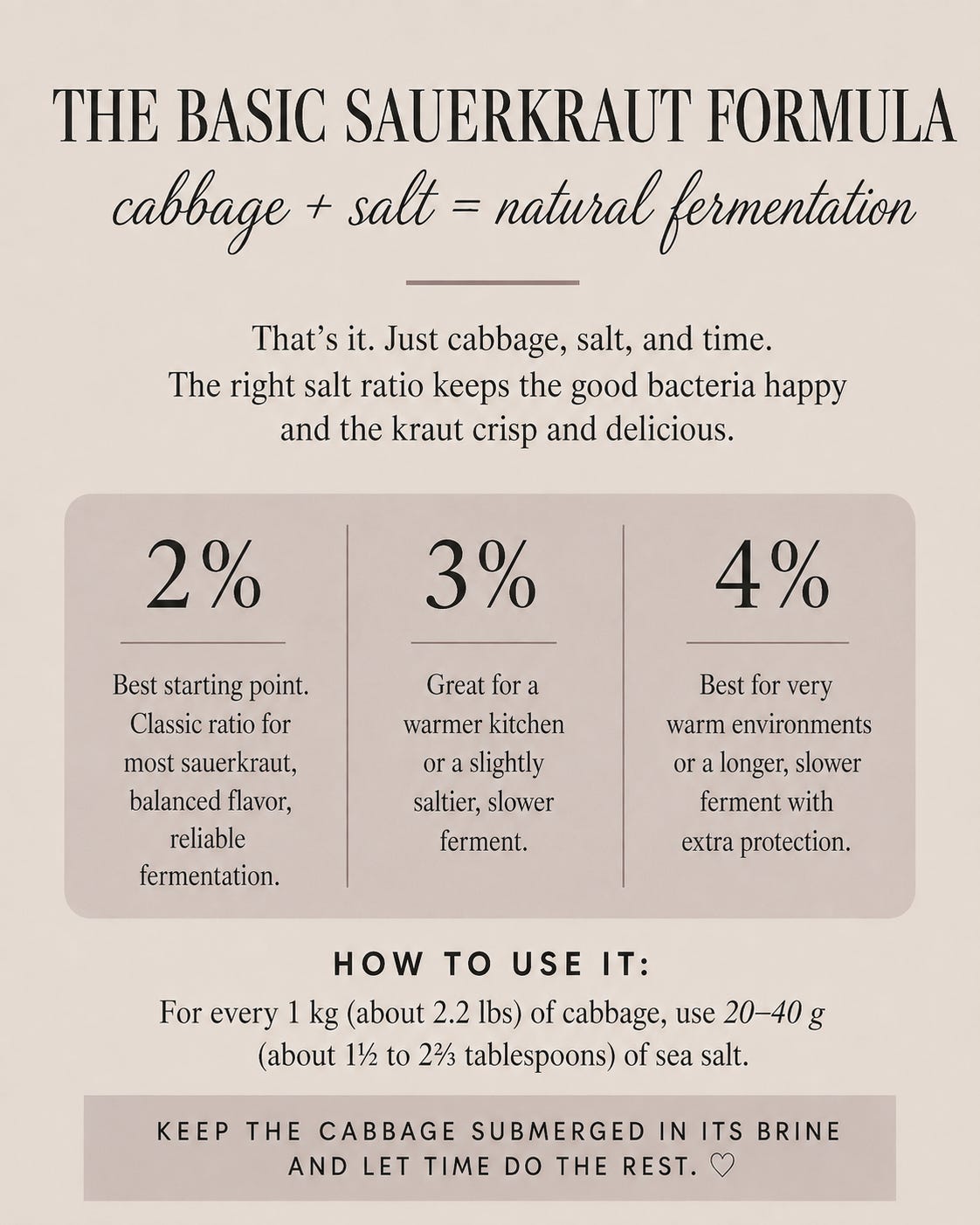
1 large head of cabbage, shredded (I used 1060g of shredded cabbage)
2-3 large carrots, shredded (I used 150g shredded carrots)
2 to 3% sea salt (I used 37g sea salt, which is 3% salt percentage) *Remember: Avoid using iodized table salt and any salt containing anti-caking agents or chemical additives. (sea salt is best)
2 to 3 teaspoons caraway seeds (gives that traditional sauerkraut flavor)
3 tablespoons fresh dill

The cabbage and salt are really the foundation and all you need to make sauerkraut. Everything else is there for flavor.
Carrots: Add a little natural sweetness and make the finished sauerkraut more colorful.
Caraway seeds: Give sauerkraut that classic earthy, slightly licorice-like flavor.
Fresh dill: Adds freshness and a subtle herbal flavor that balances the tanginess beautifully.
You can absolutely leave these out and make a traditional cabbage-only sauerkraut, or use this recipe as a base and experiment.
Other add-ins I love or would recommend trying:
Garlic
Ginger
Beets
Jalapeño or chili flakes
Juniper berries
Mustard seeds
Fennel seeds
Turmeric
Black peppercorns
Apple
Radish
The biggest thing is to keep the cabbage-to-salt ratio consistent, then have fun with the flavor. You truly can’t go wrong with the flavor. I’ve made this Antioxidant-Rich Sauerkraut with Turmeric Ginger and Cumin. It tastes almost like curried sauerkraut, which was absolutely delish for breakfast with my homemade patties.
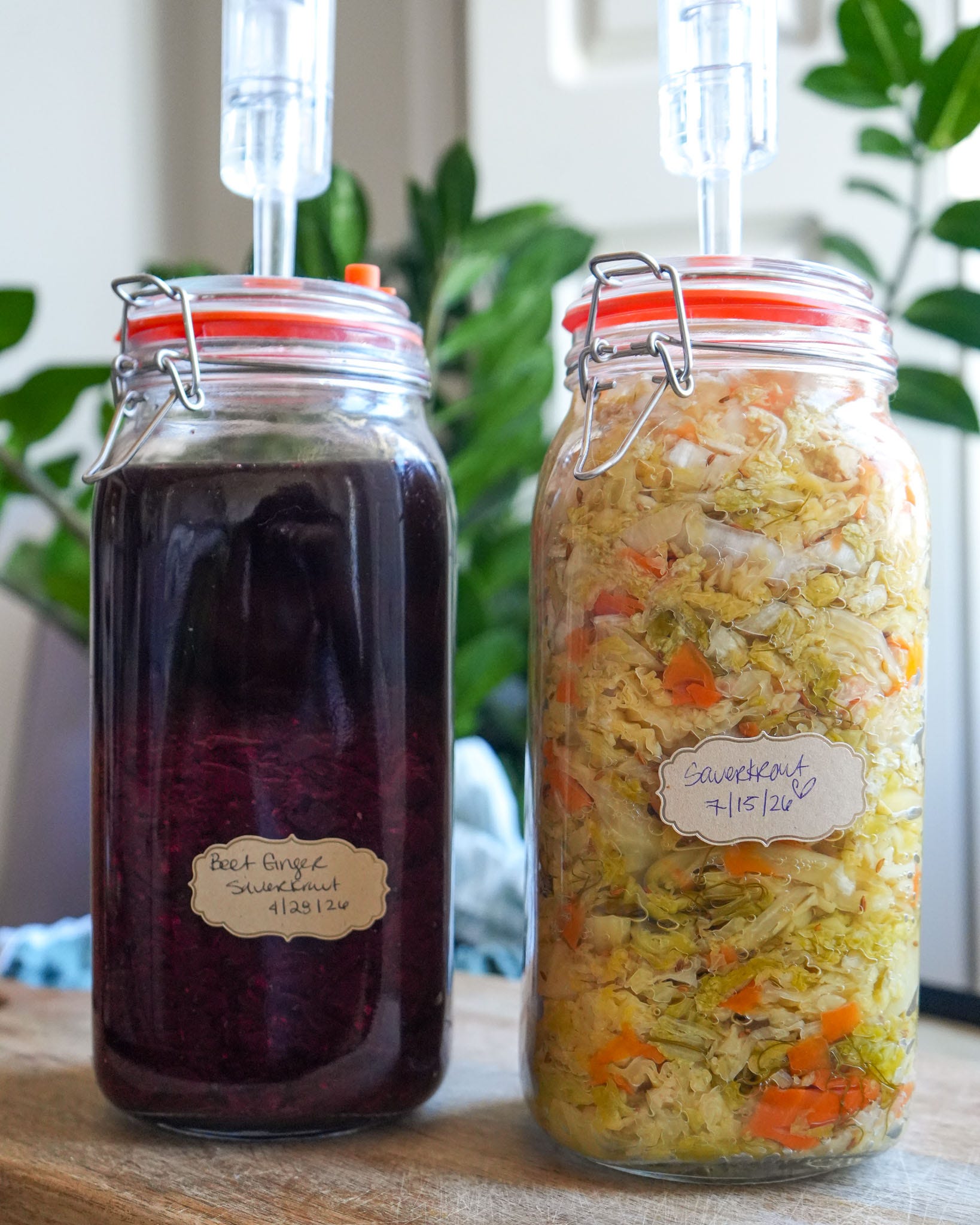
And of course my favorite sauerkraut to make is Beet Ginger Sauerkraut. I love the subtle sweetness and earthiness the beets add to the sauerkraut and the zestiness from the ginger is just chef’s kiss.
Remove any damaged outer leaves from the cabbage, then thinly slice the cabbage and carrots.
Place a large mixing bowl on a kitchen scale and zero out the scale. Add the shredded cabbage and carrots to the bowl and note the total weight.
For my batch, I used:
1060g cabbage
150g carrots
1210g vegetables total
Multiply the total weight of your vegetables by your desired salt percentage.
I used a 3% salt ratio, so for 1210g of vegetables, I added about 37g sea salt.
Sprinkle the salt over the cabbage and carrots, then massage everything together thoroughly with clean hands until the salt is evenly distributed.
At this point, you can either let the mixture sit for about 1 hour to help draw out more moisture, or do what I prefer and cover the bowl with a clean cloth and let it sit overnight.
When you are ready to jar the sauerkraut, add the optional caraway seeds, fresh dill, or any other spices and flavorings you are using.
Massage the mixture again for a good 3 to 5 minutes. You should notice the cabbage becoming softer and releasing even more liquid. That liquid is what will become your natural brine.
Transfer the cabbage mixture into a clean fermentation jar a little at a time.
After adding each handful, use a fermentation tamper to press the mixture down firmly. This helps remove trapped air, compacts the vegetables, and encourages even more liquid to rise out of the cabbage.
Continue adding and tamping until all of the mixture is packed into the jar. Pour any remaining liquid from the bowl into the jar.
By the time you are finished, you want enough natural brine to eventually cover the cabbage.
Place a fermentation weight on top of the cabbage and press down firmly so the vegetables sit beneath the brine.
If you saved a clean outer cabbage leaf, you can place it over the shredded vegetables before adding the weight to help keep smaller pieces from floating to the surface.
Keeping the cabbage submerged in the brine is one of the most important parts of successful fermentation.
Secure the jar with an airlock lid and place it somewhere out of direct sunlight.
A room temperature around 65°F to 75°F works well. Warmer temperatures will speed up fermentation, while cooler temperatures will slow it down.
If you are not using an airlock, you will need to burp the jar regularly during week one, which is the most active stage of fermentation.
Let the sauerkraut ferment at room temperature until it reaches the flavor you like. You can begin tasting it around 2 weeks, but I let mine ferment for about 1 month for a deeper, tangier flavor.
Once you are happy with the taste, transfer the sauerkraut to the refrigerator. The colder temperature dramatically slows the fermentation process and helps preserve the flavor and texture you have developed.
I like to transfer my finished sauerkraut into smaller jars so it is easier to store in my refrigerator. As you repack it, press the sauerkraut firmly into each jar and make sure it remains submerged beneath the brine. Pour any remaining brine from the fermentation jar over the top before sealing.
Then keep it refrigerated and enjoy it straight from the jar whenever you want a little fermented goodness with your meals. 🩷
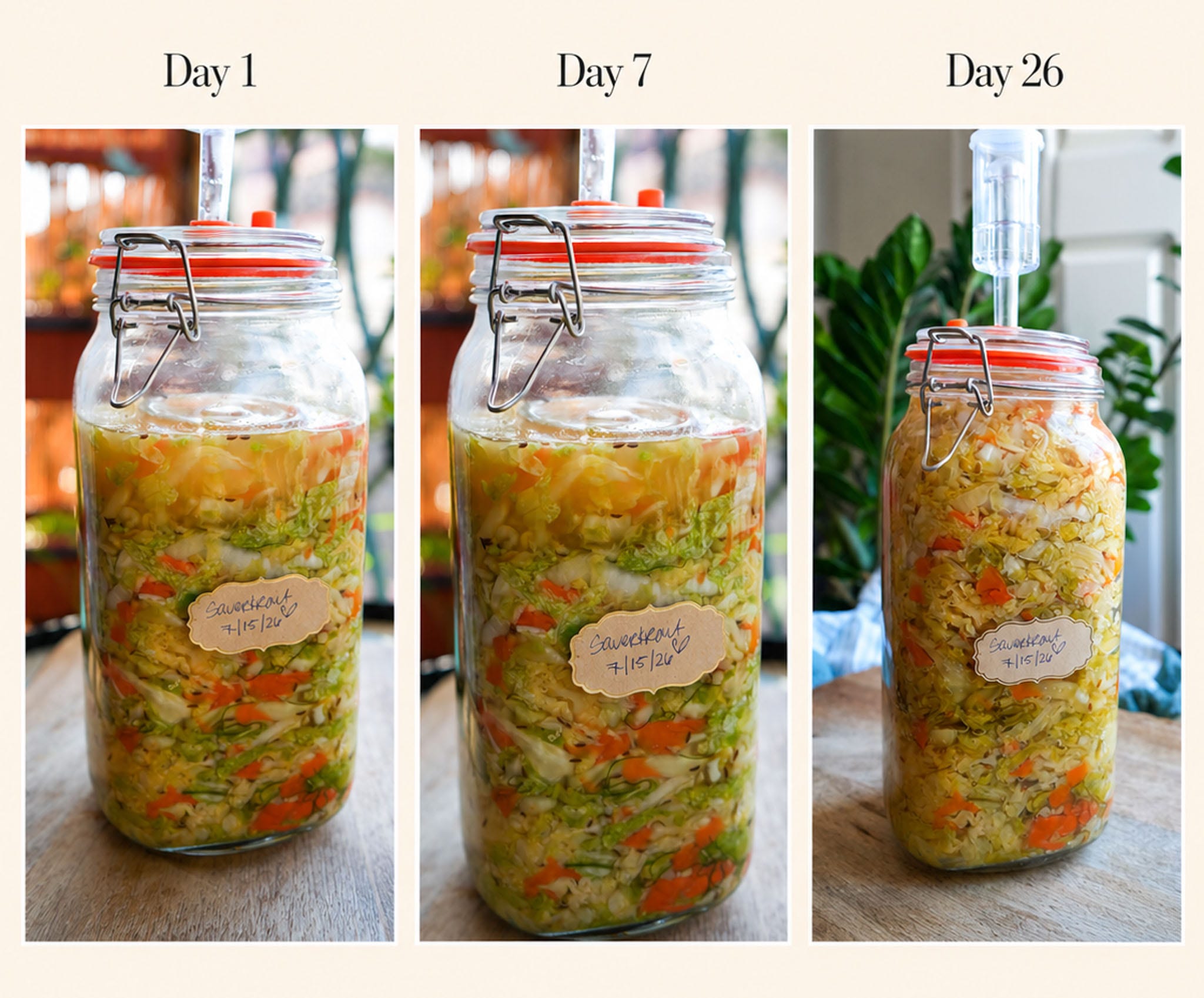
You can start tasting your sauerkraut at around 2 weeks. At that point, it should already taste tangy and noticeably fermented.
If you prefer a milder flavor, you may love it there. If you want something deeper, more sour, and more developed, let it continue fermenting. I left mine for about 1 month, and I loved the result.
There is no single perfect day. The best fermentation time really depends on your taste and the temperature of your home.
Once it tastes how you like it, remove the airlock, replace it with a regular lid, and transfer the jar to the refrigerator.
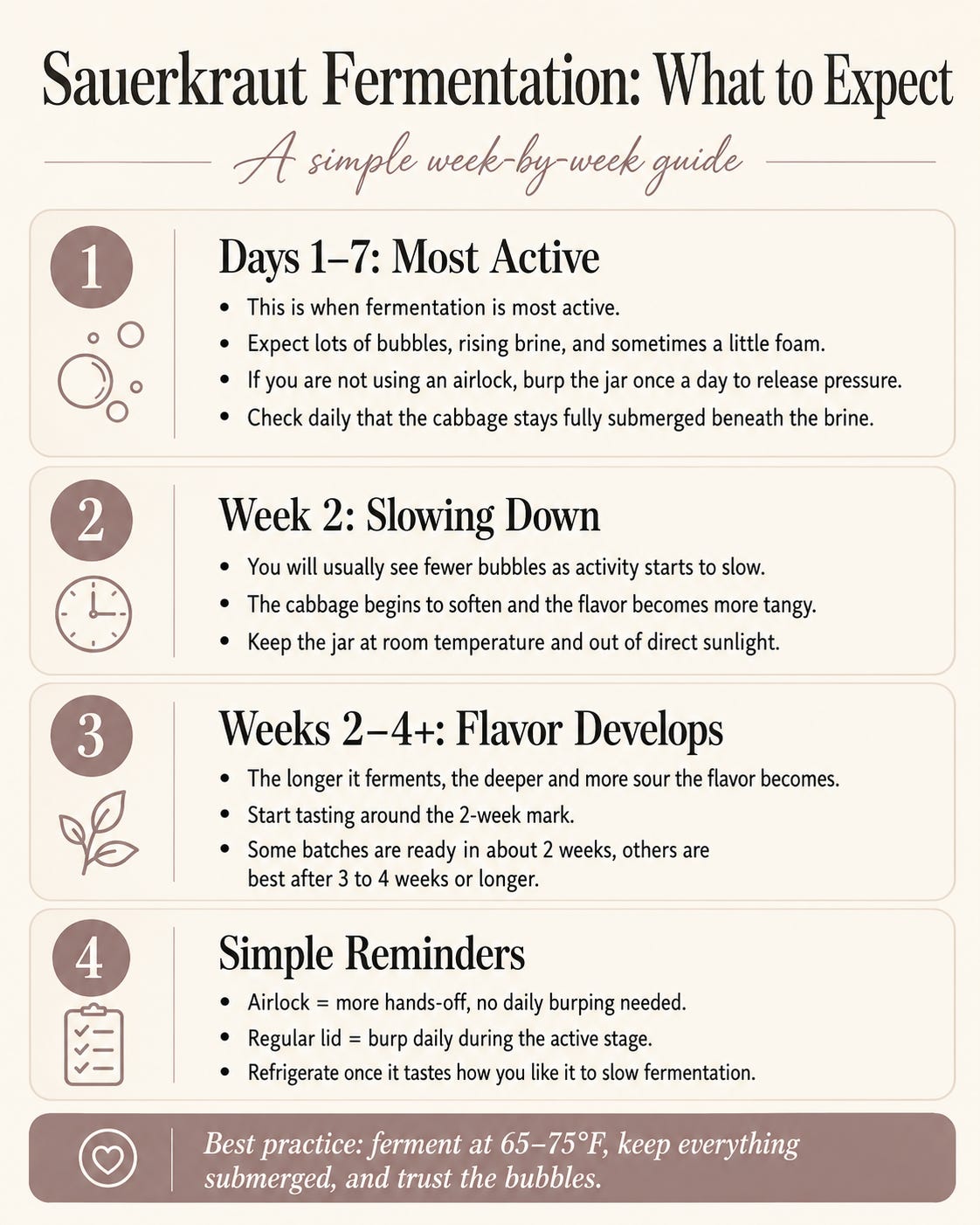
Fermentation is active, so your jar may look different from day to day.
You may notice:
Tiny bubbles
Brine rising and falling
A lightly sour smell
The cabbage becoming softer
The color changing slightly
A little pressure building inside the jar
All of these can be completely normal. The smell should be pleasantly sour, tangy, and fermented, not rotten or putrid.
If you remember only one thing, let it be this: Keep the cabbage submerged.
The salt brine creates the environment that allows fermentation to happen properly. If the vegetables rise above the liquid, gently press them back down. This is another reason I love using a fermentation weight. It does the work for you.
You do not need a complicated fermentation setup, but a few tools make the process much easier.
Large mixing bowl
Kitchen scale
Sharp knife or mandoline
Clean fermentation jar
Fermentation weight
Airlock lid
Wooden spoon or clean hands for mixing
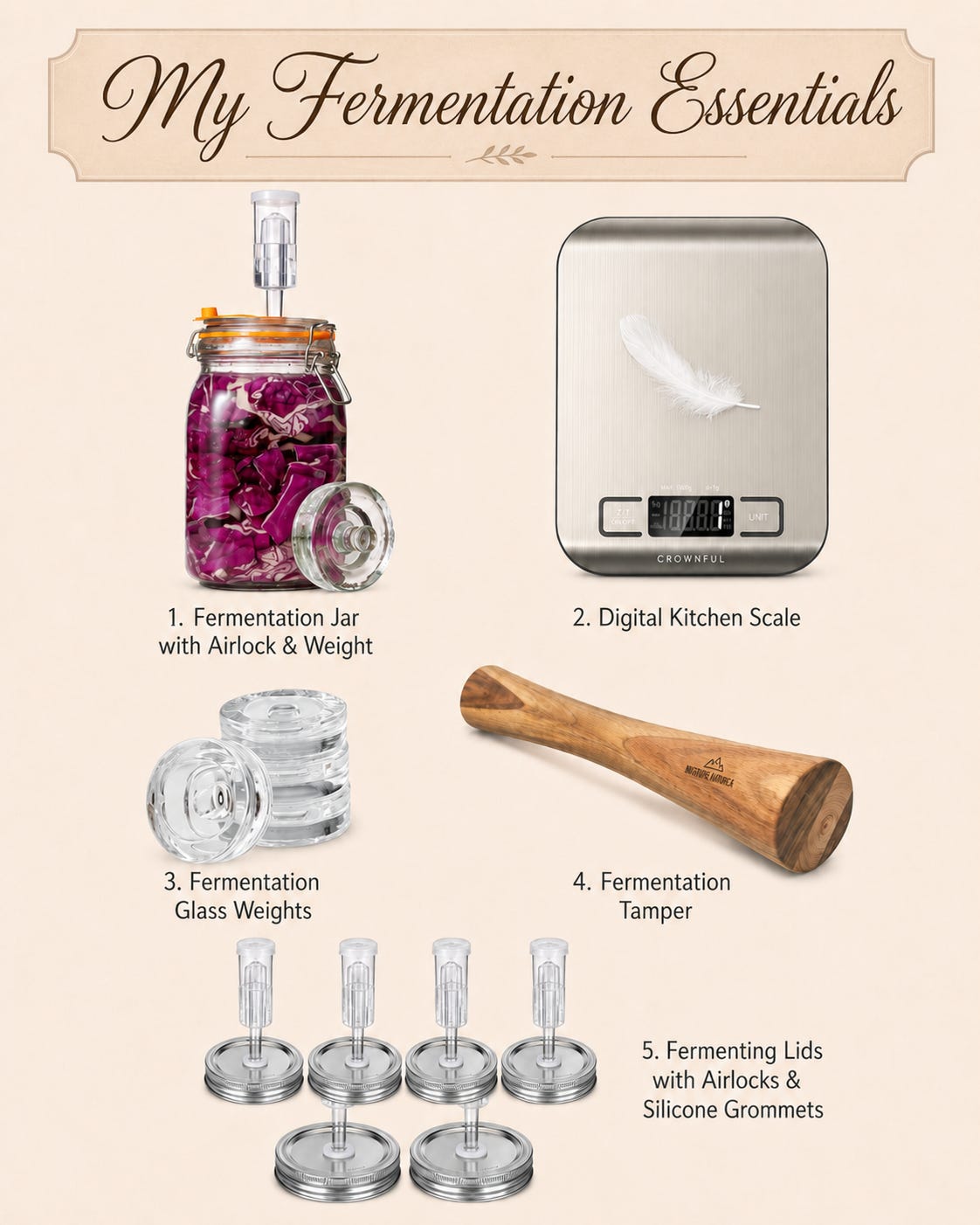
You can ferment sauerkraut without an airlock, but I find the process so much easier with one.
An airlock allows the carbon dioxide created during fermentation to escape while limiting outside air from getting into the jar. That means less opening, less worrying about pressure, and less interference with the ferment.
It also makes longer ferments feel much more hands-off. I left this batch for a full month, and using an airlock made that incredibly easy. I could simply let it sit and do its thing without constantly opening the jar. All I had to do was check every once in a while to make sure there was always water in the airlock system.
If you plan on making fermented foods regularly, an airlock is one of the few tools I genuinely think is worth having, especially because it makes fermentation SO much easier. You really can set it any forget it.

Homemade sauerkraut is one of the easiest ways to get comfortable with fermentation because the ingredient list is so simple and the process requires very little active work.
You also get to control the flavor. You can make it more garlicky, more herby, more spicy, or keep it completely traditional.
And once you get the hang of it, you realize how easy it is to turn one head of cabbage into several jars of fermented vegetables. That’s one of the reasons I keep coming back to fermentation.
It takes simple ingredients and transforms them into something completely different with nothing more than salt, time, and a little patience.
If you have never fermented anything before, sauerkraut is a great place to start. 🩷
If you make this sauerkraut, come back and tell me how it turned out! And if you already ferment at home, I’d love to know your favorite add-ins. Are you team classic, caraway, dill, garlic, spicy, or something completely different? 🥬✨
No posts
Comments
Nothing yet. Say the first thing.
Sign in to join the conversation.