
Last week we published an account of our encounter with members of the Amish community during our 75-day research trip across Canada. But that was not the only moment we came close to a community living apart from mainstream society. A few days earlier, in southern Manitoba, we had also come across a colony of Hutterites, an Anabaptist sect with roots in sixteenth-century Austrian Tyrol. It was a fleeting encounter, yet far from insignificant. We offer it here to our readers in Arianna’s first-person account
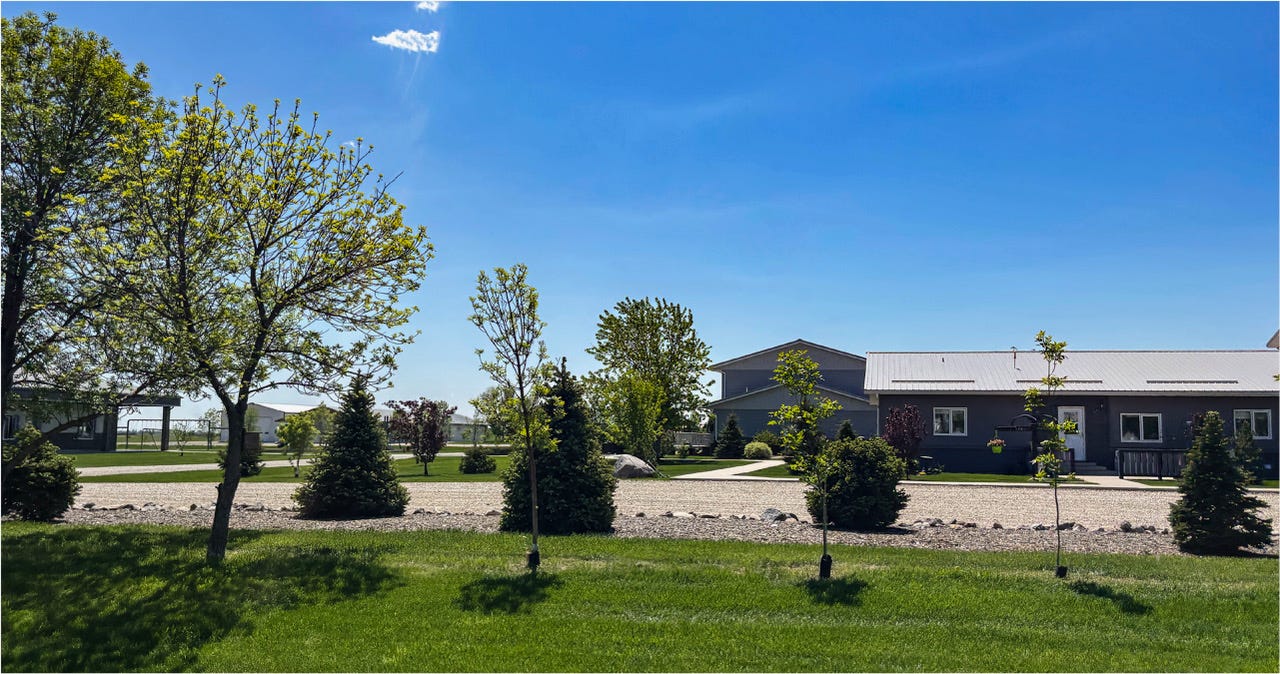
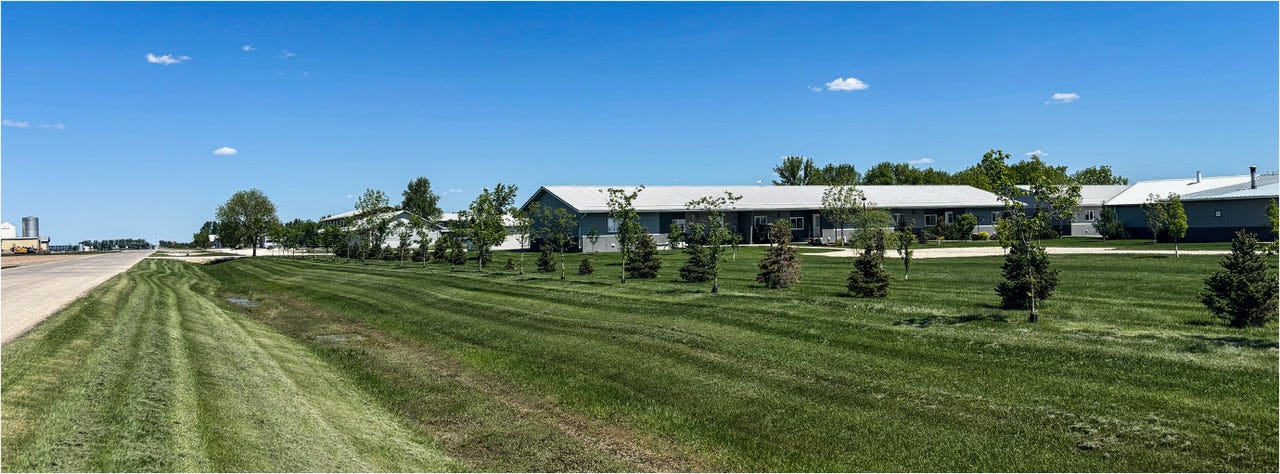
It is just past noon when, driving along a rural road outside Plum Coulee, we find ourselves skirting a complex of low buildings arranged with geometric precision, separated by pale gravel paths and surrounded by immaculately trimmed lawns. A few hours earlier, a local woman of Mennonite origin had mentioned the place almost in passing. “They live like we used to,” she had said. Then, after a pause: “In fact, they are even more closed off.”
What strikes us first is the sense of order, sharpened by the stillness of a hot summer afternoon. Even the trees seem to grow according to a precise pattern. From the outside, the Hutterite colony appears separate, self-sufficient, governed by an internal logic that feels no need to explain itself.
We pull over at the side of the entrance driveway. From there, I can see three women—one holding a baby—sitting on the veranda of one of the nearest houses. Stefano remains in the vehicle, the camera tucked away in his backpack. A few days later, when we approach Dan Stutzman, the Amish elder, he will be the one to make the first move. This time, however, it falls to me.
I walk over and introduce myself. I have barely finished explaining the purpose of our visit when the young mother stands up, citing the baby’s tiredness, and walks away without urgency but also without hesitation. The other two women, both in their seventies, remain seated in the shade. They glance at me briefly, then let their gaze drift elsewhere. They wear traditional clothing: long, wide skirts, sturdy blouses, and a black headscarf tied at the nape of the neck.
I ask if I may sit in the empty chair. They do not object. I do not ask for permission to record—it is clear it would not be welcome. I simply listen, storing away details to write down once I’m back in the car.
The two women speak in basic English, marked by a strong accent and long pauses. I try a few sentences in German, but one of them stops me: “We don’t understand you. Our language is different.” Theirs is, in fact, an old German dialect with roots in Tyrol and Bavaria, preserved almost intact through the community’s isolation. “We have been here since 1922. We are one hundred and fifty families,” explains the more talkative of the two. When the colony grew too large a few years ago, it split, giving rise to a new settlement near Morton: “We are not shrinking. On the contrary, we keep growing.”
They speak plainly about a way of life in which gender roles are clearly defined and comparison with the outside world is almost impossible. “Do we feel we live a happier life? How could we tell? We don’t know anything else. We grew up this way.”
Everything in the colony is communal—land, vehicles, machinery, barns, homes—and that’s what sets them apart from the Amish: “They accept private property”, the woman explains, “We don’t.” The government, they say, plays very little role in their daily lives, apart from taxation.
Life is structured entirely around work, without exception even for the young: some work in poultry barns, others in pig enclosures, others in the workshop where metal is cut by laser. They grow canola, wheat, barley, lentils, and potatoes. Contact with the outside world is unavoidable—they must sell what they produce—but, the more open of the two women suggests, it is not something they seek.
The children attend an internal school; lessons are taught in English, but the dialect remains the language of the community. I ask whether young people tend to stay. “Yes,” she answers without hesitation. After all, she points out, if the colony continues to grow, it is because the children do not leave.
As we speak, young women and girls move through the open spaces between buildings in long, brightly coloured floral dresses; even the smallest children wear traditional bonnets. At one point, a young man on a quad (unlike the Amish, motor vehicles are not forbidden) stops beside our car, gets off, and walks back to speak with Stefano. He asks if he can help in any way. When Stefano explains that he is waiting for me, the young man smiles, wishes him a good day, and rides off.
Before leaving, I ask one final question: what does it mean to be Hutterite today? “We try to be good Christians,” one of the women replies.
We have been there for less than half an hour. As we drive slowly along the perimeter of the colony, we notice some women quickly retreating into their homes as our car approaches. By the time we reach the last buildings, we have the distinct feeling that every member of the community already knew of our presence long before our car reached the main road and left their world.
Canadiensis – Letters from Canada/Lettere dal Canada is a reader-supported publication. To receive new posts and support my work, consider becoming a free or paid subscriber.
Quando il mondo si ferma al cancello
La settimana scorsa abbiamo raccontato l’incontro con alcuni membri della comunità Amish avvenuto durante il nostro viaggio di ricerca attraverso il Canada durato 75 giorni. Questo però non è stato l’unico contatto con un mondo che ha scelto di vivere ai margini della società contemporanea. Qualche giorno prima, nel Manitoba meridionale, ci eravamo imbattuti anche in una colonia di Hutteriti, setta anabattista con radici nel Tirolo austriaco del XVI secolo. È stato un incontro fugace, ma tutt’altro che privo di significato. Lo proponiamo qui ai nostri lettori nel racconto in prima persona di Arianna
È passato da poco mezzogiorno quando, percorrendo una strada rurale in uscita da Plum Coulee, ci troviamo a costeggiare un complesso di edifici bassi disposti con geometrica precisione, separati da vialetti di ghiaietto chiaro e circondati da prati impeccabilmente rasati. Qualche ora prima, una donna del posto di origine mennonita ce ne aveva parlato quasi di sfuggita: “Lì vivono come vivevamo noi un tempo”. Poi, dopo una pausa, aveva aggiunto: “Anzi, sono ancora più chiusi”.
Ciò che colpisce per primo è il senso di ordine — un ordine quasi inquietante, accentuato dall’immobilità di un caldo pomeriggio estivo. Persino gli alberi sembrano crescere secondo uno schema preciso. Così si presenta, vista dall’esterno, la colonia Hutterita: separata, autosufficiente, governata da una logica interna che non sente il bisogno di spiegarsi.
Parcheggiamo su un lato del vialetto d'entrata. Da lì scorgo tre donne — una con una bimba in braccio — sedute sulla veranda di una delle case più vicine. Stefano resta nell’auto, la macchina fotografica rimane nello zaino. Qualche giorno dopo, quando ci sarà da avvicinare Dan Stuzman, il capofamiglia Amish, sarà lui a farlo ma, stavolta, il primo passo tocca a me.
Mi avvicino e mi presento. Non ho ancora finito di spiegare il motivo della nostra visita che la giovane madre si alza, dicendo che la bambina è stanca, e si allontana senza fretta ma senza esitazioni. Le altre due donne, entrambe sulla settantina, restano sedute all’ombra. Mi guardano un istante, poi lasciano scivolare lo sguardo altrove. Indossano gli abiti della tradizione: ampie gonne lunghe, camicie di tessuto robusto, un fazzoletto nero annodato sulla nuca.
Chiedo se posso sedermi sulla sedia rimasta libera. Non obiettano. Non chiedo il permesso di registrare, è evidente che non sarebbe gradito. Mi limito ad ascoltare, cercando di memorizzare ogni dettaglio per appuntarlo non appena tornata in macchina.
Le due donne rispondono in un inglese elementare, scandito da un accento marcato e da pause lunghe. Provo qualche frase in tedesco, ma una di loro mi interrompe subito: “Non ti capiamo. La nostra lingua è diversa”. Il loro è un antico dialetto tedesco con radici tirolesi e bavaresi, conservato quasi intatto dall’isolamento della comunità. “Siamo qui dal 1922, siamo centocinquanta famiglie”, spiega la più loquace delle due. Quando la colonia è diventata troppo grande, qualche anno fa si è divisa, dando vita a un nuovo insediamento nei pressi di Morton: “Non stiamo diminuendo. Al contrario, continuiamo a crescere”.
Parlano con semplicità disarmante di un modo di vivere in cui i ruoli di genere sono nettamente distinti e il confronto con il mondo esterno quasi impraticabile. “Se le nostre vite ci sembrano più felici? Come potremmo dirlo? Non conosciamo altro. Siamo cresciute così”.
Nella colonia tutti i beni appartengono alla collettività: terreni, veicoli, macchinari, stalle e abitazioni. È questa la differenza fondamentale con gli Amish: “Loro accettano la proprietà privata, noi mettiamo tutto in comune”. Quanto allo Stato, la sua presenza si fa sentire a malapena, se non per la riscossione delle tasse.
Le giornate sono scandite dal lavoro, senza eccezioni nemmeno per i più giovani: c’è chi lavora nei pollai, chi nei recinti dei maiali, chi nel laboratorio dove il metallo viene tagliato al laser. Si coltivano canola, grano, orzo, lenticchie, patate. Il contatto con il mondo esterno è inevitabile — i prodotti vanno pur venduti — ma, lascia intendere la donna più disposta a parlare, non è qualcosa che si cerca.
I bambini frequentano una scuola interna; le lezioni si tengono in inglese, ma il dialetto rimane la lingua della comunità. Chiedo se i giovani siano propensi a restare. «Sì», risponde senza esitazioni. Del resto, mi fa notare, se la colonia continua a crescere è perché i figli non vanno via.
Mentre parliamo, giovani donne e ragazze attraversano gli spazi aperti tra gli edifici in lunghi abiti a fiori dai colori vivaci; anche le bambine più piccole portano le tradizionali cuffiette. A un certo punto un ragazzo su un quad (a differenza degli Amish, i veicoli motorizzati non sono banditi) si ferma accanto alla nostra auto, scende e torna indietro per rivolgersi a Stefano. Gli chiede se possa essere d’aiuto. Quando Stefano gli spiega che sta aspettando me, il ragazzo lo saluta con un sorriso e riparte.
Prima di congedarmi, faccio un’ultima domanda: cosa significa essere Hutteriti al giorno d’oggi? “Cerchiamo di essere dei buoni cristiani”, risponde una delle due donne.
Siamo rimasti lì meno di mezz’ora. Mentre ci allontaniamo costeggiando il perimetro della colonia, notiamo che diverse donne, scorgendo la nostra auto, rientrano rapidamente nelle loro case. Quando raggiungiamo gli ultimi edifici, abbiamo la netta sensazione che ogni membro della comunità fosse stato messo al corrente della nostra presenza, ben prima che la nostra auto svoltasse per imboccare la strada principale e lasciasse il loro mondo.
Canadiensis – Letters from Canada/Lettere dal Canada is a reader-supported publication. To receive new posts and support my work, consider becoming a free or paid subscriber.
Comments
Nothing yet. Say the first thing.
Sign in to join the conversation.