
One of the questions we have been asked most often in recent months — by readers and by those following the evolution of Canadiensis — concerns how we managed, during our coast-to-coast journey, to remain open to encounters and emerging situations while also meeting the practical demands of a research project that lasted 75 days and covered more than 21,000 kilometres.
It is, without doubt, a fair question.
To cross Canada in the way we did is to engage in a continuous balancing act between two very different orders of necessity. On one side lie the practical demands of the journey: routes, accommodation, weather, deadlines, equipment, backups, editing, long hours of driving, and the daily challenge of finding a place to work — all while maintaining a steady rhythm of publication. On the other side is a far less predictable dimension, which, over time, revealed itself as the true core of Canadiensis: the ability to remain receptive to what takes shape around you. And it is precisely this second dimension that proves the most difficult to sustain.
Many of the conversations that later became articles, photographs, or entire narrative threads did not originate as planned interviews. They emerged instead from situations that were often accidental, loosely structured, and occasionally chaotic: a diner chat that grew into something much larger; a brief stop that quietly unfolds into an entire afternoon; someone suggesting another place to see, another person to meet, another road to take.
From the outset, we understood that an overly rigid structure would leave little room for the unexpected. Yet openness carries its own risks. Over time, impressions, fragments, and encounters begin to accumulate, overlap, and blur. The challenge is no longer simply gathering material, but managing it — ensuring that nothing essential is lost within the constant flow of what continues to emerge.
In the early stages of the journey, we published newsletter entries almost daily. Later, that rhythm shifted to a more sustainable weekly cadence, yet the gathering of stories and photographs continued unabated. As the material grew, it became evident that its organization could not be left to some undefined moment after the journey. The work of making sense of it had to proceed alongside the travel itself, in real time.
Within this context, two tools gradually became essential in helping us maintain that balance between openness and organization.
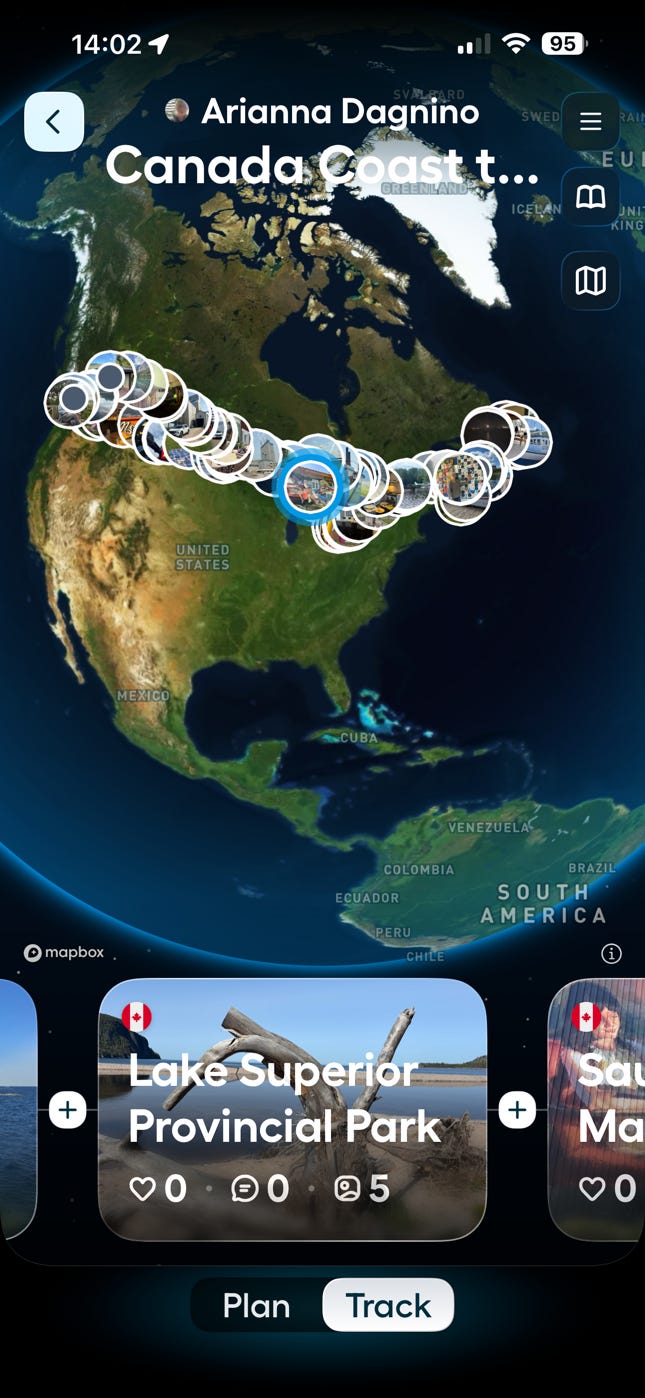
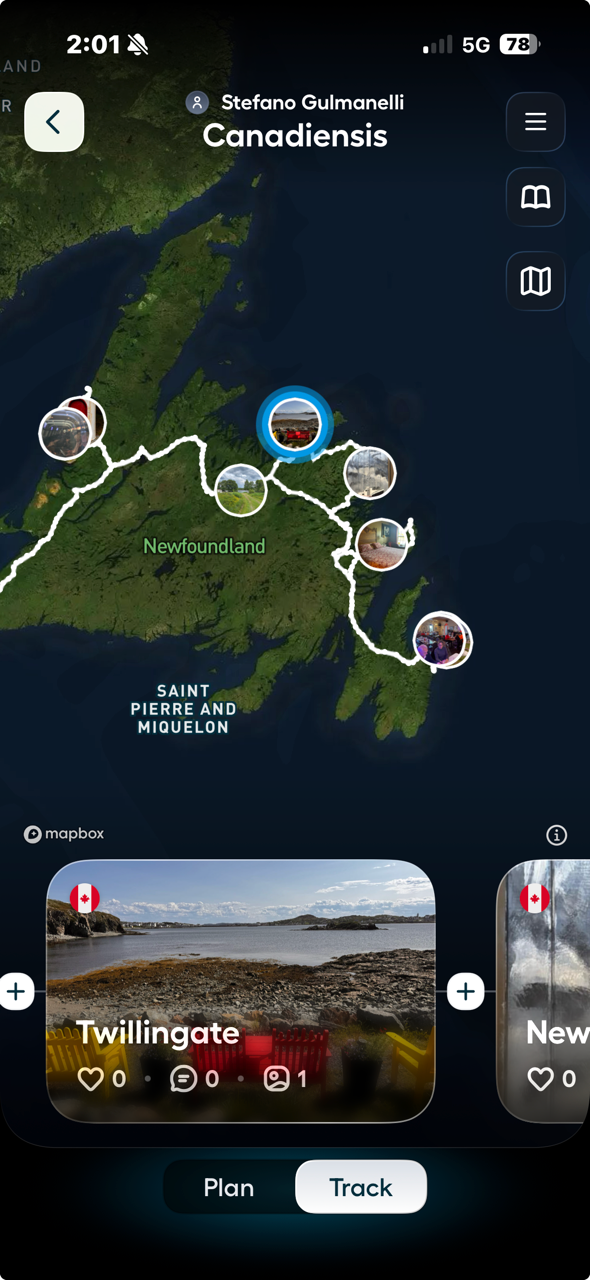
The first was Polarsteps, a travel-tracking and sharing app we initially adopted simply to allow readers and friends to follow our route in near real time.
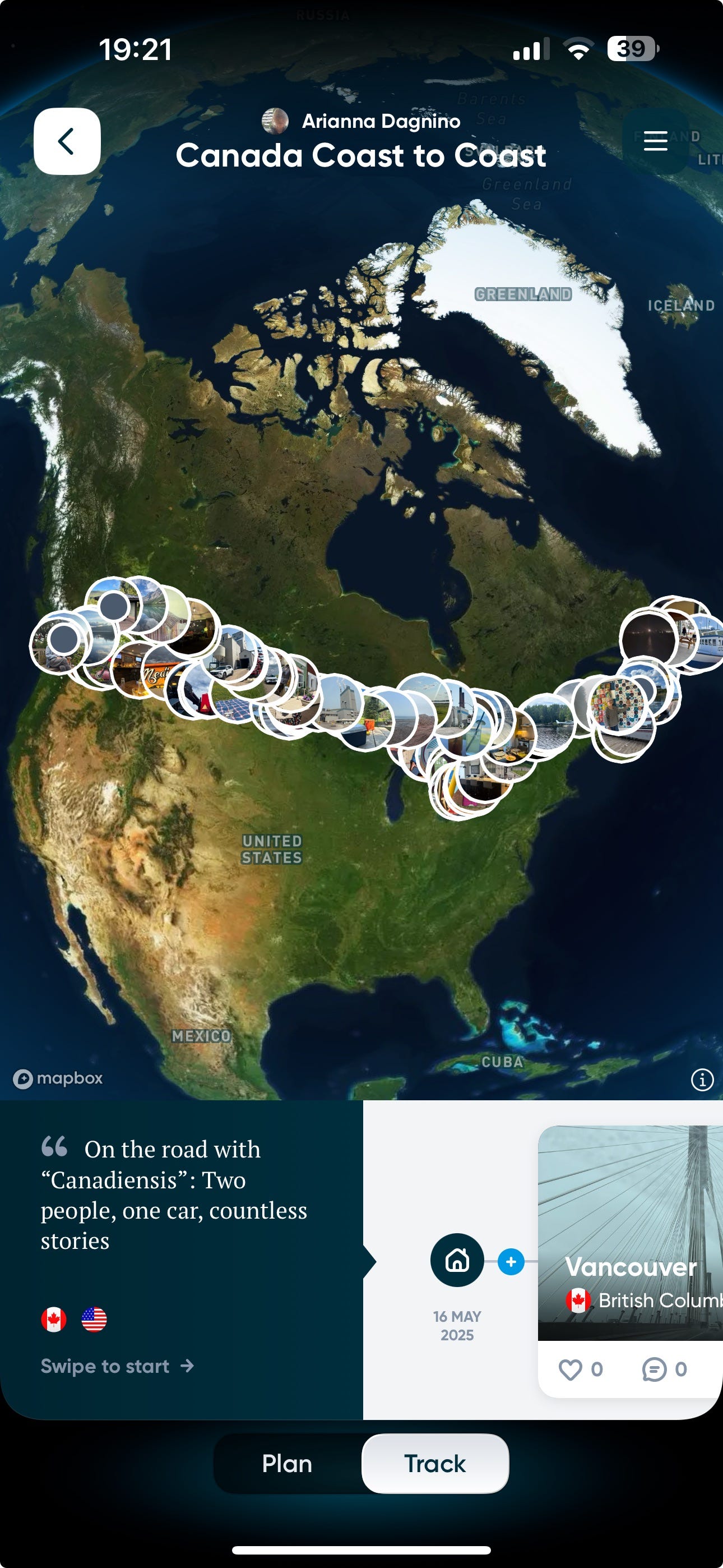
Over time, however, it proved far more useful than anticipated. Beyond recording movements from one place to another, it became a form of geographical memory — a way of reconstructing our trajectory after the fact. When weeks are spent on the road, days begin to blur with surprising speed; Polarsteps allowed us to return, with precision, to where we had been.
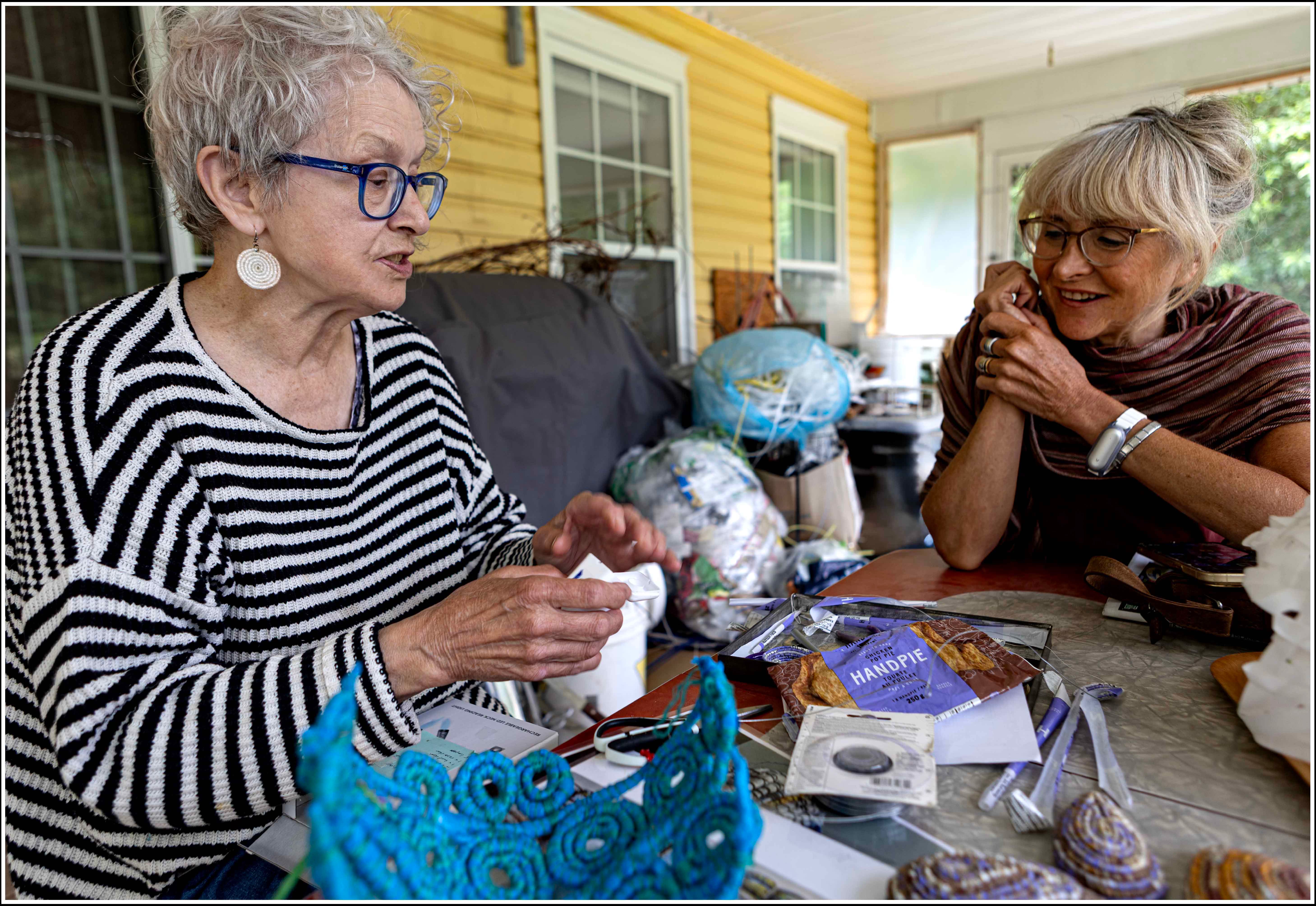
The second — and ultimately more decisive for the kind of work Canadiensis relies on — was PLAUD Note. Its value did not lie merely in recording conversations – something many other devices can do – but in the combination of reliable audio capture, near-immediate transcription, and, perhaps most importantly, the ability to automatically organize long and often sprawling conversations into themes and core narrative threads.
This was crucial because our interactions with people rarely followed the structure of traditional interviews built around a preset list of questions. Memory, work, geography, family histories, politics, weather, and personal anecdotes wove together freely, in ways that were anything but linear.
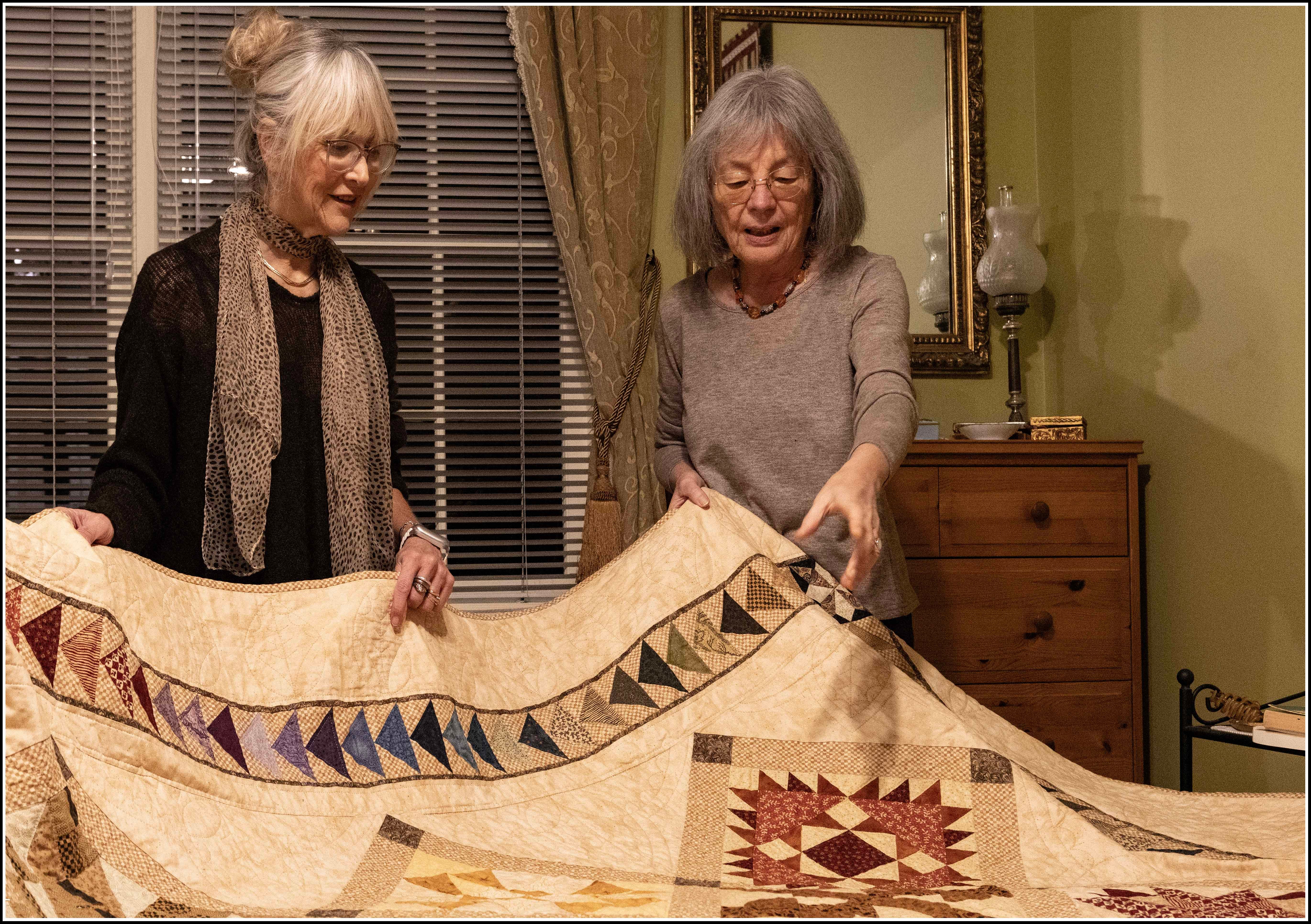
In this context, PLAUD allowed us to remain fully present within each conversation, without the need to impose artificial order simply to facilitate later reconstruction. And that profoundly changed the way conversations themselves took shape. Not because the device, fastened around Arianna’s wrist, had somehow become invisible — we always asked for consent, without exception — but because, once its presence faded into the background, people returned to speaking as they naturally do when a conversation is allowed to unfold freely. For a project like Canadiensis, this made an enormous difference.
What proved particularly useful was the way the system continued to assist us even in situations where we assumed it simply wouldn’t work. One example that immediately comes to mind is the long conversation with the farmer who later became central to the story “A Farmer’s Way.”
The entire exchange took place at the edge of an active field during seeding operations, with large agricultural machinery moving only a short distance from us. On top of that, strong prairie winds were blowing throughout the conversation, and we assumed the constant buffeting of the microphone would compromise the recording. When we later downloaded the transcript, we expected the result to be nearly unusable. Instead, the text turned out to be remarkably accurate, including passages we distinctly remembered struggling to hear clearly even as they were being spoken.
Devices and digital tools, in themselves, do not create stories. Nor do they replace attention, curiosity, relational attunement, or the willingness to notice what begins to take shape unexpectedly around you. But there are ways of using technology that reduce operational friction just enough to allow you to remain more fully immersed in the experience itself. And that is precisely the kind of space PLAUD Note helped us preserve throughout the journey.
As a number of readers have inquired about the tools that accompanied us on our journey, we are happy to provide a dedicated link (Canada; United States; Italy) and its related 10% discount code (“Canadiensis”) for anyone wishing to explore the device further.
EXPLORE THE COMPLETE ARCHIVE OF OUR PUBLISHED INTERVIEWS HERE
Come documentare un viaggio di ricerca senza perdere il filo delle conversazioni
Una delle domande che spesso ci viene rivolta — da lettori e da chi segue l’evoluzione di Canadiensis — riguarda il modo in cui siamo riusciti, durante il viaggio coast-to-coast, a mantenere un’autentica disponibilità all’incontro e all’imprevisto, pur dovendo gestire le esigenze concrete di un progetto che nell’arco di 75 giorni ci ha portati a percorrere oltre 21.000 chilometri.
È una domanda più che legittima.
L’attraversamento del Canada come lo abbiamo interpretato noi è quasi subito diventato un esercizio di equilibrio continuo fra due logiche molto diverse. Da una parte c’erano gli aspetti concreti: itinerari, alloggi, meteo, scadenze, attrezzatura, backup, editing, le interminabili ore di guida, il trovare ogni giorno un posto da cui lavorare — mantenendo comunque una pubblicazione regolare. Dall’altra c’era una dimensione assai meno prevedibile che, col tempo, sarebbe diventata il vero cuore di Canadiensis: restare ricettivi a ciò che prendeva forma attorno a noi. Ed è stata proprio questa la parte più difficile.
Molte delle conversazioni che sarebbero poi confluite in articoli o interi filoni narrativi — e le immagini che ne sarebbero derivate — non sono nate da interviste pianificate. Sono scaturite da situazioni in parte casuali, poco strutturate, a volte caotiche: una chiacchierata in un diner protrattasi ben oltre il previsto; una sosta che doveva essere di quindici minuti che finiva per prendersi l’intero pomeriggio; qualcuno che, quasi per caso, suggeriva un altro luogo da vedere, un’altra persona da incontrare, un’altra strada da percorrere.
Abbiamo capito fin dall’inizio che un’impostazione troppo rigida avrebbe finito per restringere lo spazio lasciato all’imprevisto. Ma un approccio destrutturato porta con sé il problema opposto: l’accumulo crescente di impressioni, stimoli e dettagli che iniziano presto a sovrapporsi. A quel punto, la difficoltà non è più trovare materiale — è riuscire a gestirlo senza perdere il filo dei molteplici percorsi narrativi che si creano.
Nelle prime settimane pubblicavamo quasi ogni giorno. Il ritmo è poi diventato settimanale, ma la raccolta di storie e fotografie non si è mai interrotta. Con il progressivo accumularsi del materiale, è diventato evidente che il lavoro di gestione e interpretazione non poteva essere rinviato a un ipotetico "dopo": doveva esser fatto a viaggio ancora in corso.
In questo contesto, due strumenti in particolare si sono rivelati decisivi per mantenere l’equilibrio fra disponibilità all’incontro e necessità di organizzazione.
Polarsteps — un’app di tracciamento e condivisione dei viaggi che avevamo installato inizialmente per permettere a lettori e amici di seguire il nostro percorso quasi in tempo reale.
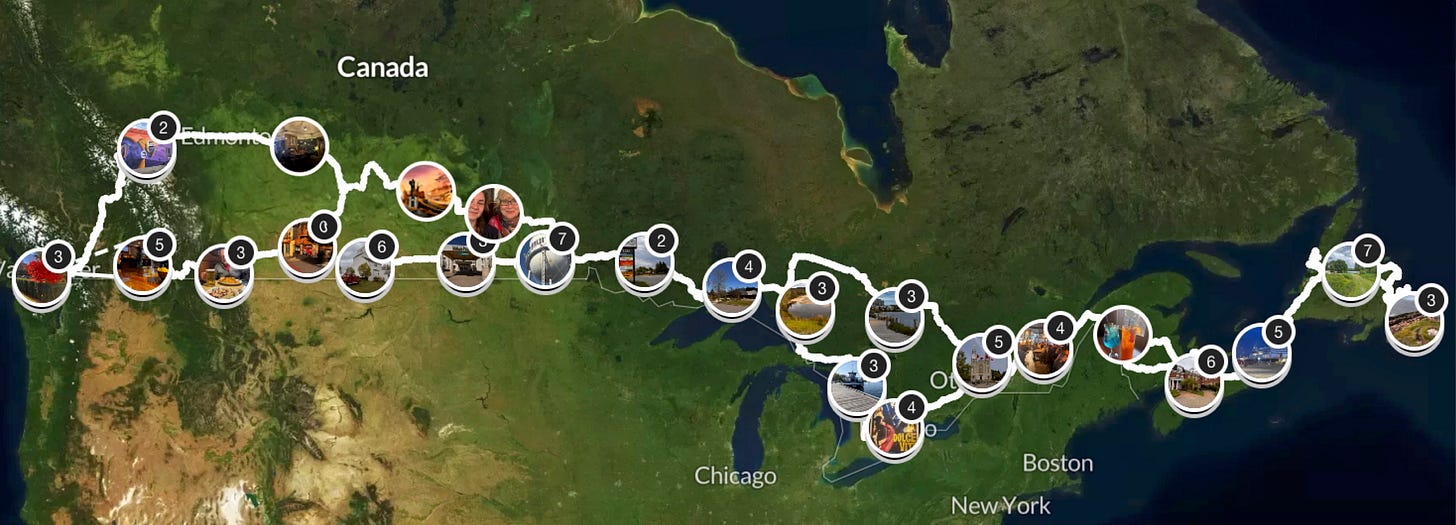
Col tempo si è rivelata molto più utile di quanto avessimo immaginato: non solo registrava gli spostamenti, ma era diventata uno strumento fondamentale per ricostruire a posteriori i nostri stessi movimenti. Quando si trascorrono settimane sulla strada, le giornate tendono a confondersi; Polarsteps ci ha aiutato a costruire una memoria geografica del viaggio cui attingere ogni volta che se ne presentava la necessità.
Lo strumento che si è rivelato davvero cruciale per il tipo di lavoro fatto in Canadiensis è stato però PLAUD Note. Non soltanto per la possibilità di registrare conversazioni — dispositivi capaci di farlo ne esistono molti — ma per la combinazione fra affidabilità della registrazione, trascrizione pressoché immediata e, soprattutto, la capacità di organizzare automaticamente conversazioni lunghe e complesse in temi e nuclei narrativi.
Questi aspetti contano, perché le nostre conversazioni non seguivano la struttura di un'intervista tradizionale basata su una lista di domande e un ordine prestabiliti: memoria, lavoro, geografia, storie familiari, politica, meteo e aneddoti si intrecciavano liberamente, secondo logiche tutt'altro che lineari.
PLAUD ci ha così permesso di restare pienamente dentro la conversazione, senza doverla ricondurre a una forma più lineare che ne facilitasse a posteriore la ricostruzione. E questo ha cambiato profondamente il modo in cui le conversazioni prendevano forma. Non perché il dispositivo, allacciato al polso di Arianna, scomparisse alla vista — abbiamo sempre chiesto, senza eccezione, il consenso al suo utilizzo — ma perché, una volta superata la consapevolezza iniziale della sua presenza, le persone riprendevano a parlare con la naturalezza e la spontaneità delle conversazioni ordinarie. Per il nostro Canadiensis questo ha fatto la differenza.
Particolarmente utile è stato poi il modo in cui il sistema ha funzionato anche dove pensavamo non avrebbe potuto. Un esempio è la lunga conversazione con l’agricoltore al centro della storia “Terra e Destino”, avvenuta ai margini di un campo dove, a poca distanza da noi, erano in attività macchine agricole per la semina. Quel giorno sulla prateria tirava un forte vento, e immaginavamo che la registrazione ne avrebbe risentito pesantemente. Quando abbiamo scaricato la trascrizione, ce l’aspettavamo sostanzialmente inutilizzabile. Invece il testo si è rivelato accurato — anche in passaggi che ricordavamo di aver sentito a malapena nel momento in cui venivano pronunciati.
Strumenti e dispositivi digitali, di per sé, non creano storie. E non sostituiscono l’attenzione, la curiosità, la sensibilità relazionale o la disponibilità a cogliere ciò che prende forma in modo inatteso. Ma esistono modi di usare la tecnologia che riducono l’attrito operativo quanto basta per restare immersi nell’esperienza stessa. È precisamente questo il tipo di spazio che PLAUD Note ci ha aiutato a preservare durante il viaggio.
Poiché diversi lettori ci hanno chiesto informazioni sugli strumenti che ci hanno accompagnato durante il viaggio, siamo lieti di condividere un link dedicato (Canada; Stati Uniti; Italia) insieme al relativo codice sconto del 10% (“Canadiensis”) per chi desiderasse approfondire l’utilizzo del dispositivo.
L’ARCHIVIO COMPLETO DELLE INTERVISTE PUBBLICATE FINORA LO TROVI QUI
Comments
Nothing yet. Say the first thing.
Sign in to join the conversation.