
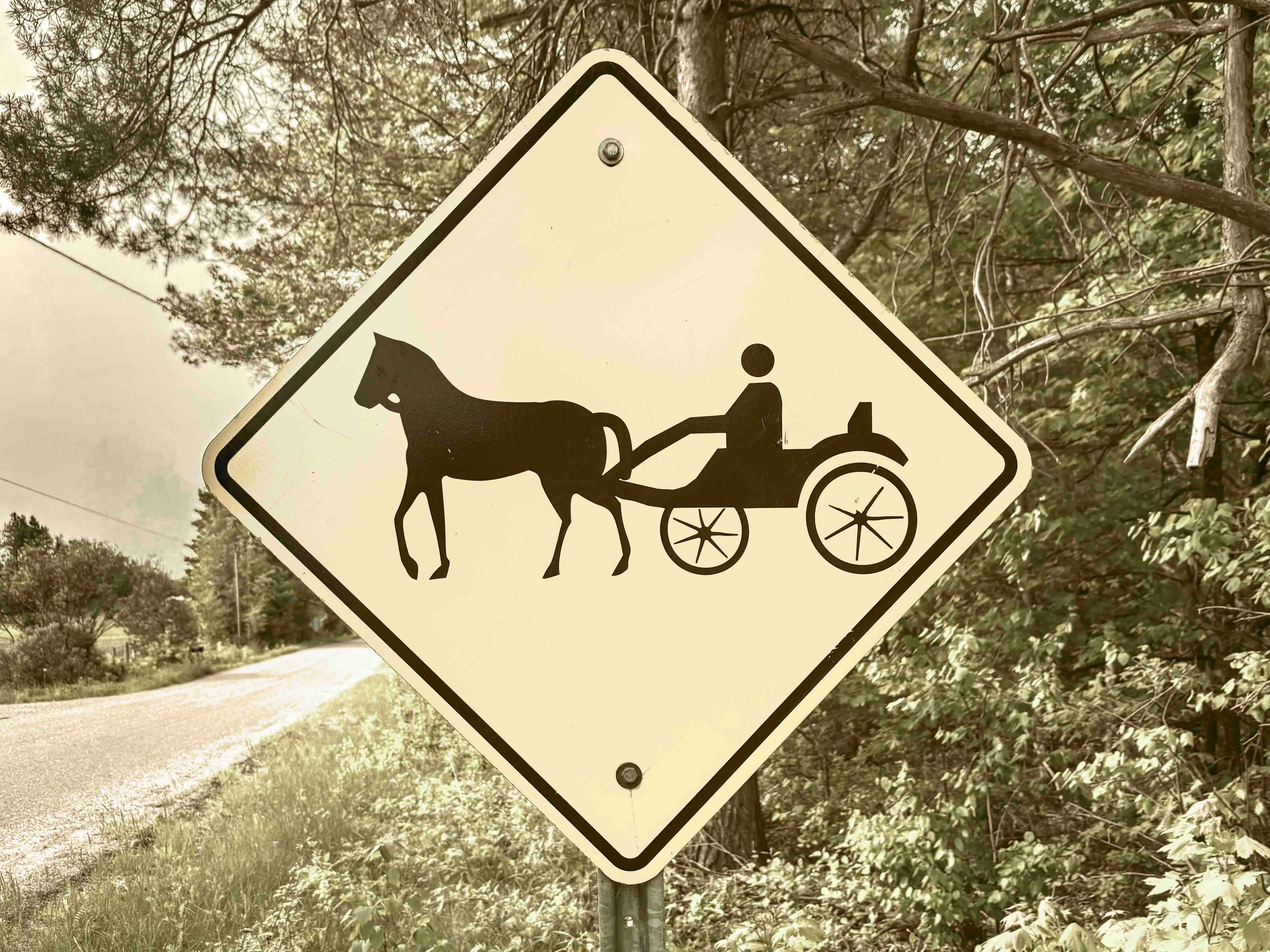
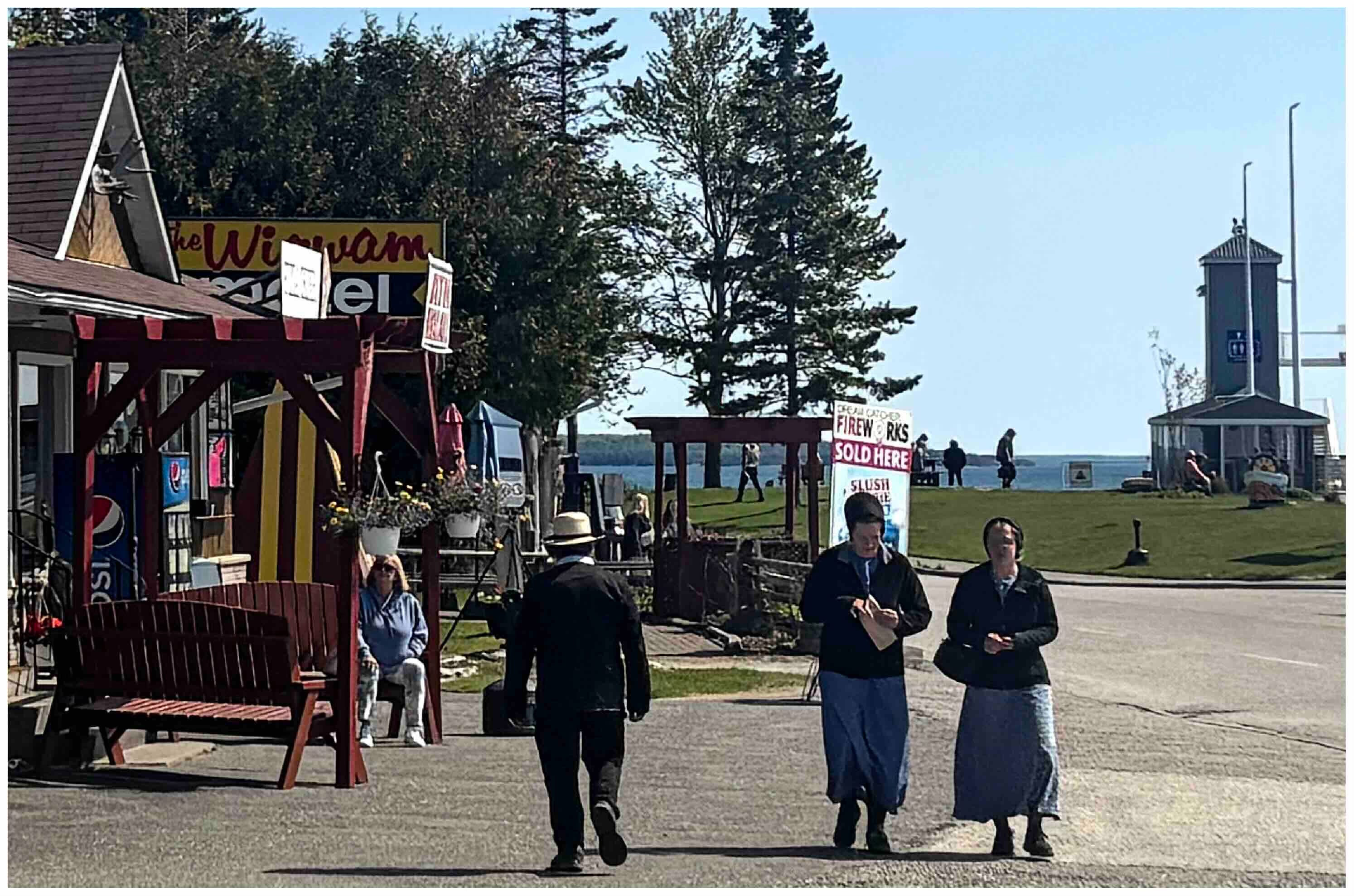
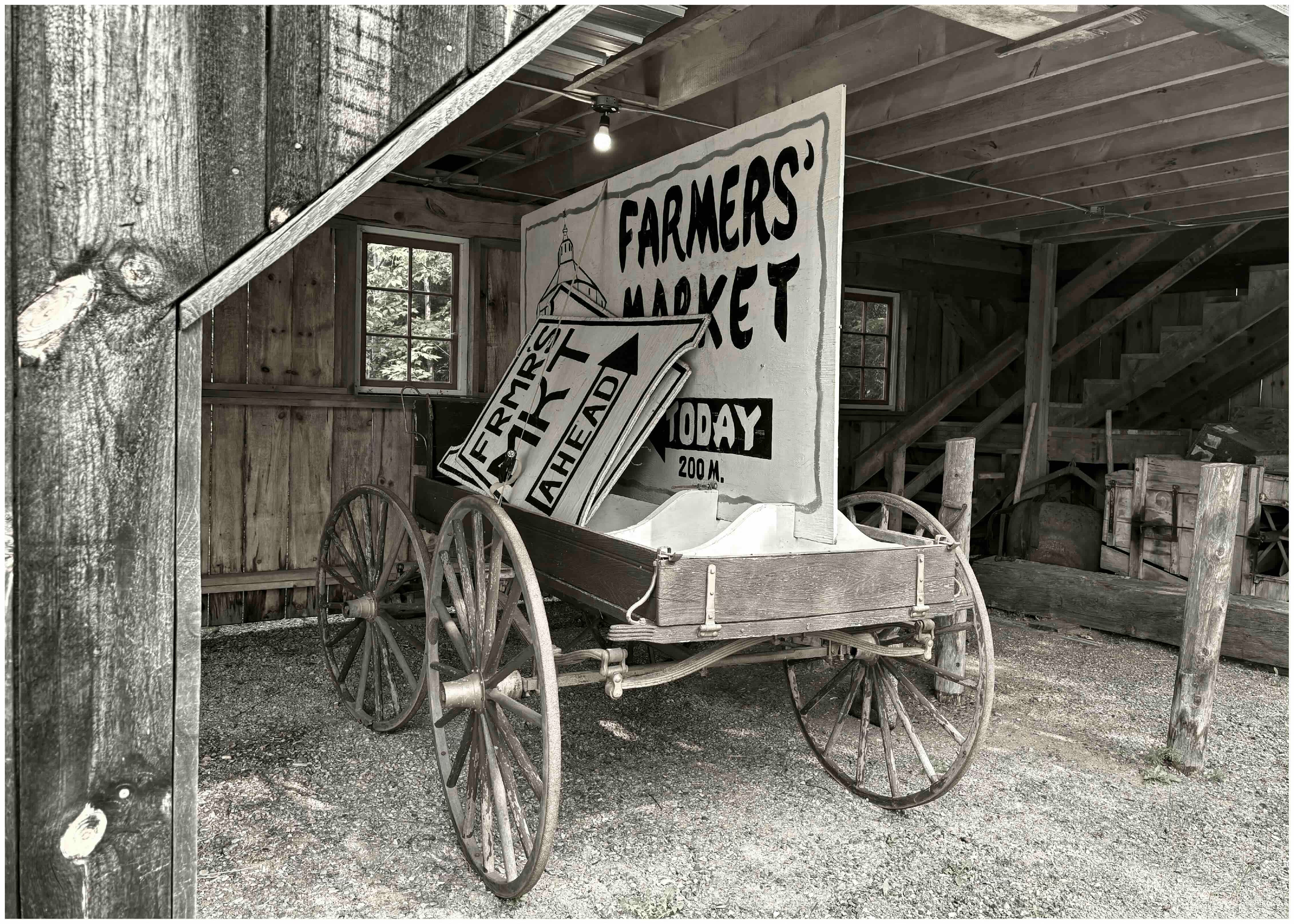
The first trace of their presence was a road sign: the silhouette of a horse-drawn buggy against a bright yellow background. The second was a man — light blue shirt, vest, dark trousers, straw hat — gliding past us on a curious four-wheeled contraption propelled solely by the steady force of his calves. The third came in the words of Mark West, owner of one of the area’s last historic barns: “They’re the only ones left who still know how to build and repair them properly.”
Little by little, their world began to take shape, hinting at how elusive their existence still remains, in many ways, in 21st century Canada. We knew what people generally know about them: they prefer to live apart from mainstream society, reject cars, computers, and electricity, wear handmade clothes in the styles of another era, continue to speak Pennsylvania Dutch — a German dialect passed down through generations — and maintain strict communal boundaries, to the point that leaving can mean permanent exclusion and the irreversible rupture of family ties. They are the Old Order Amish, and we hoped to encounter them once we entered western Ontario.
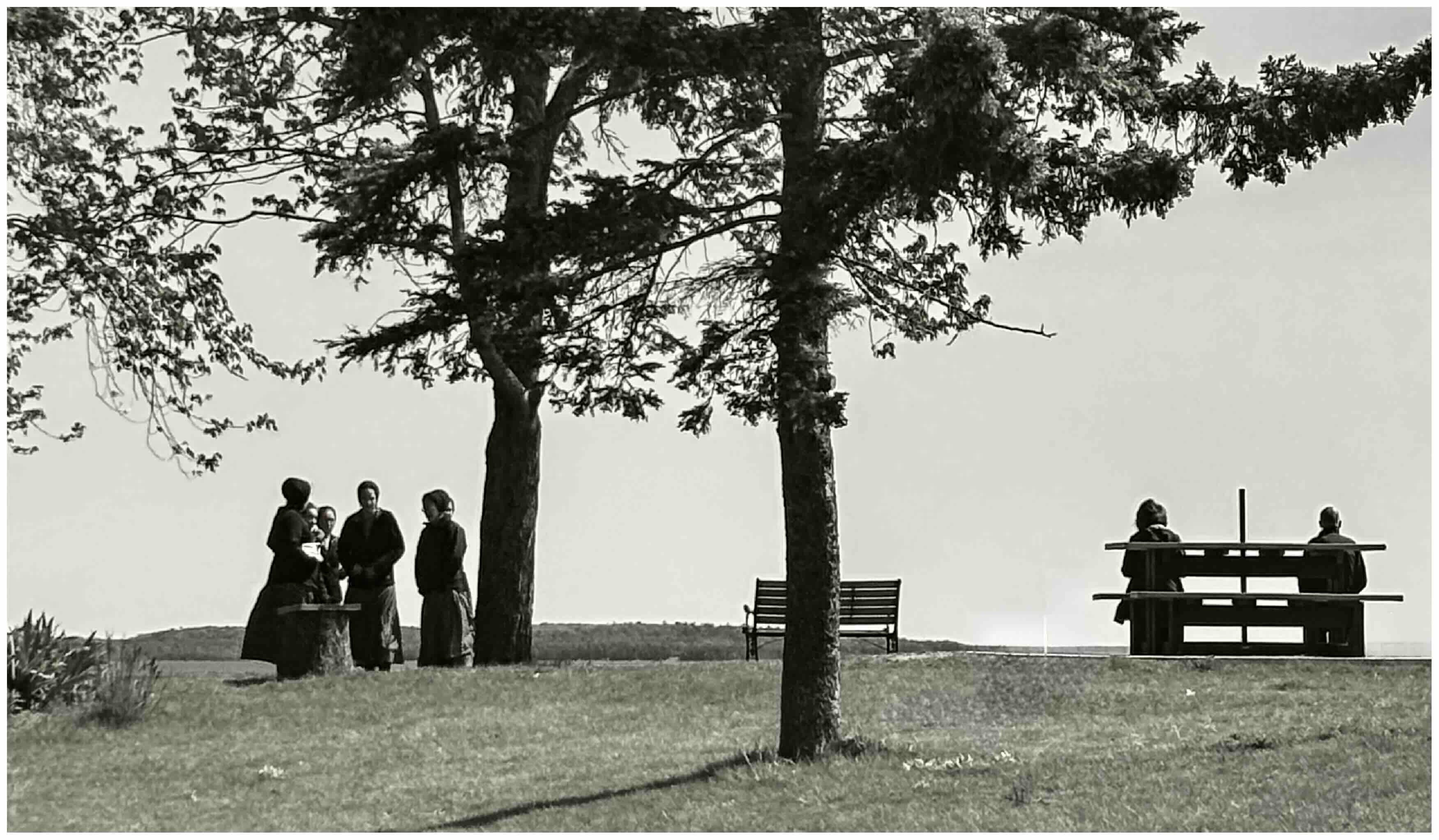
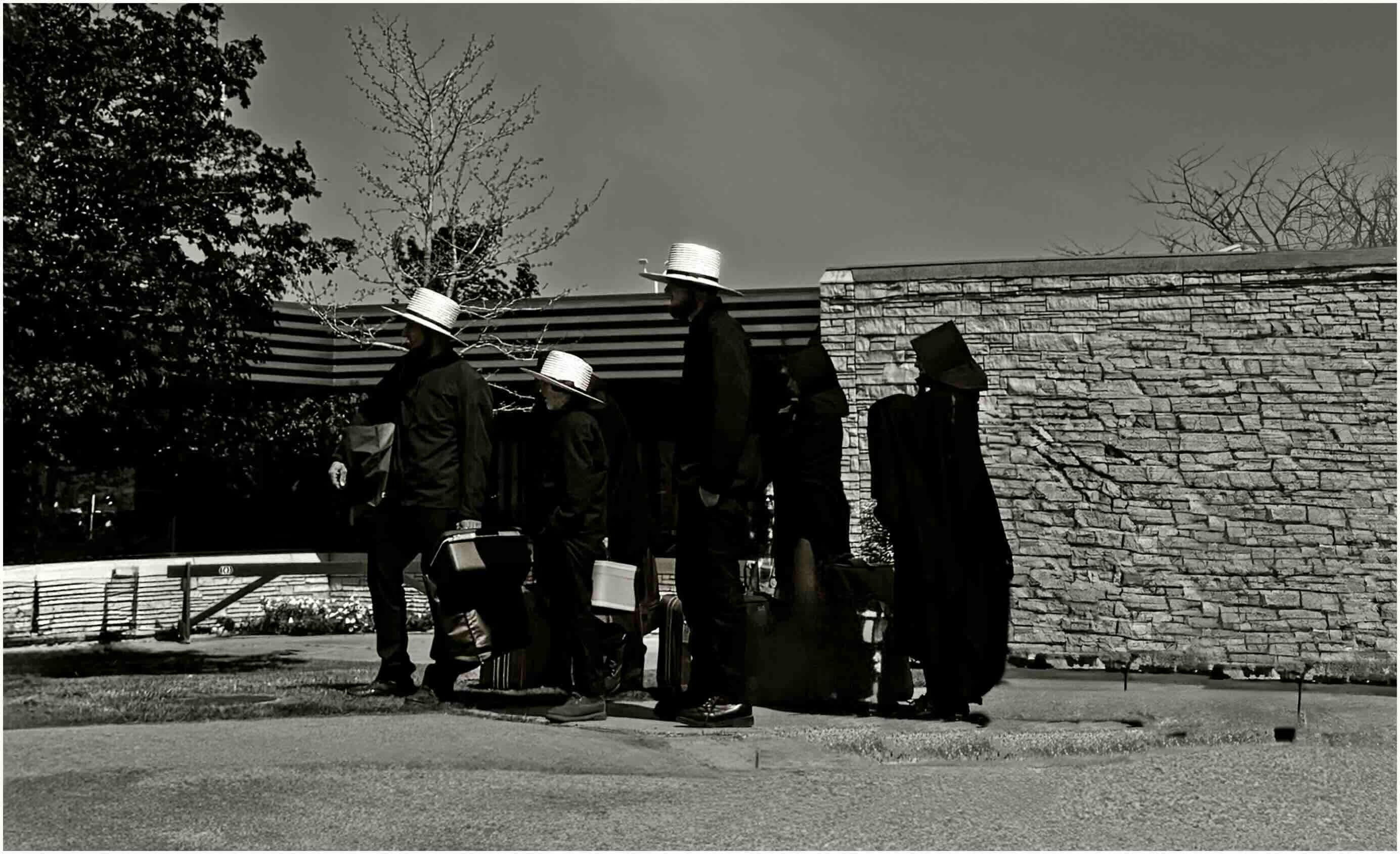
We tried. We visited deserted farms, only later realizing we had gone on a Sunday, the day when the entire community gathers for worship in private places, away from outsiders. As we moved eastward, we kept searching, though with a growing sense of unease: we felt like voyeurs — however reluctant — peering into a life deliberately withdrawn from the gaze of others. We sensed their presence all around us, yet never actually met them. Until, just as we had given up, there they were: a group of families waiting, like us, for the ferry from South Baymouth to Tobermory across Lake Huron.
Under other circumstances, those families returning from visits to relatives across the border would likely have remained respectfully distant figures to us, and we to them. But the confined space of a ferry creates a kind of proximity that makes encounters feel natural. Stefano approached the eldest man in the group and asked him about the Amish reputation for building and restoring traditional wooden barns. Dan Stutzman listened with a faint look of amused surprise and then invited him to visit his farm.
Stefano returned pleased to the small table where we had placed our laptops and coffee cups. But the crossing had more in store for us than Stutzman’s unexpected invitation. Shortly afterward, one of the younger Amish men stood up and, taking a wide detour, made his way over to us. We readily welcomed his desire to exchange a few words, while he kept casting curious glances at our laptop screens.
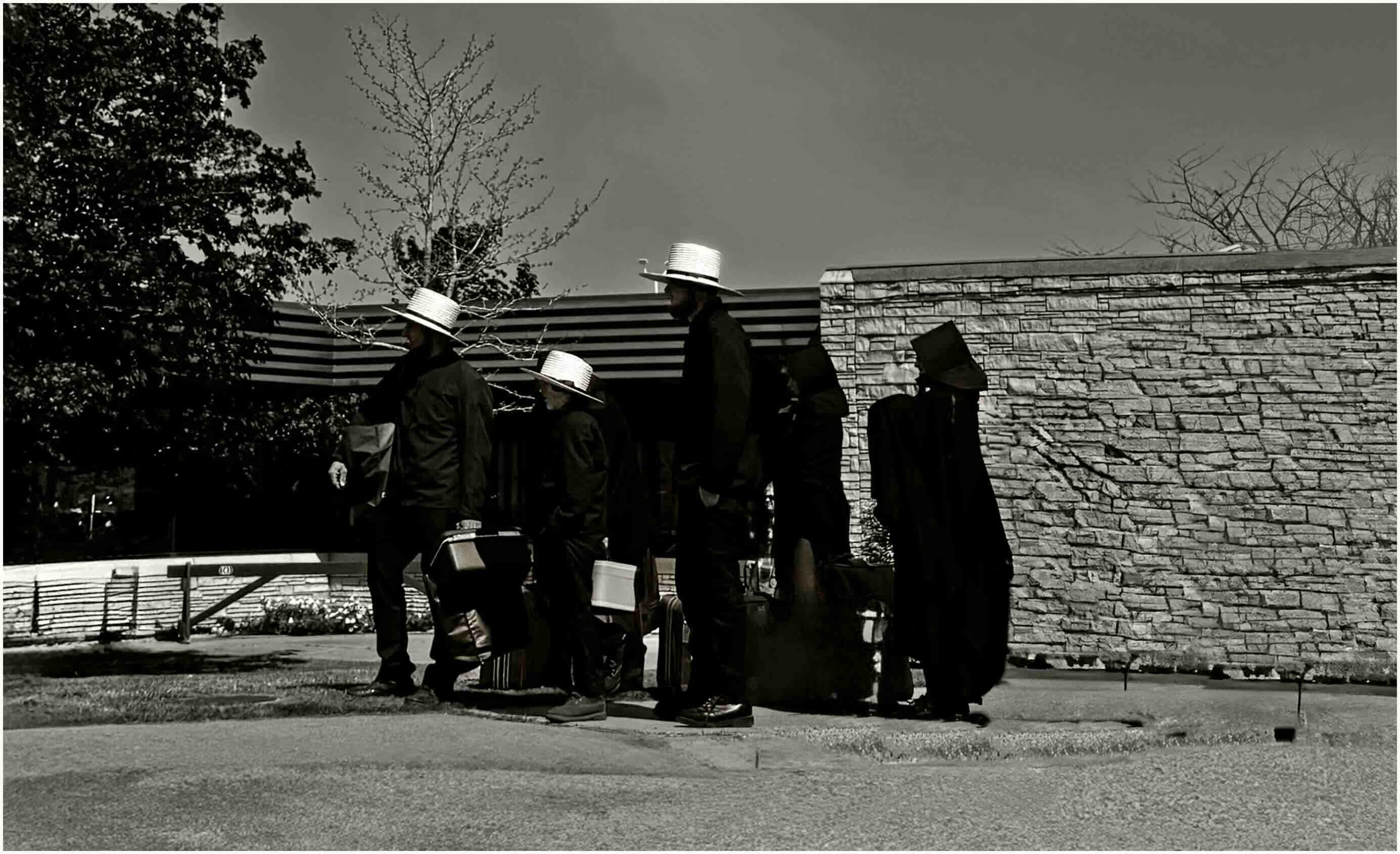
“People out there seem to have gone crazy,” he told us when we asked what he thought of the outside world. And not only because of wars — he knew about the Russian invasion of Ukraine; non-Amish customers had told him about it — but also in everyday life. “People fight all the time now,” he said. “Even husbands and wives.”
Their own world of relationships, by contrast, rests on handwritten letters sent through the regular mail and on long journeys, often across borders, to attend weddings in other communities. One of his brothers met his wife in Kentucky during a wedding; another found his in Ohio the same way. “That’s how we can meet new people,” he explained, though he himself had married a girl from within his own community. “No difficulty there.”
He and his young wife already had four children — two boys and two girls. Would they want more? He shrugged lightly. “We don’t make a number. Whatever comes, comes.” At one point, a child from the group approached and whispered something in his ear. He nodded almost imperceptibly, gave us a hurried farewell, and returned to the fold of the group.
A few days later, we were driving down the dirt road leading to Dan Stutzman’s property just outside Chatsworth, in southern Ontario.
Three barefoot children are chasing each other across the grass while a fourth, slightly older, lead us into a shed not far from the farmhouse. That’s where Dan Stutzman repairs agricultural machinery for local farms. Apart from his fifteen-year-old daughter Amanda, who is with him in the workshop, no other women are to be seen. Their presence is suggested by the laundry drying in the sun: long skirts, bonnets, ribbons fluttering in the breeze, in a scene of rural quiet far removed from the world of fast food and big-box stores from which we have arrived.
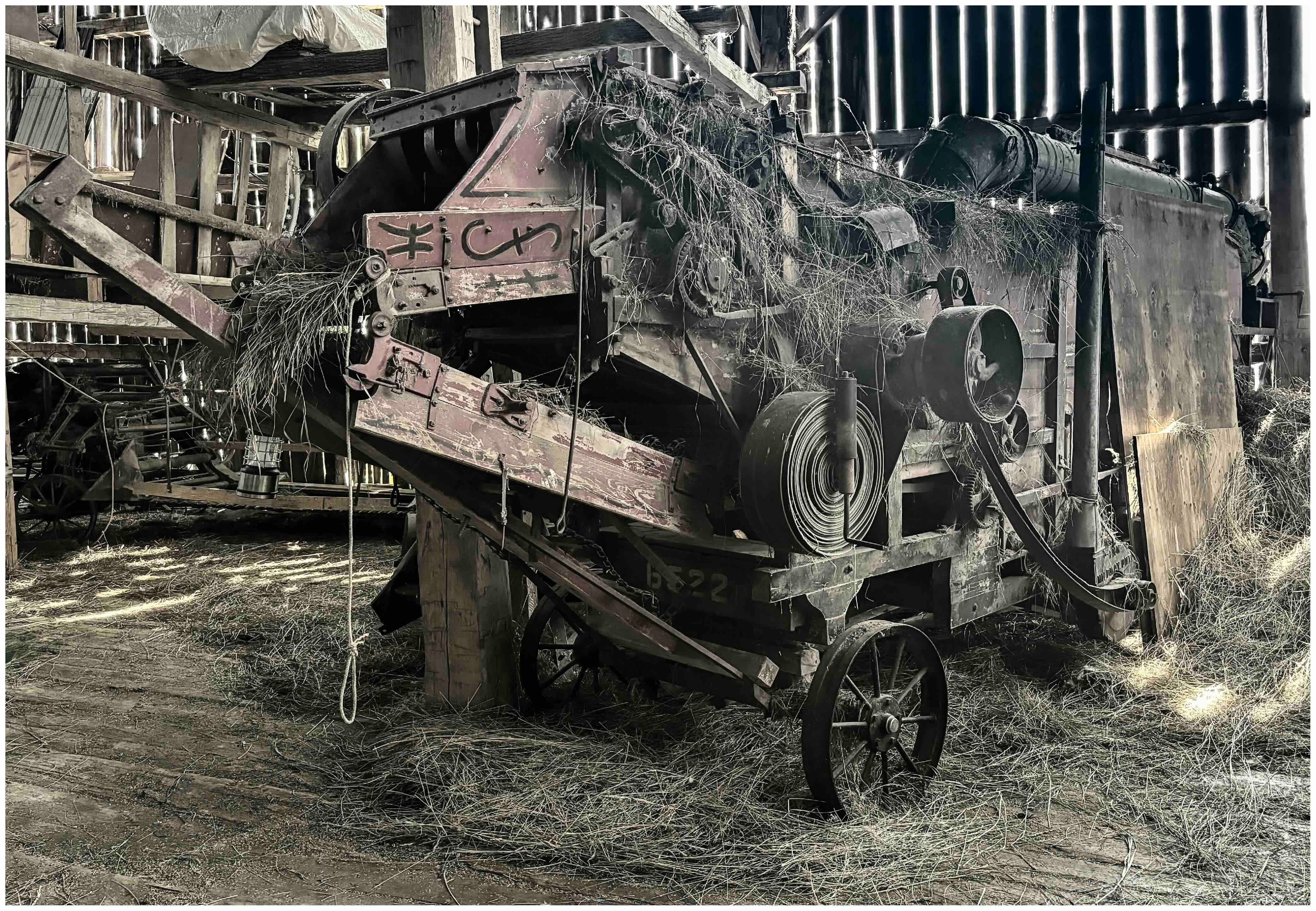
Dan is forty years old and speaks with the calm of someone who has never felt the need to show busyness. “This is my mechanical shop,” he says, gesturing toward the orderly clutter of tools, machinery parts, and handmade metal components. “I work a lot on engines — mostly tractors. I rebuild them.” At that moment, however, he is occupied with another kind of project. “I’ve got to build a barn for my neighbour Toby. He has a sawmill, but it’s very small. He wants to expand it because as it is now, it can’t keep up with the work he’s getting.”
As we talk, Amanda moves quietly and confidently around the workshop. She finished compulsory schooling at thirteen and has worked with her father ever since. “She learned to build this,” Dan says, pointing to a piece of machinery she is assembling. “I had to teach her everything, but now she does almost all of it on her own.” Dan has no doubt that children learn from a very early age: “Mine have always been around the workshop, and by the time they were five or six they had already learned a lot. That one there,” he says, pointing to a boy no older than seven, “before he even started school, used to watch us taking engines apart. I’d ask him for a nine-sixteenths wrench and he’d find it right away. That’s real learning.”
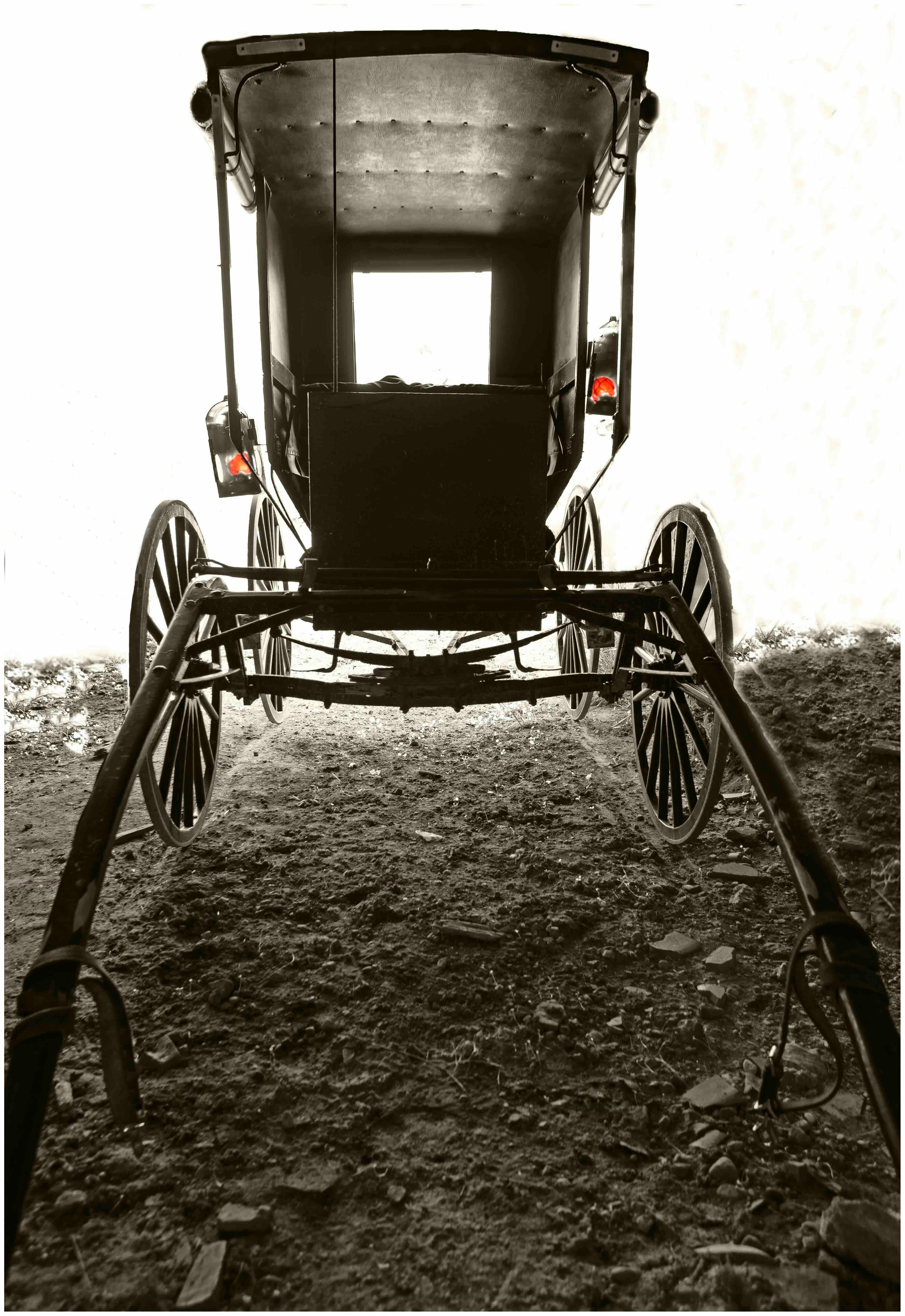
One of Amanda’s tasks is to make the tin lanterns the community mounts on their buggies when travelling after dark — she builds them entirely on her own and then paints them. Precision mechanics, however, still require more time. “It’s like lacework,” her father says. “Extremely delicate work — and she’s not quite at that level yet.”
Dan did not find his way into precision mechanics through a straightforward path. After finishing school, he took a job in Dornoch with a large dairy goat farmer, a former German industrial technician with a workshop full of tools. Dan had started out in the milking parlour, but his employer quickly noticed that he liked fixing things. “After less than two months he put me in the shop full-time with the sole task of repairing machinery.” Dan loved the work and for nine years was responsible for maintaining the entire operation.
But the farmer’s wife developed cancer, died, and the farm was sold. “I was suddenly out of work. I had already bought this place and thought: ‘What am I going to do, now?’” He began working as a carpenter, earning enough to live on while slowly buying the tools he needed to build his own workshop. “The business just kept growing, and now I can barely keep up.” He pauses, then adds with a trace of satisfaction: “I work for all the farmers around here. In spring when they’re putting the crop in, or during hay season when there are always machines to fix. Same thing during the fall harvest. Those are the busiest times.”
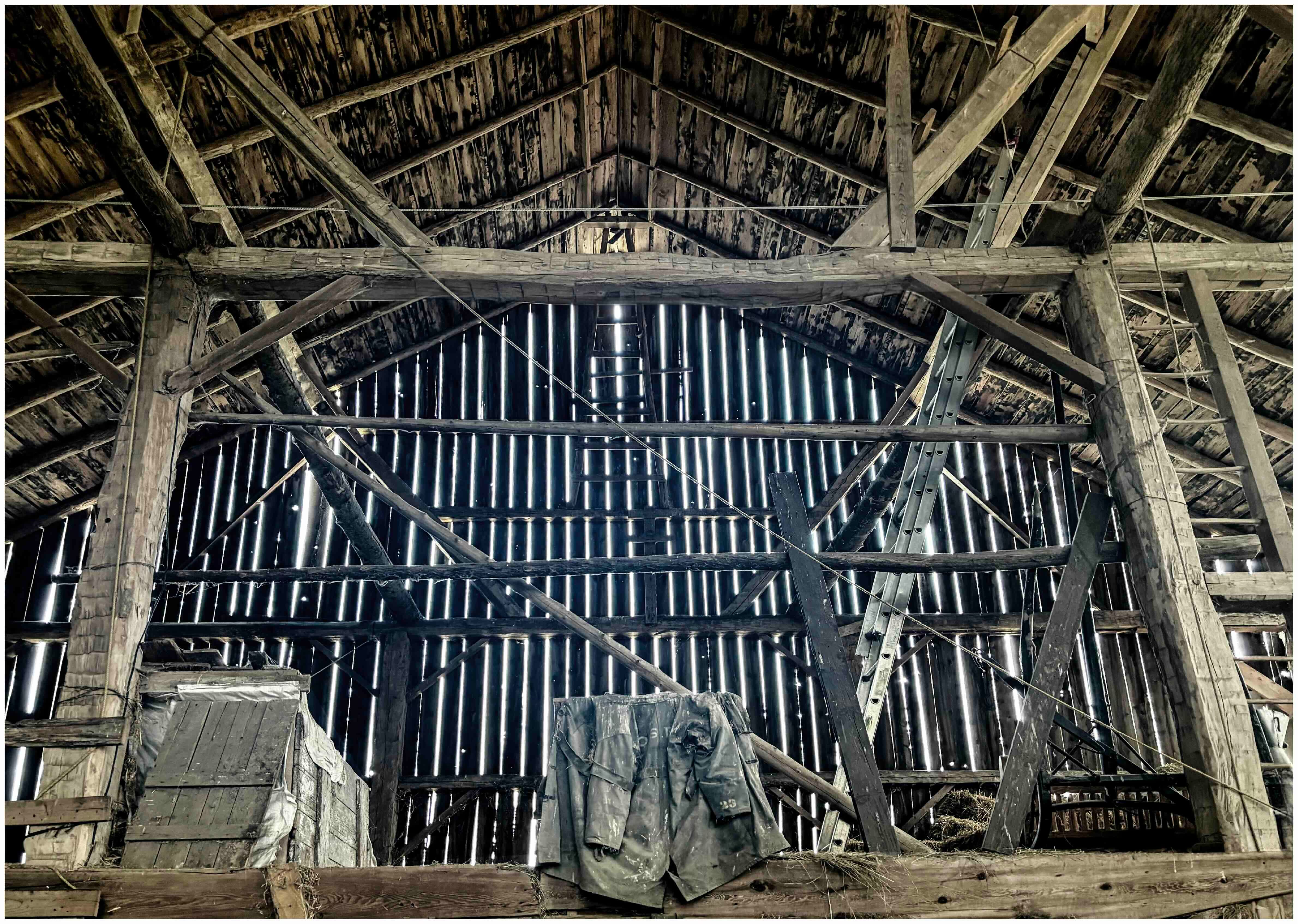
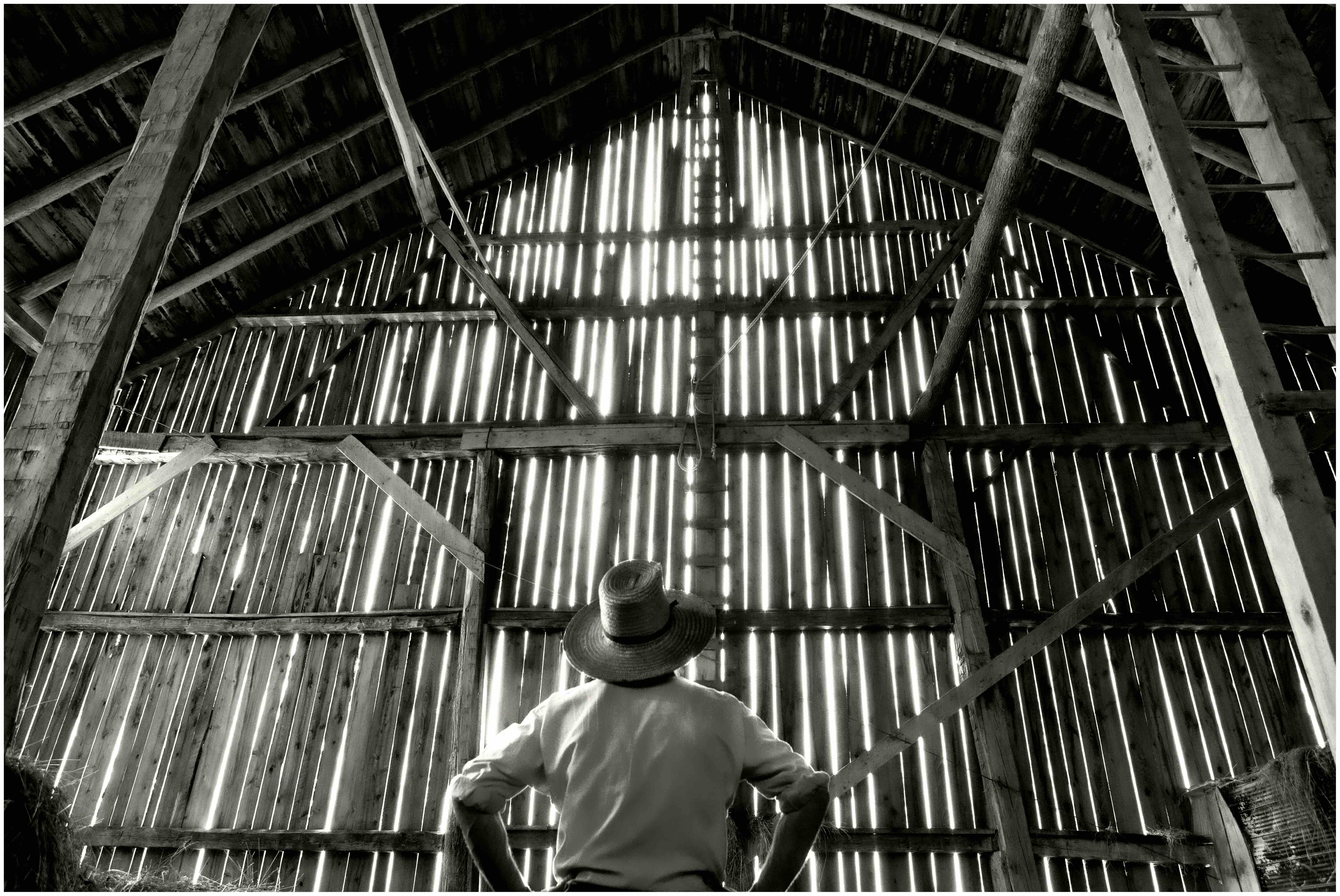
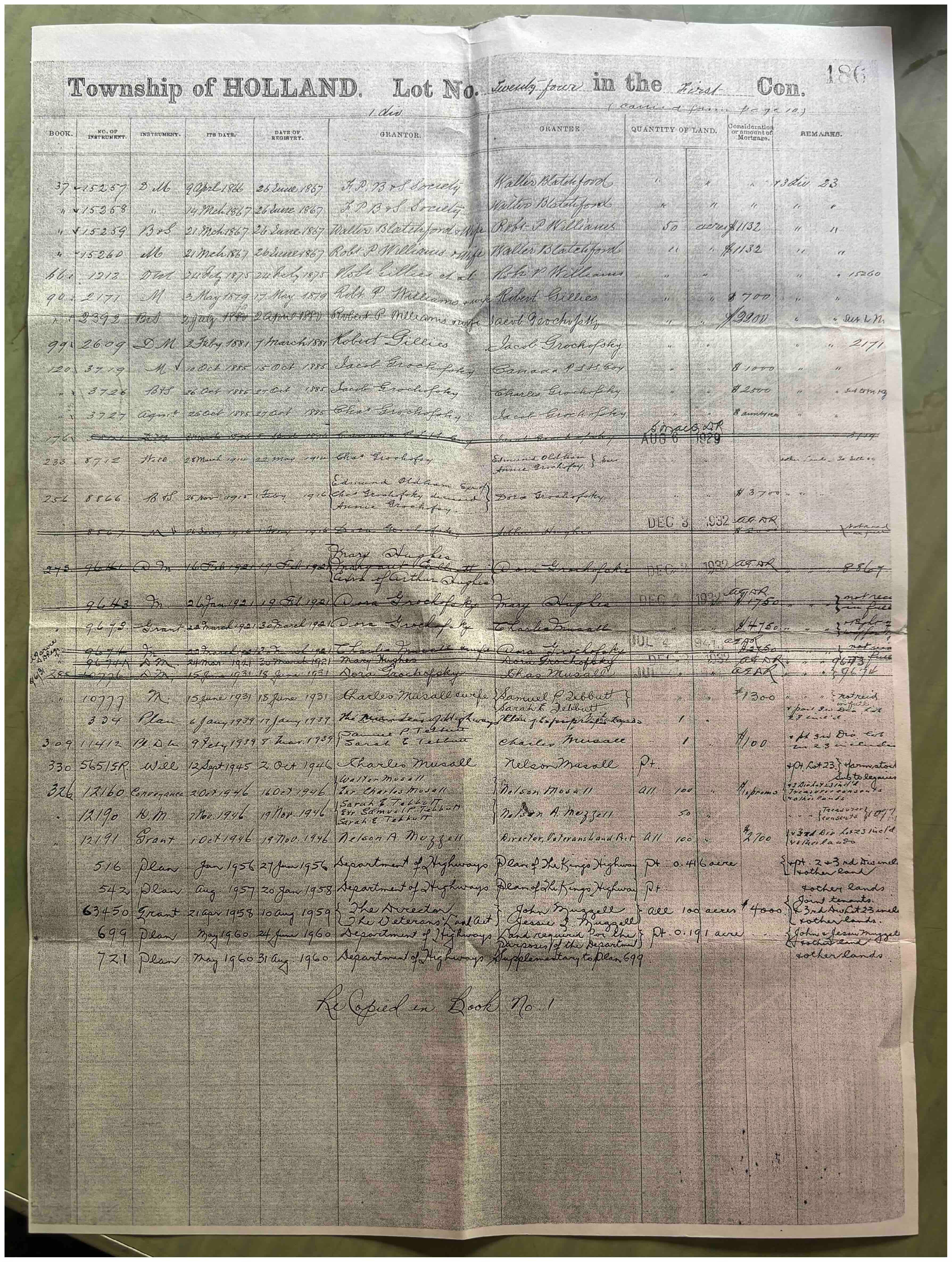
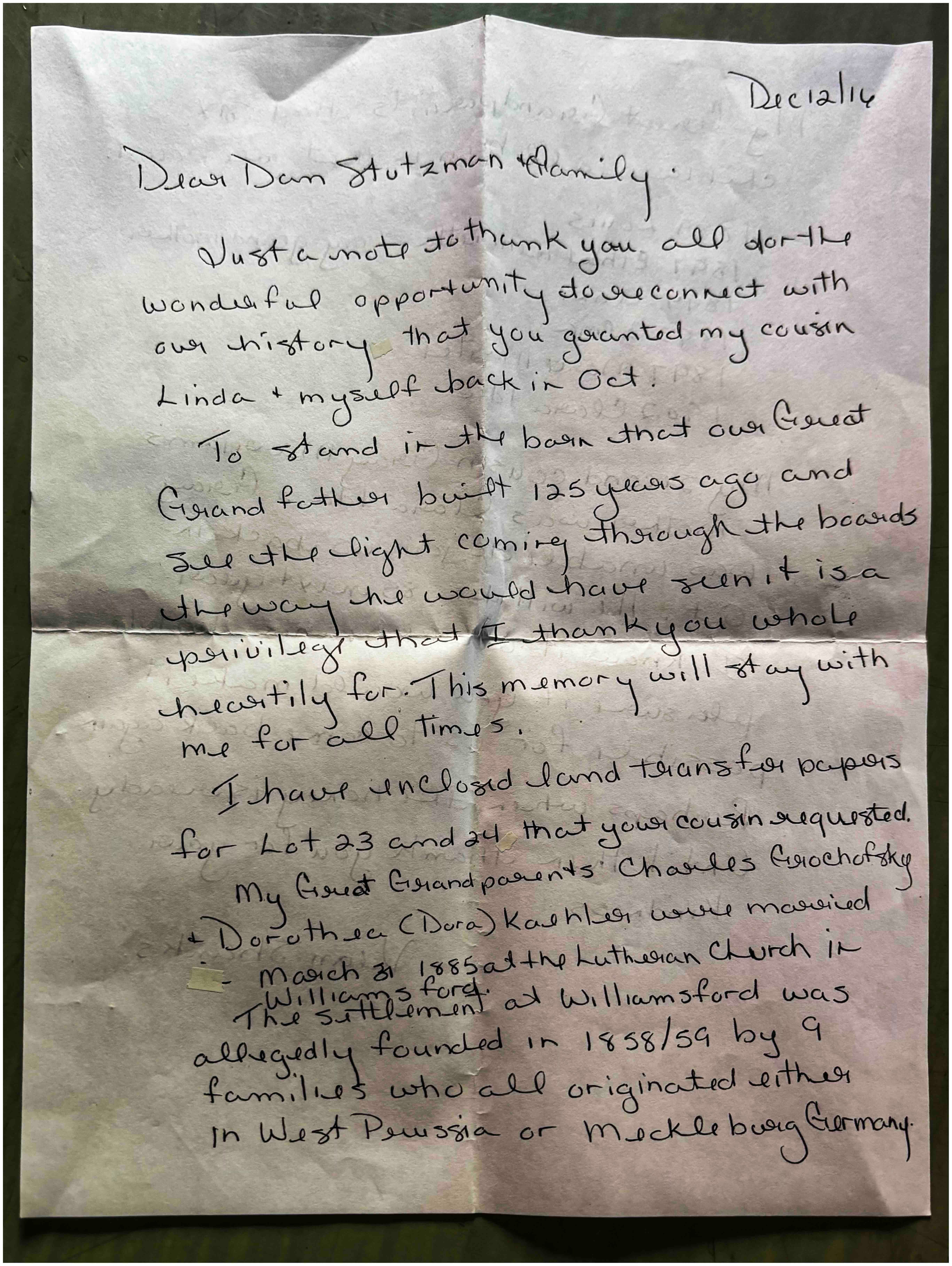
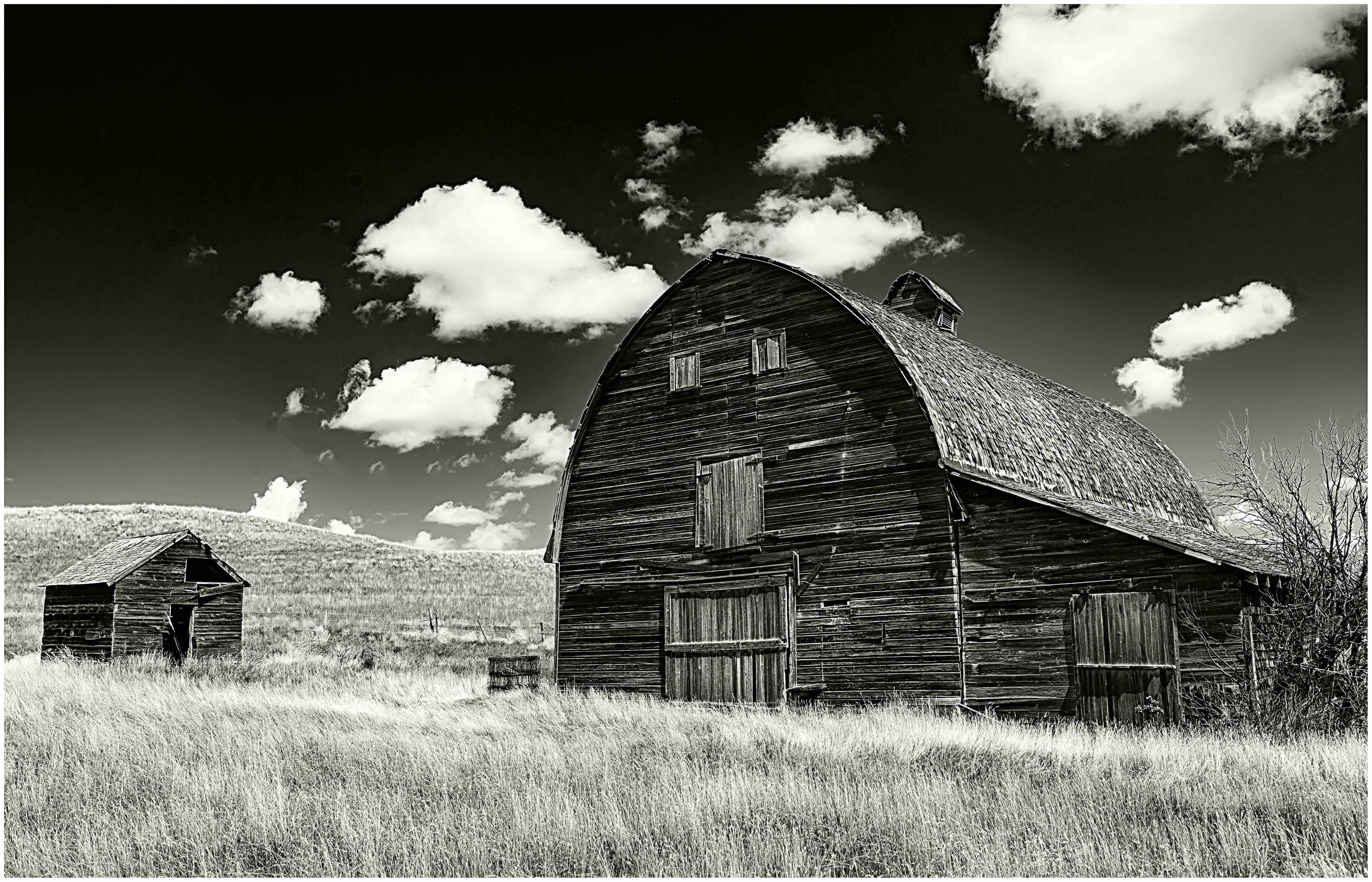
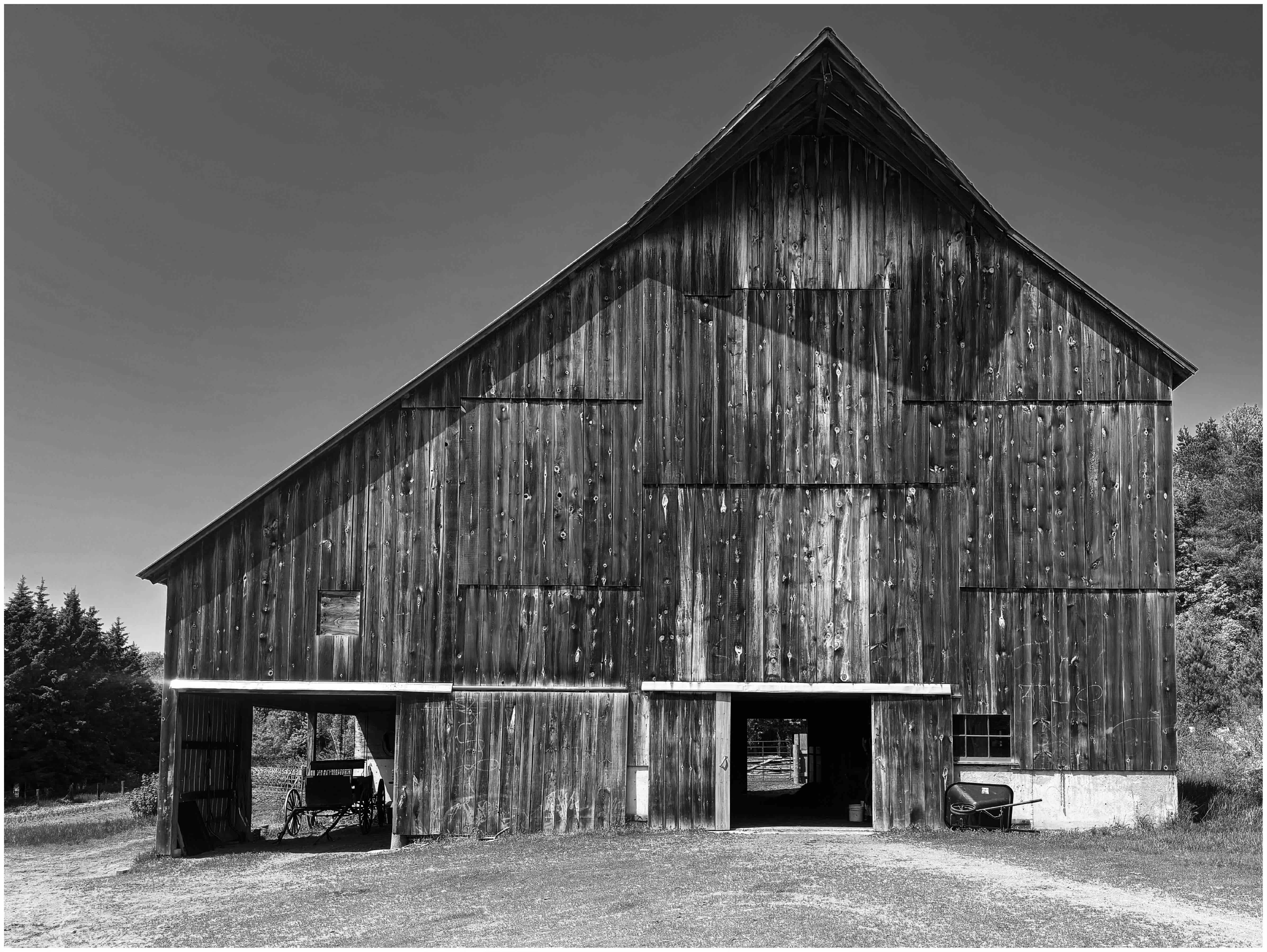
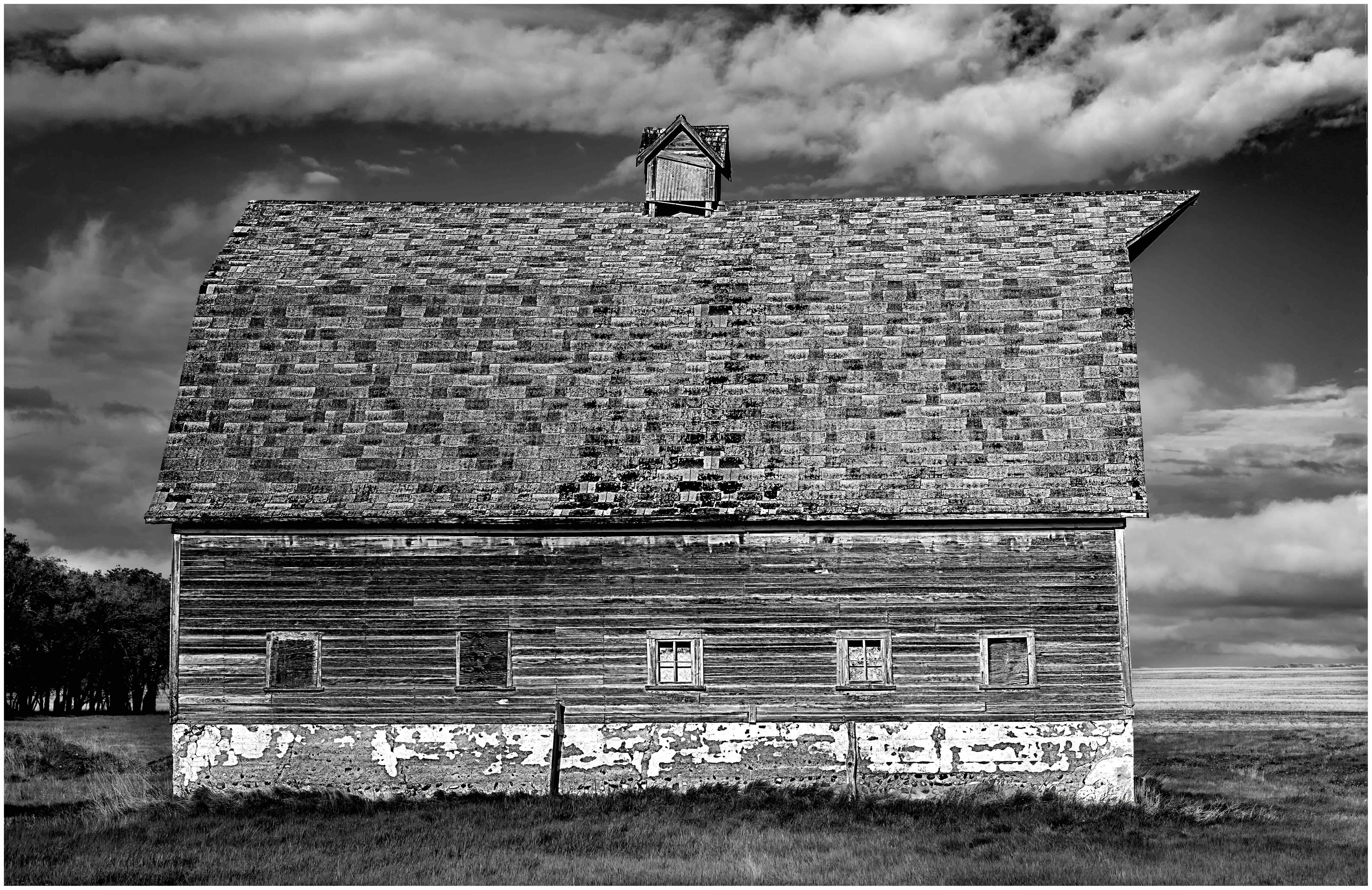
Dan’s barn has stood for more than a century. The original deed he shows us dates back to 1867; the first seller was the Crown. What followed was a series of transfers of ownership, documented until the 1960s, when the paper trail available to him comes to an end. The main structure measures twenty-two by sixteen and a half metres.
“The beams running from one side of the barn to the other are twenty metres long. There are no trees of that size left around here,” Dan says, not with nostalgia but as a simple statement of fact. “Back then logging wasn’t so systematic, and trees could grow truly massive. Maybe there are still some old Douglas firs in British Columbia, but not here.”
Today, when the community builds barns, they must accept shorter beams joined together with splice joints, use far more nails, and settle for smaller structures. Some people, however, manage to find abandoned barns to dismantle and relocate onto their own land. Dan’s father’s current barn was rebuilt that way after the old one burned down.
“I was three years old when it happened,” he recalls. “My father bought a barn whose owner wanted to tear it down because he no longer needed it. He removed the roof, pulled out the wooden pegs, dismantled it piece by piece, loaded it onto wagons, and rebuilt it on our farm. The day it was raised there were two hundred people helping.”
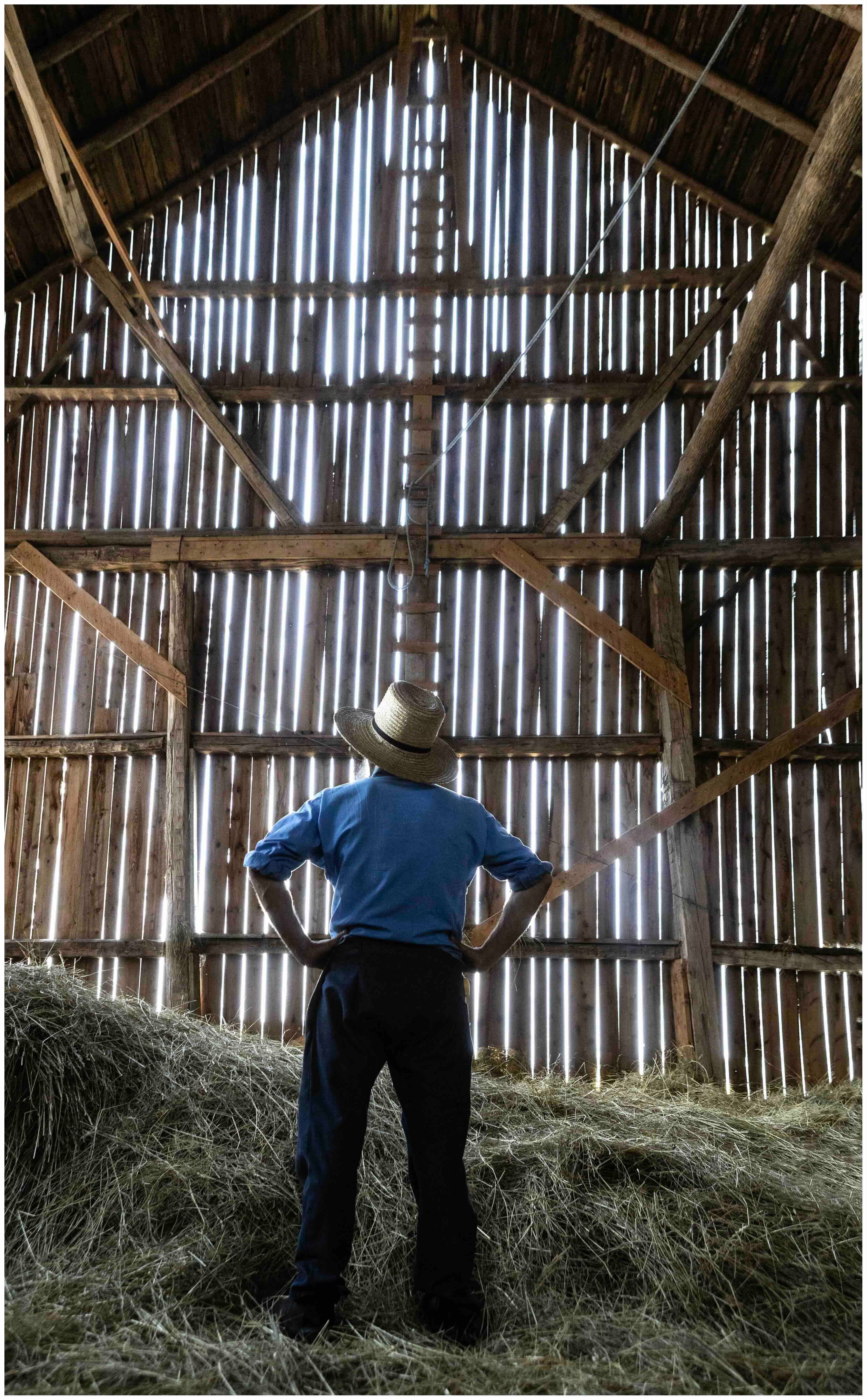
Dan speaks enthusiastically about barn raisings — communal workdays devoted to erecting a barn. “Everything is prepared in advance. Then, on the chosen day, everyone arrives early in the morning. First the frame goes up, some push with poles while others climb the beams to lock the joints into place. By evening the roof is already on. The whole thing gets done in a single day.”
“The secret is discipline,” Dan says. “It’s important to appoint a foreman, one person coordinating everybody else: if you have doubts, you ask him and do what he says. Without that hierarchy, everything falls apart, because people start arguing instead of working.” For larger structures, he explains, there can even be three supervisors: one for the lower stables, one for the main structure, and one for the roof, each with their own crew. “If everyone respects their role, everything runs smoothly.”
The community’s mutual aid system plays a crucial role. “If your barn burns down or someone dies in an accident,” Dan explains, “a committee comes in to assess the damage.” The matter is then presented to the congregation, and the bishop distributes the rebuilding costs among all the families. “Each household contributes to the expense, up to ten percent per family. That’s what we call Amish insurance.” The same applies to medical expenses: the community helps cover the costs for anyone in need.
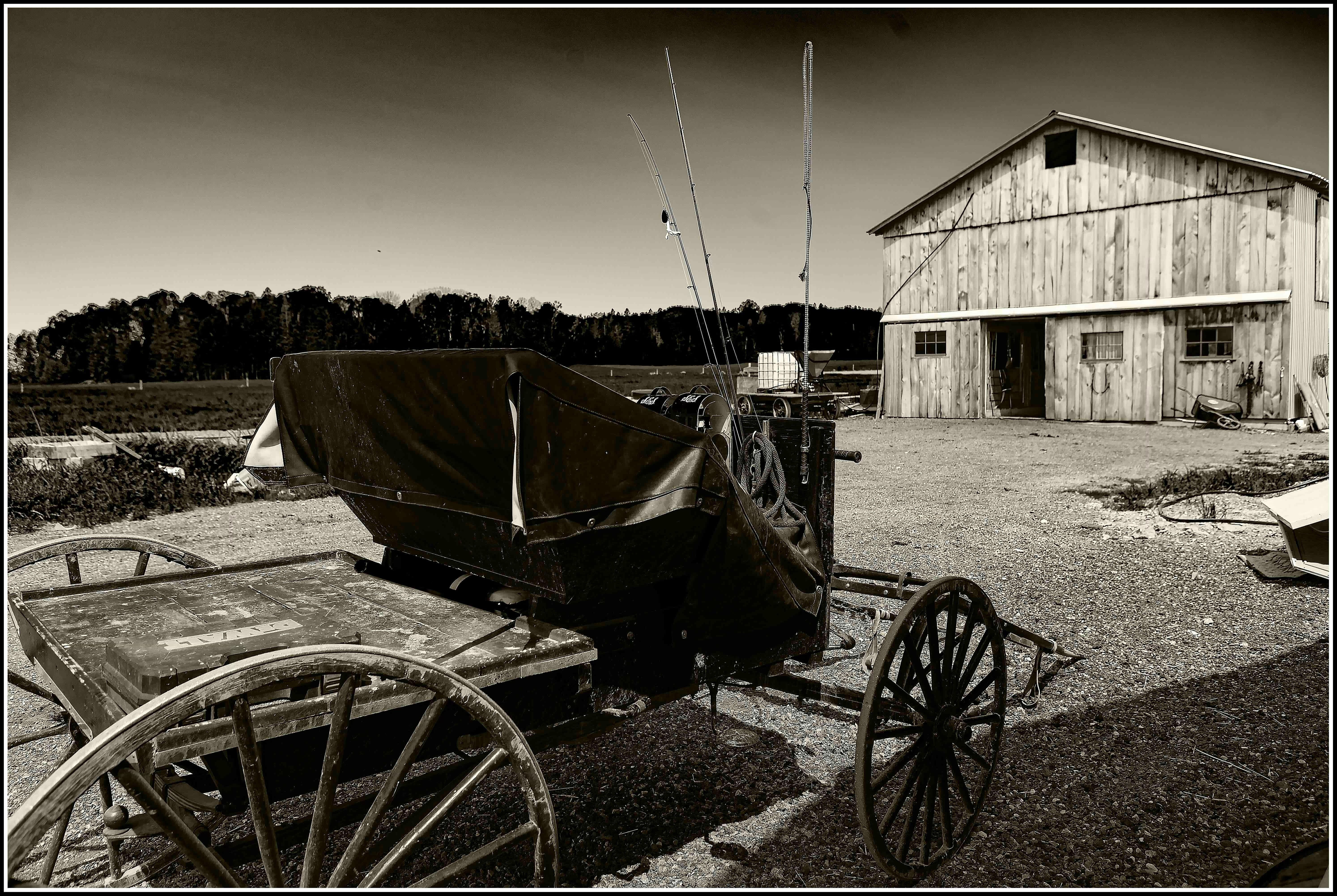
Maintaining this way of life requires constant negotiation with the outside world, Dan says. “As the world changes, things get a little harder for us.” Road safety is one example: “The police want us to install reflectors and lanterns on our buggies, and we’ve complied.” Hunting and fishing licences are another: “We follow all the required procedures because we want to maintain good relations with local people.” When more important issues arise, a committee of three deals directly with the government and makes contact with the local member of parliament. “If we simply did whatever we wanted, we’d end up in serious trouble.”
“In church we speak High German,” Dan says, though he admits the language is slowly fading — a natural drift, he suggests, for a community that has now been in Canada for generations. He recounts the history of his people with the ease of someone who has reflected on it often: Anabaptist ancestors in sixteenth-century Switzerland, then a passage through South Tyrol, and finally the arrival in the New World.
Dan stays informed the old-fashioned way, relying heavily on word of mouth. “Mostly thanks to our customers. I have a fellow who comes into the shop every other day to weld, and he keeps me up to date on things. But we also read the newspaper.” The idea of postal strikes worries him. “With no mail, we’re in trouble. End of communication.”
A few hours earlier, a local woman we had asked for directions, and who knew the Amish community well, had described the consequences faced by those who choose to leave. Years earlier, she had served as an intermediary between a girl and her mother after the daughter left the community. “The mother wasn’t allowed to contact her,” she told us, “so they communicated through me.”
When asked whether young people are tempted by the outside world — the internet, individual freedom, the possibility of studying beyond eighth grade — Dan answers calmly, without defensiveness. “So far we’ve done pretty well here because we’re always busy. We don’t have television or the internet to distract us, and we don’t sit around wasting time. In a way, our entertainment is work.”
He lists the activities shaping their days: sawmill work, building sheds, mechanical repairs, planting, harvesting. “Young people want to stay. They prefer remaining in the community because it offers a quieter life. Out there it’s all go, go, go. We prefer to live… in a more sensible way, I’d say.”
He pauses for a moment, as if weighing his words. “I think it’s a healthy life.”
Outside, the laundry continues to sway in the breeze. Somewhere behind the barn comes the voice of a child. Dan directs his gaze in that direction then, unhurriedly, walks back into the workshop.
La prima traccia è stata un segnale stradale: la sagoma di un calesse trainato da un cavallo su sfondo giallo. La seconda, un uomo — camicia azzurra, gilet, pantaloni scuri, cappello di paglia — che ci è passato accanto su un singolare veicolo a quattro ruote, spinto dalla sola forza delle gambe. La terza sono state le parole di Mark West, proprietario di uno degli ultimi fienili storici della zona: “Sono i soli che sanno ancora costruirli e ripararli come si deve”.
La loro presenza si è delineata poco a poco, lasciando intuire quanto restino, per molti aspetti, sfuggenti nel Canada del ventunesimo secolo. Sapevamo ciò che normalmente si sa di loro: preferiscono vivere in disparte rispetto al resto della società, rifiutano automobili, computer ed elettricità, indossano abiti fatti a mano nelle fogge di un’altra epoca, continuano a parlare il Pennsylvania Dutch (un dialetto tedesco tramandato di generazione in generazione) e mantengono rigidi confini comunitari, al punto che andarsene può significare l’esclusione permanente e la rottura irreversibile dei legami familiari. Entrati nell’Ontario occidentale, speravamo di incontrarli, gli Amish del Vecchio Ordine.
Breve video di un Amish che spinge un singolare veicolo a quattro ruote lungo la Highway 17 in Ontario (Video: Arianna Dagnino)
Ci abbiamo provato. Abbiamo visitato fattorie deserte, rendendoci conto solo dopo d’esserci andati di domenica, giorno in cui l’intera comunità si riunisce per il culto in luoghi privati, lontani dagli estranei. Man mano che ci spostavamo verso est, abbiamo continuato a cercarli, per quanto avvertissimo un crescente senso di disagio: ci sentivamo dei voyeur – seppur riluttanti – di una vita deliberatamente sottratta agli sguardi altrui. Li percepivamo attorno a noi, ma non ne incontravamo. Finché, quando ormai ci avevamo rinunciato, eccoli: un gruppo di famiglie in attesa, come noi, del traghetto che da South Baymouth porta a Tobermory, attraverso il Lake Huron.
In altre circostanze, quelle famiglie di ritorno da una visita a parenti oltreconfine sarebbero probabilmente rimaste figure rispettabilmente distanti, e probabilmente noi lo stesso per loro. Ma gli spazi ristretti di un traghetto creano una prossimità che facilita incontri altrimenti improbabili. Stefano si è dunque avvicinato al più anziano del gruppo, chiedendogli della reputazione degli Amish quali costruttori e restauratori di tradizionali fienili in legno. Dan Stutzman lo ha ascoltato con un velo di divertita sorpresa; poi, lo ha invitato a visitare la sua fattoria.
Soddisfatto per l’imprevisto invito, Stefano è tornato al tavolino su cui avevamo appoggiato laptop e caffè. Ma la traversata aveva ancora in serbo una sorpresa. Poco dopo, uno degli Amish più giovani si è staccato dal gruppo e, facendo un ampio giro, si è avvicinato a noi. Abbiamo accolto volentieri la sua voglia di scambiare due parole, mentre lui continuava a lanciare occhiate incuriosite verso gli schermi dei nostri portatili.
“Sembrano tutti impazziti”, ci ha detto quando gli abbiamo chiesto cosa pensasse del mondo là fuori. E non solo per le guerre — sapeva dell’invasione russa dell’Ucraina, gliene avevano parlato clienti che non facevano parte della comunità Amish — ma anche nella vita quotidiana. “La gente ormai non fa che litigare”, ha detto. “Persino mogli e mariti.”
Il loro mondo di relazioni, invece, poggia su lettere scritte a mano e spedite per posta, e sui lunghi viaggi, spesso oltreconfine, per andare a matrimoni di altre comunità. Uno dei suoi fratelli aveva conosciuto la moglie in Kentucky, durante una festa di matrimonio; un altro aveva trovato la sua in Ohio, allo stesso modo. “È in queste occasioni che possiamo conoscere nuove persone,” ha spiegato, anche se lui aveva sposato una ragazza della propria comunità. “Niente di complicato, nel mio caso”.
Lui e la giovane moglie avevano già quattro figli — due maschi e due femmine. Ne avrebbero voluti altri? Ha alzato leggermente le spalle. “Non fissiamo un numero. Quello che viene, viene.”
A un certo punto, un bambino del gruppo gli si è avvicinato per sussurrargli qualcosa all’orecchio. Lui ha annuito in modo quasi impercettibile, ci ha rivolto un frettoloso saluto ed è tornato in seno al gruppo.
Qualche giorno più tardi imboccavamo lo sterrato che porta alla proprietà di Dan Stutzman, appena fuori Chatsworth.
Tre bimbi si rincorrono scalzi sull’erba mentre un quarto, il più grandicello, ci conduce dentro un capannone non distante dalla casa colonica. È lì che Dan ripara macchinari agricoli per le aziende della zona. A parte la figlia Amanda, quindicenne, che è con lui nell’officina, non si vedono altre donne. La loro presenza si intuisce dal bucato steso al sole: gonne lunghe, cuffiette, nastri che ondeggiano al vento, in una scena di quiete agreste lontana dal mondo di fast food e grandi catene commerciali da cui arriviamo.
Dan ha quarant’anni e parla con la calma di chi non ha mai avuto bisogno di darsi un’aria indaffarata. “Questa è la mia officina meccanica,” dice, indicando il disordine ordinato di attrezzi, pezzi di macchinario e componenti metallici fabbricati a mano. “Lavoro molto sui motori — trattori, soprattutto. Li ricostruisco”. In quel momento, però, è impegnato in un altro tipo di progetto. “Devo costruire un fienile per il mio vicino Toby. Ha una segheria, ma è molto piccola. Vuole ampliarla perché così com’è non tiene il passo con il lavoro che ha”.
Mentre parliamo, Amanda si muove nell’officina con pacata sicurezza. Ha finito la scuola dell’obbligo a tredici anni e da allora lavora con il padre. “Ha imparato a costruire questo,” dice Dan indicando un pezzo di macchinario su cui è china la ragazza. “Ho dovuto seguirla passo passo, ma ora fa quasi tutto da sola”. Dan non ha dubbi sul fatto che i bambini imparino fin da molto piccoli: “I miei sono sempre stati in giro per l’officina, e a cinque o sei anni avevano già appreso un sacco di cose. Quello lì,” dice indicando un bambino di non più di sette anni, “prima ancora che iniziasse la scuola, ci guardava smontare motori. Gli chiedevo di portarmi una chiave da nove sedicesimi e lui la trovava subito. Questo sì che è imparare”.
Uno dei compiti di Amanda è fabbricare le lanterne di lamiera che la comunità monta sui calessi per spostarsi quando fa buio — le costruisce interamente da sola e poi le vernicia. Per la meccanica di precisione, però, ha bisogno ancora di tempo. “È come fare un lavoro di merletto,” dice il padre, “è una lavorazione finissima — e lei non è ancora a quel livello”.
Dan non è arrivato alla meccanica di precisione seguendo un percorso lineare. Terminata la scuola, trovò impiego a Dornoch presso un grande allevatore di capre da latte, un ex tecnico industriale tedesco con un’officina piena di attrezzi. Dan aveva iniziato nel reparto mungitura, ma il suo datore di lavoro aveva subito notato che gli piaceva riparare le cose. “Dopo neanche due mesi mi mise in officina a tempo pieno, con il solo compito di riparare macchinari”. Dan adorava quel lavoro e per nove anni fu l’addetto alla manutenzione dell’intera azienda.
Ma la moglie dell’allevatore si ammalò di cancro, morì e la fattoria venne venduta. “Mi ritrovai senza lavoro. Avevo già comprato questo posto e mi chiesi: ‘E ora come faccio?’” Cominciò a lavorare come carpentiere, guadagnando abbastanza per vivere e intanto acquistare gli attrezzi per costruirsi poco alla volta un’officina sua. “Il lavoro ha continuato ad aumentare e oggi quasi non riesco a starci dietro”. Fa una pausa, poi aggiunge con una punta di soddisfazione: “Servo tutti gli agricoltori della zona. In primavera, alla semina, o quando si fa il fieno: ci sono sempre macchine da riparare. Lo stesso vale per il raccolto autunnale. Sono le stagioni più intense”.
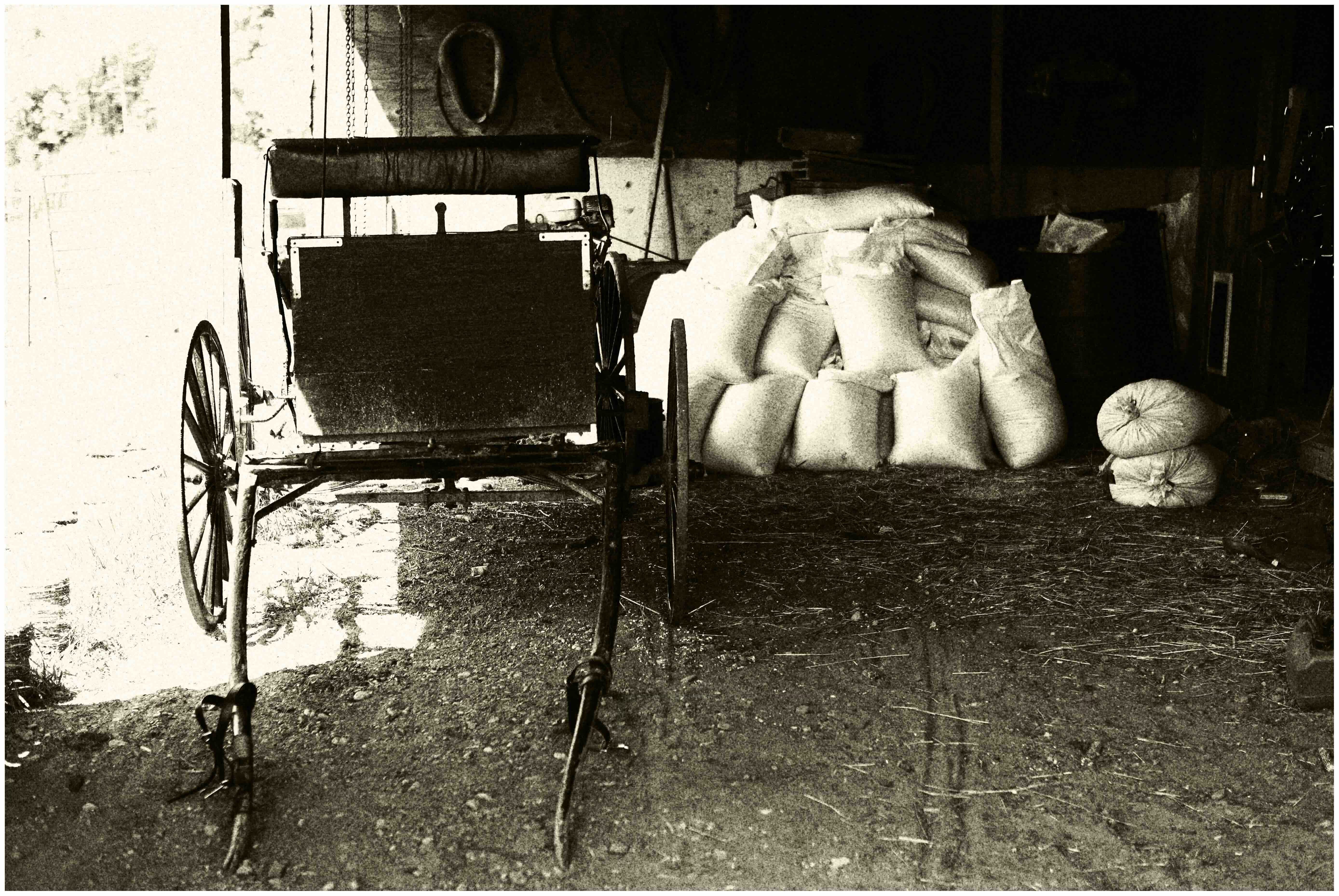
Il fienile di Dan esiste da un secolo e più. L’atto originale di proprietà, che ci mostra, risale al 1867; primo venditore, la Corona. A seguire una serie di passaggi di mano, documentati fino agli anni Sessanta, quando le tracce documentali a sua disposizione s’interrompono. La struttura portante misura ventidue per sedici metri e mezzo. “Le travi che corrono da una parte all’altra del fienile misurano venti metri. Da queste parti non ci sono più alberi di quelle dimensioni”, dice Dan senza nostalgia, ma come semplice constatazione. “Un tempo non si tagliava in maniera così sistematica, e gli alberi potevano diventare davvero grandi. Forse in British Columbia esiste ancora qualche vecchio abete di Douglas, ma qui non se ne trova”.
Oggi, quando la comunità costruisce fienili, deve farsi andar bene travi più corte, con giunzioni a incastro, usare molti più chiodi e accontentarsi di strutture più piccole. Ma c’è chi riesce a trovare vecchi fienili in disuso da smontare e trasferire sul proprio terreno. Il padre di Dan ha ricostruito il suo in questo modo, dopo che il precedente era andato distrutto in un incendio. “Avevo tre anni quando accadde”, ricorda. “Mio padre acquistò un fienile da uno che voleva demolirlo perché non gli serviva più. Tolse il tetto, sfilò i pioli di legno, lo smontò pezzo per pezzo, lo caricò sui carri e lo rimontò nella nostra fattoria. Il giorno in cui fu issato c’erano duecento persone ad aiutare.”
Dan parla con trasporto delle “barn raising” (giornate di lavoro collettivo per erigere il fienile): “Tutto è preparato in anticipo. Poi, il giorno convenuto, ci si presenta di buon’ora. Si inizia con il tirar su il telaio, c’è chi spinge con le pertiche, e ci sono quelli che salgono sulle travi per bloccare gli incastri. Alla sera il tetto è montato. In un giorno si fa tutto”.
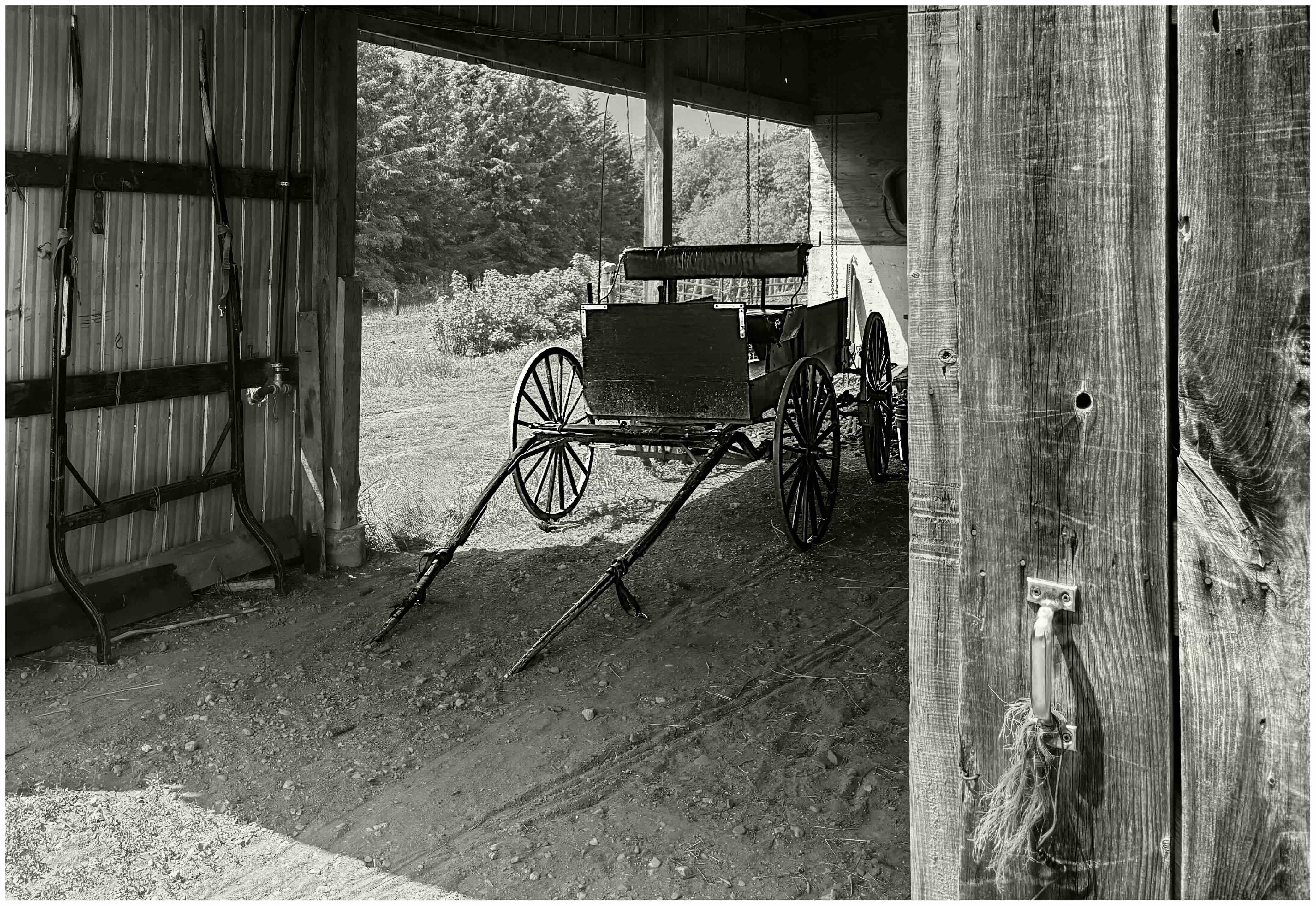
“Il segreto sta nella disciplina,” dice Dan. “È importante che ci sia un capo-cantiere, uno che coordini tutti gli altri: se hai dei dubbi, chiedi a lui e fai quello che ti dice. Senza questa gerarchia, va tutto a rotoli, perché la gente inizia a discutere invece di lavorare”. Per le costruzioni più grandi, Dan racconta che ci possono essere tre responsabili: uno per le stalle, uno per la struttura principale e uno per il tetto, ognuno con la propria squadra. “Se tutti rispettano il proprio ruolo, tutto fila liscio”.
Poi c’è il sistema di mutuo soccorso della comunità. “Se ti va a fuoco un fienile o muore qualcuno in un incidente,” spiega Dan, “interviene una commissione che valuta l’entità del danno.” La questione viene quindi presentata alla congregazione e il vescovo ripartisce i costi di ricostruzione tra tutte le famiglie. “Ogni nucleo familiare contribuisce alla spesa, fino al dieci per cento per famiglia. La chiamiamo assicurazione Amish”. Lo stesso vale per le spese mediche: la comunità contribuisce a coprire i costi di chiunque ne abbia bisogno.
Mantenere questo stile di vita richiede una negoziazione continua con il mondo esterno: “Man mano che la società cambia, per noi diventa sempre un po’ più difficile”. Dan fa l’esempio della sicurezza stradale: “La polizia vuole che montiamo i catarifrangenti e le lanterne sui buggy, e noi ci siamo adeguati”. Lo stesso dicasi per le licenze di caccia e pesca: “Seguiamo tutte le procedure necessarie per ottenerle perché vogliamo mantenere buoni rapporti con la gente del posto”. Quando si pongono questioni più rilevanti, c’è una commissione di tre persone che si rapporta direttamente con il governo e il deputato locale. “Se facessimo semplicemente di testa nostra, andremmo incontro a guai seri”.
“In chiesa parliamo l’alto tedesco,” racconta Dan, anche se ammette che la lingua va lentamente perdendosi — una deriva naturale, dice, per una comunità che è in Canada ormai da generazioni. Ripercorre la storia della sua comunità con la naturalezza di chi la rivisita spesso: antenati anabattisti nella Svizzera del Cinquecento, poi il passaggio attraverso il Sud Tirolo, infine l’approdo nel Nuovo Mondo.
Dan s’informa alla vecchia maniera, con il passa-parola. “Soprattutto grazie ai nostri clienti. C’è poi un tizio che viene spesso in officina per fare delle saldature, e mi tiene al corrente un po’ su tutto. Ma leggiamo anche il giornale”. L’idea di eventuali scioperi postali lo preoccupa parecchio: “Senza posta, siamo nei guai. Per noi è la fine delle comunicazioni”.
Poche ore prima, una donna del posto cui avevamo chiesto indicazioni stradali e che ci aveva detto di conoscere bene la locale comunità Amish aveva accennato alle conseguenze cui va incontro chi sceglie di andarsene. Anni prima, lei stessa aveva fatto da intermediaria tra una ragazza e la madre dopo che la figlia aveva abbandonato la comunità. “Alla madre non era consentito contattarla,” ci aveva raccontato, “quindi comunicavano tramite me.”
Alla domanda se i giovani siano tentati dal mondo esterno — Internet, la libertà individuale, la possibilità di studiare oltre la terza media — Dan risponde in modo pacato, senza mettersi sulla difensiva. “Finora qui ce la siamo cavata abbastanza bene perché siamo sempre indaffarati. Non abbiamo la tv o Internet per distrarci, e non stiamo a oziare e perdere tempo. In un certo qual modo, il nostro svago è il lavoro”. Elenca le attività che scandiscono le loro giornate: lavori in segheria, la costruzione di capanni, riparazioni meccaniche, semine, raccolti. “I ragazzi vogliono restare. Preferiscono rimanere nella comunità perché offre loro una vita più tranquilla. Là fuori è tutto un corri, corri, corri. Noi preferiamo vivere… in modo più sensato, direi”.
Si interrompe per un istante, quasi a pesare le parole. “Credo che sia una vita sana”.
Fuori, il bucato continua a ondeggiare nella brezza. Da dietro il fienile arriva la voce di un bambino. Dan volge lo sguardo in quella direzione poi, senza fretta, rientra in officina.
Comments
Nothing yet. Say the first thing.
Sign in to join the conversation.