
I had a theory before I visited Keukenhof.
The Dutch sell tulips year-round, I figured. The flower blooms for a few days, dies, and you want a new one next week. Beautiful, perishable, repeat purchase. Seemed like a smart business.
I was wrong about almost everything. The real story is better.
The Dutch don’t mainly export flowers. They export bulbs.
It sounds like a small difference but it’s actually the whole business model. A cut flower is just a product. A bulb is a system. One bulb produces a flower, then quietly multiplies underground into several more bulbs for next season. You plant one, you harvest many. The thing grows itself while it sleeps.
That’s how a country the size of West Virginia ends up producing 60% of the world’s flower bulbs and controlling 85% of global trade. They’re not just growing a lot of tulips — they built a compounding machine.
Tulips have this almost graphic quality — the colors are saturated and flat, almost like color blocks. That’s actually what makes which color matter so much. A florist doesn’t want “a tulip.” They want 50 stems of that exact deep burgundy, or that specific soft apricot. The color is the product.
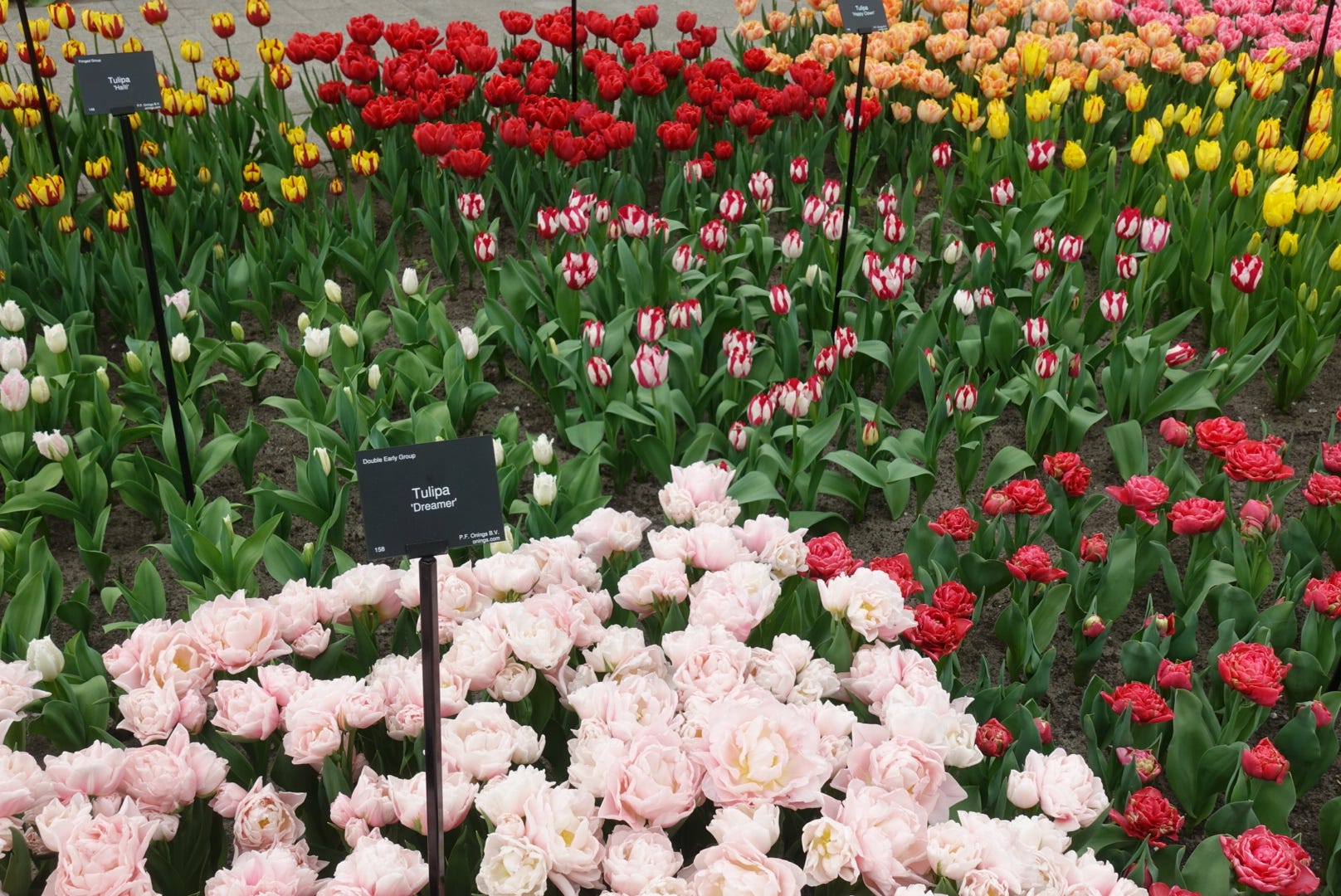
The problem with growing tulips from seed is that you get a surprise — unpredictable color, and a five to seven year wait before you even find out what you have. Bulbs are different. A bulb is a clone of its parent, so the color is locked in. Exactly what you plant is exactly what you get, season after season.
So here’s how the lock-in works: Dutch breeders spend years — sometimes decades — developing one new stable color. Once it exists, it multiplies through bulbs. Anyone who wants that specific color has to buy Dutch bulbs, every season, forever.
But wait — couldn’t a buyer just purchase the bulbs once, grow them, and become self-sufficient?
Not really. The same bulb replanted over several seasons gradually degrades — smaller flowers, duller color, declining quality. Commercial buyers need consistent output every season, and self-propagated bulbs can’t guarantee that. Dutch export bulbs are also strictly graded and certified — size, density, health — and the sub-bulbs you grow yourself simply don’t meet commercial standards. And for newly bred varieties, plant patents make large-scale unauthorized propagation illegal anyway.
The dependency isn’t built on “buyers can’t grow their own at all.” It’s built on “doing it yourself produces worse results at higher cost.” That’s the real moat.
The color is the lock-in. The beauty is the dependency.
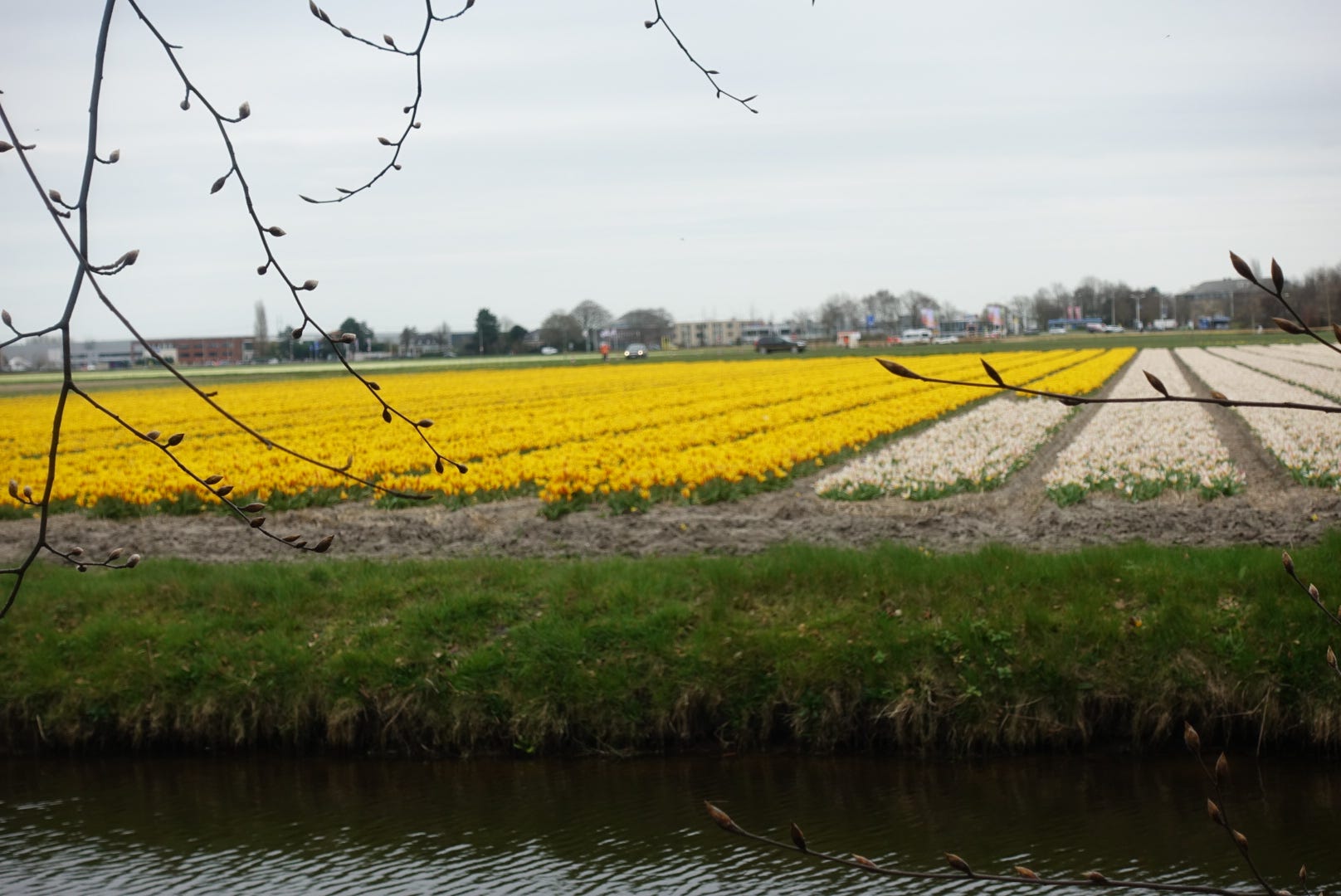
Keukenhof alone has 800 tulip varieties on display. The Netherlands as a whole has around 8,000. And the frontier keeps moving — today color trends are partly driven by social media. A rare shade goes viral, demand spikes, breeders race to multiply that bulb. Right now soft double pinks and warm oranges are hot, but they’re hard to grow so supply can’t keep up with demand.
The ultimate goal — a truly black tulip — took centuries to achieve and was only first bred in 1986. No true blue exists yet. These near-impossible colors are the permanent frontier: once you crack one, it becomes the next premium product that only you can supply.
In the 1630s, the Netherlands had Tulip Mania — one of history’s most famous speculative bubbles. The most valuable tulips were “broken” ones: flowers with wild flame-like streaks caused by a virus. Their unusual beauty made people go bankrupt trying to own them.
Today, that same streaked flower appearing in a commercial field is a bad sign — it means mosaic virus, a disease you need to contain before it spreads. The thing that once drove the mania is now a risk to manage.
The industry metabolized its own crash. Chaos in the breeding, precision in everything after.
The tulip industry figured out the two things any sustainable business actually needs: scalability and dependency.
Scalability through the bulb — a natural compounding system that multiplies every cycle. Dependency through color — something so specific and hard to develop that customers have no real alternative.
Most businesses get one of these. The tulip industry got both, then built an entire global supply chain on top of it — breeders, farmers, exporters, forcing companies, retailers — each layer doing one thing really well, all of it connected in a way that’s genuinely hard to replicate from the outside.
You can copy a product. You can’t easily copy what made it unreplicable in the first place.
I watched two spotted lambs nose around a tree at Keukenhof today, completely unbothered by the 800 varieties blooming around them.
I came to see flowers. I left thinking about what it actually takes to build something that lasts — not just something that grows, but something others can’t just clone once you’ve proven it works.
What dependency have you built into what you’re making?
No posts
Comments
Nothing yet. Say the first thing.
Sign in to join the conversation.