
I didn’t set out to build Overlay.
I set out to ship a compliance tool — something that would help product teams navigate the EU AI Act. But somewhere in the middle of that project, I kept running into the same wall: I couldn’t tell what my AI-generated code was actually doing. Claude would write a chunk of logic, I’d read it, and I’d think: I understand the syntax. But what did I just build?
So I stopped. I built a Claude code skill to audit the code for me — to translate what the AI wrote into plain language, flag anything that touched user data or permissions, and tell me whether it was safe to ship. I used it. It worked. I kept going.
Then I showed it to a few people. And they said: I need this.
That wasn’t the plan. That became the plan.
The forcing function
There’s a pattern here that I keep seeing, and I don’t think we’ve fully named it yet.
You’re building something — a product, a company, a life. You hit a blocker. In the old world, that blocker either stopped you, cost you money, or cost you time. Most people went around it or quietly dropped the thing they needed.
But sometimes you can’t go around. The main quest is too important. So you turn to face the obstacle and you build something to solve it — not because you wanted to, but because you had no choice.
And then you move on. Except you’re not the same person who hit the wall. You carry the thing you built. You carry the capability.
This is what I think of as the side-quest economy. The main quest is the forcing function. The side quests are where you actually become someone.
Such is life
I’ve been living this in a different register for a while now.
Moving to a new country is an obvious main quest — find stability, build a life, belong somewhere. But what it actually generates is an endless series of obstacles that have nothing to do with the goal itself. You have to learn systems. Navigate bureaucracies. Build credibility from zero. Communicate differently. Become legible to people who don’t yet have context for who you are.
None of that is the goal. All of it makes you more capable.
And here’s the thing I keep coming back to: even if the main quest doesn’t resolve the way you planned — even if the big thing doesn’t happen — you still own everything you built along the way. The capabilities don’t disappear. They’re yours. You became a more capable person on the way to something, and that becoming doesn’t depend on whether you arrive.
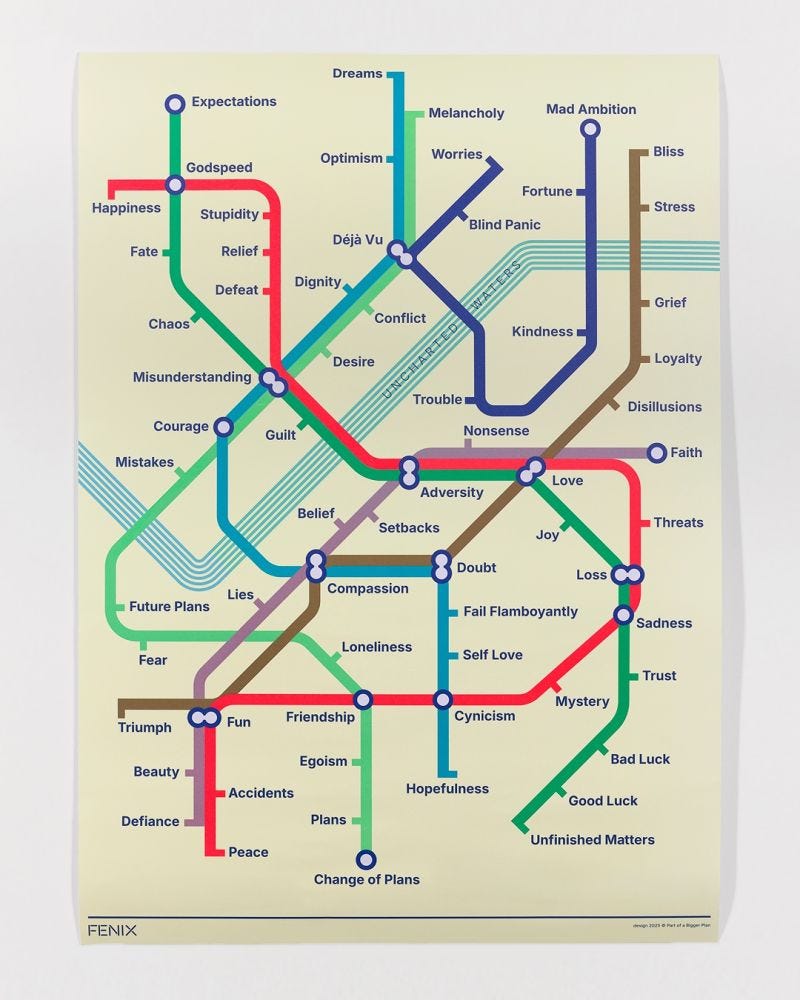
Such is life. You don’t conquer the big goal at once. You just never stop solving the problem in front of you.
Why now
What makes this moment different for builders is that AI has collapsed the cost of solving small problems to nearly zero. Not the cost of taste or judgment — those still take time. But the raw execution cost of building a small tool to remove a blocker? Close to zero.
Which means the side quests come faster. The capabilities compound faster. And the things you build to solve your own problems — they’re often exactly what someone else needs too.
The old model of building products: observe a problem, decide to solve it, scope it, ship it. Intention first, execution second.
The new model: you’re in the middle of something, you hit a wall, you build a door. The product emerges from the workflow. You extracted it from friction.
Overlay exists because I needed it. That’s the only reason it exists. And it turns out that’s the best reason for anything to exist.
I don’t know how this lands for everyone. But for anyone who’s ever picked up something hard — genuinely hard, the kind of thing where the path isn’t clear and the obstacles keep coming — I think this is worth holding onto:
You don’t have to see the whole route. You don’t have to know if the main quest resolves. You just have to keep solving the problem in front of you.
The side quests are the work. The becoming is the point.
Overlay is an open-source Claude Code skill for understanding what your AI just built — before you ship it. github.com/yaozhou5/overlay
Comments
Nothing yet. Say the first thing.
Sign in to join the conversation.