
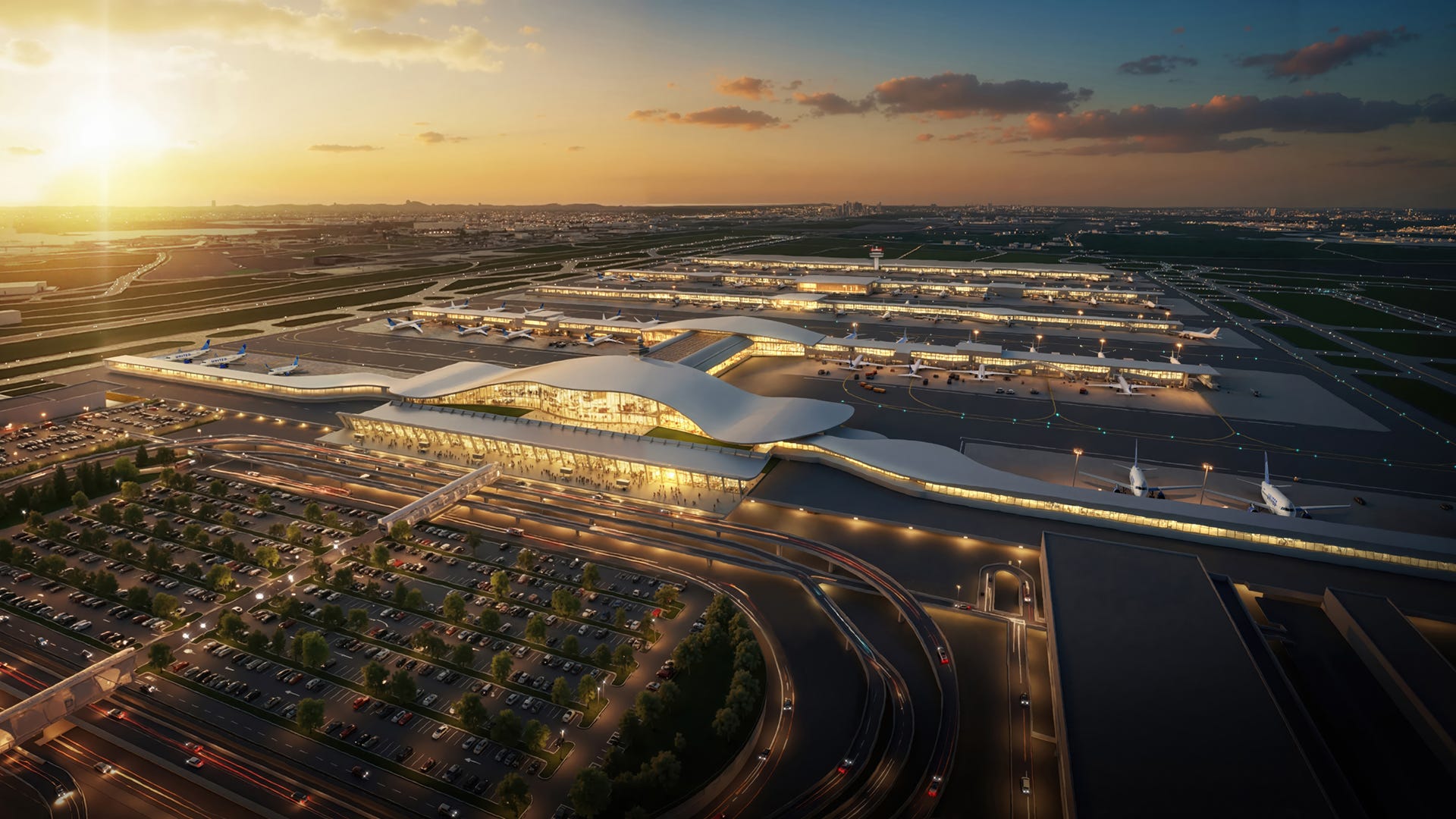
The plan for Washington Dulles International Airport is here.
No, I am not talking about the AI slop-esque renderings released by the White House and others last week. I am referring to the plan — first reported by Airport Architecture in May — to build out the airport’s master plan for $22.5 billion in, maybe, eight short years.
The ceremony at the White House on July 29 was, first and foremost, a triumph for United Airlines that will get the gleaming hub it seeks. But also for any traveler forced to spend time in the “temporary” Concourse C-D (more on that history here) with its drop ceilings, overcrowded corridors, slot windows and corrugated metal exterior — can we just save the colorful glass brick wall? And, of course, the many who will cheer the departure of the mobile lounges once and for all that, while I love their jet-age nostalgia, admittedly are a mid-century anachronism in today’s digital world.
There are a few stories here: the plan, the hubris and the reality of rebuilding an airport like Dulles. Let’s dive in.
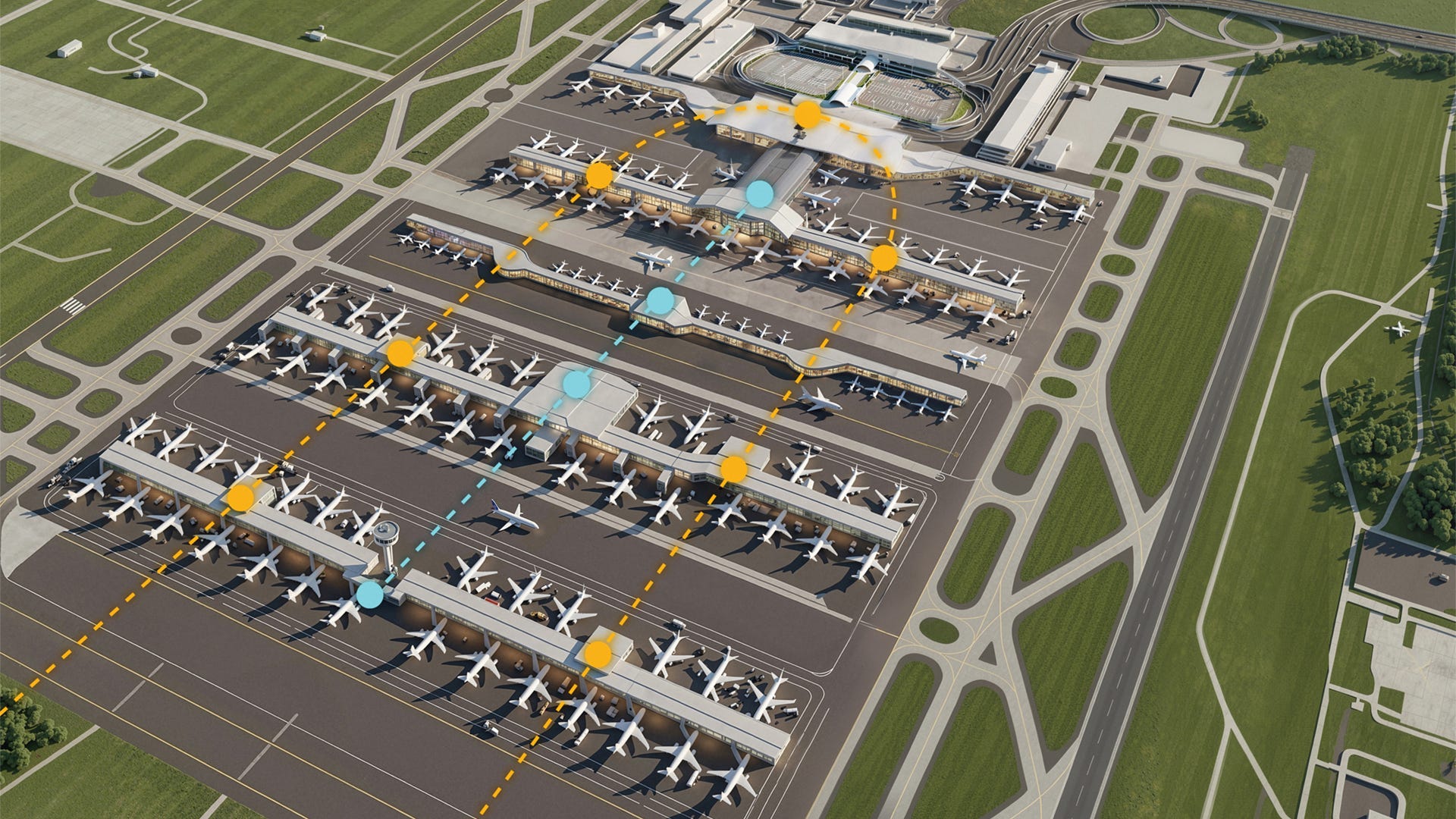
United’s plan for Dulles is good. It adopts the fully separated landside terminal and linear airside concourse layout connected by an underground train that Hartsfield-Jackson Atlanta International Airport pioneered with its 1980 midfield terminal by Stevens & Wilkinson, and Smith, Hinchman & Grylls (now SmithGroup).
The layout has proved immensely beneficial to Delta Air Lines, Atlanta’s hometown carrier, as the backbone of “most profitable and powerful airline hub,” as my friend, analyst and author Jay Shabat has put it.
United CEO Scott Kirby wants to match and beat Delta’s success, and readily admits that he had a strong hand in Trump’s plan for Dulles.
“We designed it by and large,” Kirby told me in June. “We’re excited about it.”
The real issue is costs. The revitalization is budgeted at an eye-popping $22.5 billion that, based on estimates provided to airlines in May, translates to fees topping $90 per departing passenger at Dulles by the mid-2030s. Those expenses, known as “cost per enplanement” or CPE, are forecast at $12.77 this year. The CPE estimate assumes the revitalization is almost entirely debt-financed with no federal grants.
“The $90 CPE is not correct because there’s going to be more Es,” Kirby said in June, indicating United plans to grow the number of passengers at Dulles. That growth is already underway: United boardings at Dulles were up 7% year-over-year to 9.2 million in 2025, or nearly a fifth higher than in 2019, the latest Bureau of Transportation Statistics data shows.
Otherwise, as Bloomberg writer Kriston Capps noted on X: “If anything goes wrong, the consequences of cost overruns for DMV customers will be enormous.”
“We’re going to make it maybe the best,” President Trump said of Dulles on July 29.
The unsigned renderings that were released are, as he indicated, an agglomeration of the more than 30 ideas that the Department of Transportation received in response to its December 2025 solicitation.
“We did a little cherry-picking and we spoke to a lot of people about it,” Trump continued. “We’ve come up with a plan that’s efficient and really beautiful, and I think it’s going to give you one of the most beautiful — keeping the Saarinen.”
In other words: this is not a coherent design for Dulles and should not be treated as one.
Coherently designed buildings, airports or otherwise, tend to count among the best. It is the Frankenstein structures with additions added to additions that, often, turn out poorly with incoherent appearances and confusing interiors. Combining pieces of 30 different proposals for the airport does exactly that: it fails to create a coherent whole that improves upon and celebrates the airport’s iconic Eero Saarinen-designed main terminal.
“These aren’t real designs.”
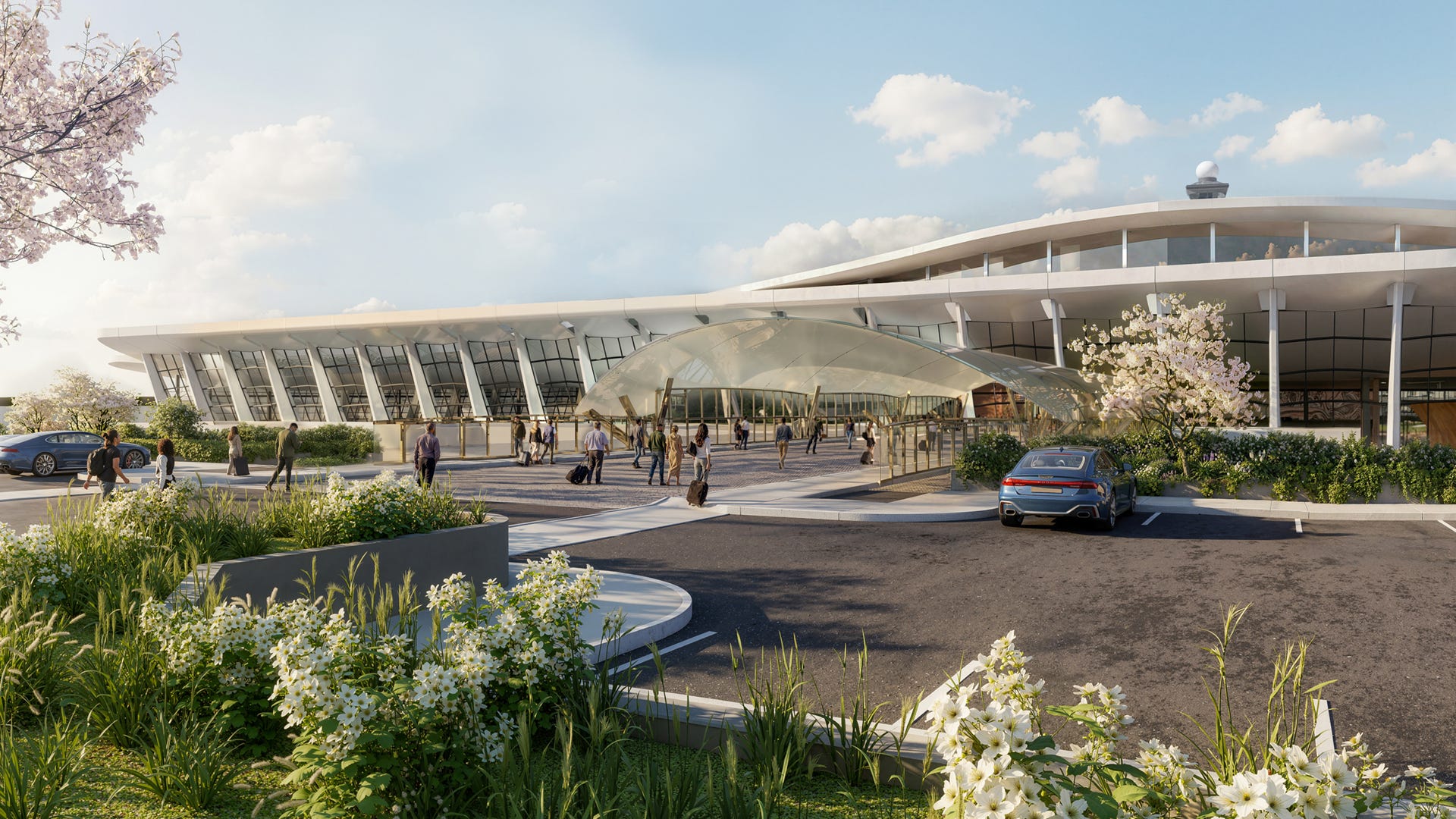
“There are all kinds of things wrong with the renderings that point to a rushed and indifferent job,” Neil Flanagan, a DC-based architect and the author of the forthcoming history, The Birth of a Capital, told me over email.
“Not only has no designer been announced, they only just opened the solicitation,” he continued. “These aren’t real designs to me. Personally, at this extremely early stage of the project, very diagrammatic, suggestive designs would be appropriate for getting the best ideas and not locking details in. The goal is to capture scope or aesthetic.”
Take the elevated Metro station at Dulles. Since opening in 2022, it already carries as many as 4,000 people a day to the airport, yet it is completely absent from the renderings.
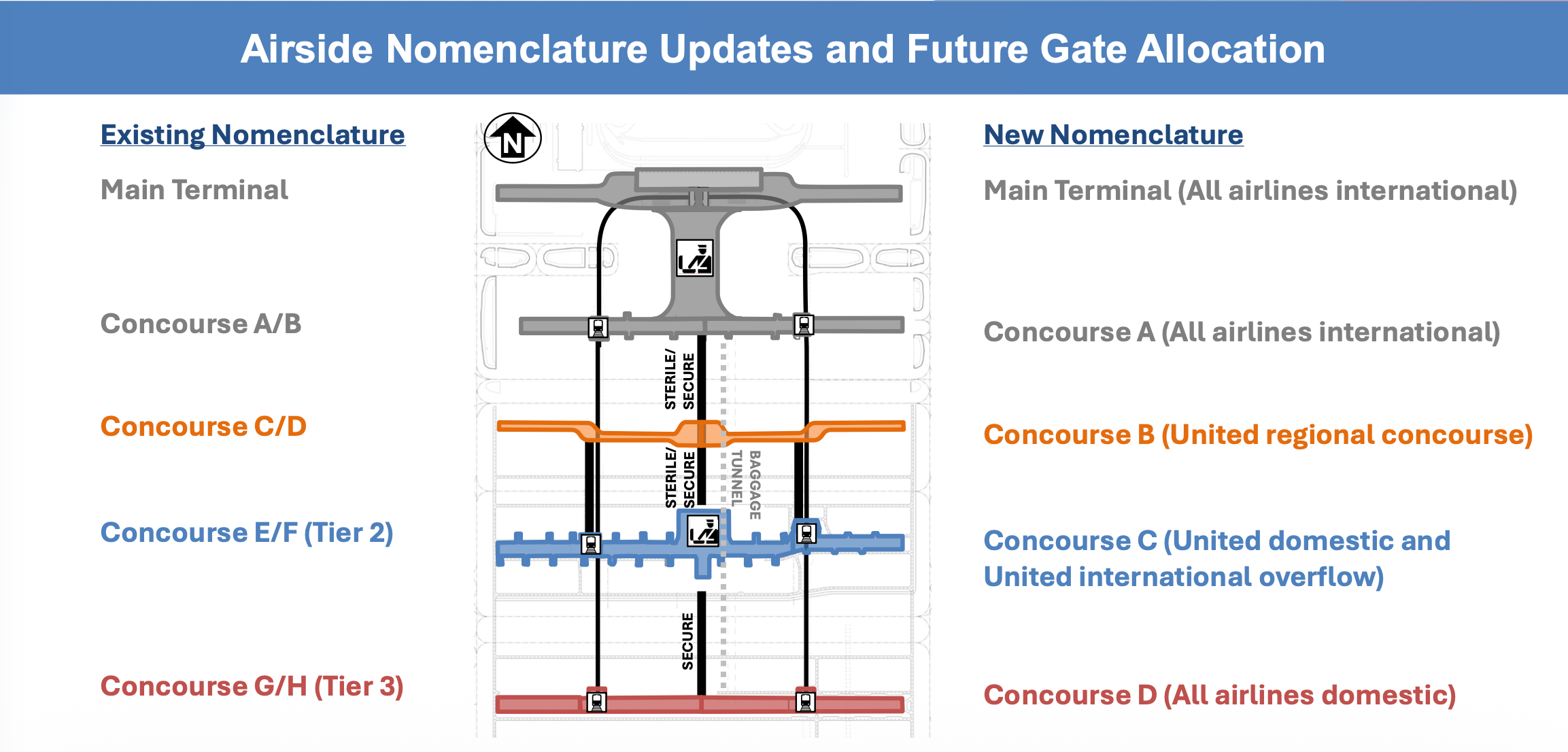
The solicitation Flanagan referred to is the Metropolitan Washington Airports Authority (MWAA)’s June request for qualifications for a design-builder for the first piece, or Package A, of Dulles’ revitalization. The package includes the main terminal expansion, new terminal gates, an above-ground connector to Concourse A — as Concourse A-B is set to be known — refurbishment of said concourse and an extension on the site of the existing ground-level regional gates.
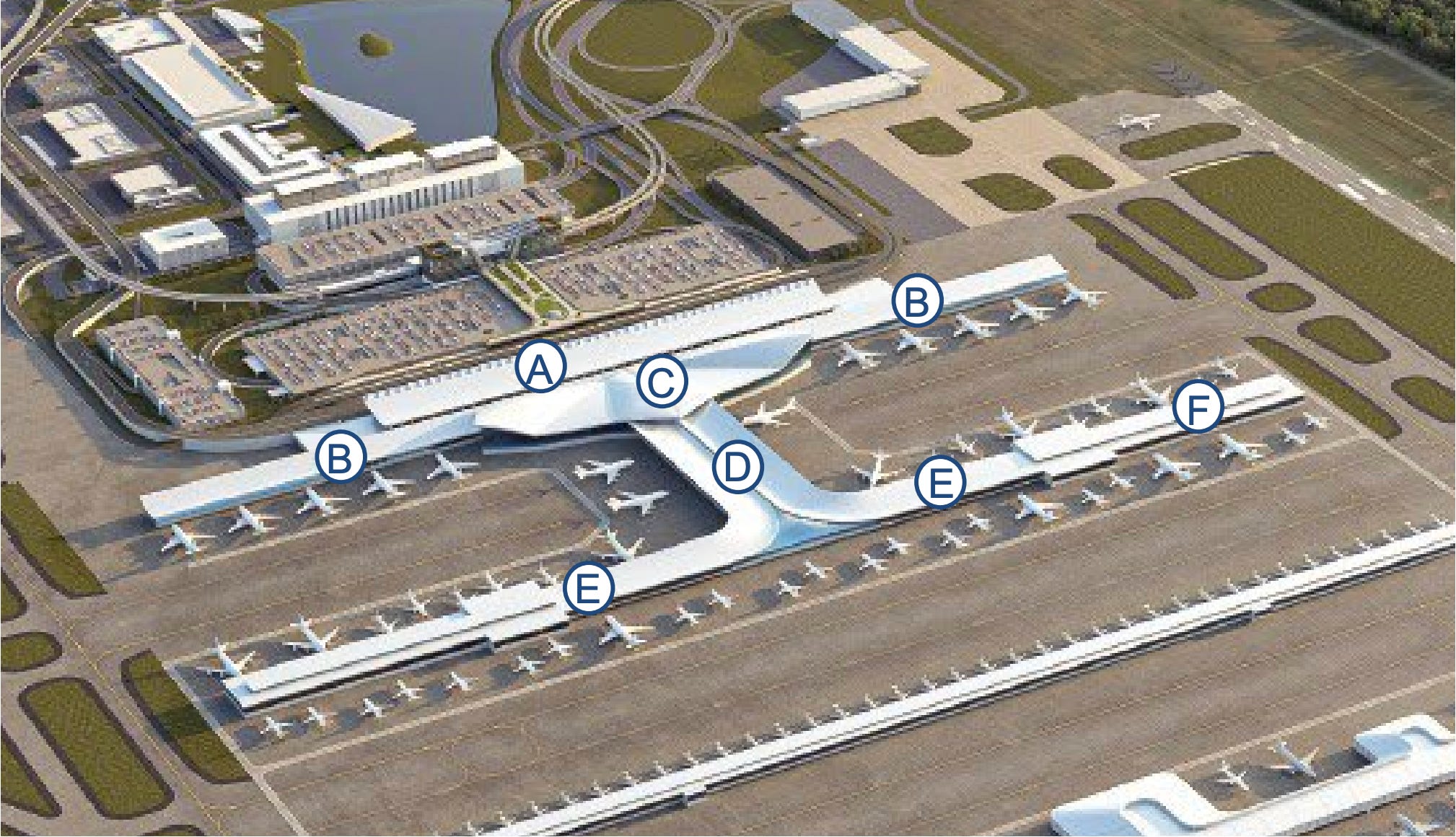
Returning to the renderings, they were clearly purpose-made for one man who happens to view himself as a master builder. Secretary of Transportation Sean Duffy summed it up: “I think this is one the best designs probably because you actually did it.” Emphasis mine.
And let’s not even talk about Trump’s idea to make parking garages great again.
The revitalization of Dulles faces a long road ahead. The actual solicitation for Package A outlines a multi-month timeline that does not see the contract awarded before February 2027 and construction optimistically beginning that December — eight months later than anticipated in the May presentation to airlines viewed exclusively by Airport Architecture.
Then, after Package A, there are for more major pieces: Package T (people mover and pedestrian tunnel expansion) — necessary to retire the mobile lounges — Package C (full build out of the under construction Concourse E, renamed Concourse C), Package D (new Concourse D) and Package B (new regional Concourse B). And all of this work will need to be done without disrupting flights at Dulles.
Needless to say, there are a lot of details yet to be sorted.
Brian Goldstein, an architectural historian at Swarthmore College, told me that Dulles could use a “rethink;” it “feels fairly cobbled together,” he explained. But changes to the main terminal raise red flags.
“I’ve been worried about what would happen to the Saarinen-designed terminal and, to some extent, the many lesser-discussed aspects of the Saarinen era: the funky fonts, the concrete tunnels, the various pieces that make it not just a modern building but part of the mid-century modernist dream of advanced transportation,” he said.
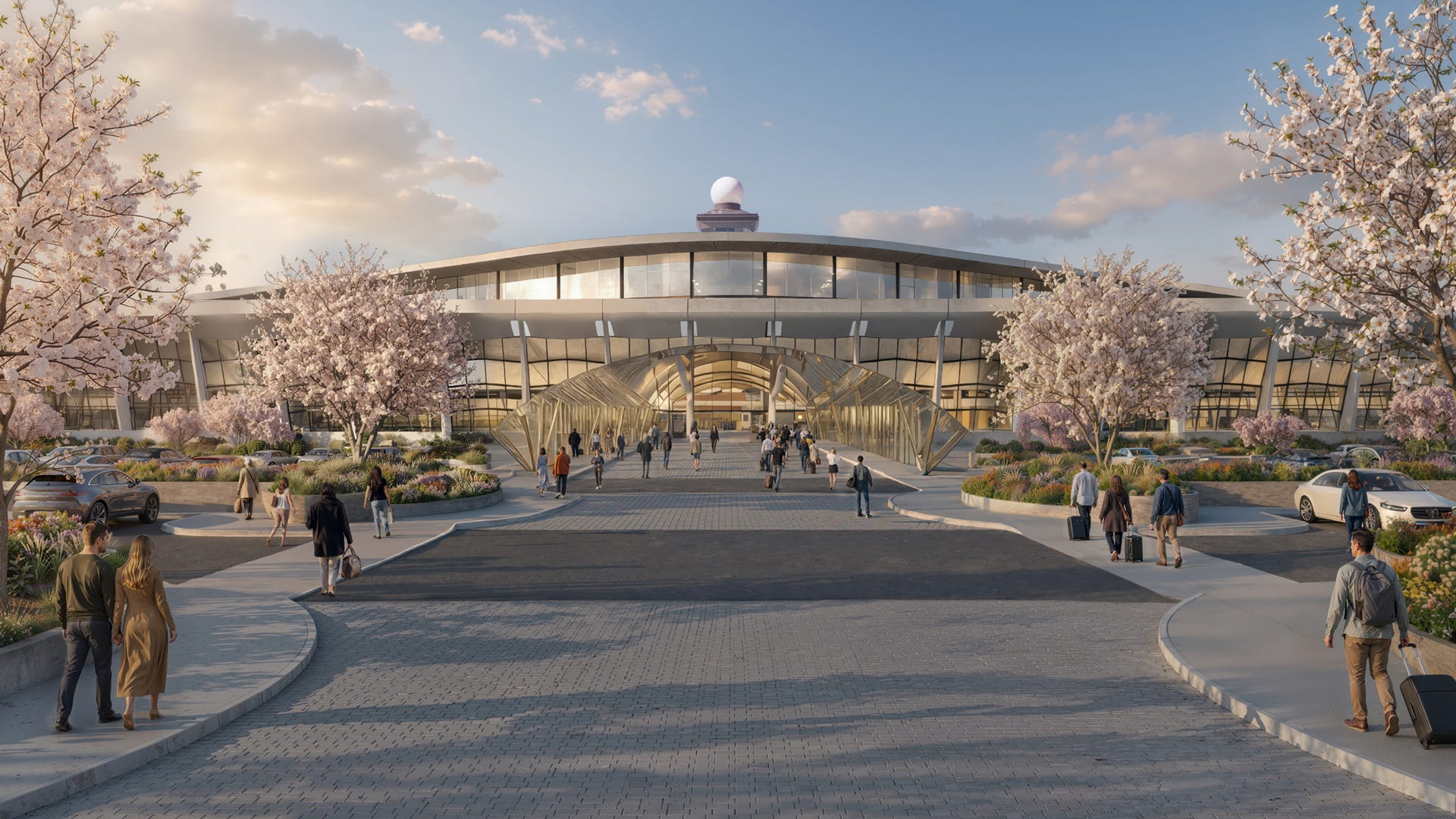
The renderings show Saarinen’s terminal as the main entrance to Dulles but with an expansion behind it that overwhelms the mid-century icon and almost entirely subsumes the original control tower.
And what of the airport’s Harry Bertoia wall?
The MWAA solicitation, however, indicates more thought is going into the design of the terminal expansion than the images suggest:
“The Authority intends to maintain the iconic architectural design while undertaking a comprehensive transformation of the interior spaces … The terminal will be expanding approximately 300 feet to the east and west respectively preserving the original iconic façade design with its organic piers and the steel mullioned glass curtain walls sloping outward.”
That suggests a terminal expansion that could complement the main terminal while achieving the modernization sought after by United — and Trump. I’m imagining something akin to Beyer Blinder Belle’s TWA Hotel towers that complement and almost melt into the background of Saarinen’s iconic TWA Flight Center at New York’s JFK International Airport.
Then there is the question of place. Trump’s vision is of an air gateway to the U.S. capital to rival airports like Doha Hamad and Singapore Changi. Both, by the way, were the result of significant government investment — not debt financing — in what are viewed as major national priorities. Is Dulles that aviation priority for the U.S.? On numbers alone, either Los Angeles International Airport or New York JFK is a more important international gateway.
“The best airports have specificity and speak to you of the place where you are,” Goldstein said. “The DC region has a lot of personality and placeness but the renderings have ignored those aspects; subsuming the Saarinen-designed terminal contributes to this feeling.”
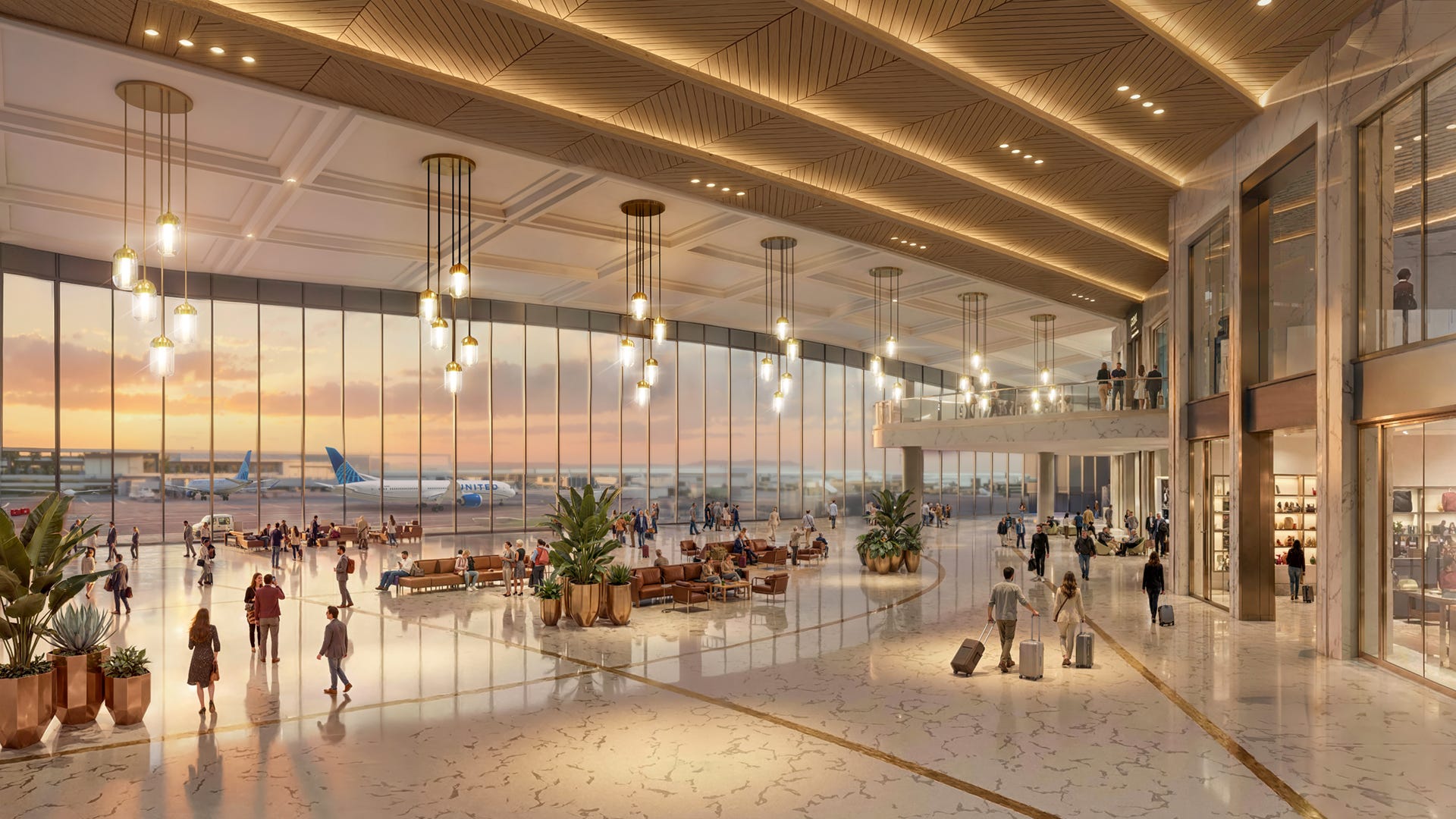
The best airports are those that are clearly somewhere — Albuquerque’s Pueblo Revival terminal or Changi’s airport-in-a-jungle feel, for example — not generic airport world with faux-gold trim and plug-and-play chandeliers.
No posts
Comments
Nothing yet. Say the first thing.
Sign in to join the conversation.