
The microdrama, gamified storytelling apps and vertical video space is fasts moving, and here is the latest in a semi-regular summary of what we know so far, as we sift the tea leaves to help producers plot a course in this area.
So far, it is drama producers who have been most intrigued by this trend, however I’d suggest all genres should be taking notice. Even if the microdrama gamified app space has limited scope for certain genres (at the moment), vertical content sits in all our pockets, so the format and experience should be treated as a core part of our market.
This post covers:
The context of the growth of vertical content
A major report into the microdrama audience and their behaviours
TikTok testing a new paid short form drama app
Range and territories of microdrama apps
Streamers and studios with their own vertical video strategies.
Thanks for reading Business of TV! This post is public so feel free to share it.
A key factor that can often be missed in the discussion around changing user behaviours and content consumption is identifying whether we are in an ‘and’ or an ‘or’ situation.
Often, when we talk about video viewing on new platforms, it is immediately considered an ‘or’ scenario - where the viewing is replacing some other viewing. So if people are watching Netflix, it is instead of network TV, whether live or on VOD services. The same goes for YouTube and so on.
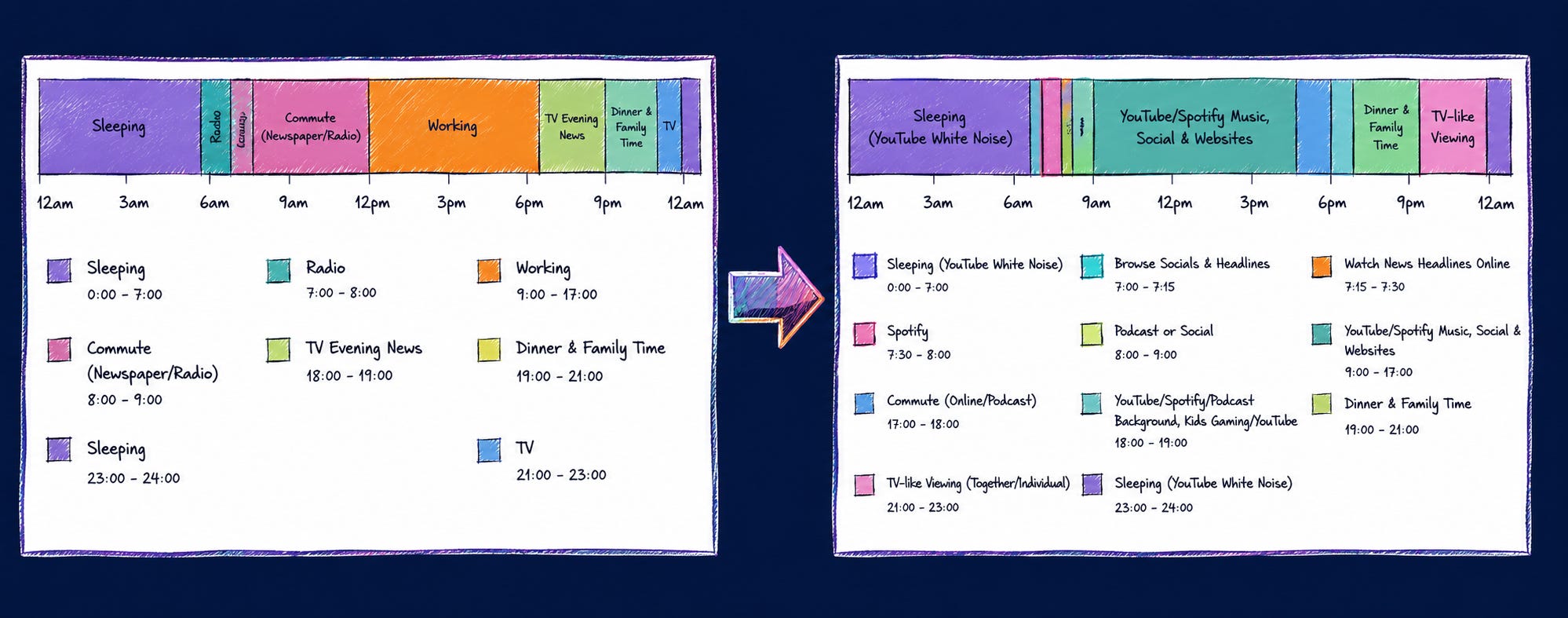
However, often, we are in an ‘and’ situation. Where thanks to new devices and new products and services, where previously there were hours of our days where we didn’t consume video, we now are. So, when we talk about TikTok or YouTube viewing, this often comes is in addition to the video viewing we are doing at more traditional times of the day. Where previously people would visit the loo (no judgement) either without media, or perhaps a newspaper, they now are taking their phones and scrolling or watching something. Or, perhaps less intimately, people used to read a book on the train to work, and are now watching video.
You might recall my diagram where I attempted to represent that change.
So with that in mind, on to vertical video and microdramas in particular. I’ve written about this phenomenon at length in the past:
And thought I’d revisit it for two reasons: firstly, because I’m chairing a panel on this very subject at Edinburgh TV Festival at the last week of August (if you were on the fence about coming, that surely should push you to buy a ticket - there is a discount code below).

Heading to this year’s Edinburgh TV Festival?
The Festival returns from 25–28 August, bringing together the biggest names in TV and the brightest emerging voices for four days of unmissable conversations, industry insight and unrivalled networking. From headline keynotes to curated sessions and networking events, the Festival is the place to connect, collaborate and shape the future of television.
Business of TV subscribers can secure 20% off Festival passes using the code B20DIS26. Buy your Passes here.
And secondly, there are all sorts of interesting manoeuvres in this area, so is important to keep tabs as things evolve - as covered a few weeks ago, those heady days of the early gold fever seem to be over, with players like Cineverse and PocketFM taking a step back. However, others are finding successes and ploughing on, so tracking these developments - which also have wider implications for genres other than scripted - is important.
After all, a key aspect of the age of disruption is that the disruption doesn’t stop.
Before I get on to the latest developments, another framing point. It is important to keep in mind what the purpose of the various platforms and companies are when investing in vertical content. At a high level, this could be considering in two ways:
Vertical content to market something else
Vertical content as a business in its own right.
So when you see Disney, Paramount, Netflix et al investing in vertical content, the question to ask is whether the goal is to get people to watch vertical videos on their devices, with the ambition they’ll watch a full length film or show at a later point. This is a well known user behaviour, where often users are scrolling partly to be entertained in the moment, but also to act as a filtering system, looking for ideas of things to engage with at later date - so TV shows, streaming series, movies and so on.
And when you think about all those gamified microdrama apps, then these are businesses in their own right. There isn’t an onward marketing journey (at the moment) to get people to watch full length episodes on the TV later on, rather the goal is to get people to buy tokens and watch more shows within the app or service.
If you want a recap of how these models work (and how they are closer to Candy Crush rather than social video on TikTok or Instagram), then these two posts are a good place to start - the first is about romance in general, but explains the gap in the market filled by microdramas and their particular business models:
You could argue that creators on Instagram and TikTok are a blend of both of these: where they treat their vertical content as a business that makes them revenue on their primary platform. However, thanks to the need to revenue stack, they too want to use those videos as marketing for something else: to watch full length videos on another service, buy tickets to their shows and so on.
Comments
Nothing yet. Say the first thing.
Sign in to join the conversation.