

In this series, I guide you through all the details you should be obsessing about. Not worried yet? Keep reading. So far, we’ve fretted over race outfits and second-guessed our hydration.
Please Share This Post! I would love to boost my Reader Base and YOU can help!
Links to all the articles in this series:
Worry About Imaginary Aches and Pains
Worry About Drinking Too Much or Too Little Water
Today, we go hardcore: Hypochondriasis. It is “Five Days and a Wake-Up” until the Pittsburgh Marathon. For many of you, the “5K-Myalgia” has officially set in.
Everything hurts.
Everything is tight.
Every twinge portends a ruptured tendon.
Every cough signals a DNF-level bout of Covid.
You tell yourself that final shakeout run was a catastrophic mistake. You think: If I feel this “off” on a 5K, how am I going to survive 13.1 (or 26.2)?
This is Runner’s Hypochondriasis. All of us go through it; some of us just do it at a PhD level. While last-minute injuries are real, how many times have you felt “broken” on a Tuesday only to feel like a superhero on Sunday?
Why is your brain lying to you? It comes down to two psychological traps:
1. Somatic Hypervigilance & Amplification Usually, you rely on exteroception (watching the road, checking your watch). But as the race nears, your brain switches to interoception—an intense, microscopic monitoring of everything inside the skin.
Your brain is a priority machine. It highlights what is rewarding or threatening. Because the marathon is a high-stakes “threat,” your brain promotes every minor sensory blip to the top of your consciousness. Once you focus on a spot, you amplify it. It’s the “Finger Prick Effect”: the more you watch the needle, the more it hurts.
2. Malignant Labeling Once you perceive a sensation, you assign it a narrative. A tight hamstring isn’t just a feeling; it becomes a tragedy where you’re limping across the Birmingham Bridge while the sweep bus looms behind you. With that guy from 8th grade shouting insults from a megaphone on top. The “PhD Brain” knows that whether you label a sensation as THREAT or NON-THREAT changes your entire physiology. If you can label it “Taper Noise,” your nervous system shifts from sympathetic (fight or flight) to parasympathetic (rest and digest).
Your brain is running a high-stakes “discrimination algorithm” to decide if a pain is “Good” (fatigue) or “Bad” (injury):
The Thalamus (The Filter): It’s trying to distinguish signal from noise. If the pain is sharp and localized, the Thalamus cranks the volume.
The Amygdala (The Alarm): It is biased toward “threat” because the cost of ignoring a stress fracture is higher than the cost of a missed run. It’s what fuels those “I forgot my shoes” marathon nightmares.
The Prefrontal Cortex (The Logic): This is your executive center. It asks: Does this change my gait? Is it symmetrical? Have I felt this before? If the answer is “No,” it’s likely just the Taper talking.
1. Don’t Overmedicate Avoid the “Pill for Every Ill” trap. Inappropriate NSAID use leads to sour stomachs or gastric bleeds, and “taking the edge off” with alcohol or other substances just leaves you sluggish at the starting line.
2. Counter-Regulate with Box Breathing If anxiety raises your cortisol, fight back with patterned breathing. It’s used by Navy SEALs and elite athletes for a reason.
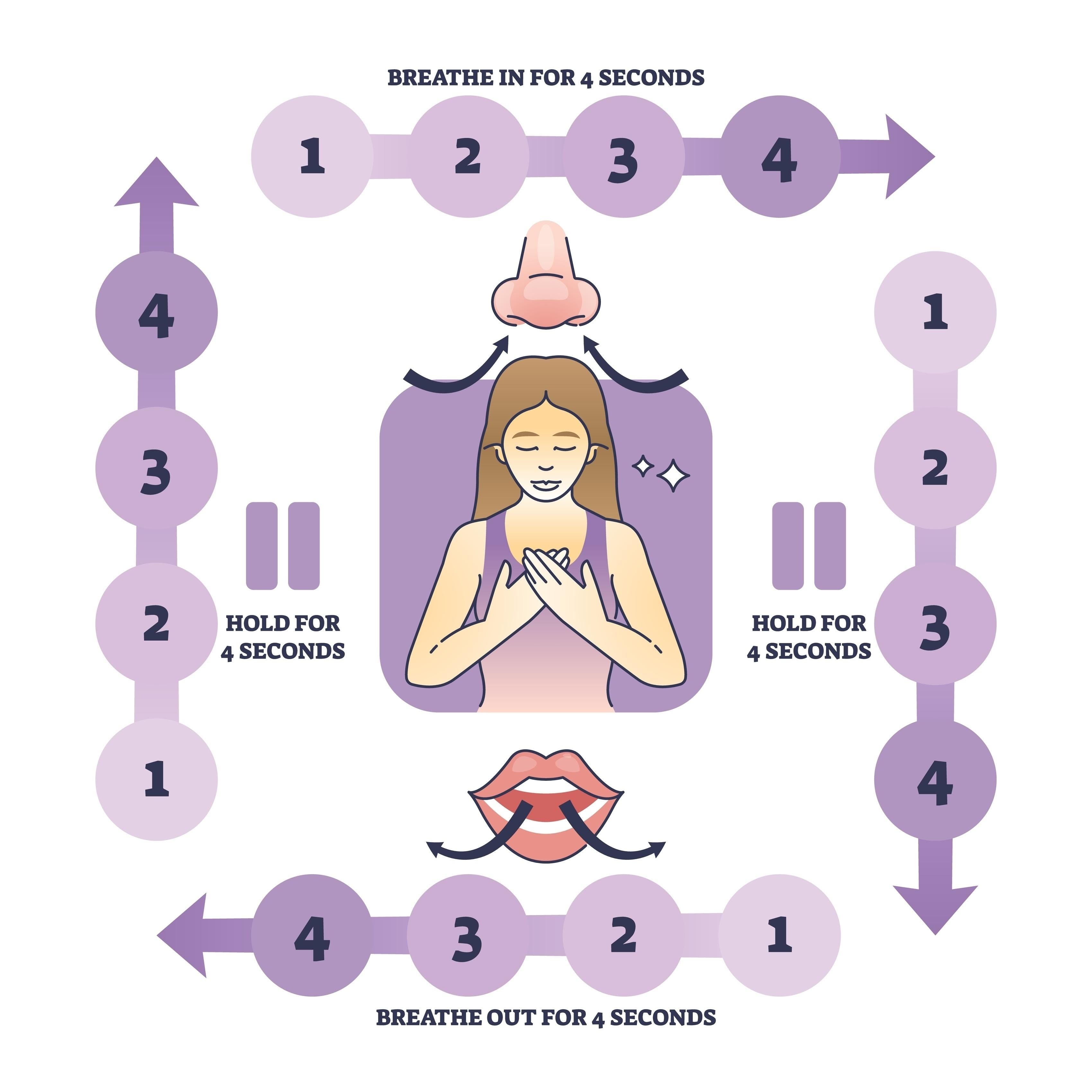
Inhale for 4 seconds.
Hold for 4 seconds.
Exhale for 4 seconds.
Hold (empty) for 4 seconds.
3. Use ACT (Acceptance & Commitment Therapy)
Acknowledge: Don’t suppress the butterflies. Say: “I am noticing pre-race adrenaline.”
Accept: The jitters are just your body “priming the engine.” Don’t fight them; let them ride shotgun.
Commit: Reconnect with your “Why.” Focus on your purpose—whether it’s a PR or a Smiley Cookie at the finish—not the noise in your nerves.
We are running in Mr. Rogers’ Neighborhood, after all. Be kind to yourself. Hypochondriasis hits those of us who like control the hardest.
I have found that running hypochondriasis happens to the people that tend to want to exert the most control and who deal most poorly with lack of control.
I find in meditation that my mind constantly chatters. Its as if my mind thinks that if it stops talking, or creating images, whether good or bad, that something horrible will happen. Maybe the only thing that makes the world real is my mind and if it stops generating thoughts the whole world will just go away. Cease to exist. What a cosmic existential burden!
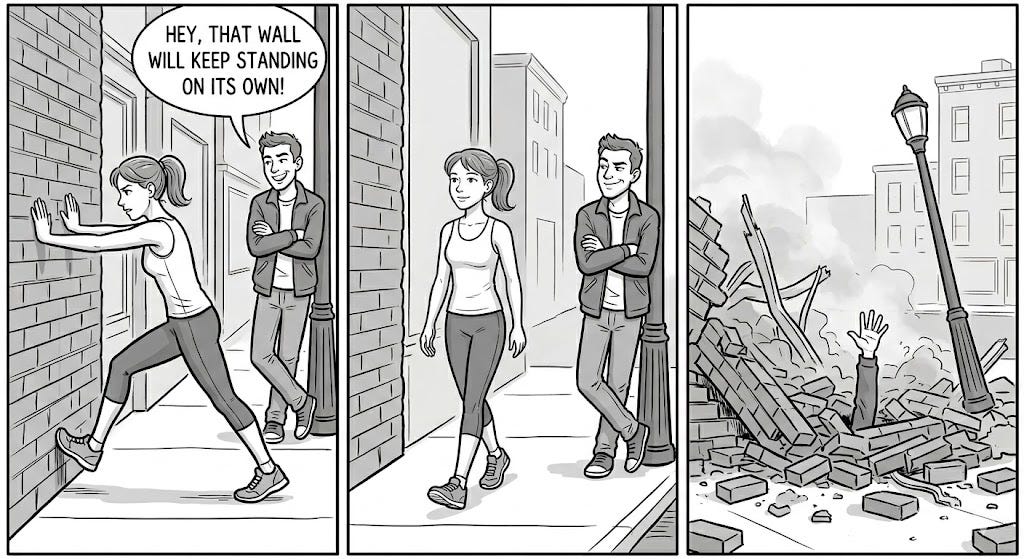
Surprise: The world doesn’t end.
And surprise! Aches and pains or not, you have trained in ice and snow and dark and rain and wind and hills and potholes. And you have a club and family and a whole city that has your back if you fall.
Five Days and a Wake-Up Call. See you out there.
Leave a Comment - I actually respond to them
No posts
Comments
Nothing yet. Say the first thing.
Sign in to join the conversation.