

In this series, I guide you through all the details you should be obsessing about. Not worried yet? Keep reading.
If you know a fellow runner staring at the ceiling tonight, please share this with them. Let’s help everyone get to the start line a little more rested!
We’ve come to the final piece in our pre-race worry series. So far, we’ve fretted over race outfits, second-guessed our hydration choices and agonized over imaginary aches and pains. Now I want to introduce you to a topic that will keep you up at night… insomnia.
Subscription is FREE… No matter what the next screen says!
Links to all the articles in this series:
Worry About Imaginary Aches and Pains
Worry About Drinking Too Much or Too Little Water
Pittsburgh Half Marathon Countdown: What to Worry About Today— Insomnia
There is a special and horrible kind of silence that exists at 3:00 AM on race morning. It’s the silence of thousands of runners staring at hotel ceilings, calculating exactly how many hours of sleep they’ve lost and how much it will cost them on the course.
If you are awake right now, you are in the majority. Research suggests that up to 70% of endurance athletes report significant sleep disturbances during race week, with over 60% suffering from acute insomnia the night before the event. Interestingly, studies have shown that half-marathoners often screen positive for sleep problems at higher rates (38.3%) than full marathoners (28.4%). This is likely because the “half” often attracts a larger pool of first-timers, for whom the “performance-anxiety-to-experience” ratio is at its peak.
The Good News: You are Physically Fine
As a psychologist and a runner, I want to offer you a “permission slip” to stop worrying. The seminal research by Reilly and Edwards (2007) provides a vital distinction between physiological capacity and subjective appraisal. Their data demonstrates that one night of poor sleep has no significant impact on objective markers like leg strength, heart rate, or lung capacity.
The real danger is the “Negative Placebo” effect: the belief that because you didn’t sleep, you must perform poorly. In reality, while your “Perceived Effort” (RPE) might feel higher, your body is still a primed machine. Knowing you are physically “okay” is often the very thing that lowers your arousal enough to finally drift off.
The Architecture of a Restful Taper
To give yourself the best chance at rest, we have to move beyond simple “sleep hygiene” and look at the biological levers of the body.
What Actually Works:
The Saturday Reset: Wake up extra early on the Saturday before the race. Ensure you are physically and “adenosine-tired” by 8:00 PM.
The Thermal Trigger: Take a hot bath 90 minutes before bed. It sounds counterintuitive, but the vasodilation caused by the heat helps your core body temperature fall rapidly once you get out—a biological prerequisite for deep sleep.
Environment: Keep the room “cave-like”—cool, dark, and utilize a fan or white noise generator to mask hotel hallway sounds.
Early Fueling: Eat your final large meal early in the day to prevent metabolic heat and digestion from keeping you awake.
The Blue Light Myth

We’ve been told to fear our screens, but Dr. Merijn van de Laar, author of How to Sleep Like a Caveman, offers a much-needed correction. He argues that the blue light from a smartphone is often too low in intensity to truly suppress melatonin. The real culprit isn’t the light; it’s the psychological impact of the content. Checking your “split” goals, engaging in “rage bait” on social media, or provocative news stories puts your brain in an alert, problem-solving state. It’s the “engaged mind,” not the glowing screen, that keeps the switch turned to “on.”
The “Recovery Tax”: Alcohol and Melatonin
When sleep is elusive, many reach for a “nightcap” or a “natural” supplement. Both are metabolic traps.
Alcohol: The Sedation Trap
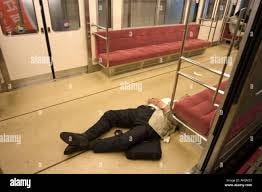
Even a single serving of alcohol is a recovery disaster. While it acts as a sedative, it is not a sleep aid.
Sleep Fragmentation: As alcohol is metabolized, it causes “micro-wakeups” throughout the night.
REM Suppression: Alcohol is a potent blocker of REM sleep. This leads to a “REM rebound” in the morning, characterized by vivid, restless dreams.
The Physical Cost: One drink elevates your resting heart rate, suppresses your Heart Rate Variability (HRV), and blunts the nocturnal release of Growth Hormone necessary for muscle repair.
Melatonin: The Hormonal Hammer
Similarly, I advise caution with melatonin. It is a potent hormone, and one of the few hormones sold over-the-counter that affects the HPG (reproductive) axis.
Dosage Chaos: Research in the Journal of Clinical Sleep Medicine found that the content in supplements can vary from the label by 10% to 478%.
Supraphysiological Doses: Most OTC pills provide 10–100 times what the brain naturally produces. While it may help you fall asleep, it rarely helps you stay asleep, often leading to 3:00 AM awakenings and a heavy “fog” the next morning.
The Huberman Stack: A Better Alternative?
If you are looking for a “biological buffer,” Dr. Andrew Huberman suggests a non-hormonal cocktail:
Magnesium Threonate (145mg): Crosses the blood-brain barrier to quiet the nervous system.
Apigenin (50mg): A chamomile derivative that acts as a mild sedative (Caution: can act as a mild estrogen blocker, so discuss this with your healthcare provider).
L-Theanine (100–400mg): Promotes alpha brain waves for “relaxed alertness” (Note: can cause very intense dreams in some).
BOLD WARNING: If you are going to try this, do it now. Do not experiment with new supplements the night before your marathon. Huberman repeatedly warns that both Magnesium Threonate and L-Theanine can cause intense vivid dreams in some. Test it during your taper to see how you react. As always, consult your healthcare provider before starting a new regimen. Also, some people get diarrhea with any kind of Magnesium. Know your supplement!
Behavioral “No-Demand” Methods
Box Breathing: Inhale for 4, hold for 4, exhale for 4, hold for 4. This mechanical override signals the vagus nerve to switch from “fight-or-flight” to “rest-and-digest.”
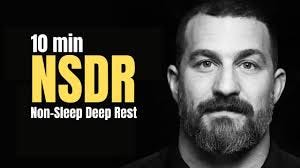
NSDR (Non-Sleep Deep Rest): Non-sleep Deep Rest is a term coined by Stanford Neurobiologist Andrew Huberman. It is essentially a secular form of Yoga Nidra. You are guided through deep breathing and body scanning. Specifically, you breathe in through your nose and then do slow exhalation through pursed lips. This induces a parasympathetic nervous system tone shift. You then focus on scanning through the body. Although you are not asked to focus on sleep, it often helps transition you into sleep. Perhaps because of the non-demand aspects. I have included links to both a 10-minute and a 20-minute version of this and both are on YouTube. I would recommend practicing them starting today to get some experience doing them. I personally find this to be the “magic bullet” for sleep and relaxation.
The Finish Line
At the end of the day, remember that the marathon isn’t won in the eight hours before the race; it was won in the hundreds of hours of training you’ve already put in. If you find yourself awake tonight, don’t fight it. Lean into the quiet.
Your legs don’t know you’re tired; only your head does. And your head is usually a liar when it’s 3:00 AM and you’re 26.2 miles away from glory.
References
Book
Van de Laar, M. (2025). How to sleep like a caveman: Ancient wisdom for a better night’s rest. William Collins.
Podcast Episode
Huberman, A. (Host). (2021, January 11). Master your sleep & be more alert when awake (No. 2) [Audio podcast episode]. In Huberman Lab. Scicomm Media. https://www.hubermanlab.com/episode/master-your-sleep-be-more-alert-when-awake
Huberman, A. (Host). (2022, August 8). Sleep toolkit: Tools for optimizing sleep & sleep-wake timing (No. 84) [Audio podcast episode]. In Huberman Lab. Scicomm Media. https://www.hubermanlab.com/episode/sleep-toolkit-tools-for-optimizing-sleep-and-sleep-wake-timing
Huberman, A. (Host). (2022, August 22). What alcohol does to your body, brain & health (No. 86) [Audio podcast episode]. In Huberman Lab. Scicomm Media. https://www.hubermanlab.com/episode/what-alcohol-does-to-your-body-brain-and-health
Newsletter
Huberman, A. (2024, May). Toolkit for sleep. Huberman Lab Neural Network. https://www.hubermanlab.com/newsletter/improve-your-sleep
Video/Audio
10-Minute Version (YouTube) Huberman, A. [Huberman Lab]. (2021, September 10). NSDR (Non-Sleep Deep Rest) with Dr. Andrew Huberman [Video]. YouTube.
20-Minute Version (Spotify) Huberman, A. (2023, July 24). NSDR (Non-Sleep Deep Rest): 20 minute protocol [Audio podcast episode]. In Huberman Lab. Spotify.
Journal
Reilly, T., & Edwards, B. (2007). Altered sleep–wake cycles and physical performance in athletes. Physiology & Behavior, 90(2-3), 274-284.
Walker, M. (2017). Why we sleep: Unlocking the power of sleep and dreams. Scribner.
Leave a Comment Here.
I answer them!
This Substack is reader-supported. To receive new posts and support my work, consider becoming a free or paid subscriber.
Comments
Nothing yet. Say the first thing.
Sign in to join the conversation.