

A staircase can keep someone from an education, a job, a bus, or an entire public life, and the person at the bottom is blamed for being unable to climb it.
After contracting polio at 18 months old, Judy Heumann used a wheelchair for most of her life. She wanted to become a teacher. But no wheelchair user had ever taught in a New York City public school, and most schools weren’t accessible.
Judy decided to fight.
Even the ACLU refused to help her, insisting that she had been rejected for a medical reason rather than discriminated against. The Civil Rights Act of 1964 had prohibited discrimination on several grounds, but disability was not among them. Disabled people could still be legally excluded from schools, workplaces, transportation, and much of public life.
After Judy’s story appeared in The New York Times, people across the country came forward to support her. Roy Lucas, who would later become one of the attorneys in Roe v. Wade, offered to represent her. Judy sued the Board of Education, and the case was settled. She received her license and became New York City’s first teacher to use a wheelchair.
But this was only one fight.
“The perfect ending to this story about life-altering serendipitous moments would go something along the lines of ‘So then I got my license, found a job, and lived happily ever after.’ But that’s not how it went…” Judy Heumann
Please don’t forget to heart react this post. More engagement means more people might see my work. ♥️
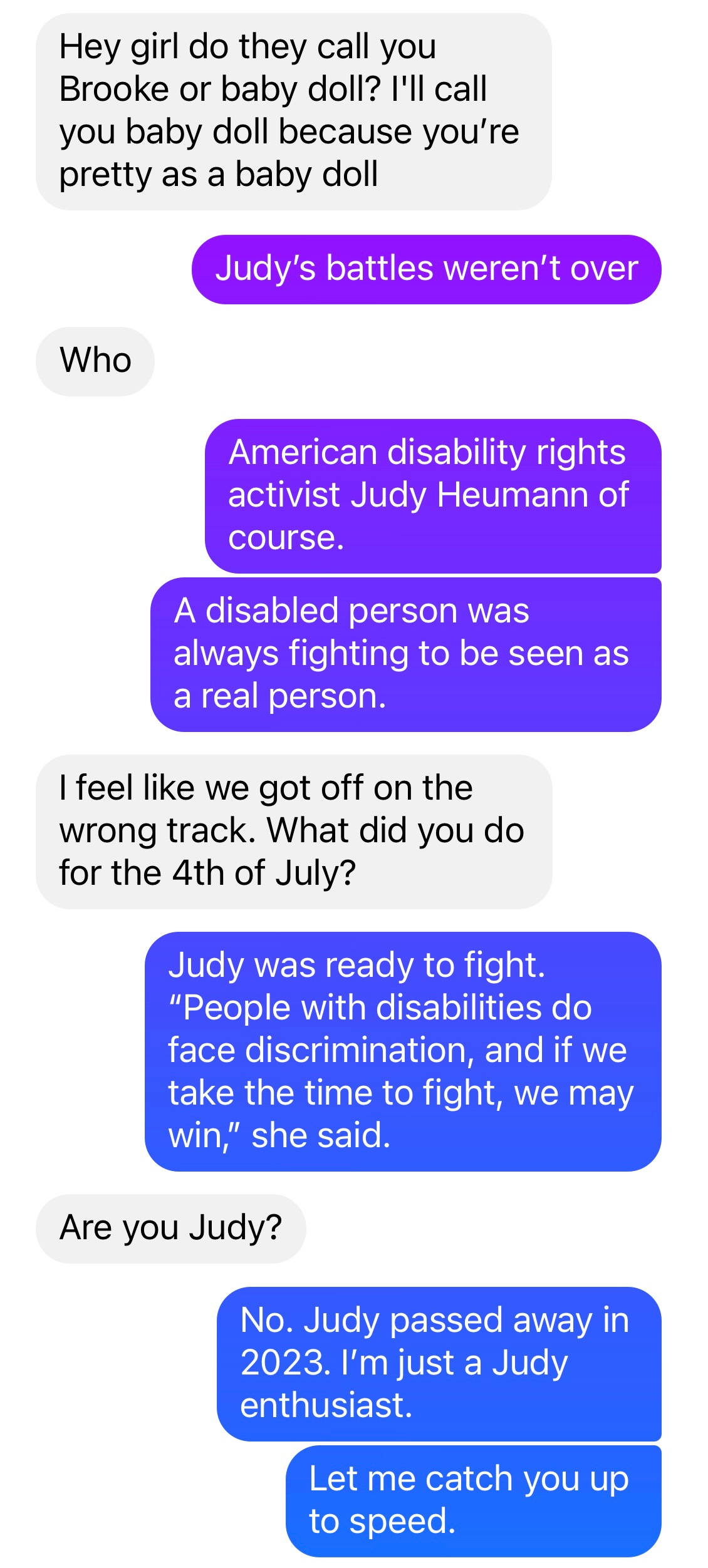
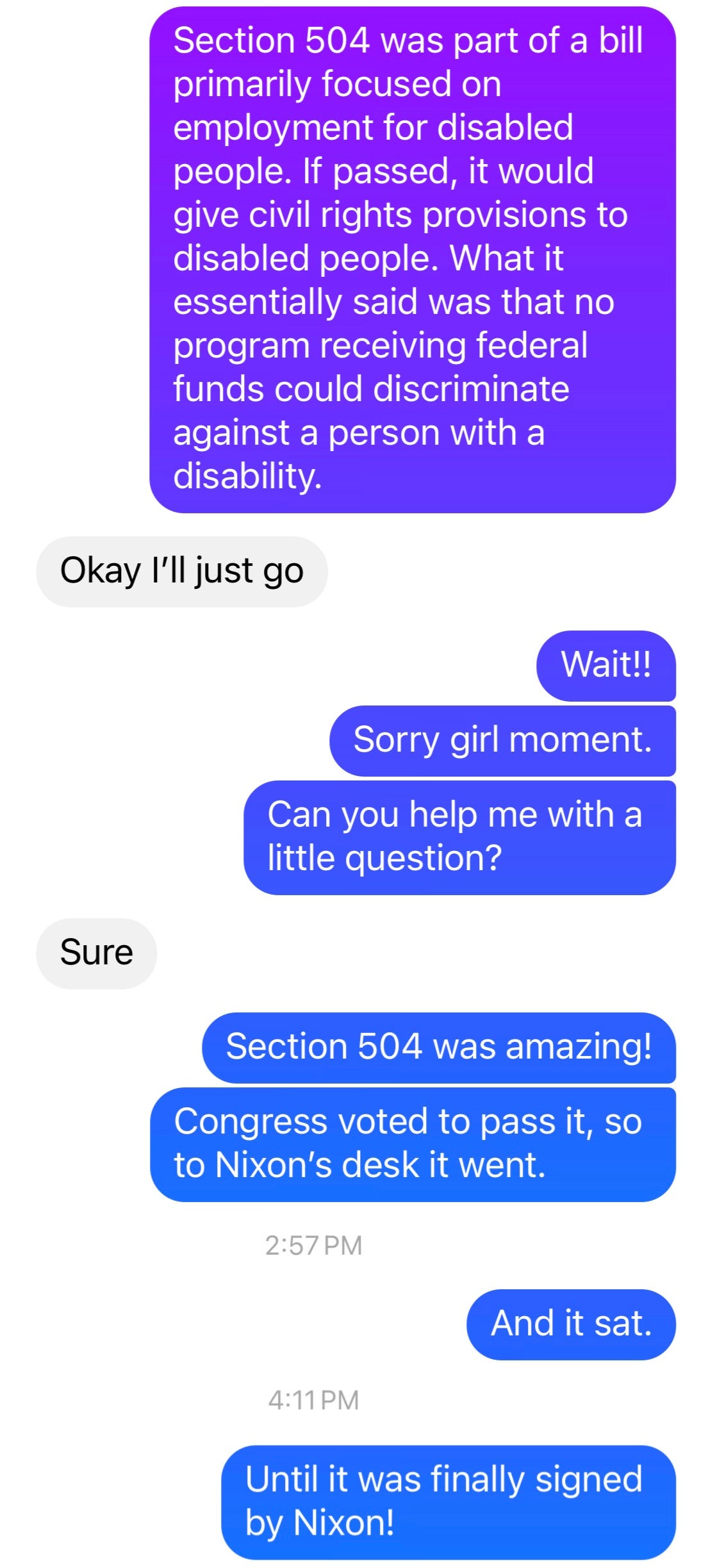
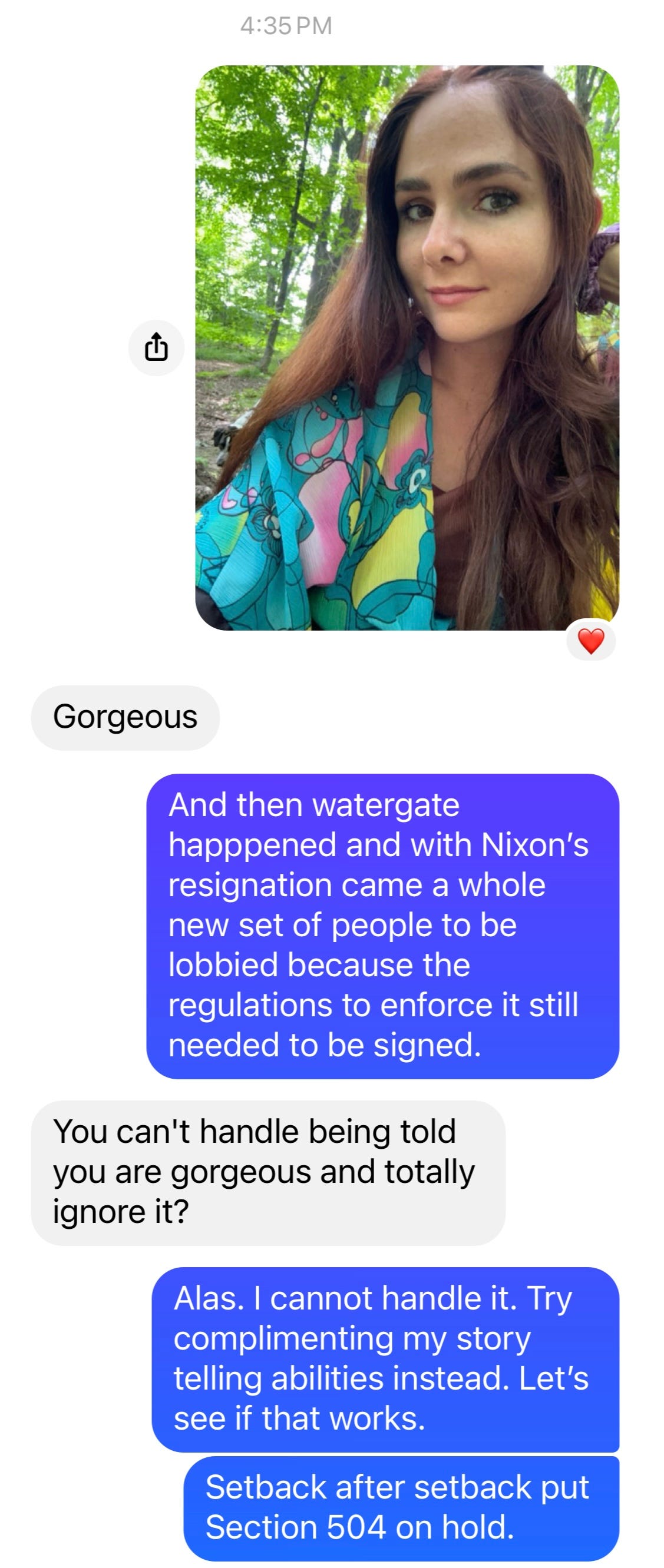
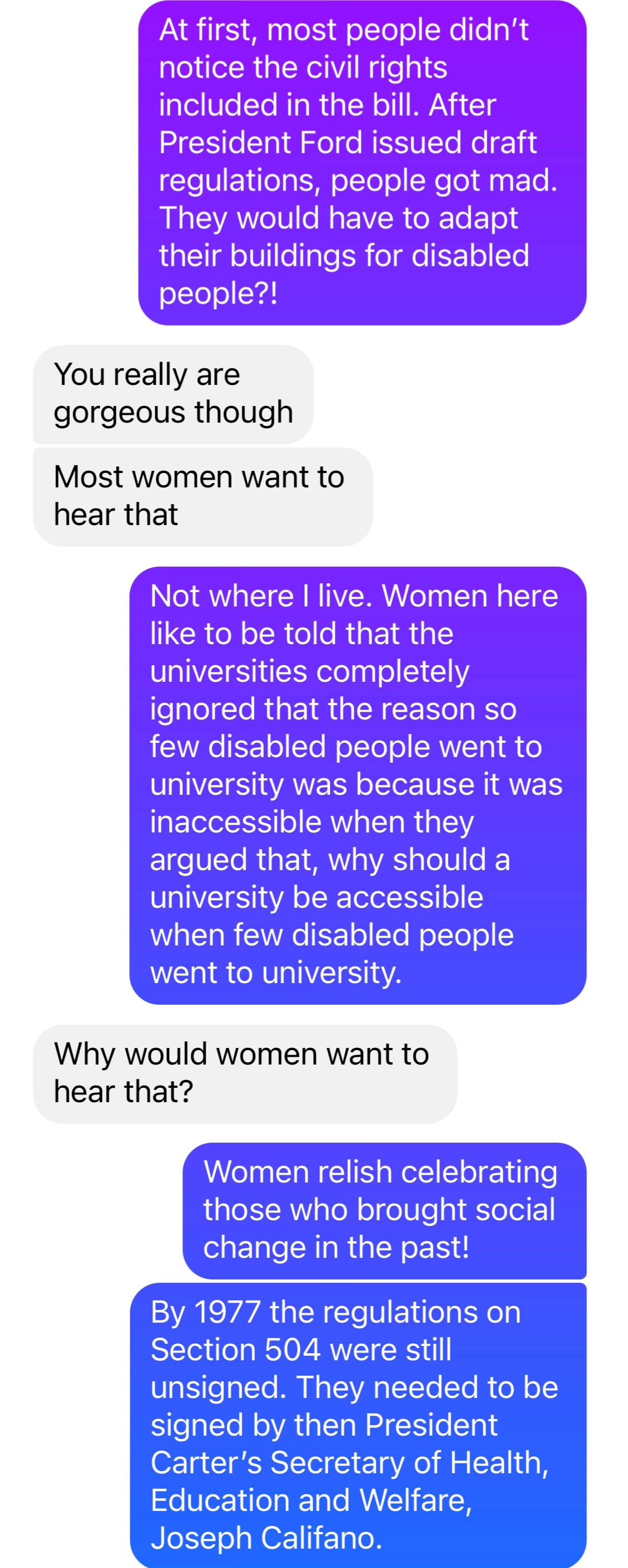
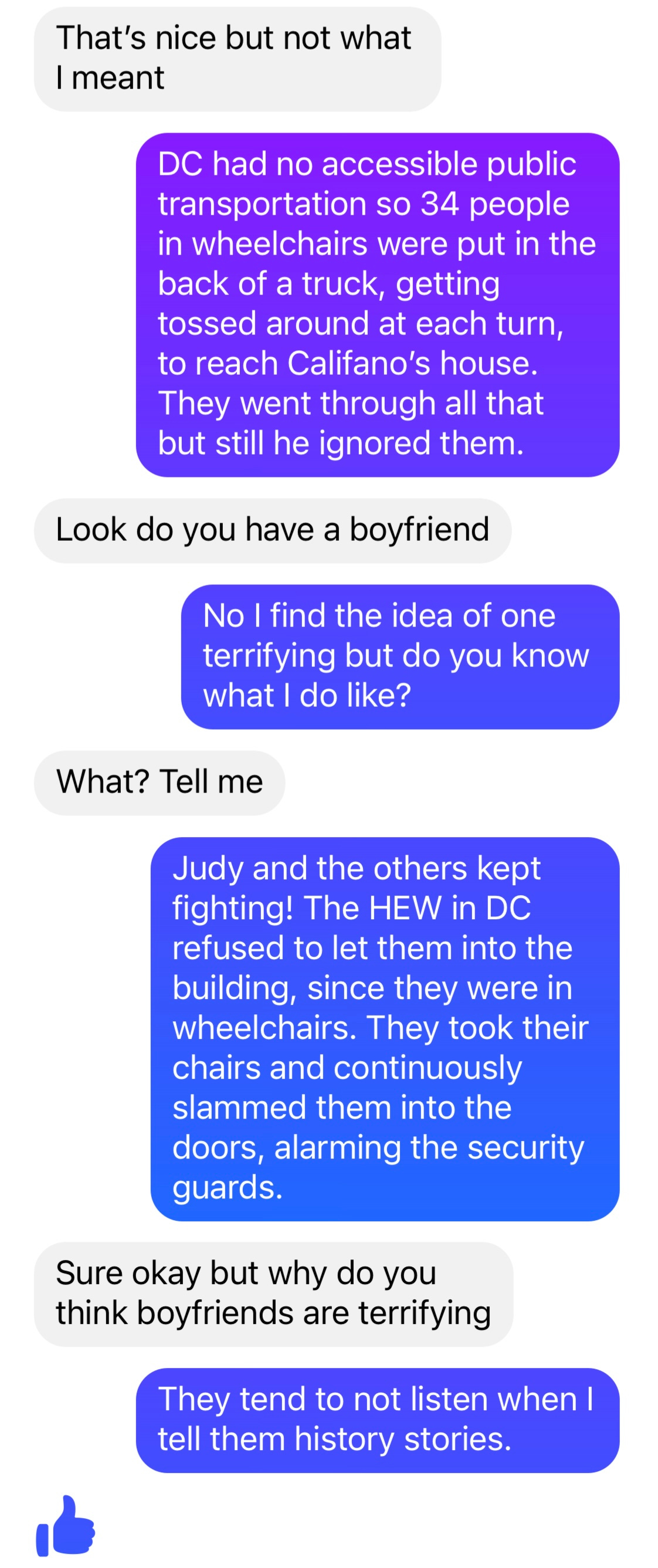
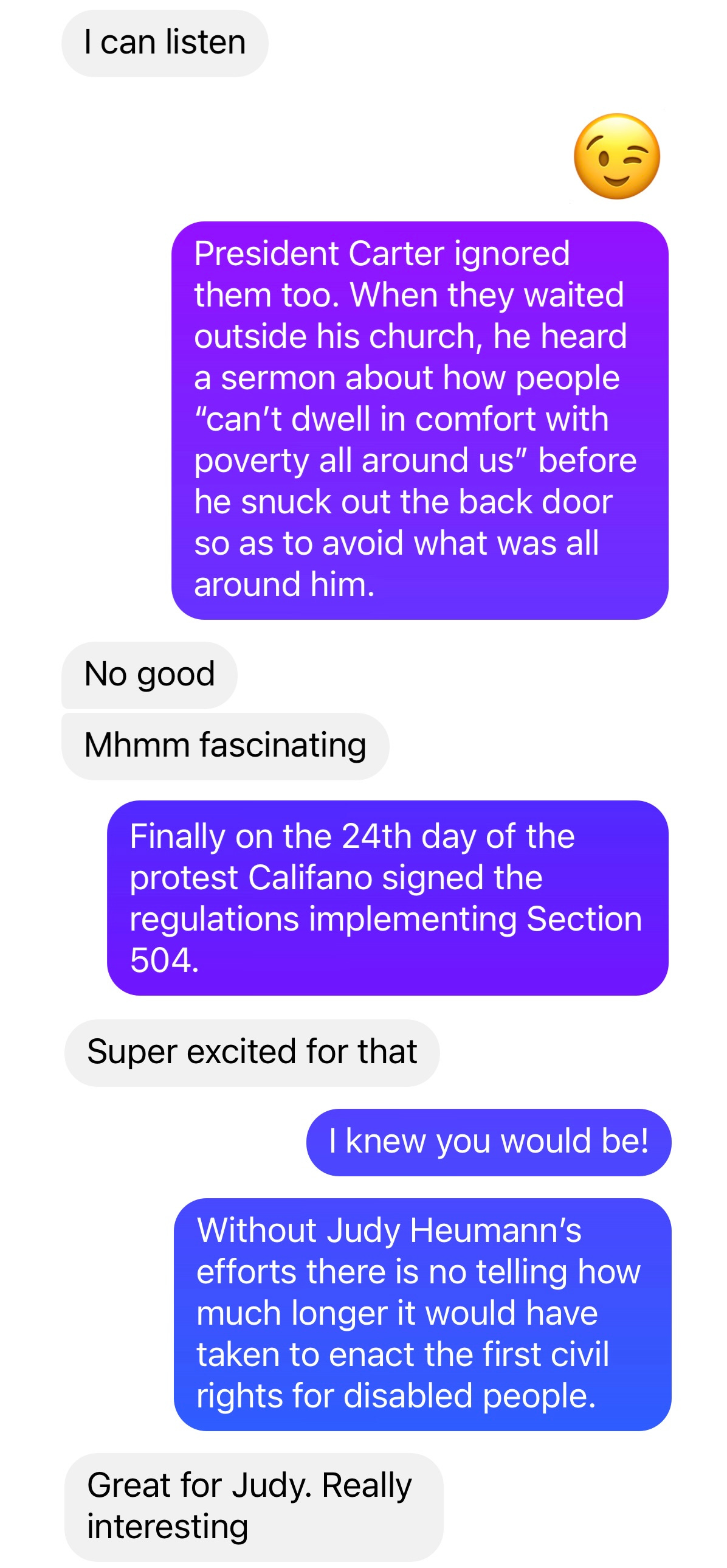
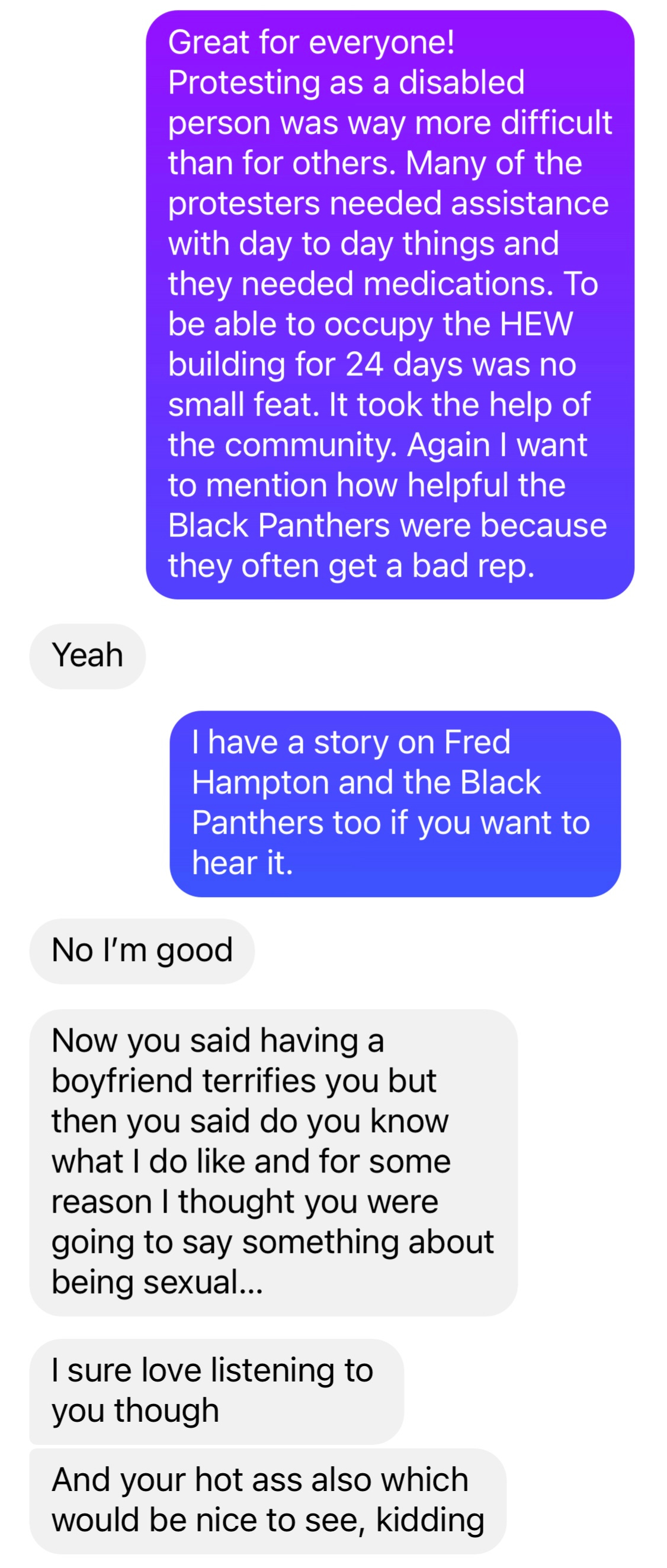
Still, it wasn’t over.
A regulation could be signed with a pen, but accessibility did not appear with the ink. People had to be taught what accessibility required. The regulations had been signed, but enforcement often depended on a disabled person filing a complaint. Many people first had to learn that they had a right to complain, that their desire to participate fully in life was valid, and that asking for accessibility wasn’t asking for too much.
This was why the HEW regulations implementing Section 504 were so important. Without clear rules, courts could not even agree on what discrimination looked like. In one city, a bus system was considered nondiscriminatory as long as the driver stopped for a disabled passenger, even when the passenger could not get on. Somewhere else, a court recognized that stopping was meaningless when the only way inside was a set of stairs.
Judy’s ideas were groundbreaking. She called for officials to “close down special-ed schools and get disabled students into regular classrooms.” She argued that “disability was a natural part of the aging process; thus, the fact that people acquire disabilities as they age should be accommodated, so people can remain active in the community.” She approached disability as a natural part of human life and believed the world should be built to accommodate it.
We are all so much more than what our bodies can physically do.
I need your help.
Please subscribe to support my writing and my dreams. Subscribe below, or you can even subscribe at discounted rates: 25% off, 50% off, 75% off, 90% off
If you’re looking for the story on Fred Hampton and the Black Panthers I mentioned above, you can find it here:
Sources:
Being Heumann Judy Heumann
Short History of the 504 Sit-in Kitty Cone
Women in History - Judy Heumann: Giving Voice and Creating Change Sarah Hall
Do you want to see me live? Get your tickets now.

Comments
Nothing yet. Say the first thing.
Sign in to join the conversation.