
We continue our series on the winners and finalists of the Management Publication of the Year 2024 with Prof Sreevas Sahasranamam, whose personal blog contributions won the Sustainable Futures category.

At the halfway stage, we were on track to meet only 15% of the United Nations Sustainable Development Goals (UN SDGs) by 2030, a figure that has since slowed amid ongoing wars. We are woefully off track on these targets because the SDGs suffer from an inherent Structure-Data-Governance (S-D-G) problem. This article illuminates these problems and discusses emerging mechanisms that could help tackle them.
The problems of structure are twofold: (a) problems of market access or participation; and (b) problems of coordination and communication.
A recent World Bank report finds that while nearly 70% of the global population had internet access, 90% of it was in high-income countries, with only 25% in low-income countries. This 65-percentage-point gap in internet access has direct implications for businesses tackling the SDGs in low-income countries, as they have limited access to information, resources, and opportunities. The problems of market access worsen when we explore their intersectionalities, such as gender. For example, research evidence from the UK suggests that the intersection of gender and deprivation further reduced entrepreneurial opportunities in communities, highlighting a double disadvantage in market participation.
In Guatemala, entrepreneurs and civil society organizations were working in collaboration to implement an improved clean cookstove initiative. The benefits of clean, efficient cookstoves are obvious in terms of health and fuel efficiency, but adoption was poor. When delving into the details, they found that the improved cookstoves sacrificed key social concerns. For instance, traditional cookstoves were a source of heat and light, making them a social gathering point for the family. Clean cookstoves ignored this social reality. This highlights the problem of a lack of local embeddedness and communication with the practical and social realities of a place, hampering efforts to solve the SDGs.
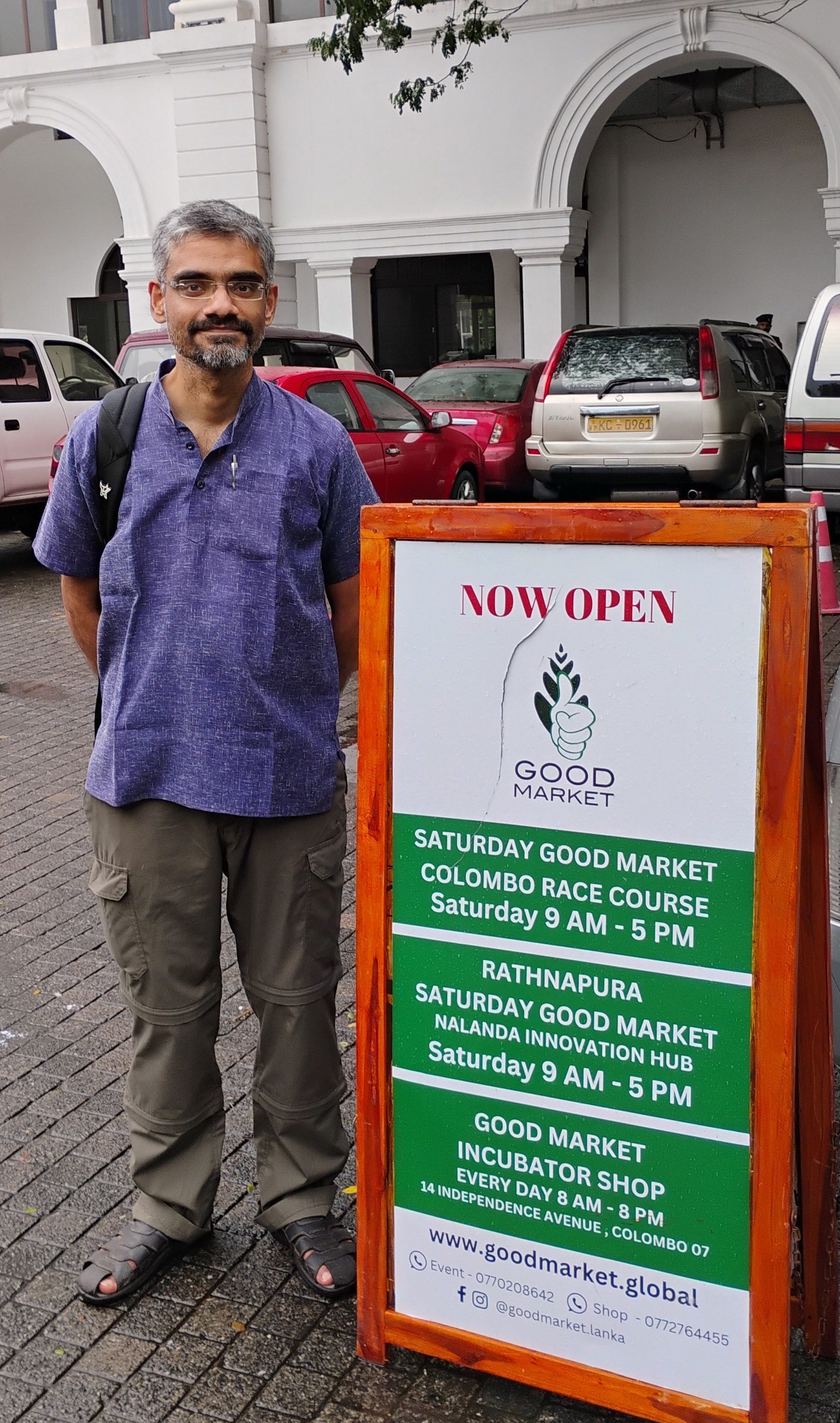
In countries like India, Digital Public Commons called India Stack, is helping overcome market access problems by offering marginalized and informal actors digital identity, digital payments, and digital market visibility for their products and services. Similarly, Digital Commons initiatives like Good Market in Sri Lanka are creating a global marketplace for entrepreneurs from remote locations and marginalized communities. Such efforts also empower communities to locally solve SDG challenges, which ensures better embeddedness and ownership of the solutions.
The problems of data are twofold: (a) problems of awareness; and (b) problems of valuation.
Evidence suggests that there is wide variation across countries when it comes to awareness and cognizance of the SDGs. For example, the Global Entrepreneurship Monitor 2023/24 report suggests that in countries like Italy and Norway, around 50% of the entrepreneurs are aware of the SDGs, while in countries like Morocco and Ecuador, it is less than 5%. Even in policy circles, in-depth awareness and deep engagement with the SDGs are just becoming mainstream, particularly with the social and environmental targets. A textual analysis of leaders’ declarations across the 18 years of G20 summits showcases this, wherein we see that in initial G20 declarations, the commitments were almost entirely focused on economic SDG targets, while it is only in the last couple of years that social and environmental targets have gained more prominence. The 2023 New Delhi declaration made the most commitments towards it, at nearly 75%.
The second data problem is about how we quantify social value. For example, we don’t have quantifiable answers to questions like how much value is in saving a spotted owl? OR how much value is in offering companionship to the elderly? While impact measurement approaches are improving, many aspects of social and environmental targets remain hard to quantify, which complicates entrepreneurs' efforts to engage with them through measurable goals and to communicate them to investors and other stakeholders.
Global verification mechanisms for SDG efforts could provide a globally validated definition and governance framework for SDG-based entrepreneurship. For instance, scaling up efforts like the People and Planet First verification from the Social Enterprise World Forum could help in this regard. Global data efforts, similar to the World Economic Forum's State of the Social Enterprise report, would help clarify the sector's state, gaps, and development needs.
Universities could solve the SDG awareness problem through a multi-step process. First, explicit inclusion of SDG components in the taught curriculum to build SDG Skills. Second, complement that with real-life project challenges of solving an SDG challenge, such as rural electrification in Rwanda or water management in Malawi, to build SDG Mindsets. Third, create a university commercialization pathway independent from technology spin-outs for Social Impact Spin-Outs. An early-stage effort towards this end happening in Scotland has created spin-outs in areas of climate litigation and sustainable futures.
The problems of governance are twofold: (a) problems of weak institutions; and (b) problems of power difference.
In countries with weak institutions, for example, when many people lack secure property rights, this hampers access to resources and markets for people who want to solve the SDG challenges. For example, in weak institutional environments, only larger microfinance organizations garner support from funders, as funders aim to mitigate risks given weak property rights. So, in such settings, smaller-scale efforts to solve the SDGs are going to be disadvantaged by a lack of funding support. Research also points out that founders are reluctant to make personal financial investments toward a social venture when the rule of law in a country is weak.
Entrepreneurs working on SDGs are also challenged by the inherent power differences and inequality within the community they operate in. For example, in Colombia, entrepreneurs working with waste pickers had to confront the power of elites, including large corporations, local authorities, and the media. These elites had restricted market access for the waste pickers by barring access to waste and silencing the voices of those who tried to speak out.
The support structures of policy and funding oftentimes involve hierarchical top-down governance where decisions and solutions are offered to people, rather than being a bottom-up process where solutions are co-created with people. Many national-level startup programs have followed a top-down approach, and evidence points to muted outcomes. Emerging research evidence, however, points to bottom-up collective action with a thrust on dialogue and multistakeholder participation to be particularly effective in navigating the governance problems of SDGs. For example, Open Healthcare Network began as a collective action effort by volunteers in response to COVID-19, and it has lived beyond its pandemic use case, developing and deploying its tools for intensive medical care in remote areas of India.
To accelerate our progress towards meeting the SDG targets by 2030, we must work on solving the Structure-Data-Governance problems. Digital commons, global data efforts by multilateral organizations, universities enhancing SDG awareness, and collective action by local communities hold key promise in this regard.
Sreevas Sahasranamam is a Professor at the Adam Smith Business School, University of Glasgow. His research examines the strategic and ecosystem enablers shaping innovation and start-ups addressing the UN Sustainable Development Goals (SDGs). He was recognized as a UK 40 Under 40 honouree in 2025, serves on the World Economic Forum’s Advisory Group on Social Entrepreneurship, and was an inaugural winner of the Management Publication of the Year Award (2024).
Thanks for reading Business Research Unpacked! This post is public so feel free to share it.
Comments
Nothing yet. Say the first thing.
Sign in to join the conversation.