

We’ve all been there. You’re having a good morning. Things are going well and feeling productive. And then you sit down for a quick lunch.
Then like clockwork, your focus starts to slip, eyelids start to feel heavy, head starts to nod, and you start crashing.
Most people blame the blood sugar crash after lunch for this, but that’s only a small part of the picture.
What’s interesting is that this “afternoon slump” is an almost universal phenomenon. Several animals, and even insects, experience the same dip. Even fruit flies have an afternoon siesta.
I was recently interviewed by GQ on why this happens, and what exactly to do about it. You can find the article here. Today I wanted to do even more of a deep-dive, with the exact protocols I have researched and found to be helpful.

Universally, no matter what people eat, they all still tend to get sleepy in the afternoon (this even tends to happen if people eat nothing and don’t pay attention to the time).
A lot of this seems to boil down to our circadian rhythms. Let’s start with a little bit of physiology. There are two specific processes that determine how awake you tend to feel at a certain time:
Process S (sleepiness): This is sleep pressure, and essentially continues to build throughout the day, the longer you stay awake.
Process C (circadian): This is your circadian rhythm, which runs on a ~24-hour cycle that peaks in alertness at different times, no matter how much you’ve slept. That’s why even if you pull an all-nighter, you still get a morning boost in alertness at around the time you typically wake up.
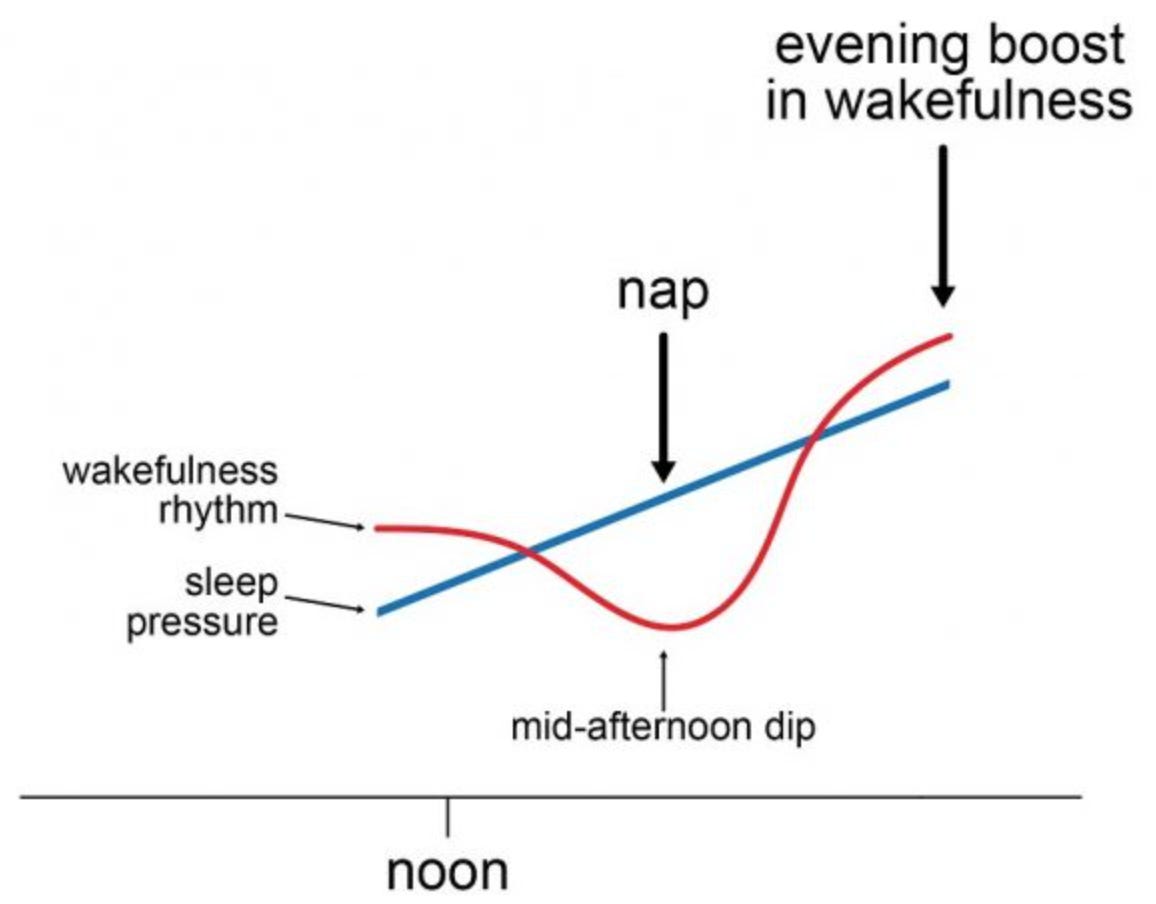
The afternoon slump is when process S and process C converge into a sort of perfect combination of sleepiness. While process S has been accumulating for around 8 hours, process C tends to succumb to a natural afternoon dip in alertness before ramping up again in the evening.
So now that we know how it works, let’s go over the evidence on how to combat it.
Comments
Nothing yet. Say the first thing.
Sign in to join the conversation.