
When I was in medical school, most of my time was spent learning the common things in medicine, like how to treat a heart attack, manage diabetes, work up cancer, etc.
But exams, and life, also teach you that it’s important to know the rare signs as well.
Here’s a running list of the most bizarre ways I’ve seen and studied cancer present in people. As a general disclaimer, having one of these does not guarantee that you have cancer, but it may be a warning sign worth checking with your doctor.
Here are some that stuck with me most from my training.
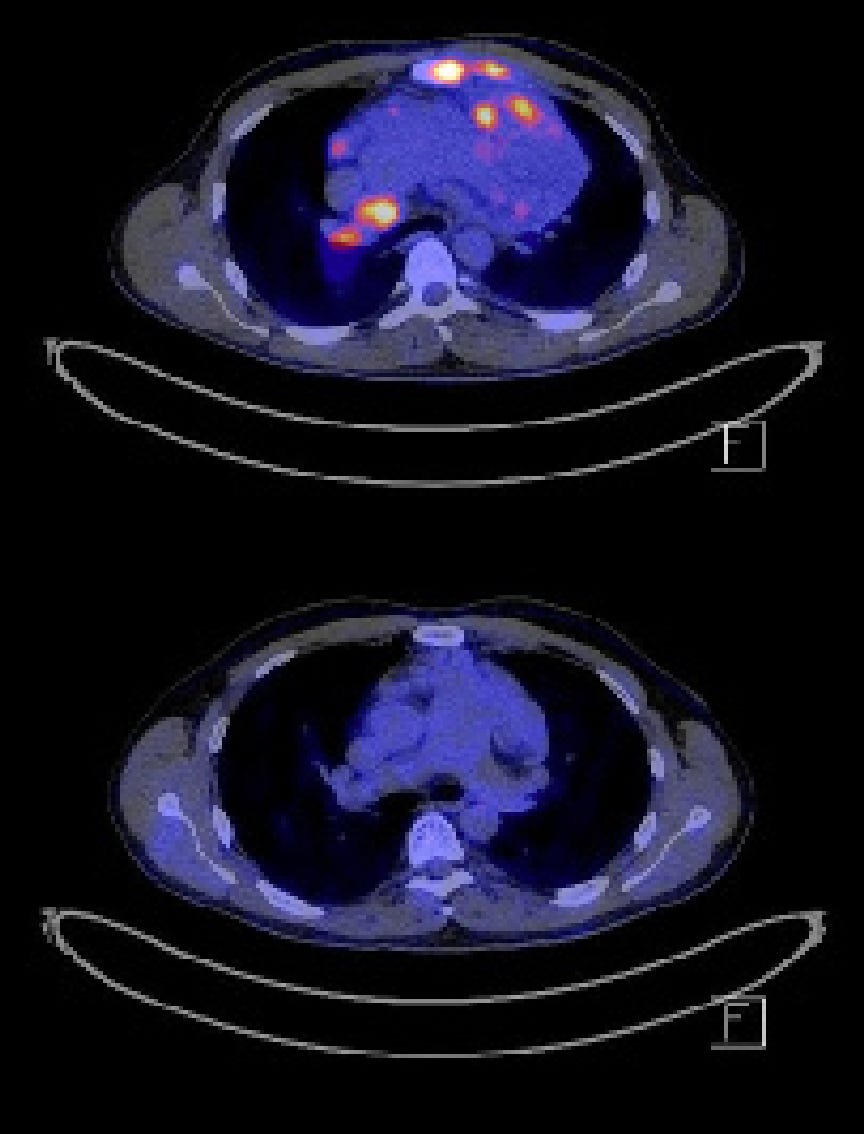
This one almost seems made up, but I’ve seen it myself. In some cases of Hodgkin lymphoma, alcohol can trigger pain at the site of a cancerous lymph node.
The above image is from a real case report involving a 32-year-old man who kept developing chest pain a few minutes after even small amounts of alcohol. About six weeks later, he developed a lesion between his ribs which triggered a workup and he was diagnosed with Hodgkin lymphoma.
The scan above is from his case and shows bulky cancerous mediastinal lymph nodes (top image). Thankfully, they responded to treatment (bottom image).
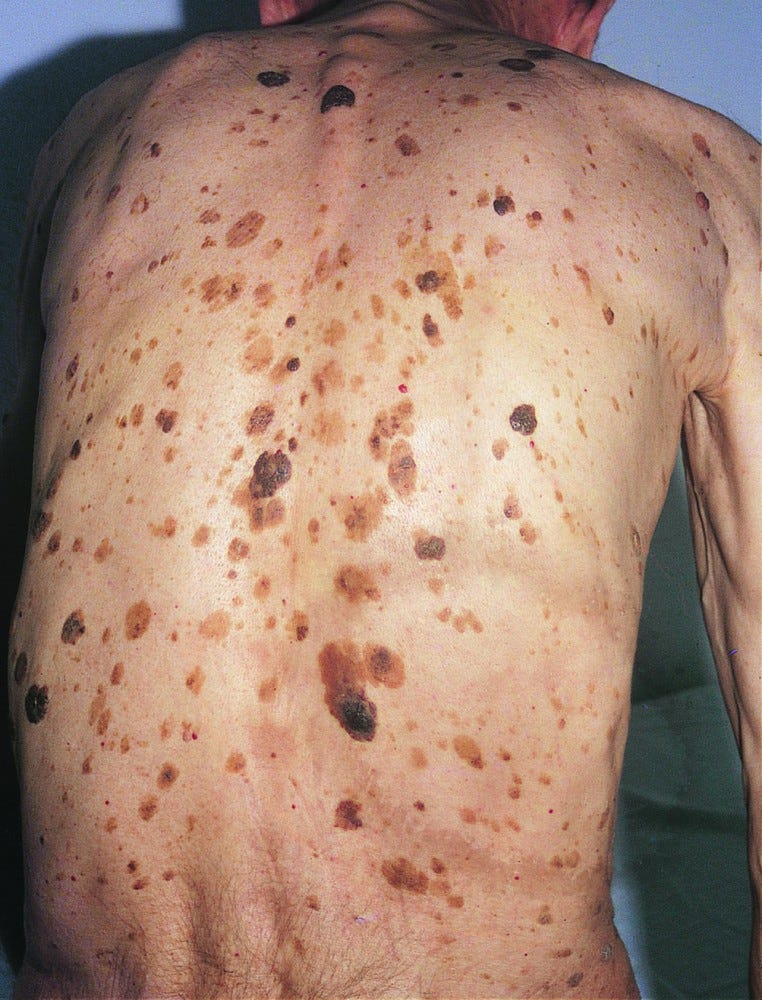
Most people are familiar with seborrheic keratoses, which are classically described as waxy, “stuck-on” skin growths.
In certain gastrointestinal and other cancers, there can be a massive eruption of many of these at once. This is known as the Leser-Trélat sign.
I should note that this one is slightly more controversial these days, but it still shows up in medical textbooks and exams.
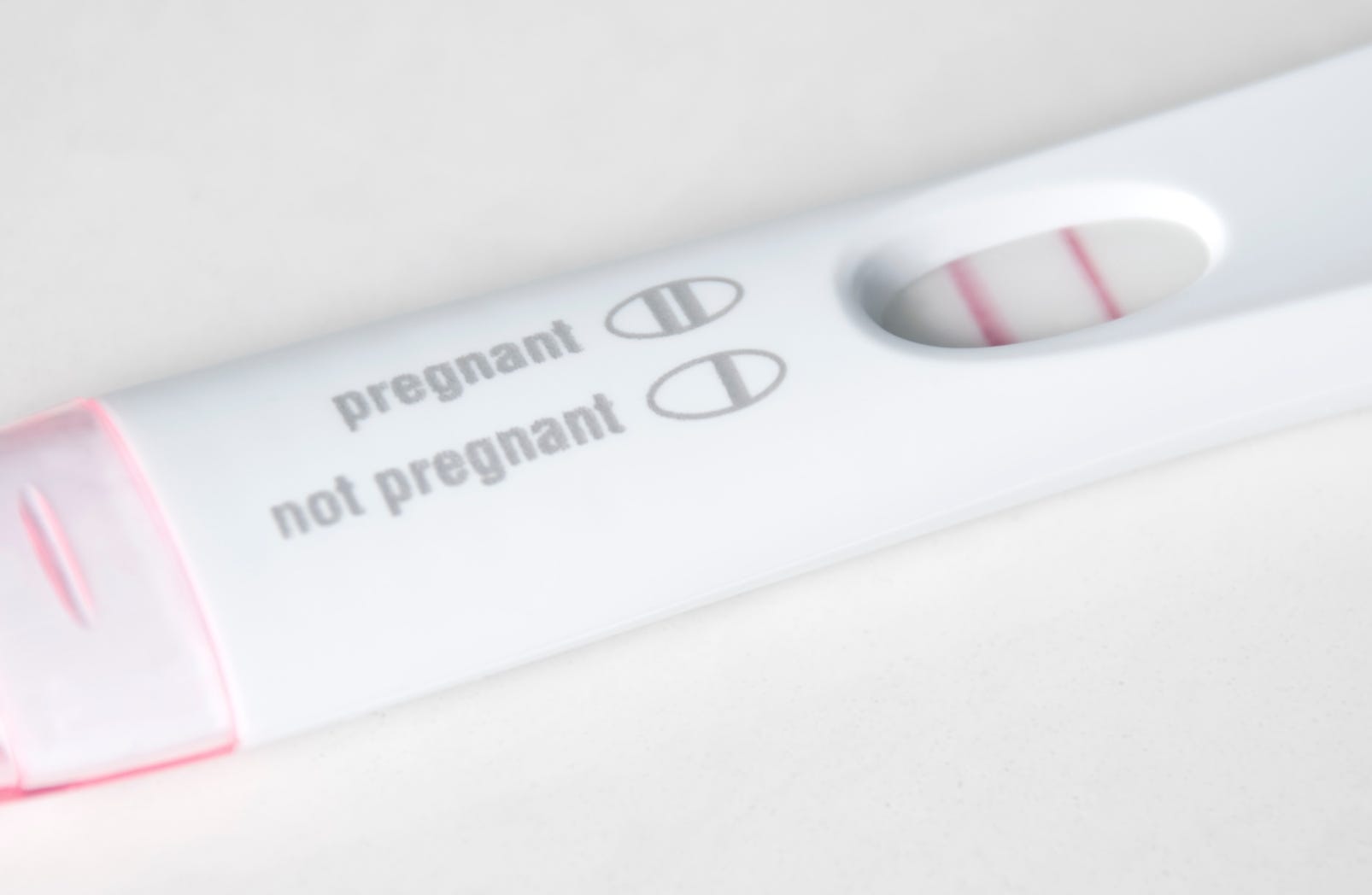
The way pregnancy tests work is by detecting hCG, which is produced by the developing placenta. While it is not normally present at high levels in a male body, certain testicular cancers can actually produce enough hCG to make a pregnancy test positive (this is not the case for all testicular cancers, only certain types).
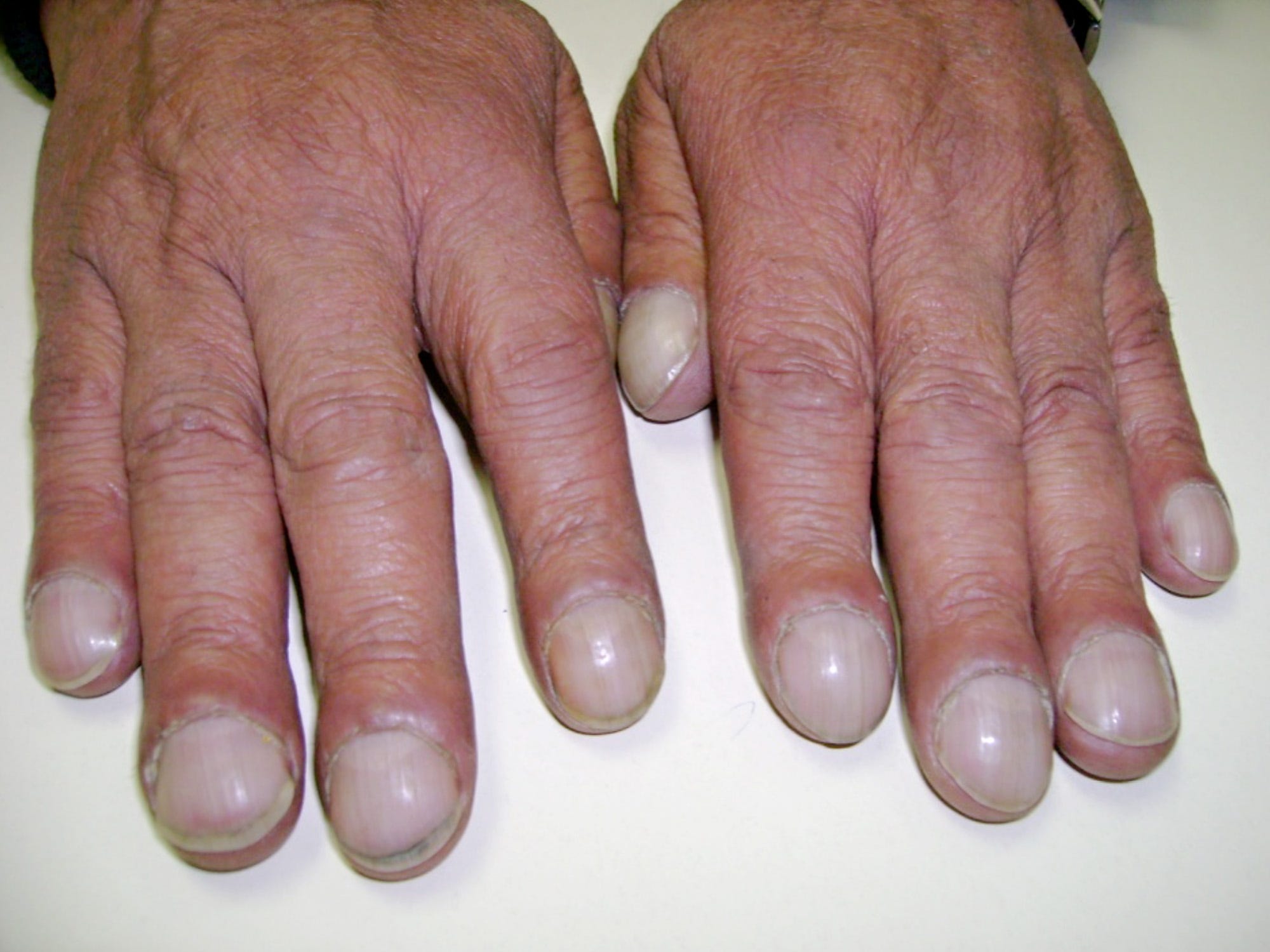
Clubbing is one of medicine’s oldest physical signs, described as far back as Hippocrates.
The fingertips enlarge and the nails become increasingly curved and convex. Why it happens remains not entirely clear.
There are many causes of clubbing, but new unexplained clubbing can be a clue to lung disease, including cancer.
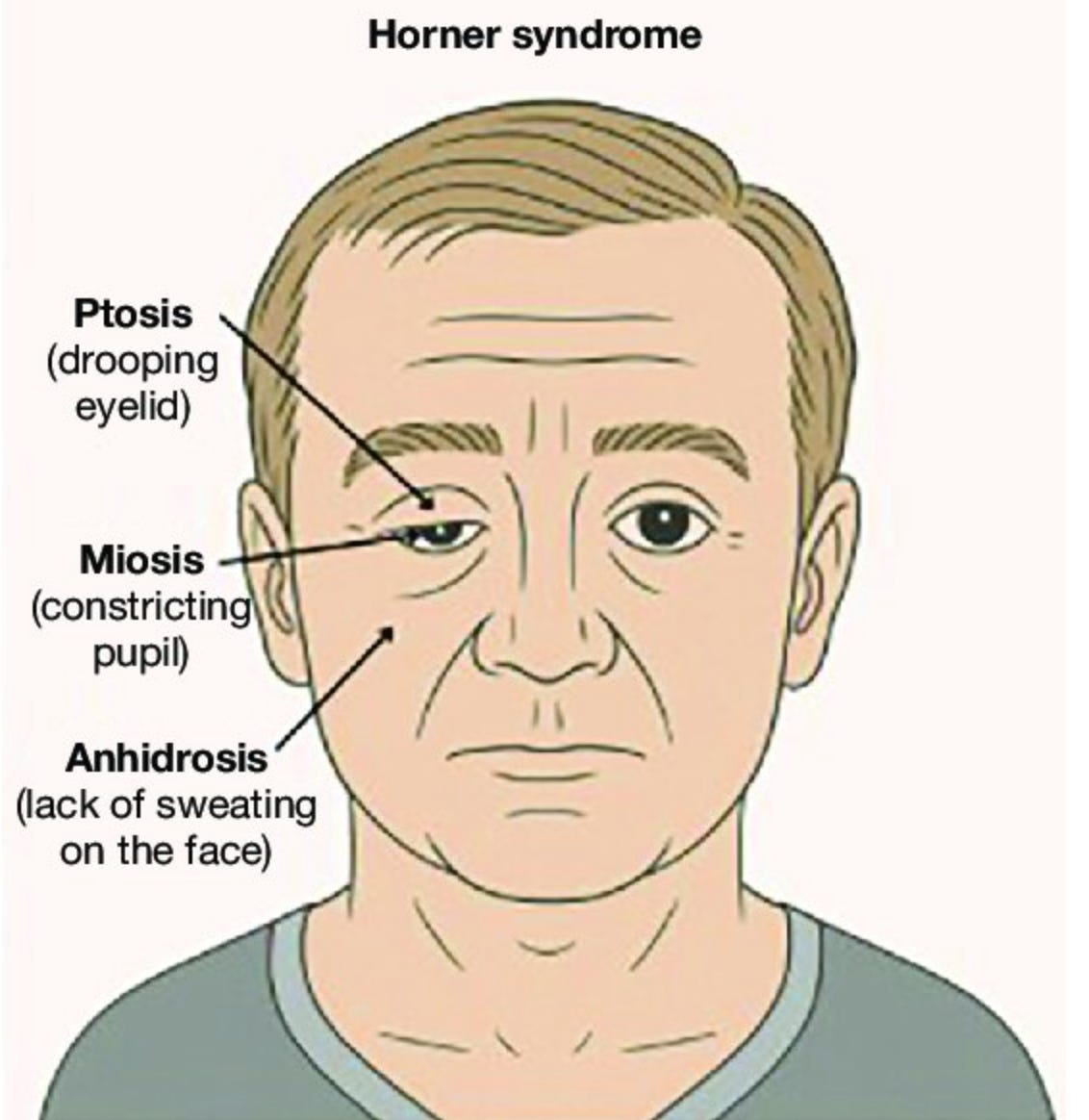
Horner syndrome is a classic sign in medicine characterized by three key features: a droopy eyelid, a constricted pupil, and reduced sweating (ptosis, miosis, and anhidrosis) on one half of the face.
This is a sign that the nerve supply to one half of the face is not working properly. Classically, a large cancer growing in the lung, such as a Pancoast tumor, can disrupt this nerve pathway and cause it to malfunction in this pattern. It is also not uncommon for people to have arm and shoulder pain.
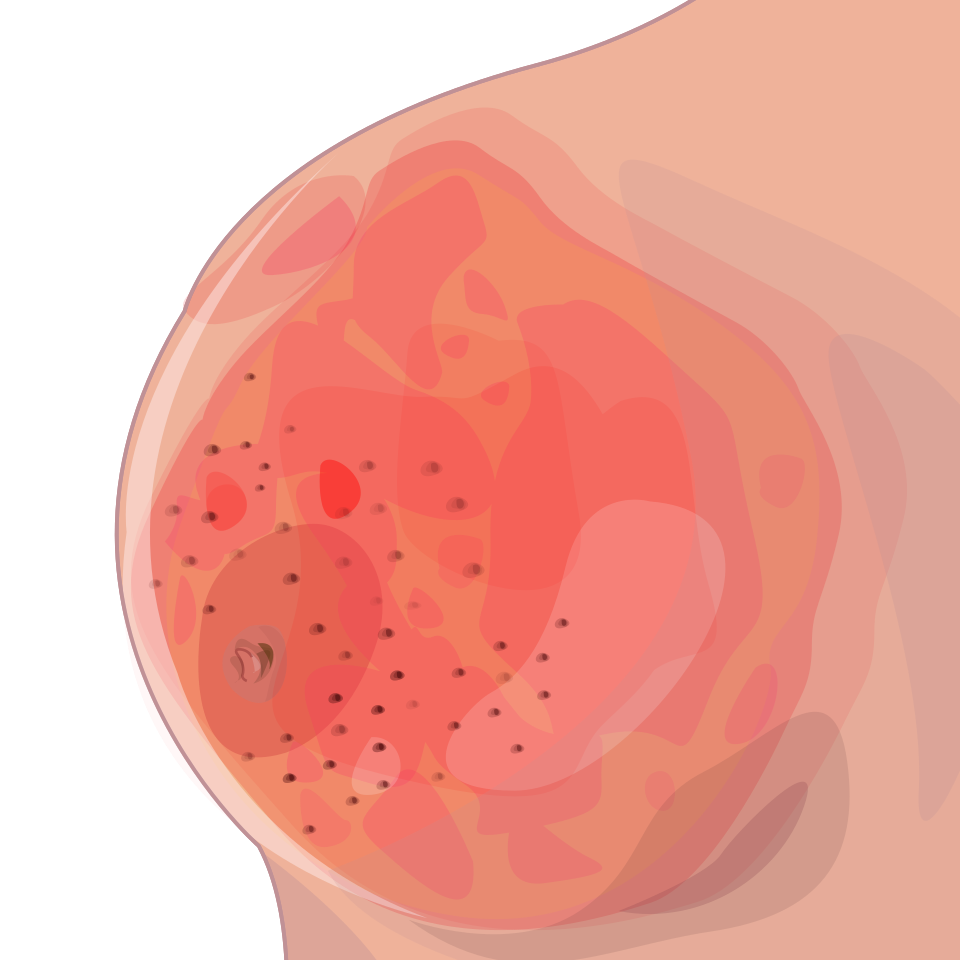
Peau d’orange is French for “orange peel skin.”
In inflammatory breast cancer, cancer cells can block lymphatic drainage from the breast. This essentially causes fluid to back up and can create a characteristic orange-peel appearance of the skin. The breast can also become red, hot, and swollen.
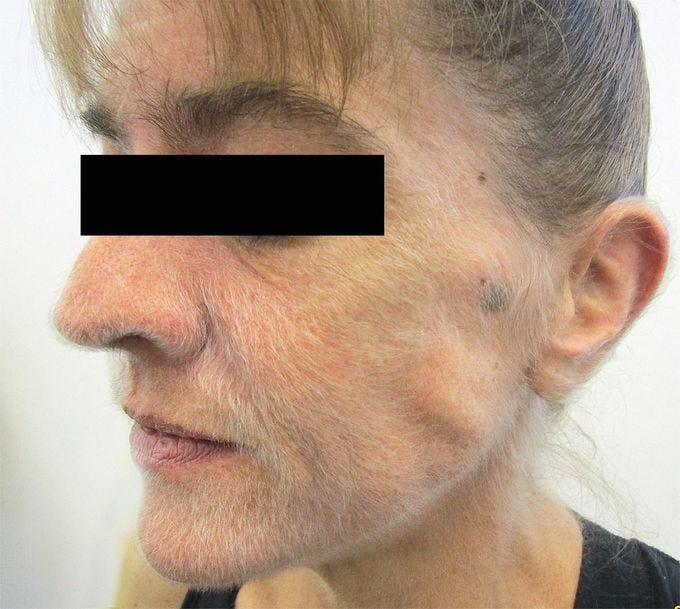
The rapid growth of fine, long, non-pigmented hair can sometimes be a sign of acquired hypertrichosis lanuginosa.
This is very rare, and the exact mechanism is unknown, but it can be a sign of a malignancy that is likely sending hair-growth signals throughout the body.
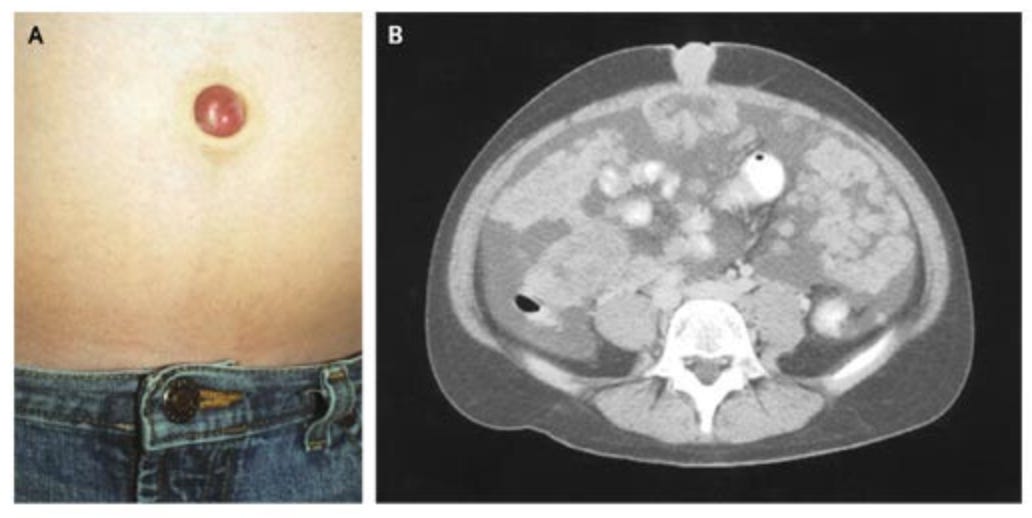
A new lump in the belly button can be a sign of metastatic cancer that has spread from somewhere, often the gastrointestinal or gynecologic system.
This association was actually recognized by Sister Mary Joseph Dempsey, who was working as a surgical assistant and noticed it in patients undergoing abdominal surgery.
Thanks for reading. If you found this helpful, a like or a restack directs others to this.
This newsletter is for educational purposes only and is not medical advice. Always seek your own health-care provider for guidance before using this information if you have health conditions.
No posts
Comments
Nothing yet. Say the first thing.
Sign in to join the conversation.