

We’ve all been taught to wash our hands. They’re in constant contact with germs, dirt, and every surface we touch. One of the main ways we get sick is when we touch our mouth, nose, and eyes with hands that deliver these bugs there for us. So if you think about it, hand washing was never really about the hands. It’s about what the hands reach.
Which raises an important question. The nose and mouth is where most respiratory viruses land first. The common cold, COVID, RSV, they all typically take hold on the mucous membranes of the nose and mouth, sometimes the eyes, and start replicating there before you feel anything.
So if the whole point of washing our hands is to keep viruses out of the nose and mouth, why do we stop at the hands?
Here are some important reasons nasal saline lavage deserves a place beside hand washing.
Colds get shorter and spread less
In a fascinating (but small) randomized trial, adults were instructed to start rinsing and gargling with salt water within 48 hours of a cold. The results were remarkable:
Colds recovered on average 1.9 days faster
People used 36% less over-the-counter medications
Spread of the virus between household contacts was reduced by 35%
The reduced transmission is incredible and makes mechanistic sense. If there’s less virus in your nose, it’s less likely to spread to others and therefore less likely to get others sick. So you’re actually doing other people in your house a favor.
What about long term use?
Another study instructed ~14,000 adults to use nasal sprays when they started to feel a cold coming on or in situations they were likely to get sick. Then they tracked them to monitor the rate of infections. Average total days sick was significantly reduced from ~8.2 days in the usual care group to ~6.4 days on average in the nasal spray group.
So how does it actually work?
1. It physically washes out bad stuff
This is the intuitive mechanism. Rinsing out the nasal passageway removes germs, pollen, and other particles. Even more importantly, you might be washing out inflammatory cells causing problems.
In a study of 30 patients with allergic rhinitis, nasal saline irrigation reduced markers of inflammation as early as 30 minutes. It has been consistently useful for allergies across studies, with one meta-analysis demonstrating an average 28% reduction in symptoms, 62% reduction in medication use, and 28% improvement in quality of life.
2. It might feeds your nose’s own bleach factory
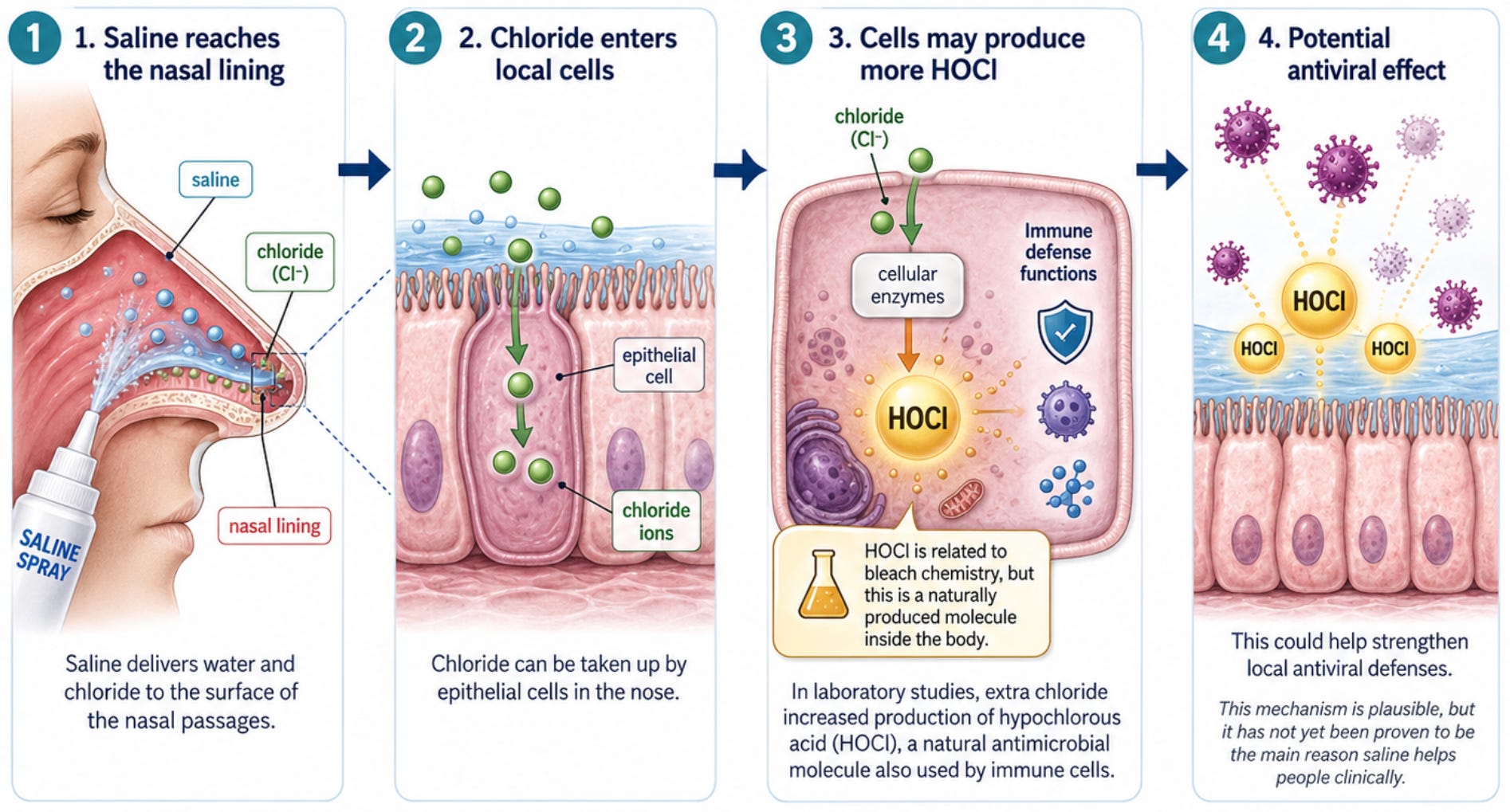
This is one of the most interesting possible mechanisms.
One way your immune cells kill microbes is by producing hypochlorous acid, which is similar to the active compound in household bleach.
A breaking study in 2018 identified that cells in the body are, in fact, able to make hypochlorous acid, which has antiviral properties, and they make more of it when they’re provided with salt.
So the chloride itself from the nasal rinsing may serve as a building block to the body to help fight off viruses. However, it’s worth mentioning that these studies are still from the lab, and we need more experimental human evidence.
3. It speeds up airway clearance

Your airway is lined with cilia, which are microscopic hairs that beat in coordinated waves to sweep mucus and particles out of the lungs.
Illness and inflammation slow it down. Saline seems to speed it back up. In one laboratory study, normal saline improved clearance time by ~24% and hypertonic saline by ~40%. While this might not directly translate to viruses, the mechanism fits.
Faster clearance means less time for a virus sitting in your nose to replicate and spread.
Options to choose from
There are three main ways to use nasal saline rinses:
Neti pot/squeeze bottle
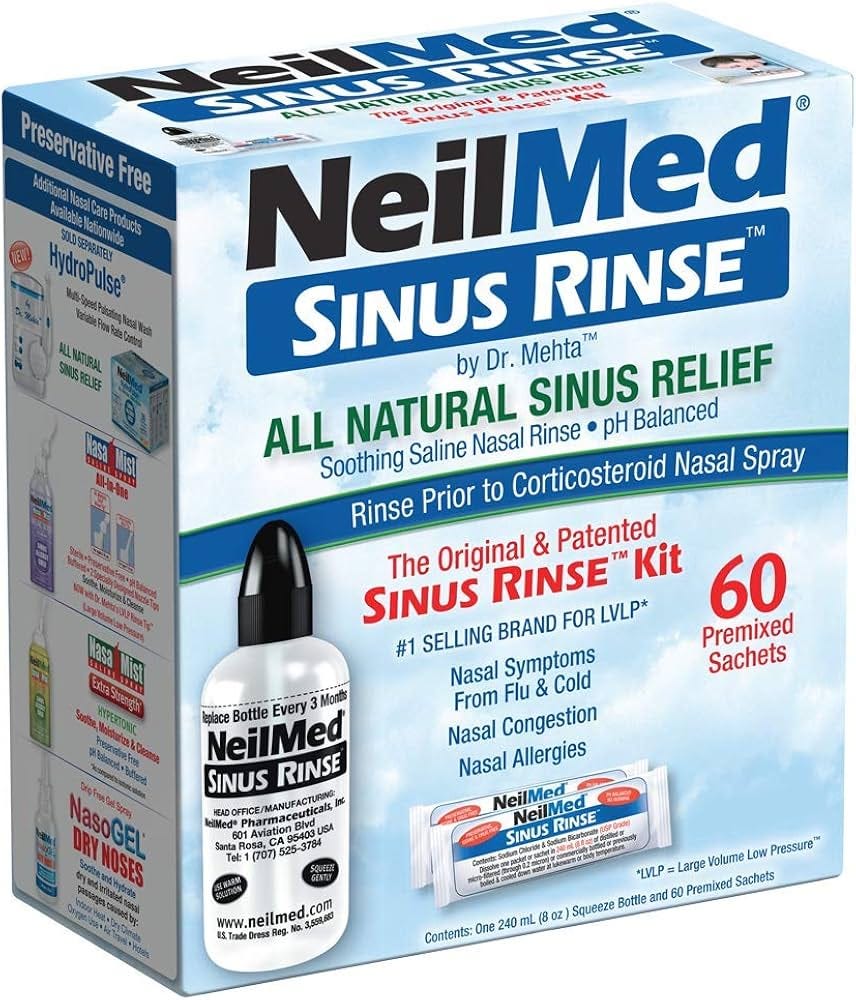
This is the cheapest and most tried and true method. In a perfect world, I would suggest using this twice a day, but it does take a bit of maintenance. I currently use it mostly when I am sick, have allergies, or know I had an exposure to someone sick.
Saline sprays
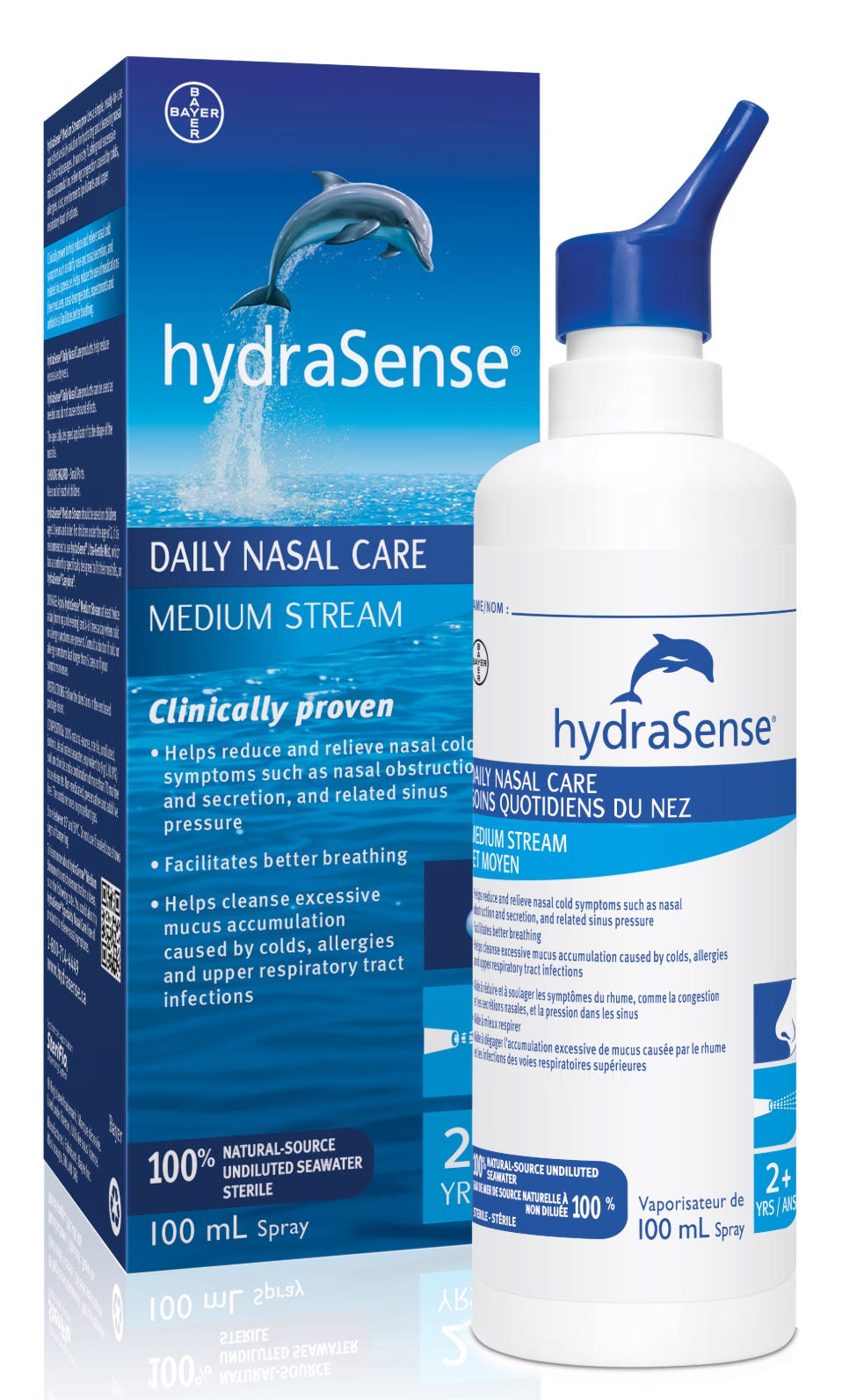
You can also get pre-compressed saline in bottles, or simply a saline spray. I find these really great for traveling or when I’m busy, but they are expensive and don’t clean the entire nasal passage. I usually just keep one in the shower and use it after work to rinse out my nose. I’ve found it has really reduced the amount of times I get sick and my spring allergies.
Powered irrigators
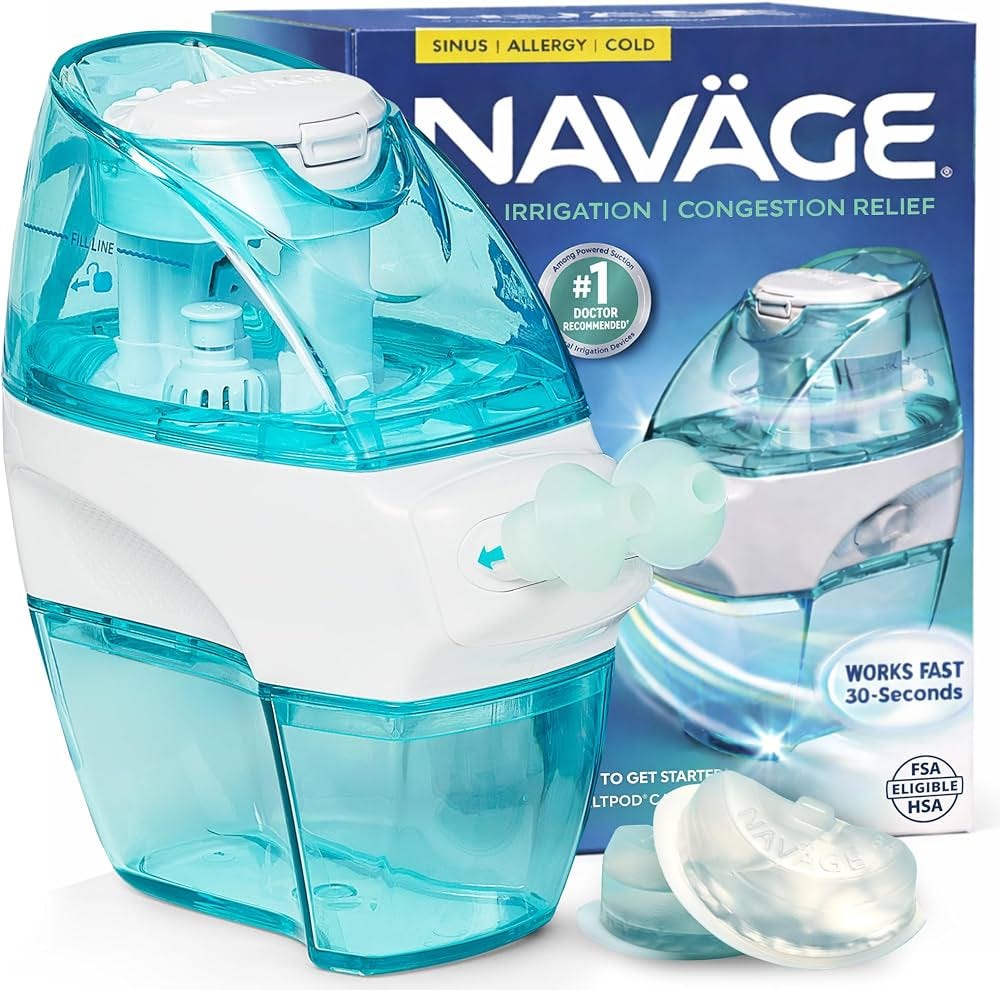
You can also get electrically powered nasal irrigators if you have the money. I have never been able to justify the cost, and use the other two methods above myself.
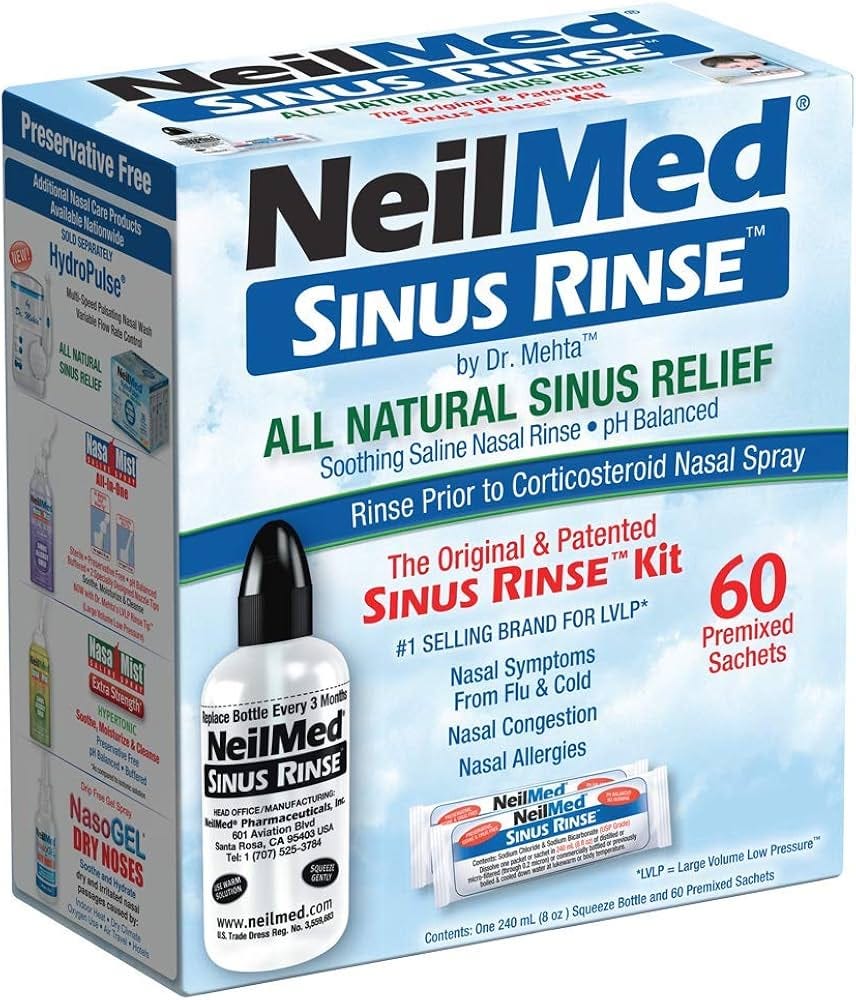
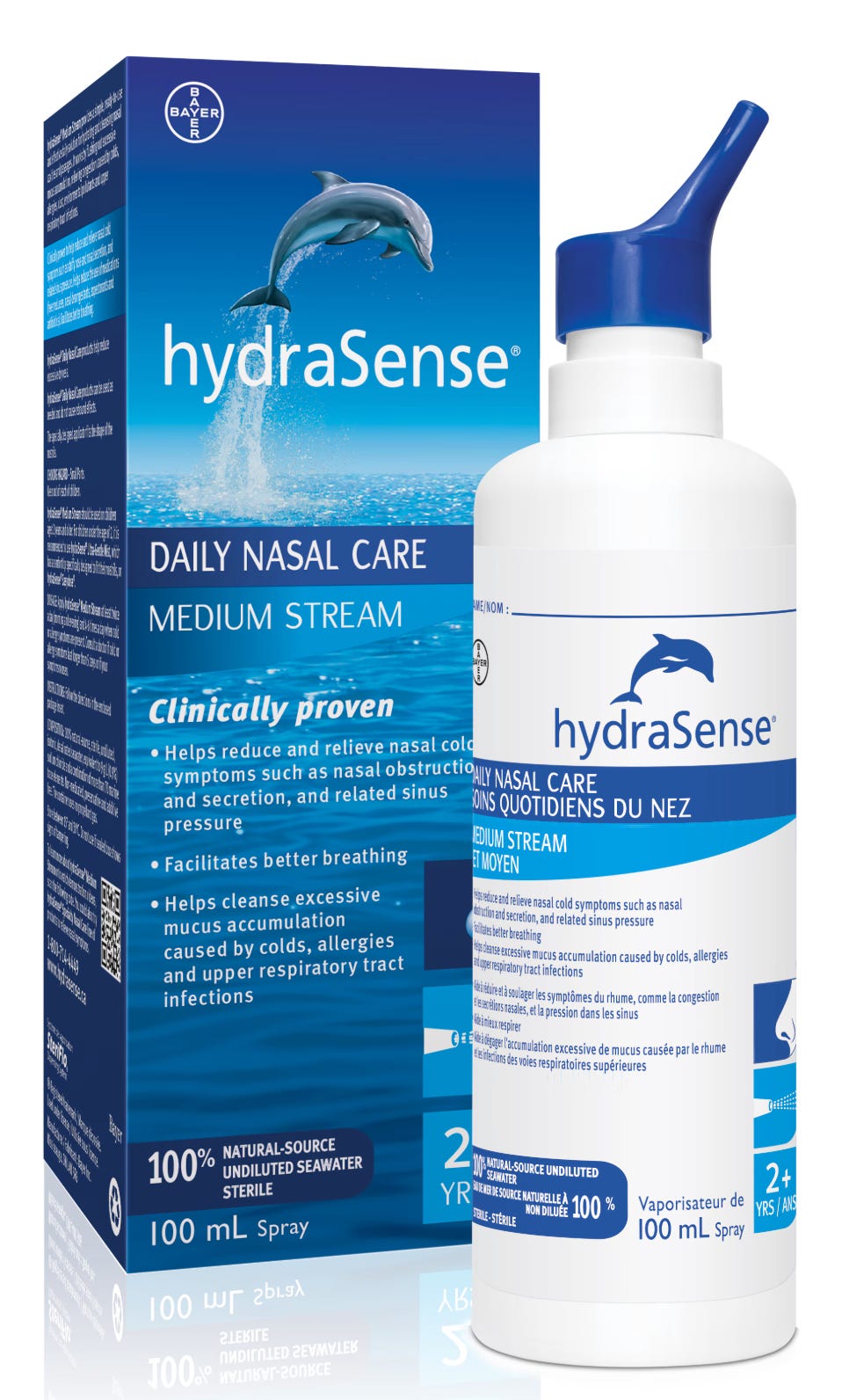
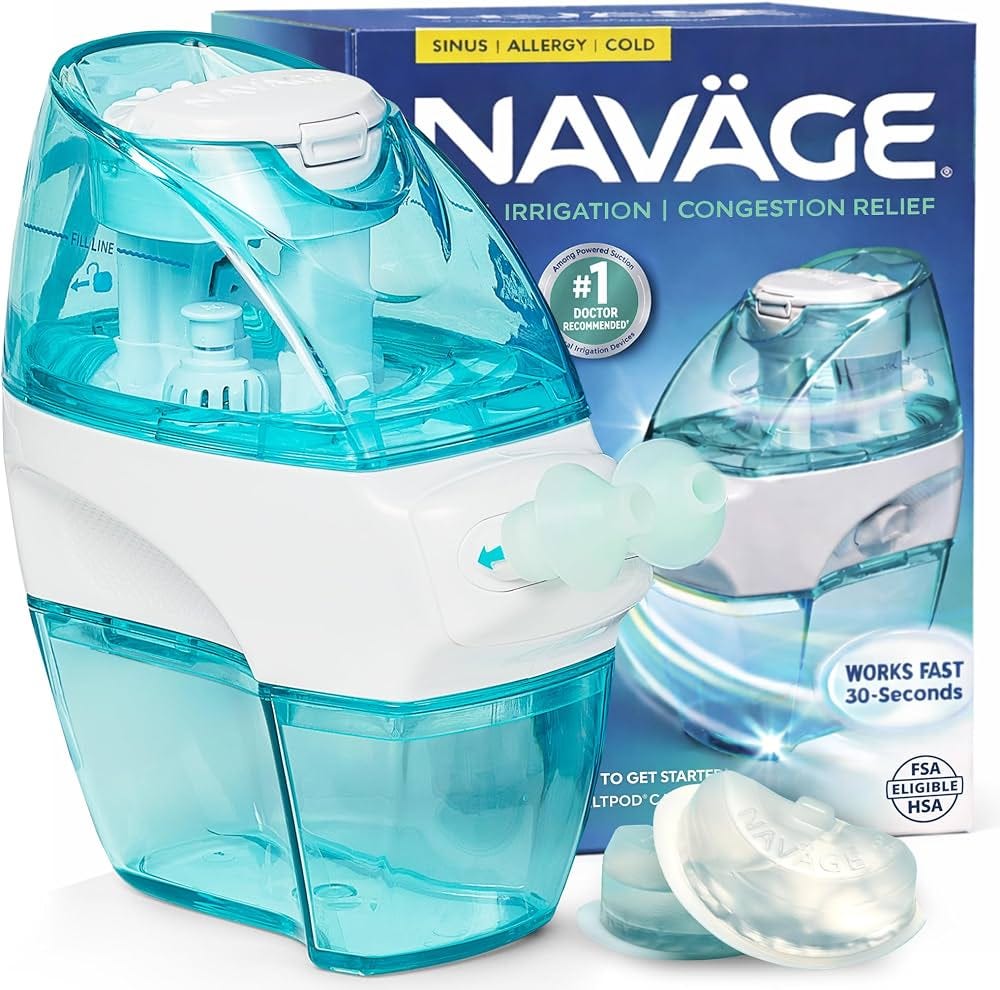
In general, I would say start with the compressed spray because it’s very easy. But if you have time, or you’re noticing spring allergies, then an investment into the Neti pot or squeeze bottle would be worth it.
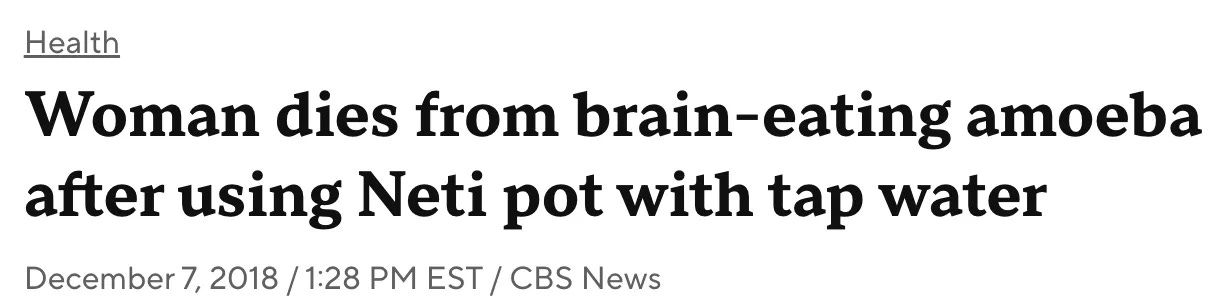
Now here’s the one golden rule of nasal saline lavage: NEVER use tap water. There’s a very low, but real risk that certain organisms can live in tap water, and one woman did die from a brain infection from this. Distilled water is typically very cheap and should be the only thing you ever use.
I hope you found this interesting. Here are some other similar posts:
Thanks for reading. If you found this helpful, a like or a restack directs others to this.
This newsletter is for educational purposes only and is not medical advice. Always seek your own health-care provider for guidance before using this information if you have health conditions.
Comments
Nothing yet. Say the first thing.
Sign in to join the conversation.