
I first tried creatine in my early twenties. A friend from the gym convinced me.
Within weeks, the difference was obvious. My bench, squat, and deadlift all jumped. Recovery felt easier. I put on visible muscle without changing anything else.
Like most people, I filed it away as a great strength supplement and didn’t think much beyond that.
Then medical residency happened.
Overnight shifts. 26-hour calls. Cognitive demands on almost no sleep. I started digging into the research on how to optimize my brain under sleep-deprived conditions, and creatine kept showing up. The findings shocked me. It wasn’t just a gym supplement.
I wrote about it in Creatine for the Sleep-Deprived Brain. But the deeper I kept digging, the more applications appeared. Blood sugar. Mood. Bone. Vascular function. Some are well-established. Others are early signals worth watching. All of them sit on top of one of the cheapest, most-studied supplements available.
How it works (30 seconds)
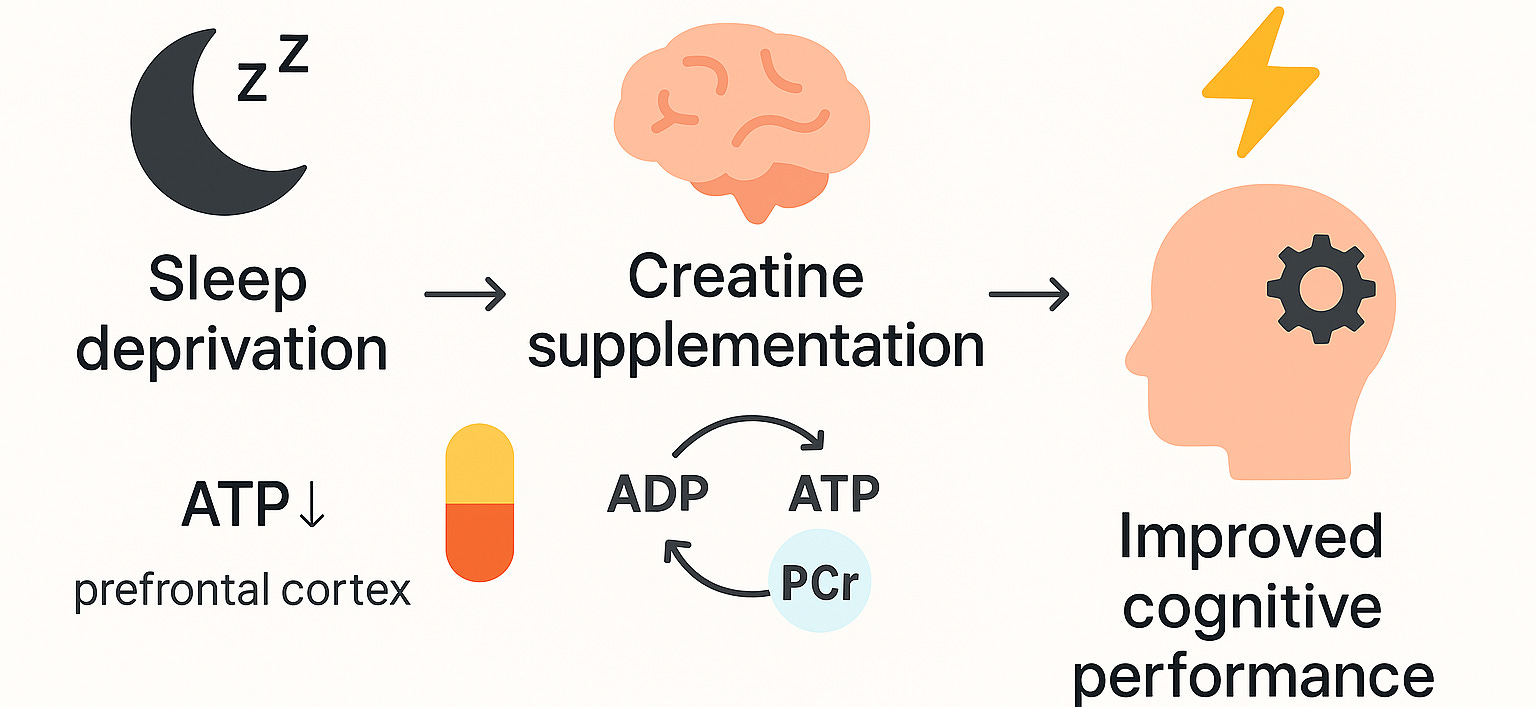
Your body uses ATP for energy. Creatine helps regenerate ATP through the phosphocreatine system, especially in tissues with high demand like muscle and brain. You make about 1 gram a day and get most from meat. Supplementation tops off the tank and provides more available rapid energy.
1. More muscle and strength
This is one of the most studied and beneficial supplement for muscle and strength gains.
Two large reviews cover the basics. One pooled 60 trials on lower-body lifts and found consistent gains in squat, leg press, and overall quadriceps strength (Lanhers et al., 2015). The other pooled 53 trials on upper-body lifts and found the same for bench press and chest press (Lanhers et al., 2017). The effect held across age, sex, training status, dose, and duration.
Creatine plus resistance training added about 1.1 kg more lean body mass than placebo plus lifting, with the benefit consistent across young, middle-aged, and older adults (Delpino et al., 2022).
If you lift, creatine works. Very few supplements have this level of evidence.
2. Protects the brain under sleep deprivation
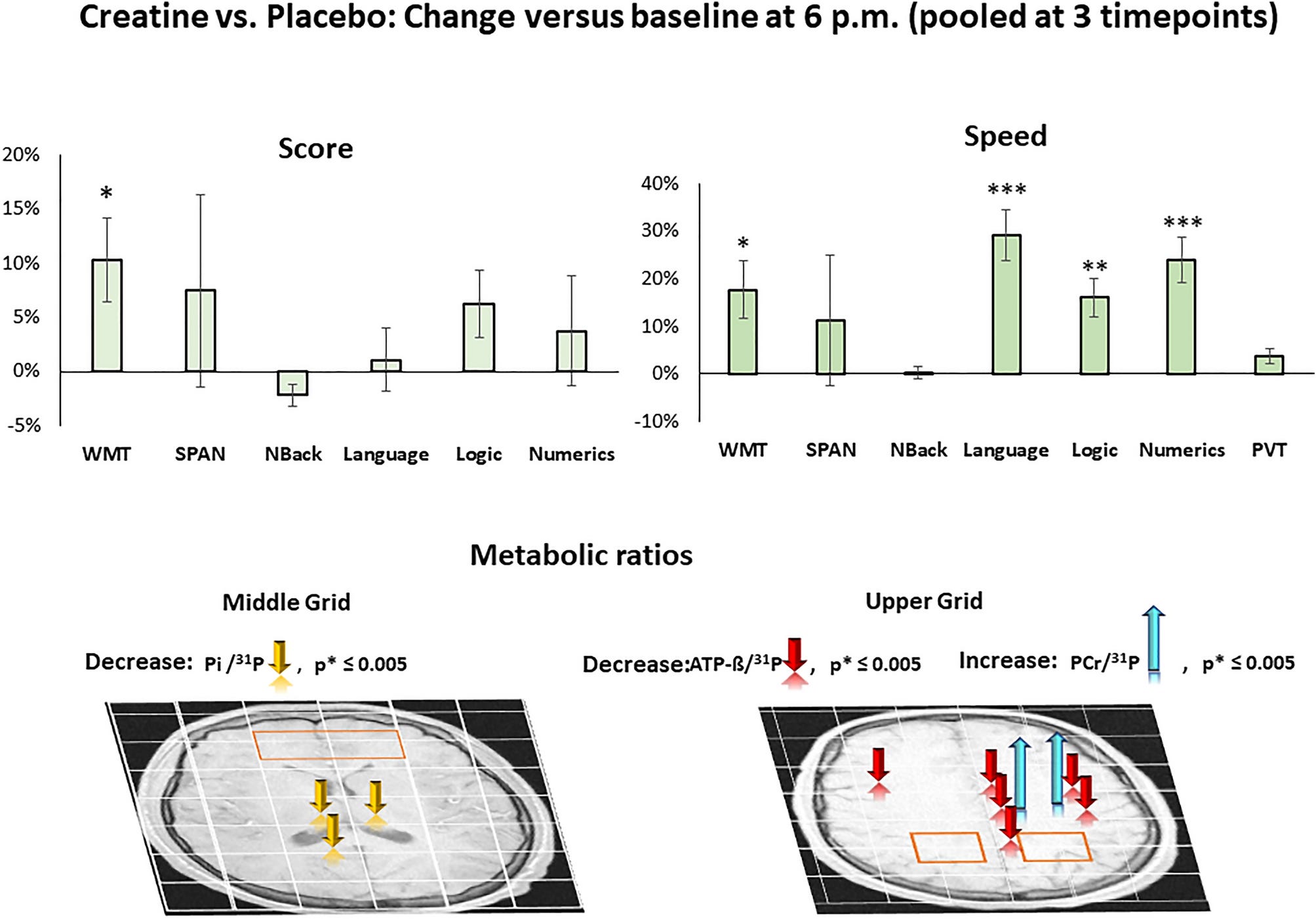
In an incredible study, a single high dose of creatine (0.35 g/kg, about 25g for a 70kg adult) didn’t just blunt the cognitive toll of sleep deprivation. Some measures actually exceeded the well-rested baseline.
Word memory improved by 10%. Processing speed jumped across the board: 29% on language tasks, 24% on numeric tasks, and 16% on logic tasks. Brain energy metabolites and cognitive performance stayed elevated for up to 7.5 hours (Gordji-Nejad et al., 2024).
Sleep is still the actual intervention. But under metabolic stress, creatine seems to help buffer brain energy demand.
I did a deep dive on creatine and sleep deprivation as a guest on the Psychiatry and Psychotherapy Podcast, and helped put together the comprehensive show notes here:
3. Improves memory and processing speed
A 2024 review pooled 16 trials and roughly 500 participants on creatine and cognition. There was consistent evidence for improved memory, attention, and information processing speed (Xu et al., 2024).
The effect sizes are modest, not transformative. But for a supplement this cheap, safe, and easy to take daily, even small gains are worth it. Compounded over years, they add up.
4. Preserves muscle during immobilization
A small 2009 study put young men in arm casts for a week. The creatine group lost only 4% of strength compared to 22% in the placebo group, and 10% of endurance compared to 43% (Johnston et al., 2009).
This is my go-to recommendation when a friend or family member gets injured. It’s cheap, low-risk, and may help preserve strength while they heal.
The findings haven’t been replicated in larger trials. But for many healthy adults, creatine is low-cost, generally well-tolerated, and reasonable to consider given minimal other options.
5. Improves blood sugar in type 2 diabetes
In a 12-week trial, adults with type 2 diabetes on metformin who added creatine to their exercise routine dropped their HbA1c from 7.4% to 6.4%. This is a huge change and rivals first-line medications (Gualano et al., 2011).
Important caveat: this was creatine plus exercise, not creatine alone. It works as an add-on to training, not a replacement for it. I wrote a full deep dive on this here:
6. Enhances depression treatment
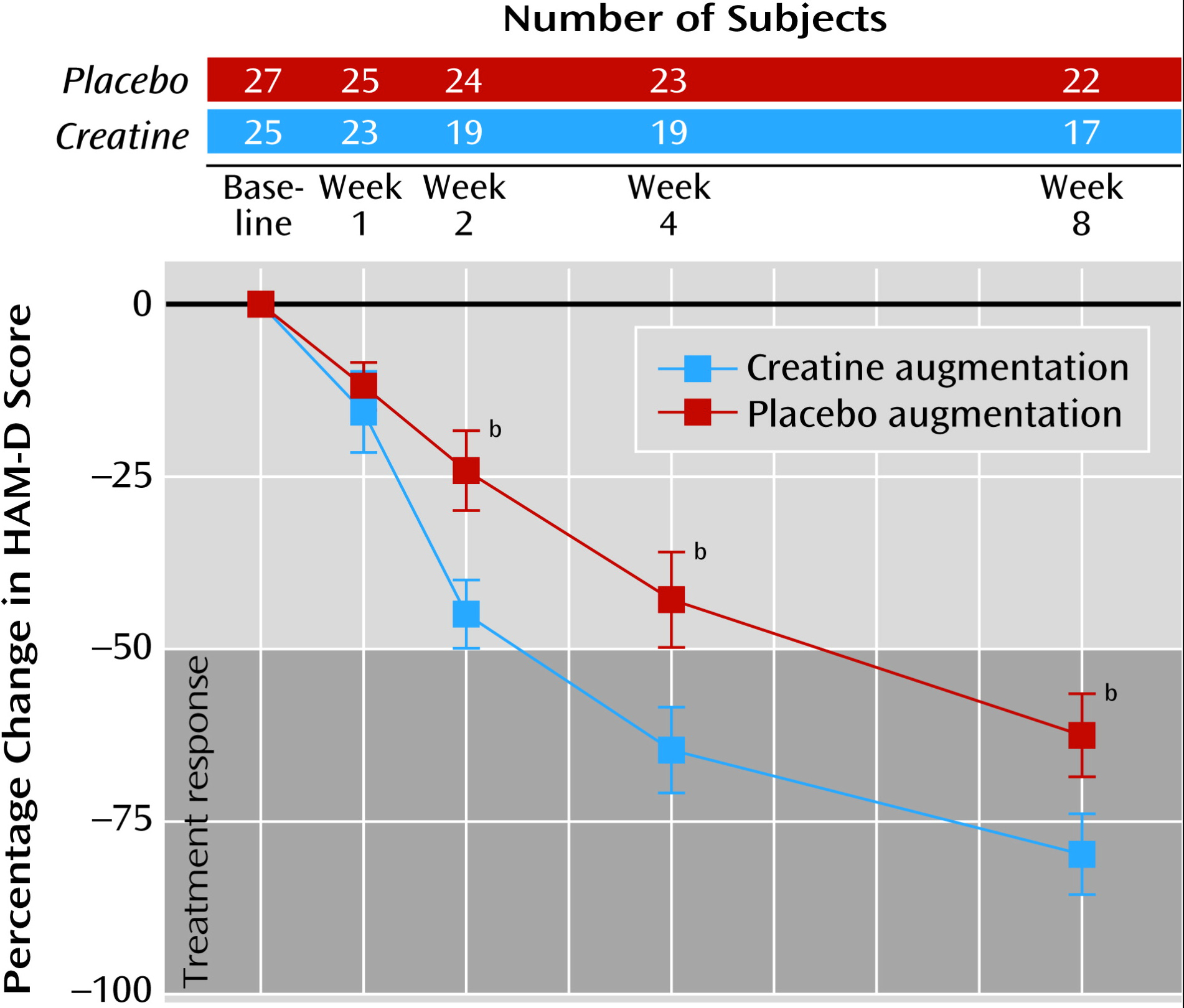
In a trial of 52 women with major depression already taking an SSRI, adding creatine led to faster and greater improvement by week 2, sustained through week 8 (Lyoo et al., 2012).
This is add-on territory, not standalone treatment. People with a bipolar history should not self-start creatine for mood without talking to their clinician first.
7. May support bone health
In one 12-week trial, older men who did resistance training plus creatine gained 3.2% in arm bone density. The placebo group lost 1% (Chilibeck et al., 2005).
A longer 12-month follow-up trial in older men didn’t replicate the density gains. There was no overall difference between creatine and placebo, though a trend toward improved femoral neck strength favored creatine (p = 0.061) (Candow et al., 2021).
Evidence is mixed, but still some signal of benefit. Given the strong safety profile and the other reasons to take it, bone health is a reasonable possible bonus.
8. Emerging signal for vascular and metabolic health
A small 12-person randomized crossover pilot in sedentary older adults found that 4 weeks of creatine improved several vascular markers, including flow-mediated dilation and a ~62% increase in microvascular reperfusion rate, along with reductions in fasting glucose and triglycerides (Clarke et al., 2024).
Too early to draw firm conclusions, but the data is intriguing.
9. Excellent safety profile
Creatine has one of the strongest safety records of any supplement studied. The International Society of Sports Nutrition reports that doses up to 30g/day for up to 5 years have been safe and well-tolerated in healthy individuals (Kreider et al., 2017).
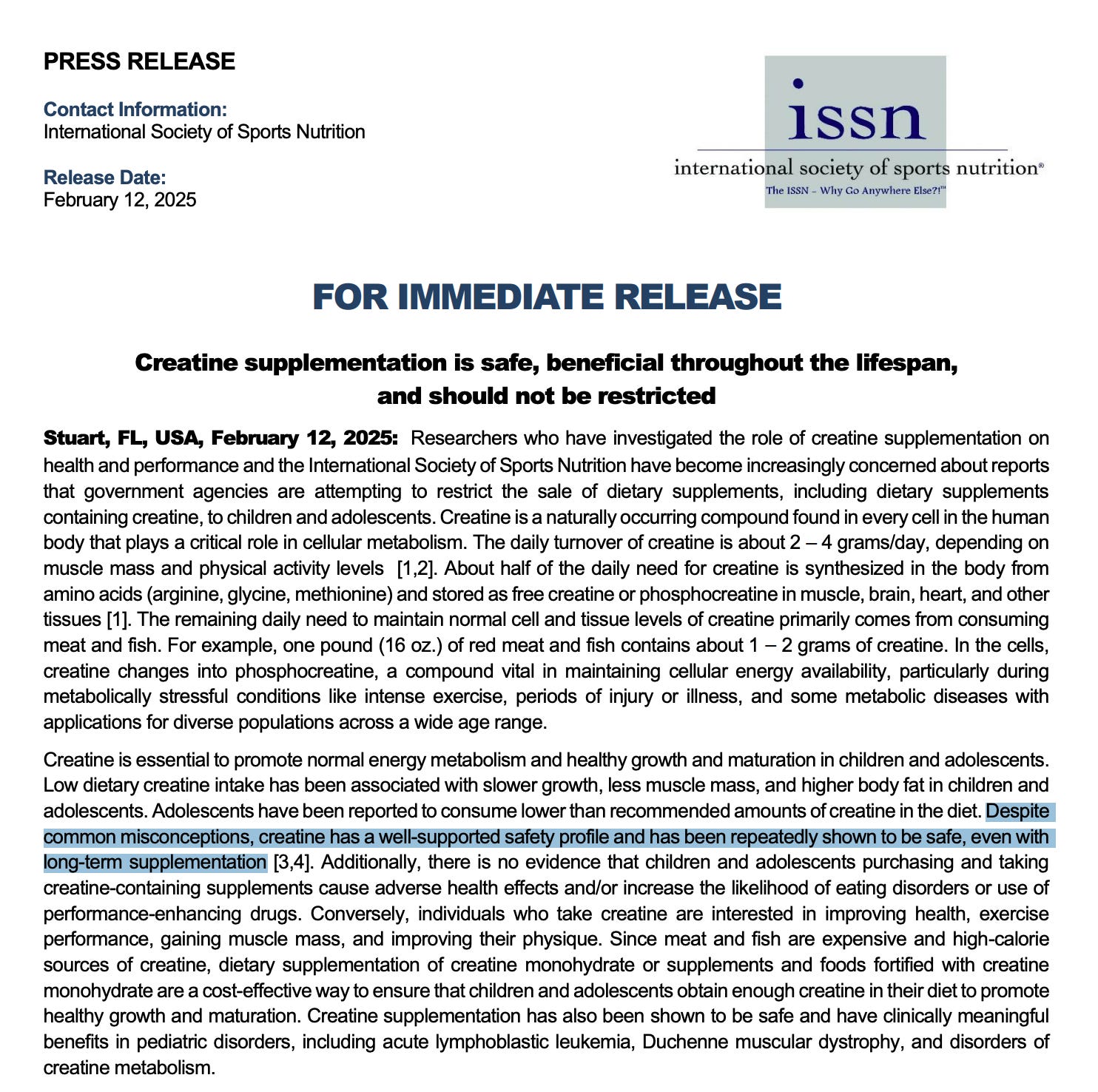
But if you have kidney disease, are pregnant or breastfeeding, have other medical conditions, or are on prescription medications, talk to your doctor first.
The bottom line
Creatine is one of the most extensively studied and best-supported supplements out there. The strength and muscle evidence is overwhelming. The cognitive, metabolic, mood, and vascular signals are intriguing and getting stronger.
Comments
Nothing yet. Say the first thing.
Sign in to join the conversation.