
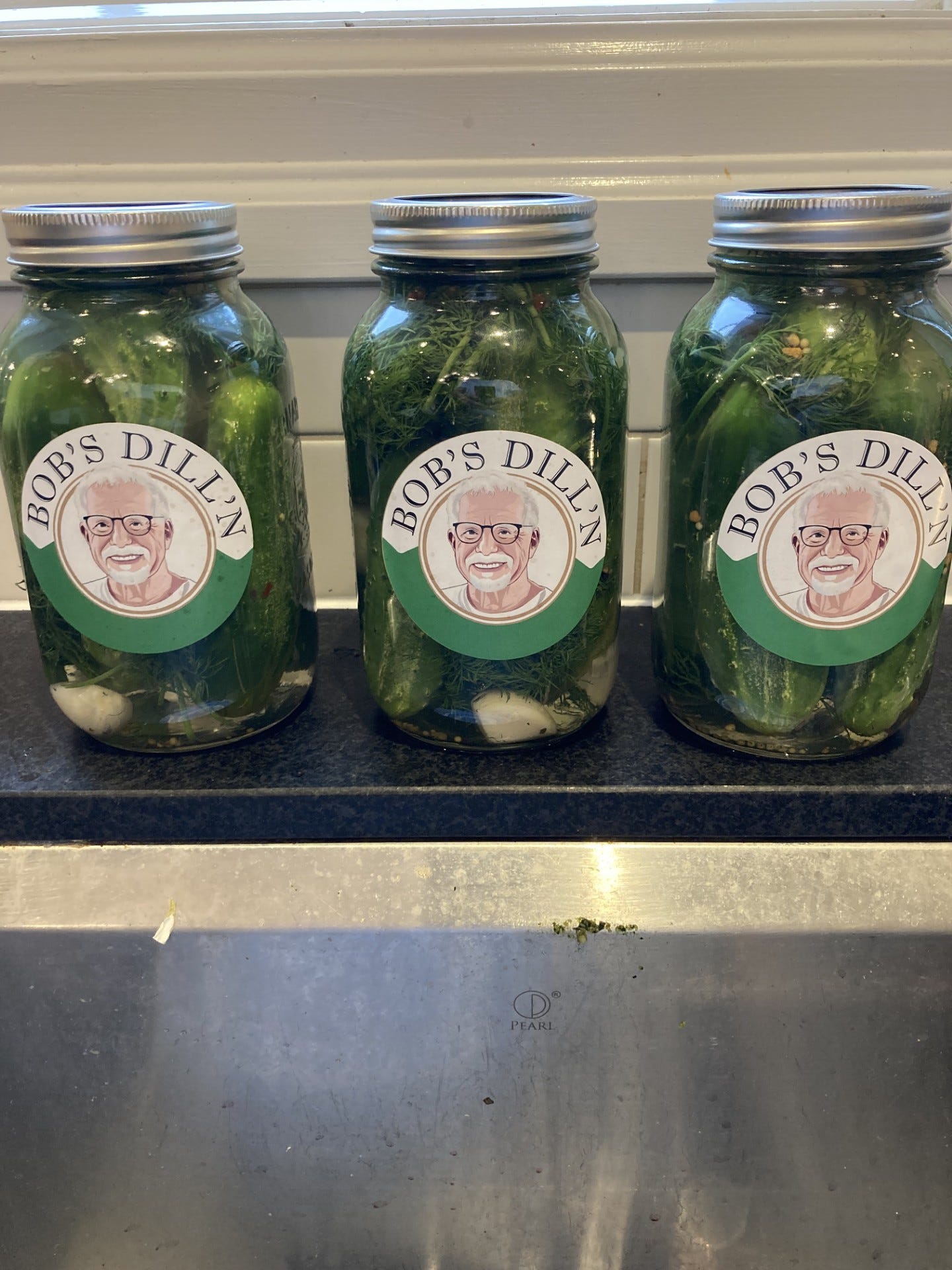
When I learned to pickle at my grandmother’s knee, I never realized that fermented food would eventually become a global health fad.
Bubby’s recipe for #Kosher Dill Pickles was pretty simple. Stuff a clean bottle-neck jar with 6-8 medium-size green pickles and equal number of garlic cloves together with a handful of dill weed, one to and one-half tablespoons of salt and a teaspoon of pickling spice. Fill to the brim with cold tap water. Tighten the cap. Leave the jars at room temperature for two weeks. You know you’re making progress when the mixture becomes murky, the bottles start to bubble and a faint dill aroma spills into the room. Refrigerate after one week if you want “half-sours” and two weeks for a traditional “Dill Pickle”.
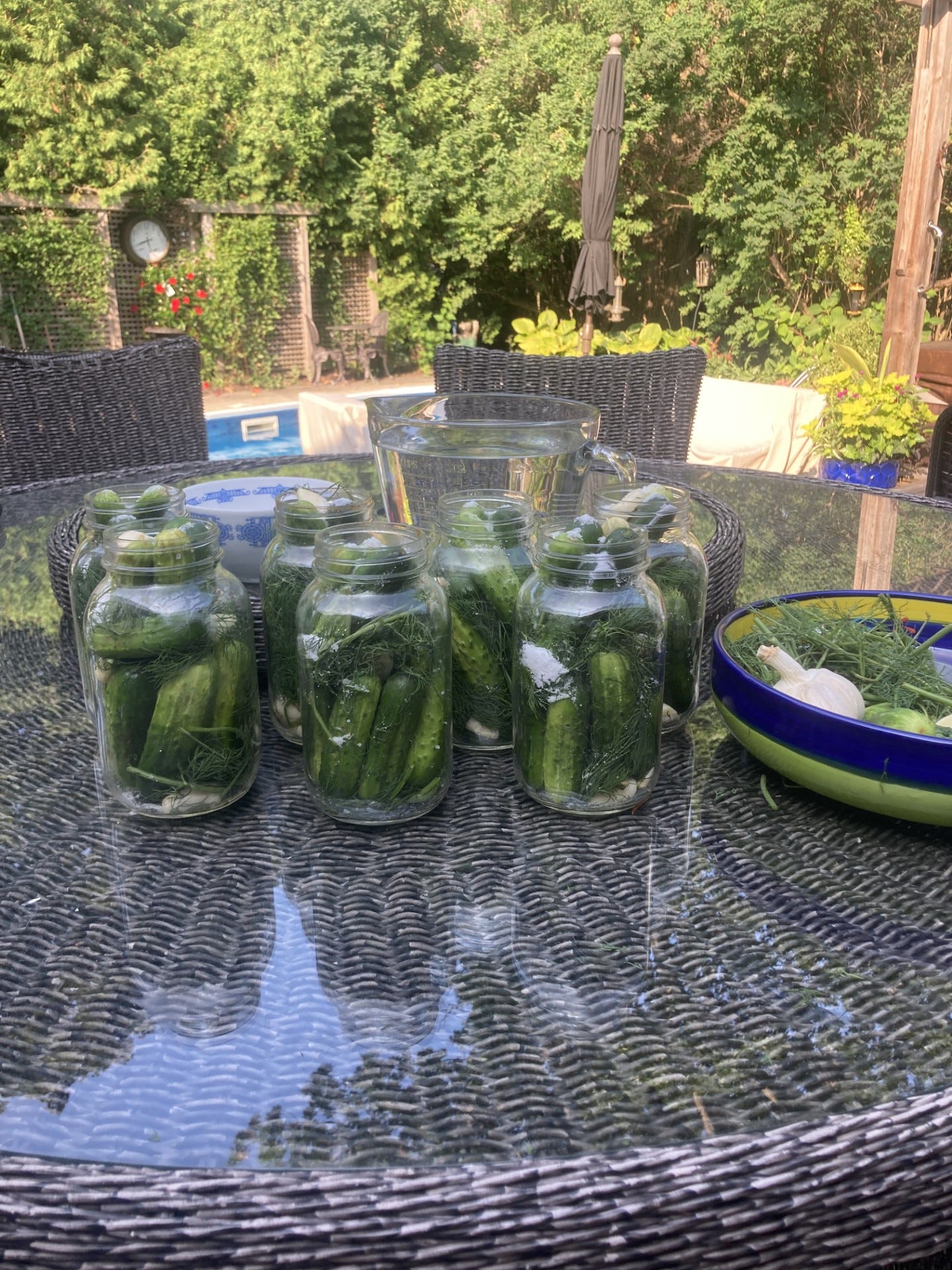
The pickles will stay crisp for a year and edible for two, but only if you know this secret. In order for the pickles not to spoil, you have to use the” pressure cap” that allows the carbon dioxide to bubble off, and you have to run a fork around the inner “neck” of the bottle to release any oxygen trapped when you stuffed in cukes and dill weed.
Little did I know that so many of my grandmother’s recipes were part of a widely circulated mid-European food culture. At one point, taking a one-night course from an “expert”, the president of national pickle company was alarmed to discover that his company used exactly the same “secret” recipe for his commercial brand of Kosher dills.
In the Omnivore’s Dilemma and In Defense of Food, Michael Pollan popularized the importance of fermented food in nurturing a healthy intestinal microbiome. The race was on for all the health guru’s upselling a whole variety of foods encompassing #Korean Kimchi, European #Sauerkraut, #Kefir, and “Balkan style” #yogurt.
What is the health magic of fermented foods all about? In some senses it’s a counter reaction to the clean hygiene mania of the twentieth century. In many ways European culture never recovered from the bubonic plague of the 1400’s. This epidemic of rat borne disease is estimated to have wiped out 1/3 to ½ of the population of western Europe. Middle European obsession with cleanliness was largely concentrated in the central European countries of Poland, Germany, Holland and Belgium and to a lesser degree the fringe countries of Spain, Italy, Greece and Britain. Ever wonder of the what’s behind the power of the image of “Old Dutch Cleanser” and the Polish or German washer woman?
The discovery of the germ theory of disease and then the lifesaving power of antibiotics carried forward into the twentieth century created the sense that human life is under ever present threat by germs. It was only in the 70’s and 80’s, that scientists began to appreciate the enormity of the bacterial population. A healthy human gut contains billions of bacteria.
As these populations were identified, there was growing appreciation of two ideas, the impossibility of eliminating bacteria from the human bowel and the importance of nurturing a healthy bacterial population called the #microbiome.
Researchers at #McMaster University led the way in examining the role of a healthy gut biome in moderating infections, modulating #functional bowel diseases like the irritable bowel syndrome, autoimmune illness like Ulcerative Colitis, allergies and even mood disorders.
Well, how do you encourage a healthy gut microbiome. One approach is to ingest probiotics, these are the actual bacteria that repopulate your gut after a course of antibiotics, but you have to ingest live bacteria by the millions to bypass the sterilizing effect of stomach acid. Alternatively, you can ingest prebiotics which are nutrients that encourage the growth of healthy bacterial population.
Kifir and yogurt contain live cultures of lactobacillus. Ingesting them along with milk fat and protein probably allows greater numbers to bypass gastric acid sterilization compared to ingestion of probiotic supplements. Similarly, the live cultures sauerkraut and Kimchi and Kosher dills are partially protected by their presence in a mixture of cellulose vegetable fibre.
By contrast, pickles that depend on the presence of sugar and vinegar preserve cucumbers at room temperature require careful sterilization of the contents. It is instructive to realize that bacteria cannot grow in foods that are super sweet such as processed sugar, jams or even maple syrup, the reason sugar is consistent ingredient in preserving meats through curing and sweet sauces such as ketchup and BBQ sauce don’t require refrigeration.
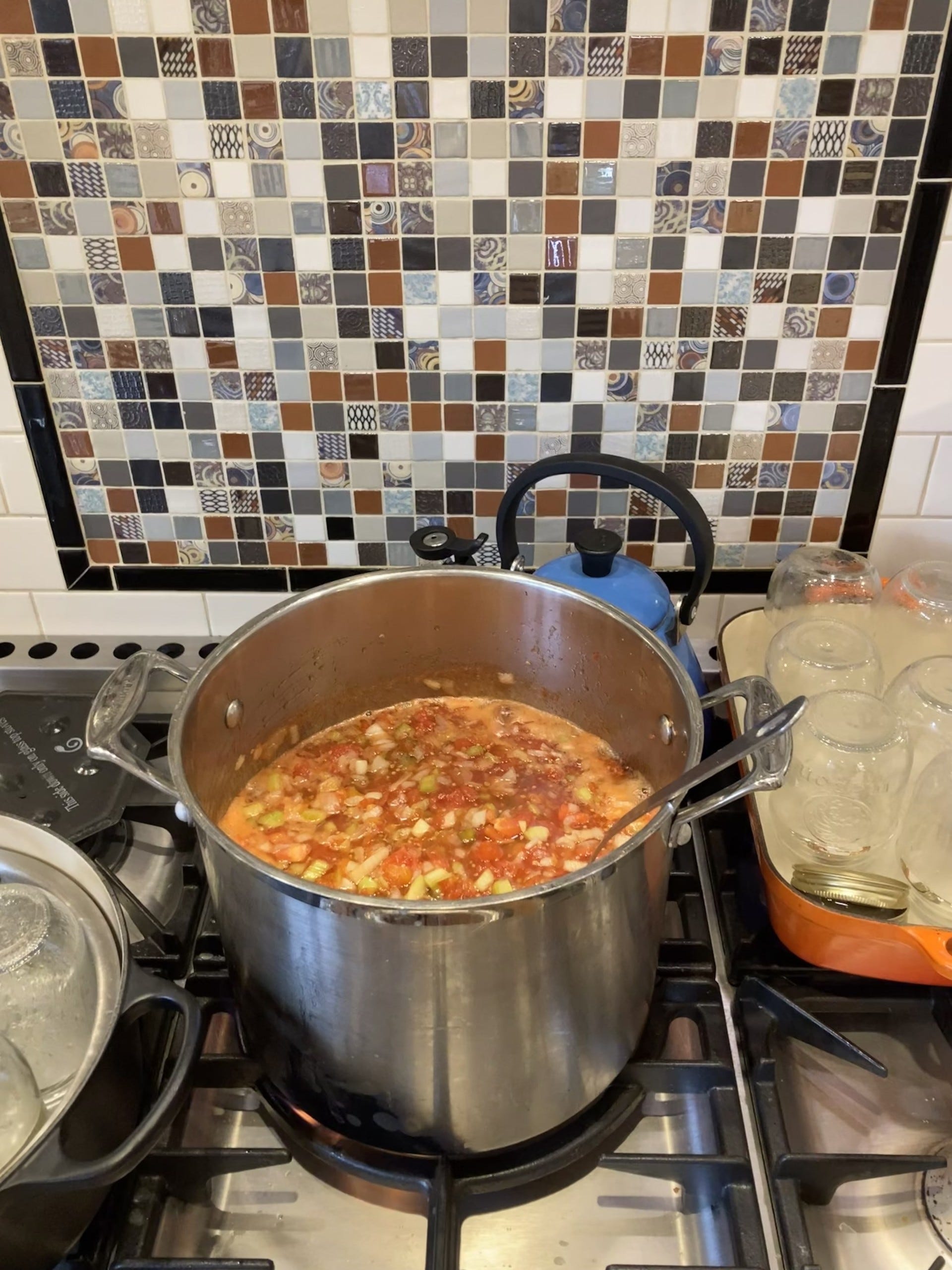
We also put up my father-in laws recipe for garden chili, a staple in mid-Ontario farm culture. In this process, the sugar, salt, pickling spice and vegetables mixture once brought to a boil can be poured into sterilized jars. Tightly sealed with sterilized “safety caps”, this product stays good at room temperature for years. The purpose of the “safety cap” is to indicate whether the “seal has been broken” an indication that the preparation has been contaminated. It is critical that the process to maintain sterilization be done meticulously to avoid contamination and poisoning the entire family with botulism toxin. My mentor, Barbara Burt cautions to avoid temptation and always use new caps.
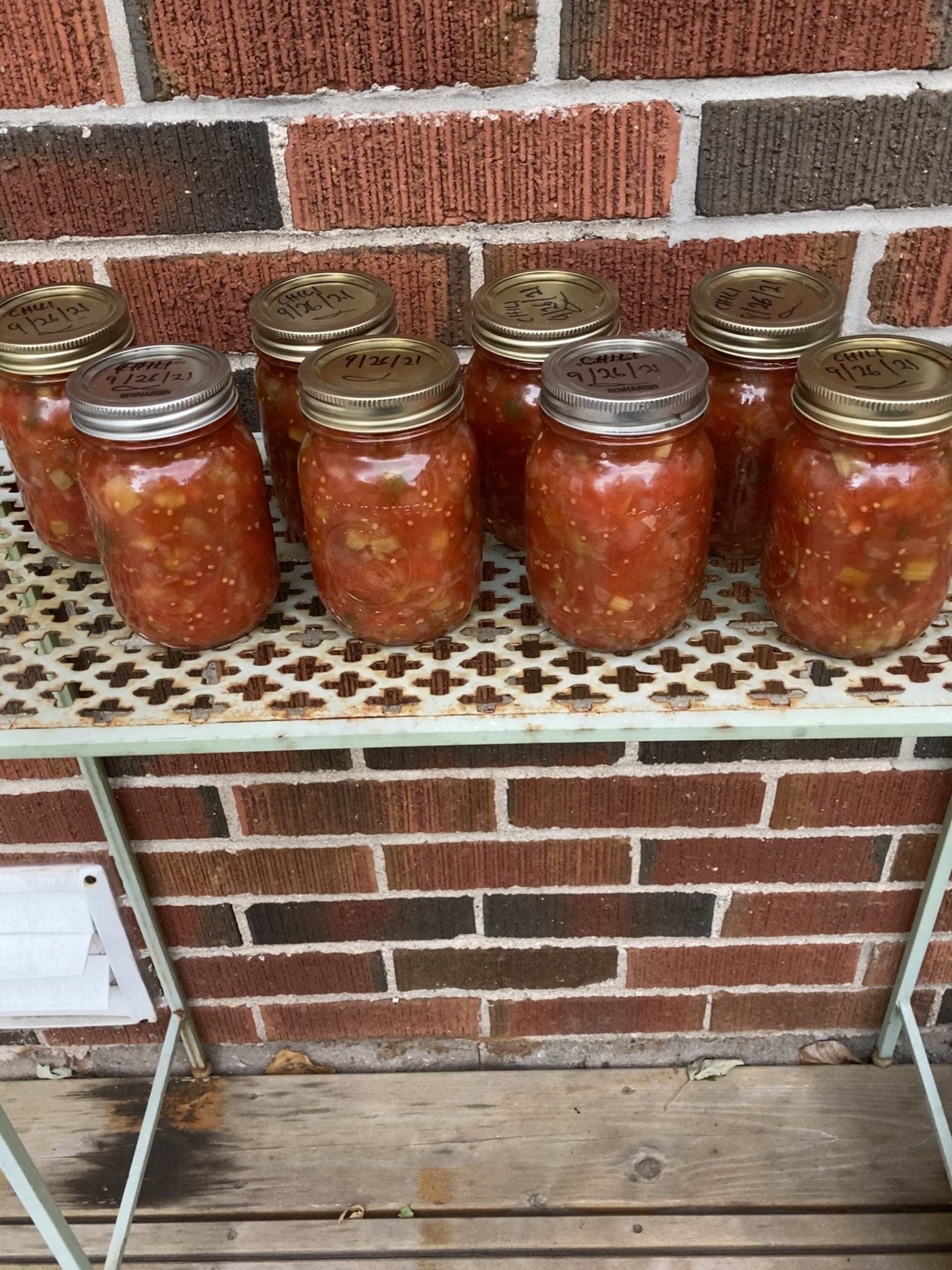
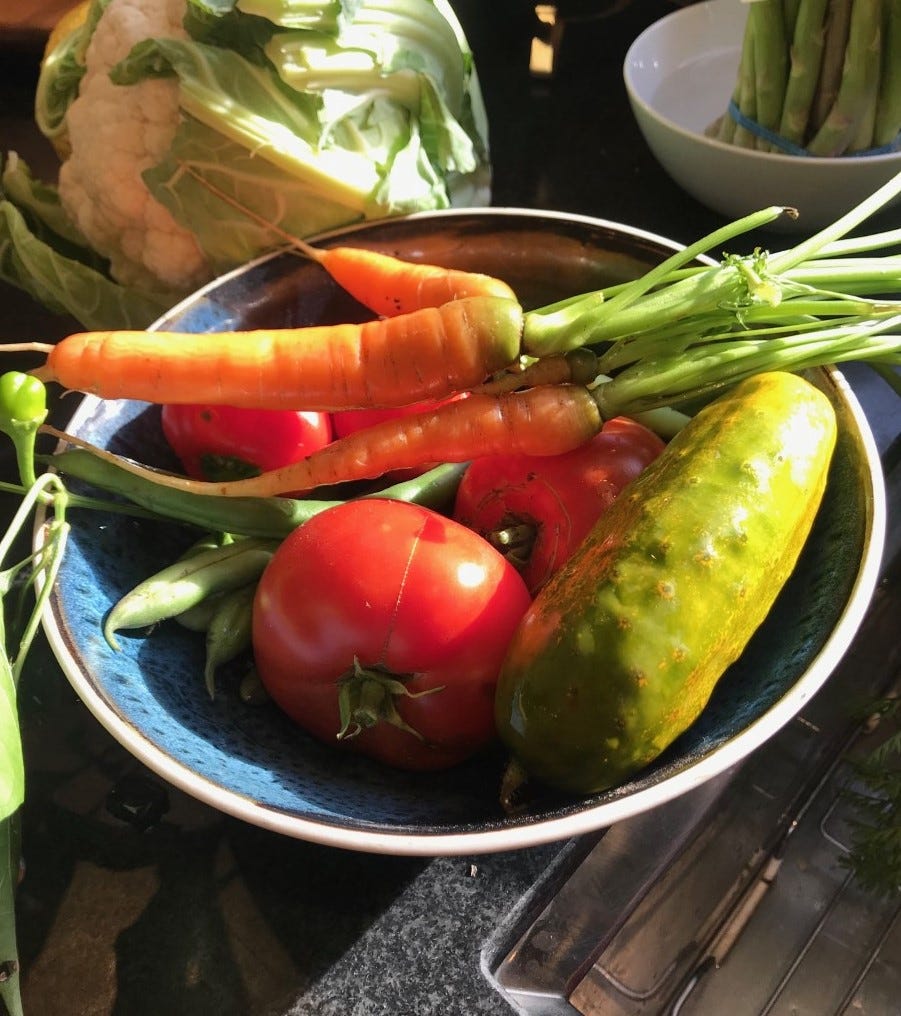
Now that you know the secret, go down to the farmer’s market, pick a peck of cukes, green beans, and beets and “pickle on”!
No posts
Comments
Nothing yet. Say the first thing.
Sign in to join the conversation.