
You’re convinced it’s the worst thing that ever happened to you. But in fact, the opposite is true - it’s the best thing that could’ve happened.
Chris Hoiles twice experienced that jarring reversal during his unlikely rise from small-town Ohio to an integral role with the Orioles as their starting catcher in the ‘90s.
The first time, in 1983, Hoiles had just graduated from high school, having made all-state in football and also starred in baseball. He planned on playing both sports at Eastern Michigan University until the baseball coach called one night and said the scholarship offer was off the table unless he dropped football.
Hoiles was flabbergasted. Disappointed. Crushed.
“Football has always been, still is, my No. 1 love,” he told me during a recent conversation for the Bird Tapes Podcast. “I always loved the game of football, studied the game of football. Probably studied it more than I did anything else.”
He hated giving football up, but over time, he understood it was the right move for his baseball career.
“Football is a great sport, but it would have been a whole lot more taxing on my body (to play both sports in college) than just being a catcher,” he said.
The second crushing development that turned out well for Hoiles came five years later, in 1988, when the Detroit Tigers, the team that had drafted him into professional baseball, traded him to the Orioles.
Hoiles was shocked. He was 23 years old and had spent his entire life in Ohio and Michigan. He was playing for the Triple-A Toledo Mud Hens, one step from the majors. Tigers manager Sparky Anderson, one of his idols growing up, would be his skipper if he earned a promotion.
But now, suddenly, he was … a Baltimore Oriole?
“At the time, I was kind of devastated. I didn't know much about Baltimore,” Hoiles said. “But (the trade) worked out for me a hundred fold. It was a great trade for me.”
Indeed, it was. The Orioles were looking for a new catcher after the end of Rick Dempsey’s long run. They’d filled the position adequately with veterans Terry Kennedy, Bob Melvin and Mickey Tettleton, but they were looking for a younger prospect to take the job and run with it. Hoiles did just that. Between his major league debut in 1989 and the end of his career in 1998, he started 819 games at catcher and played in nearly 900 games overall — all for the Orioles.
He was a regular in the club’s first years at Camden Yards, when every game drew a sellout crowd and the Orioles never lacked for star power with players such as Cal Ripken Jr., Mike Mussina, Rafael Palmeiro and Roberto Alomar wearing the uniform. Hoiles was a taciturn grinder more than a star, fine with toiling in the background. But he was consistent and productive. He forged a fine .366 career on-base percentage and hit a lot of home runs — 151 overall, more than any catcher in Orioles history.
“And I was hitting ninth in the order sometimes!” Hoiles said, laughing about the overall talent on the teams of his era.
But he wasn’t just a slugger. Four times, he led the American League in fielding percentage. Twice, he ranked among the leaders in runners caught stealing. Looking back, he is especially proud to have ranked among the leaders in games caught, a simple stat that reflected his durability.
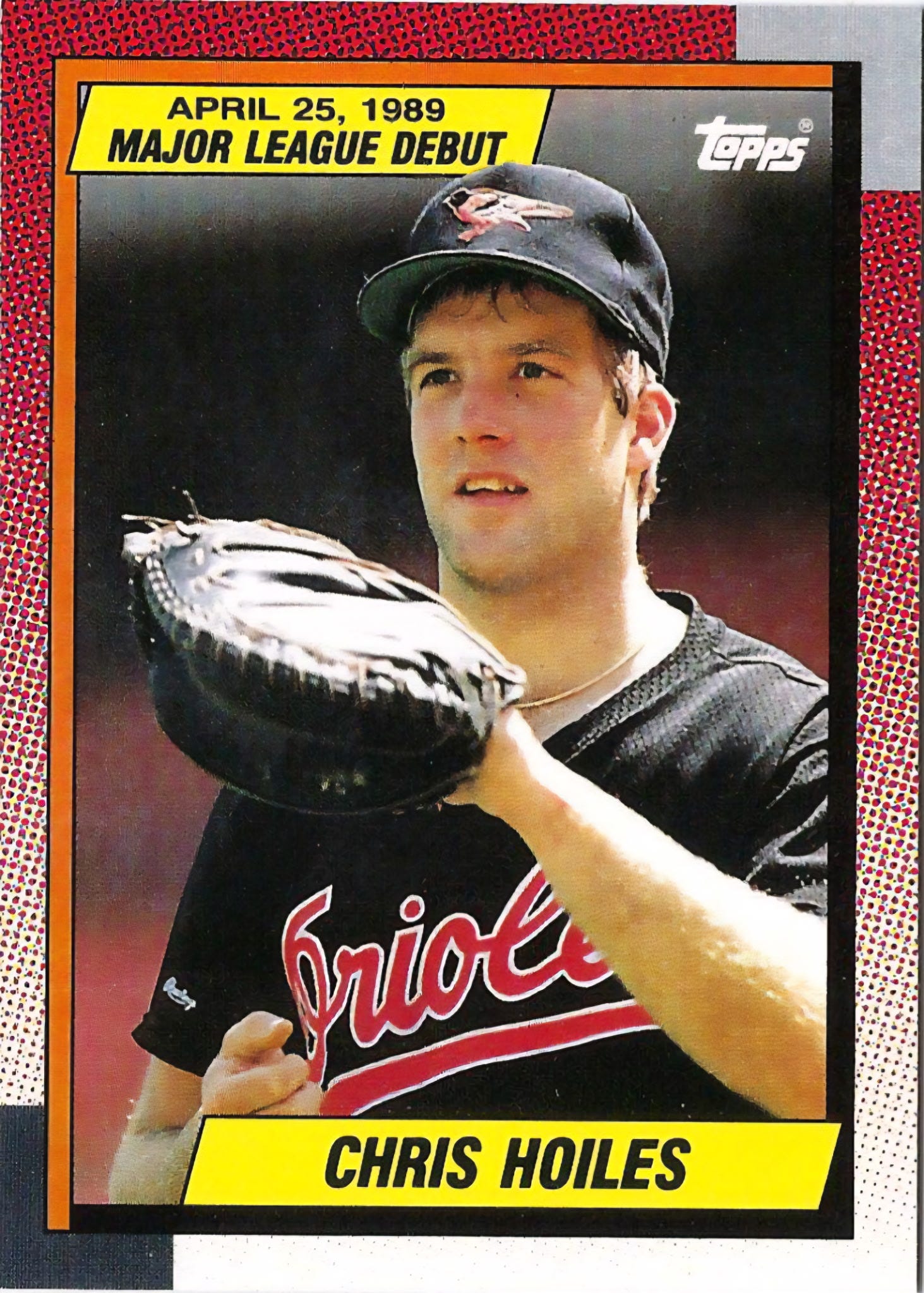
In Part 1 of my interview with Hoiles, available to paid Bird Tapes subscribers with this post, he chronicles his journey from high school to the major leagues and pinpoints the qualities that he believes helped him succeed. He worked hard. He listened when his elders offered advice. He brought a football mentality to a rugged job.
It was no wonder Cal Ripken Sr. advocated for him and Boog Powell made a habit of dropping by and shooting the breeze with him in the clubhouse.
Hoiles was old school.
I’ll post Part 2 of my interview with him next week.
(Note from John Eisenberg: My conversation with Hoiles is the ninth new interview of 2026 that I’ve added to the Bird Tapes Podcast stream, following Roy Firestone, Buck Showalter, Dr. Charles Steinberg, Mike Bordick. Andy MacPhail, Ed Wheatley, Rick Dempsey and Rick Vaughn. You need a paid subscription to hear Hoiles as well as most of the 64 interviews in the archive. I’ll continue to post new interviews with important figures in Oriole history throughout 2026. A reminder, new annual subscriptions are on sale this week in honor of Father’s Day. The price is $45, which is 25 percent off the usual price. Just hit the “subscribe now” button to access the sale. A paid subscription at any level gives you 24/7 access to the Bird Tapes Podcast stream and the entire Bird Tapes archive of interviews.)
Comments
Nothing yet. Say the first thing.
Sign in to join the conversation.