
Before the main story, here are some important happenings this week.
Kimi K3 is a reminder that foundation models are becoming interchangeable and commoditized. Every few months, another model reaches the frontier. The durable competitive advantage may not be the model itself, but where institutional knowledge lives, how workflows are designed, and who controls the intelligence layer inside the enterprise. Marketers will still need to understand which models power their AI stack, and why. (Axios)
In the AI era, the fundamentals can never be forgotten. Domino’s latest earnings offered a reminder, as profits missed expectations and management acknowledged that a marketing miss hurt results. Meanwhile, Kraft Heinz announced a multiyear partnership with Disney that will bring its brands into Disney parks, cruises, media, and character-driven experiences. It feels like a more natural and potentially durable partnership than Disney’s short-lived agreement with OpenAI, announced last year and abandoned within months.
Technology became the arbiter of truth again at the Open Championship after golf professional Bryson DeChambeau received a two-shot penalty following video review. Like the VAR issue that I covered last week, the incident showed how recorded evidence increasingly carries more authority than human judgment. We are beginning to see the same dynamic inside organizations as AI reconstructs decisions, workflows, and performance after the fact. (BBC)
Brands selling through TikTok Shop are using AI-generated influencers and avatars to create product videos instead of relying solely on human creators. The appeal is speed, lower costs, and the ability to rapidly test creative variations at scale. The bigger question is whether AI-generated personalities can build the same trust and engagement as human creators. For marketers, authenticity may soon become as important a differentiator as efficiency. (Business Insider)
AI training is becoming a continuous capability rather than a one-time event. The organizations making the fastest progress no longer treat AI education as a workshop or prompt class. As the technology evolves and workflows change, learning must become a permanent operating rhythm rather than a periodic intervention. This reflects my own philosophy on AI training.
Taken together, these stories show how quickly AI is moving beyond production and into the systems through which work is evaluated, optimized, and governed.
Late last year, in Creativity’s Coming Reckoning, I argued that AI was moving into territory creative professionals had long considered uniquely human. As machines became better at generating ideas, images, copy, music, and film, the defense shifted. AI might generate the options, but humans would still provide the taste and judgment needed to decide what was good. That division of labor has become one of the most comforting assumptions of the AI era, vigorously defended by marketers, creative leaders, and consultants at Cannes Lions. It may also be wrong.
The mistake is treating taste as something a machine must experience before it can exercise. Human taste is rooted in memory, culture, emotion, identity, and years of exposure to work that moved us or left us cold. AI does not feel beauty or understand why an image matters because it resembles someone once loved. But organizations do not hire people merely to experience taste privately. They hire them to choose. Someone selects one campaign and rejects another, decides which headline survives, which scene weakens the story, and which product concept deserves investment. Taste may begin as sensibility, but inside a company it ends as a series of comparative decisions.
AI does not need human consciousness to perform more of that work. It needs to recognize patterns associated with originality, coherence, brand consistency, cultural relevance, technical quality, and audience response. It needs to rank alternatives, learn from feedback, and improve as more preferences are revealed. The research increasingly suggests that it can.
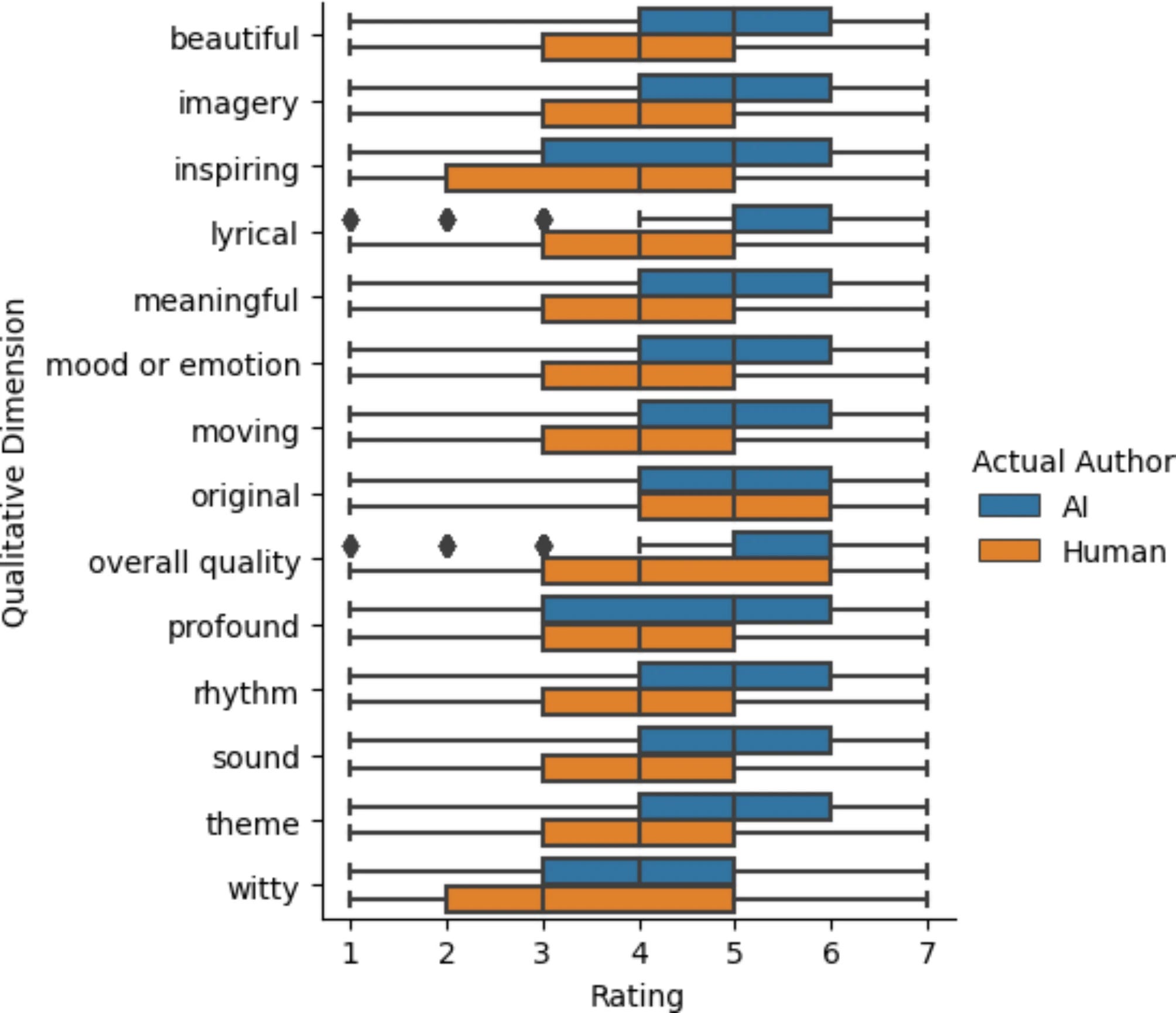
Studies of divergent thinking have found that large language models can outperform average human participants on originality and elaboration, even when the strongest individual humans still do better. Other experiments show that people often struggle to distinguish AI-generated poetry from work by established poets and sometimes rate the AI work more highly. When they are told a piece was made by AI, however, the same artifact appears less original. None of these studies proves that AI possesses taste in the human sense. They do show that many of the behaviors organizations associate with taste can increasingly be measured, modeled, and automated.
That should make us cautious about treating human judgment as the neutral gold standard. Our evaluations are influenced by effort, status, authorship, familiarity, professional politics, and what we believe creativity is supposed to look like. Human taste may be rich and meaningful. It is not objective or consistent.
Meanwhile, AI systems are being trained directly on the choices people make. Image-ranking models can predict which visual users will prefer. Reward models trained on expert comparisons can score creative outputs and improve the systems that generated them. Language models are increasingly used to evaluate other models’ responses, sometimes reaching levels of agreement comparable to human evaluators. The relevant comparison is not flawed machine judgment against perfect human judgment. It is one imperfect system against another.
This matters because creative professionals are being told that as AI takes over production, their value will move upward toward curation, evaluation, and taste. But AI is moving upward too. Imagine a system that generates one thousand campaign concepts, evaluates them against the brief, scores them for brand consistency, compares them with years of category advertising, predicts likely audience preferences, and presents the creative director with five finalists. The creative director may make the final selection, but most of the judgment has already occurred. Nine hundred and ninety-five ideas have disappeared before the human enters the process. The machine did not merely generate the options. It decided which ones were worth seeing.
This is the central point. AI does not need taste in the philosophical sense to become the organizational arbiter of taste. It only needs to perform the evaluative functions associated with taste well enough, consistently enough, and cheaply enough that companies begin relying on its rankings. Once that happens, whether the machine truly understands beauty becomes less important than the fact that it increasingly determines what gets funded, produced, and shown.
Every AI platform therefore contains more than a theory of work. It contains a theory of quality. Through its training data, preference models, reward systems, evaluation criteria, and defaults, it decides what looks polished, what feels coherent, what is likely to perform, and which outputs deserve to move forward. That theory may reflect popular preferences, a company’s historical brand choices, the judgments of annotators, or customer behavior. Whatever its source, it shapes the work before a human gatekeeper sees it.
The danger is that preference optimization can improve quality while narrowing possibility. A system trained on what people previously liked may become excellent at producing work that feels immediately appealing, yet poor at protecting work that is difficult, unfamiliar, culturally specific, or ahead of its time.
Fashion already offers a preview. As Amy Odell argues in The New York Times, consolidation and financialization have elevated corporations and algorithms over designers with distinctive points of view. Brands such as Edikted now mine search, social, and celebrity data to determine what to produce at extraordinary speed. The result is commercially responsive work that can also become increasingly interchangeable.
Edikted is the latest example of companies using data and algorithms as arbiters of taste, but AI can take this logic much further. Focus groups already reward the familiar, and testing can kill originality. AI does not create this tension, but it can industrialize it, turning creative culture into a feedback loop in which yesterday’s preferences steadily narrow tomorrow’s possibilities.
The important question is therefore not whether AI has taste. It is whose taste the system has learned, what forms of quality it privileges, and who retains the authority to disagree. Can its criteria be inspected? Can its rankings be challenged? Does it preserve space for work that initially performs poorly, or does it quietly pull everything toward the aesthetic center?
This requires a more honest and rigorous account of the human advantage. People do not matter because they will always outperform machines at ranking creative options. They matter because creative choices shape culture, identity, representation, and meaning. Humans can decide that the most popular outcome is not the right one to pursue, protect work whose value has not yet appeared in performance data, and accept responsibility for what gets made.
The human advantage may not be that we alone can judge. It may be that we can decide which judgments deserve authority. I would therefore amend the conclusion of my earlier piece, Creativity’s Coming Reckoning. Companies should not invest in human taste because machines can never possess it. They should invest in it because machine judgment is becoming powerful enough to shape what gets selected before people even know what was rejected.
AI may never feel the weight of a sentence, understand the memory behind an image, or experience beauty as we do. It does not need to. If it can predict what audiences prefer, rank what brands should produce, and filter the possibilities before they reach us, the philosophical debate can continue while the organizational decision has already been made.
The machine does not need to possess taste. It only needs to become the one that decides what survives.
At the Cannes Festival of Creativity in late June, alongside hosting the AI Trailblazers Cannes Reworked Summit, I had the opportunity to spend time with many peers, friends, and leaders alongside whom I’ve grown up in the industry. What made the experience even more special was having my older son, Arjan, join me at the festival for a few days, get a glimpse into the world of marketing, and meet many of those industry friends.
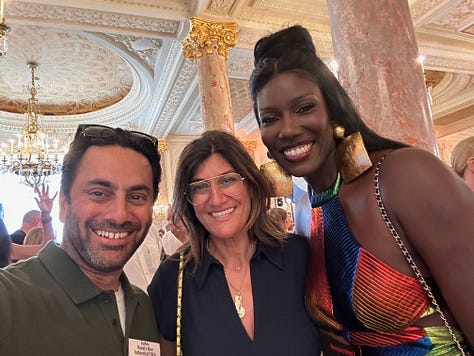

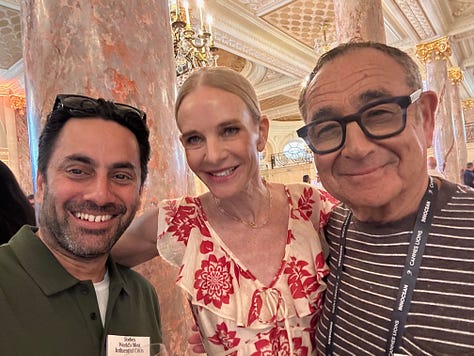
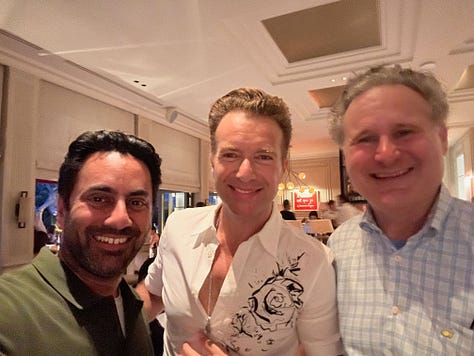


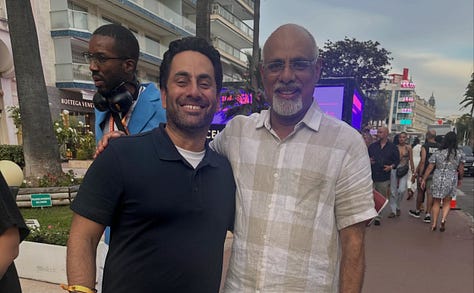
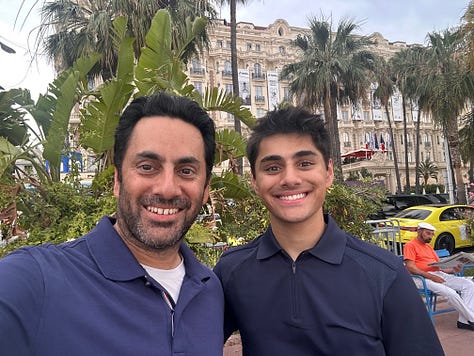

Special thanks to friends at ADWEEK, BCG, Ciroc Athletic Club, Forbes, Kargo, LinkedIn, Mastercard, OpenAP, PTTOW!, Influential, Sports Beach, TIME, Virtuosi Leap, The Wall Street Journal, 3CV and many others who made the week even more memorable.
When AI Becomes the Referee (July 2026)
The Front Door Moves (July 2026)
The Execution Layer is Collapsing (June 2026)
The End of the Segment (May 2026)
When Intelligence Enters the Org Chart (May 2026)
Shiv Singh is the CEO of Savvy Matters, which helps business teams translate AI disruption into practical business and marketing strategies, organizational design, executive-ready roadmaps, and bespoke education programs. He is also the Co-Founder of AI Trailblazers, a vibrant community uniting marketers, technologists, entrepreneurs, and venture capitalists at the forefront of AI. A former two-time Chief Marketing & Customer Experience Officer and author of Marketing with AI for Dummies (4th print run, translated into five languages), Shiv built his career at LendingTree, Visa, PepsiCo, and The Expedia Group, and serves as a public-company board member of a Fortune 300 company and private investor.
Comments
Nothing yet. Say the first thing.
Sign in to join the conversation.