

Chime launched with a bold aim: serve the under-banked and fee-burdened U.S. consumers through a fully digital bank alternative. It rapidly positioned itself as more than just a fintech; it aimed to be a primary financial account.
Many people scoffed at this thought, and had multiple criticisms:
How could a fintech that isn’t even a real bank (Chime rents a banking charter) become top of wallet for its consumers?
How could a fully digital bank with frictionless onboarding offset fraud losses?
Financial services CAC is super expensive and continues to rise - how will Chime buck this trend?
Over the last 13 years, Chime was able to win on all 3 fronts and become GAAP profitable, and has now gone public.
According to their S-1 filing, Chime had amassed more than 8.6 million active users, with about 67% of them treating Chime as their primary account.
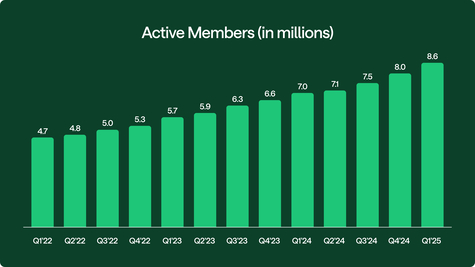
How were they able to do this? By targeting consumers who have been overlooked and overcharged by traditional banks. Banks today require minimum balances, direct deposits, and other requirements in order to avoid those $10-$20 monthly fees.
Their suite of products is directly targeted at this consumer demographic:
Fee free checking - Originally subsidized by lack of branches.
0 fee, 0 interest secured card for credit building - super unique value proposition, almost no one offers 0 interest. How can they afford to? By bundling it with a direct deposit requirement in their checking account.
Early payday and $200 free overdraft - these features are critical for those living paycheck to paycheck.

By offering hyper-targeted products, Chime has been able to increase their product penetration and attach rate.
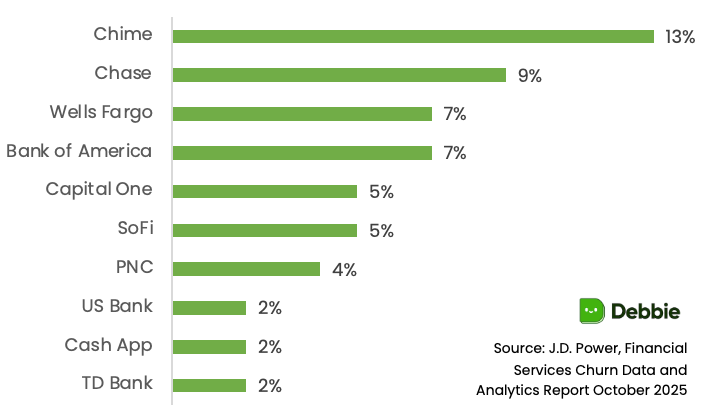
This has led to a trend known as “soft switching” - or opening an additional account while slowly making it your primary. A recent J.D. Power Financial Services Churn Data and Analytics report found that 52% of all US checking accounts opened in the third quarter were additional accounts, while only 25% of those opened were defined as strictly replacement accounts. However, of those two categories, 72% opened with a different financial institution than their primary, and over half made the new account their primary.
Chime currently leads the pack of all net new accounts opened in Q3 - with 13% of all new checking accounts going to Chime, surpassing Chase.
Aside from their product set, one of the largest reasons Chime has been able to grow is by reducing friction in onboarding and transacting. While this can open a bank up to fraud, Chime has been able to offset those losses.
Thanks for reading Banking on Growth! This post is public so feel free to share it.
Serving this demographic — households making, say, <$100K per year, often living paycheck-to-paycheck — also carries legacy risks, such as constant overdrafts. Neobanks, especially those with thin or no branch networks, often face higher fraud exposure.
The traditional viewpoint says: the less friction at onboarding, the more fraud risk. However, Chime has taken the approach of tackling fraud post-onboarding, as opposed to creating friction initially. This has allowed them to build trust with good users and improve their transaction volume/user, driving revenue that offsets the losses. This is exemplified by their strong transaction profit (gross profit - risk losses) at 67% in Q1 of 2025.

Some things Chime has done to fuel growth and primacy (which many financial institutions can implement):
Chime does not require funding during account opening, before they’ve gotten to know and trust you. Allowing users to deposit funds once they enter digital banking creates more trust.
Chime only requires ID verification for those flagged for risk, not all users.
Chime does not ask for additional verification documents over the phone, like pay stubs and proof of address. Close to 100% of your applications should be done digitally and decisioned automatically - Millennials and Gen-Z don’t pick up the phone.
Chime has dynamic scoring rules for transfer limits, rather than keeping limits prohibitively low to start.
While sticking with the traditional approach (higher friction) may reduce your fraud, it will also decimate trust and create frustration for prospects. While users expect some element of friction for loans, they do not accept this for checking/savings. As a result, many banks and credit unions are no longer top of wallet for Millennials and Gen-Z, hurting their overall top line.
But don’t think we encourage financial institutions to do business at any costs. A case study published by Best Practice AI reports that Chime implemented a machine-learning fraud detection platform (via vendor Simility) that helped reduce fraud losses from ~18 basis points to ~11 basis points — a ~40% reduction. This system allowed them to create dynamic transaction rules post-onboarding, blocking bad actors while keeping good ones in.
Chime has been able to out-compete everyone with its industry leading CAC (customer acquisition cost), on the order of ~$100/user, compared to ~$600+ for traditional banks. How?
A major driver is student, young professional and under-banked word-of-mouth and referral programs.
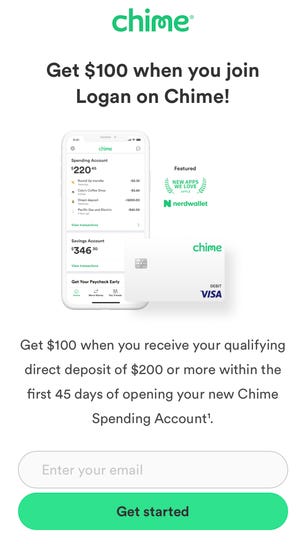
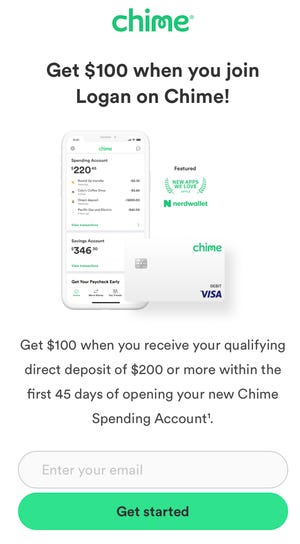
Chime built a referral flywheel: for example, “Refer a friend and you each get $50”, helped tap high-trust networks. Many banks have referral programs, but they are often buried in fine print in the back of their websites. Marketing them early and often increases throughput.
Reliance on scalable affiliate channels, such as influencers/UGC, as well as other publishers (Bankrate/Nerdwallet), has led to highly efficient acquisition.
To become top of wallet, financial institutions need to make doing business (nearly) frictionless. Adding roadblocks may protect your assets today, but it will make it impossible for new generations to do business with you, risking your assets tomorrow.
Some key takeaways and strategies you can implement:
Make account opening simple and frictionless by removing account funding requirements and phone call verifications, while tackling fraud on the back end.
Put your referral program front and center - market it early and often. If you think you’re doing enough here, 10x your efforts.
Tap into affiliate channels for growth - people search reviews on Debbie, Nerdwallet, Bankrate, influencers, all day long. Members want to learn about you through others they trust, not by hearing directly from you.
No posts
Comments
Nothing yet. Say the first thing.
Sign in to join the conversation.