
A serious debate is spreading across online geopolitical discourse. One side argues the United States is executing a sophisticated, long-term plan to isolate China from its energy suppliers and potentially commandeer global hydrocarbon flows. The other side contends that while Washington may dream of such a strategy, actual policy is ad hoc, reactive, and institutionally fragmented. The Iran war that began on February 28 sits at the center of this debate. Its escalation, the dual blockade of Iranian exports and the Strait of Hormuz, and the resulting shock to global energy markets force a fundamental question: is this chaos the instrument of a grand design, or the symptom of its absence?
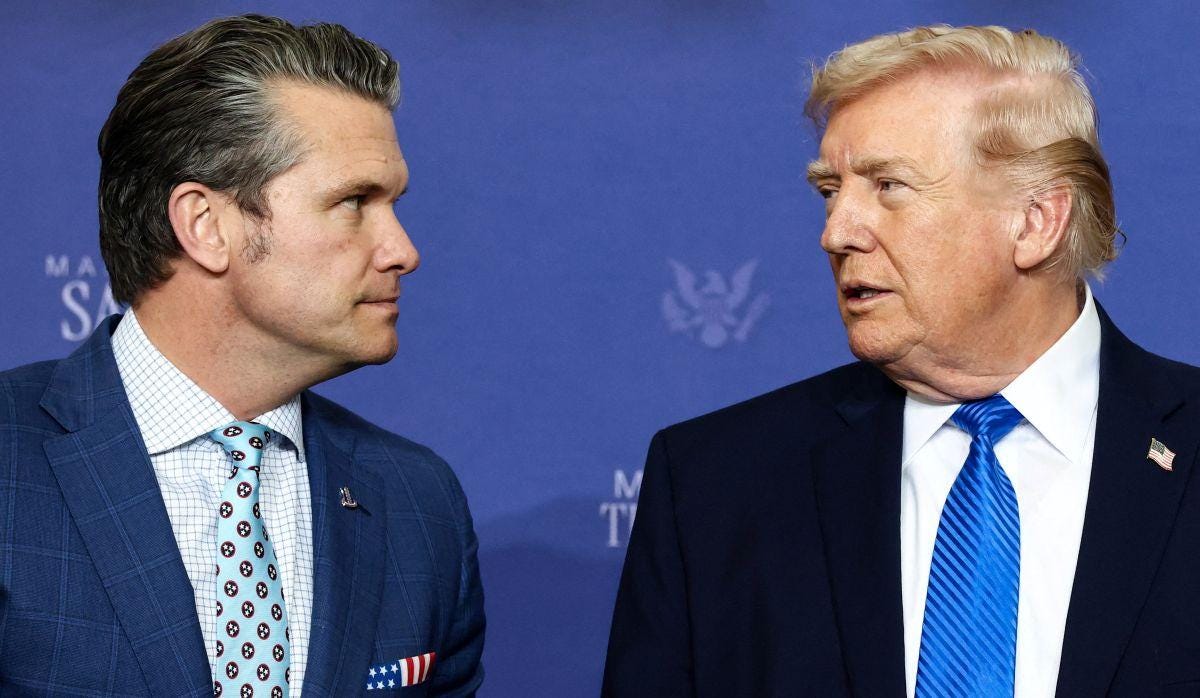
This is not to doubt that Trump, Hegseth and the rest want to isolate China. Given the Venezuela and Iran campaigns, of course they do. The question rather is whether all of the elements we are seeing are planned or are simply emerging from multiple points in the Trump administration, the Deep State and elsewhere.
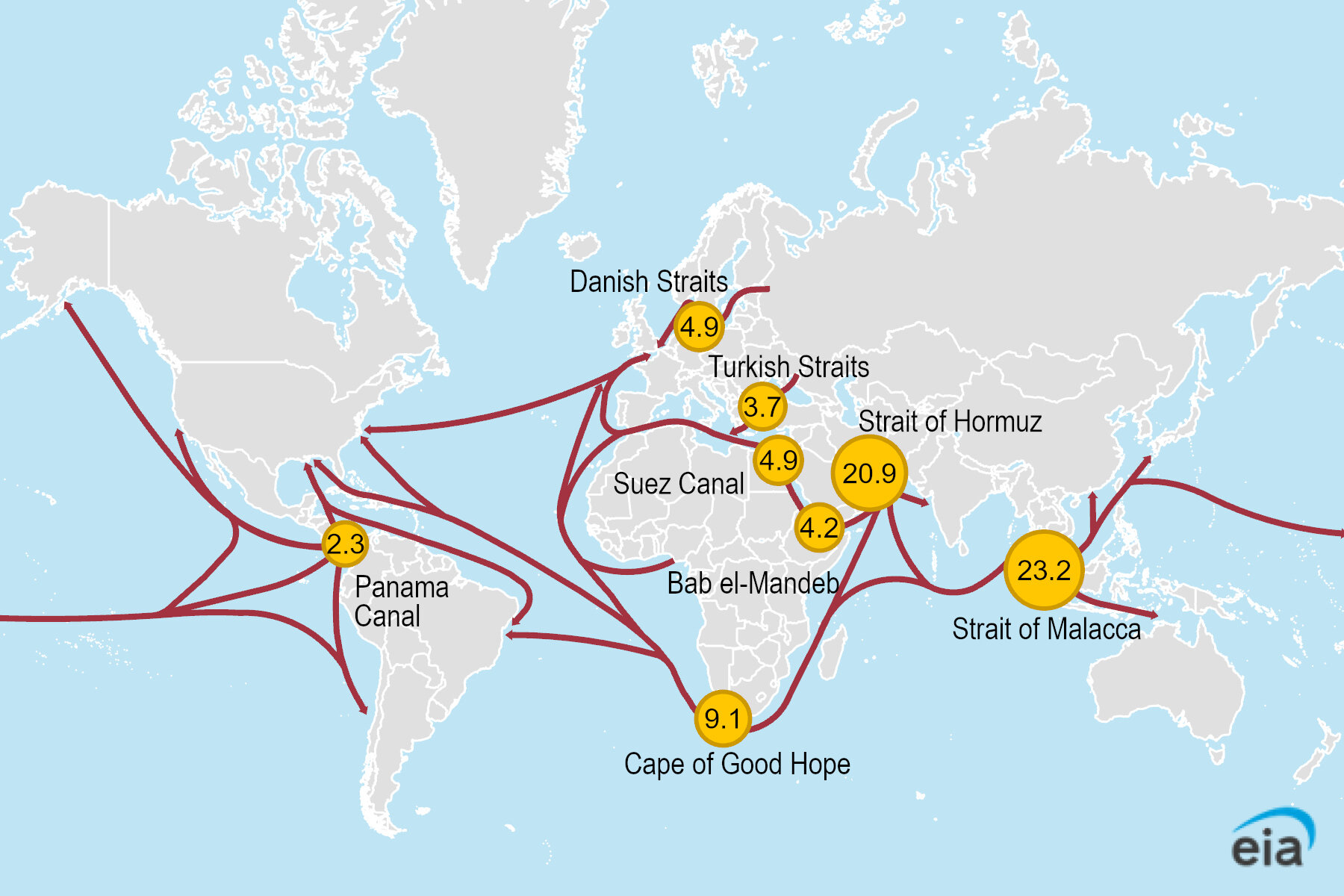
From the grand design perspective, the logic is clear. For example, the campaign against Russia’s energy sector is not merely about punishing Moscow. It aims to remove Russian seaborne oil from the global calculation entirely, tightening the noose around China’s primary alternative supplier. Ukrainian drone strikes on refineries, interdiction of the shadow fleet, and pressure on the GIUK gap serve this end. The Iran conflict, in this reading, is a deliberate lever to disrupt the last major independent supplier to Beijing. Pressure on Venezuela, scrutiny of the Malacca Strait, and heightened Arctic activity form the other vectors of a coordinated squeeze.
Yet each element invites scrutiny. The Arctic presents a clear example of ambition meeting physical reality. US submarines can monitor and potentially defend Arctic approaches, but they cannot open the region for commercial energy transit. That requires icebreakers, ports, and sustained infrastructure. The United States has ordered icebreakers from Finland and renewed interest in Greenland, but it remains decades behind Russia’s existing Arctic fleet. A grand design that depends on controlling a region it cannot yet access is a plan built on future promise, not present capability.
The role of British intelligence further complicates the narrative. If MI6 is coordinating Ukraine’s campaign against Russian energy infrastructure, does that fit neatly into a US-led master plan, or does it reflect parallel interests pursued through separate channels? Intelligence alliances are rarely monolithic. Different risk tolerances, legal authorities, and national priorities can produce aligned outcomes without centralized control. The question is not whether cooperation exists, but whether it is evidence of design or of convergent opportunism.
The most significant challenge to the grand design thesis, however, is China itself. Is Beijing as vulnerable to energy disruption as the theory assumes? The evidence may suggest otherwise. China has systematically expanded its energy alliance with Russia, locking in long-term supply agreements and building new pipelines to bypass maritime chokepoints. It has diversified its imports, increasing purchases from Central Asia, Africa, and Latin America. As well, China is electrifying its transportation sector at a pace far beyond any other major economy. Its dominance in solar, wind, battery production, and rare-earth processing reduces its exposure to hydrocarbon coercion over time. A strategy designed to strangle China’s energy access in 2026 may find its leverage eroding by 2030.
And of course, there is the question of reverse leverage. Even if the US were to achieve some degree of global energy dominance, China has other areas where, as has been seen in the “tariff wars” last year, it can retaliate in ways highly damaging to the US economy. Added to this, the likely strengthening of the China/Russia partnership is a considerable downside to this strategy.
This brings us to the core skepticism regarding execution. Grand strategy demands analytical discipline, bureaucratic coordination, and patience, even across political cycles. The Trump administration’s economic record raises profound doubts on all three counts. Its tariff framework has been widely criticized by mainstream economists for theoretical incoherence and disruptive outcomes. Policies that would make a first-year university student blush have been advanced as serious strategy. If the same circle of advisors struggles with basic trade mechanics, can they orchestrate a synchronized global energy campaign spanning the Caribbean, the Persian Gulf, the South China Sea, and the Arctic?
Some propose a middle path: a strategy of “planned shambles,” where deliberate ambiguity and controlled instability exhaust adversaries and create openings. But this theory carries steep domestic risks. Engineered energy disruption would likely fuel inflation, strain allied economies, and alienate voters. In a political system governed by midterm and presidential cycles, deliberately tanking global economic stability would be an extraordinary gamble. It assumes a level of risk tolerance and intra-administrative discipline that historical precedent rarely supports.
The debate ultimately hinges on a simple distinction. The United States undoubtedly possesses the power to disrupt global energy flows. It can impose costs, create friction, and force adversaries to adapt. But disruption is not the same as design. A grand strategy to rewire the world’s energy architecture requires not just power, but precision, patience, and a coherent theory of victory. The operational record suggests a pattern of reactive pressure campaigns, competing agency agendas, and short-term political calculus. China’s rapid adaptation, Russia’s partial resilience, and the administration’s own policy inconsistencies all point to a more complex reality. Chaos can be exploited. But it is rarely designed with the precision the grand design thesis requires.
No posts
Comments
Nothing yet. Say the first thing.
Sign in to join the conversation.