
The following is somewhere between a reworking and a continuation of a previous article I posted last year on “Governance in Russia - A Civilizational State”.
The Western political imagination often struggles to comprehend systems of governance that deviate from its own cherished model of short-term, liberal democracy characterized by frequent electoral turnover between opposing parties. This failure stems from a deeply ingrained belief that this model represents the historical endpoint of political evolution. When observing nations that operate on different logics, the Western lens often interprets them as deficiencies rather than coherent alternatives. Yet political systems do not emerge in a vacuum. They are shaped by geography, historical memory, and the practical demands of holding diverse societies together.
This Substack is reader-supported. To receive new posts and support my work, consider becoming a free or paid subscriber.
China’s governance model reflects a civilizational priority on stability, continuity, and collective progress. Rooted in Confucian traditions that value harmony and hierarchical responsibility, the system insulates leadership transitions from electoral disruption, enabling planning that spans decades. Infrastructure expansion, technological self-reliance, and poverty alleviation are treated as multi-generational projects rather than campaign promises. Legitimacy is derived from performance, social order, and national rejuvenation, not from adversarial political competition.
Russia’s framework is built on centralized state capacity and strategic patience, forged by centuries of defending a vast, multi-ethnic territory against repeated invasion. Governing across continents requires a time horizon that frequent electoral cycles cannot accommodate. The chaos of the 1990s is remembered not as democratic experimentation but as a period of national fragmentation that validated the necessity of a strong, continuous central authority. Stability, sovereignty, and the state’s role as a civilizational bulwark remain the core pillars of Russian governance.
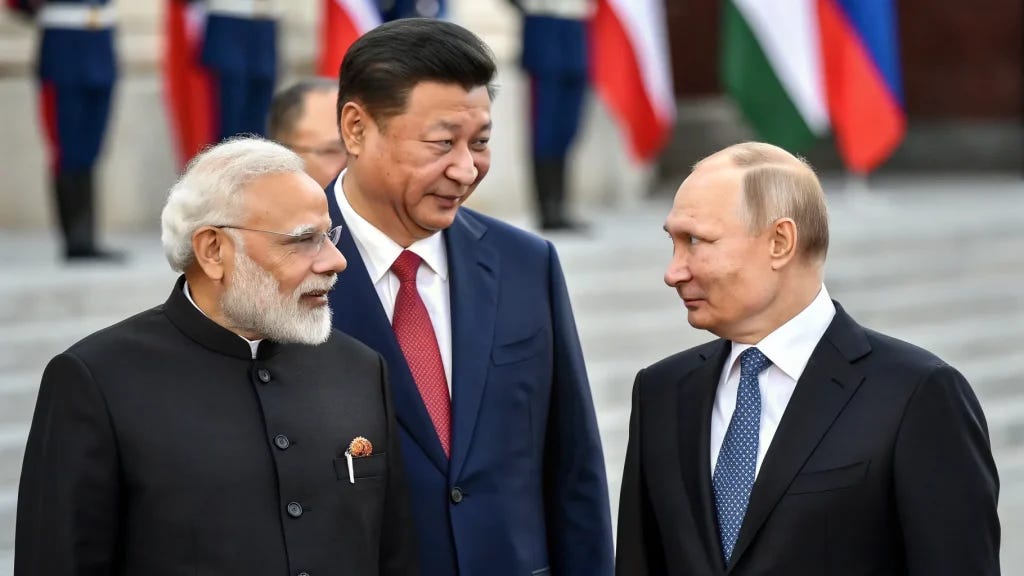
India operates under the formal architecture of Western-style democracy, but its daily reality is filtered through deeper social structures. Clan networks, regional identities, and religious affiliations heavily shape voting patterns, party formation, and policy priorities. Elections are less about competing ideological platforms and more about managing complex social coalitions. The state continuously negotiates between constitutional secularism and the lived realities of a deeply pluralistic society, making Indian governance a constant exercise in balancing ancient communal ties with modern electoral machinery.
Much of Africa remains in search of a governance model that truly fits. The core difficulty lies in inheritance: most modern African states are artificial constructs drawn by colonial powers, their borders designed for resource extraction and imperial administration rather than organic nation-building. Imposing Western multi-party systems onto these fragmented foundations has often produced instability, as political competition maps onto colonial-era divisions rather than shared civic identity. The search continues for frameworks that can reconcile inherited state structures with indigenous traditions of consensus, kinship, and localized authority.
Iran presents a system where deep religious conviction and ancient statecraft intersect. Beneath its theocratic-republican structure lies a civilization with a continuous political identity stretching back four millennia. Persian concepts of justice, centralized administration, and cultural sovereignty remain embedded in how power is legitimized. The Islamic Republic channels older traditions of a morally guided state that sees itself as a guardian of civilizational dignity. Governance here blends clerical oversight with bureaucratic continuity, reflecting a society that views politics through both spiritual and historical lenses.
Turkish politics often echo patterns that feel strikingly familiar to older Mediterranean traditions. The deep polarization between secularist-republican and conservative-nationalist camps functions less like modern ideological competition and more like a contemporary iteration of historic factional rivalries. Political loyalty is culturally charged, shaping urban life, media narratives, and social identity. Elections are intense and personal, driven as much by historical memory and civilizational self-perception as by policy platforms, reflecting a society navigating its role between continents and legacies.
Japan and Korea perhaps offer good examples of why cultural values matter in terms of governance. Both countries have what from a distance appear to be western style liberal democracies. But, in very different ways, neither in practice operates as such. In Japan the Liberal Democratic Party has been in power basically uninteruptededly, since after WW2 (a 2 year gap in the 1990’s). Does anyone really see all that much difference between how the CCP in China chooses the next leader of the country and how it is done in the Libdem party in Japan? In Korea, the problem is different. Since the (more or less) end of military dictatorship in the 1980’s the country has (usually) had elections and alternating parties in power. But in the more than a dozen government transitions since then, in all but one case, the outgoing President was either ousted in a coup or was jailed for corruption, sometimes both. Both of these countries illustrate the difficulties in implanting governance systems that go against the cultural norms and values of a country.
These examples underscore a simple but often ignored reality: different civilizations cultivate different values, and their governance models reflect those values. The West’s emphasis on individual rights and electoral competition emerged from its own philosophical and historical trajectory. Applying that template universally ignores how other societies define the common good, derive legitimacy, and plan for the future. Governance is not a universal standard to be imported; it is a deeply human enterprise shaped by memory, geography, and cultural priorities. Recognizing that multiple paths exist does not require endorsing every policy or ignoring flaws. It simply requires acknowledging that political evolution has many branches, and that the true measure of any system is whether it serves its people, preserves its civilization, and navigates the future on its own terms.
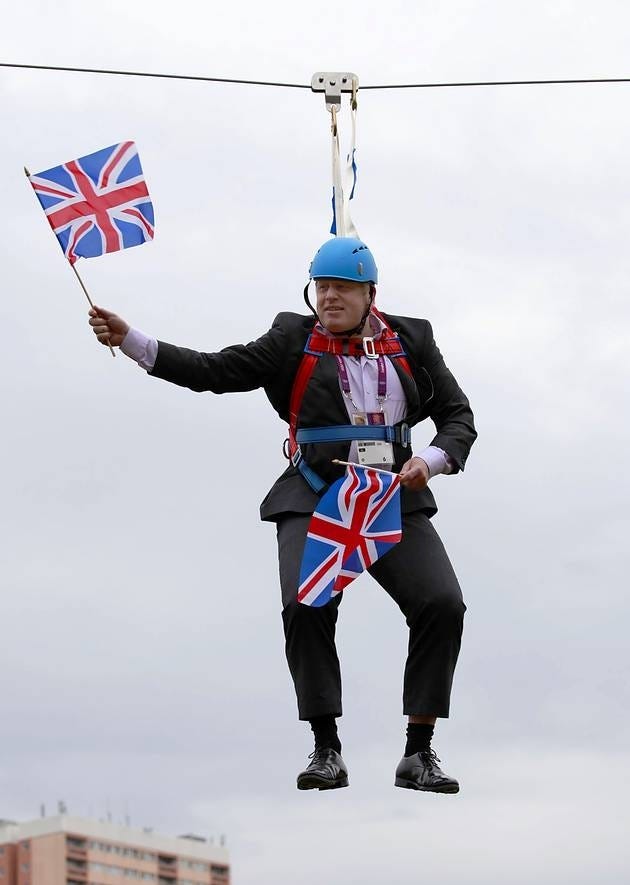
Most people would have trouble arguing against the basic premise that different societies, different civilizations have different values and priorities, and that their governance model should reflect those values and priorities. At the same time, these societies can possibly look abroad and incorporate what is successful (or unsuccessful) elsewhere and incorporate those teschings into their model. Which brings us to the current state of the world. One cannot help but wonder how some can still maintain absolute faith in the Western model when it appears increasingly capable only of elevating such questionable figures to the pinnacles of power as Donald Trump, Joe Biden, Boris Johnson, Keir Starmer, Emmanuel Macron or Friedrich Merz.
When governance becomes a function of fundraising networks, media cycles, and short-term partisan maneuvering, the system inevitably rewards performers rather than stewards. The contrast with civilizations that prioritize continuity, strategic patience, and culturally grounded legitimacy grows more pronounced with each passing election cycle. This is not a call to necessarily discard representation or accountability, but a recognition that political maturity cannot be measured by a single template. Different societies will continue to forge paths that reflect their own histories, values, and civilizational imperatives. The question is no longer which system is universally correct, but which ones can actually sustain their people through the complexities of the coming decades. In that regard, the West’s insistence on its own exclusivity may be its greatest liability, while the pluralism of global governance remains its most enduring reality.
Or put more simply, ”horses for courses” as the British would say, or “Каждому своё” for our Russian friends.
This Substack is reader-supported. To receive new posts and support my work, consider becoming a free or paid subscriber.
Comments
Nothing yet. Say the first thing.
Sign in to join the conversation.