
Alex Cooper got a valuation this week that should have her feeling anything but unwell. WTSL, the firm run by former WME chairman Patrick Whitesell, took a stake in her media company at $500 million, the first outside money the business has taken in three years.
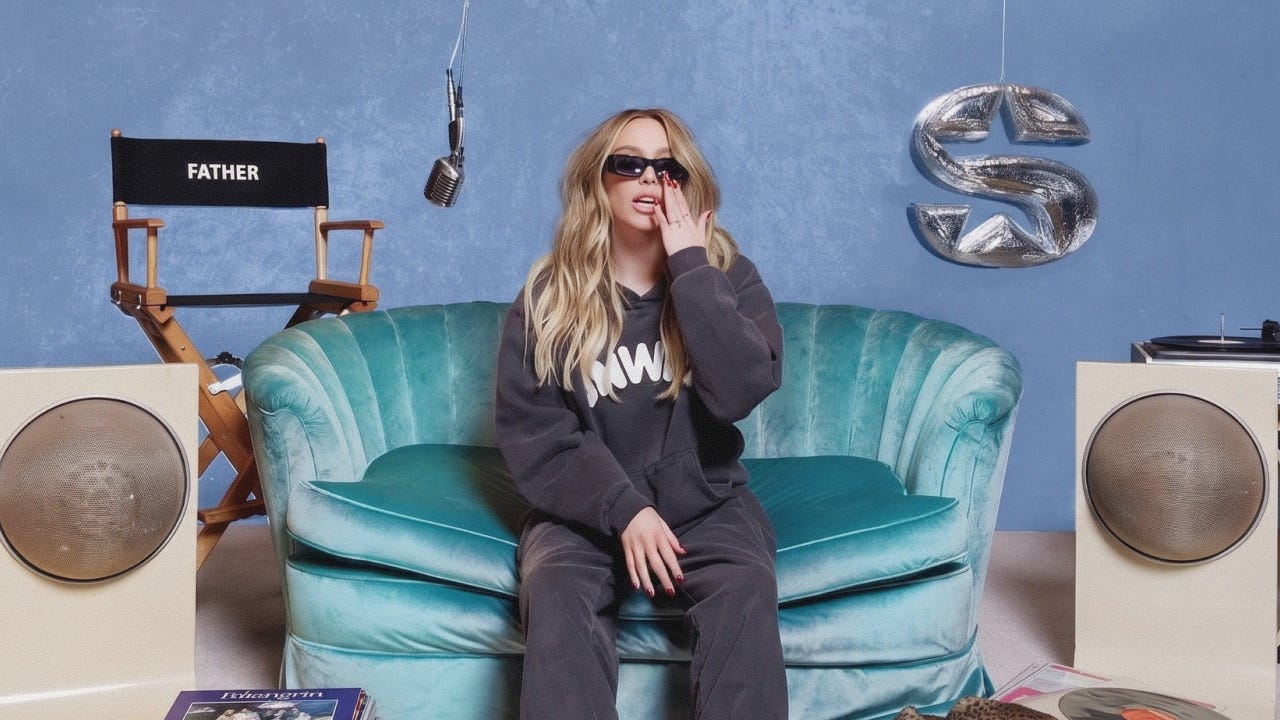
What makes it worth writing about is who set the price. Whitesell spent thirty years on the other side of this business, representing talent and selling them into the networks. He knows how to value a media company, and he has watched them get built the same way for decades, i.e., own the distribution first, fill it with programming, and hope an audience turns up.
Cooper built hers in the exact opposite order, audience first and distribution last. Whitesell sees that what she is building is the future of media, and he priced it at half a billion dollars.
The proof that the order has flipped is in who pays whom. SiriusXM signed a reported $125 million deal with Cooper in 2024, and now pays Unwell roughly $30 million a year to handle distribution and ad sales. Legacy media used to sell brands access to audiences. Now they are paying her for access to hers.
For a century, attention was something a company could buy. You paid for the time slot or the page, and the audience was already sitting there because there were three channels and a handful of magazines, with no real alternative for people to spend their time and attention. Advertisers were not competing for attention; they were competing for inventory, and the media companies that controlled that inventory set the price.
None of that exists anymore. Every person now has an infinite number of things they could be watching, reading, or listening to at any second, and they are choosing constantly, in real time, against everything ever made. Nobody sits through anything they did not pick. Nobody is stuck with what is on. Which means attention has stopped being something you can purchase and become something a person voluntarily gives you, and there is no budget on earth that forces that decision.
That is the hardest problem in modern business, and it is what Cooper solved early. Roughly 70 million women a month choose to spend their time with her, not because they were served an ad or handed a channel, but because they want to. That is what WTSL invested in.
The size of an audience tells you very little on its own. What matters is who is in it and how tightly it holds together, and on both counts, Unwell’s is unusually rare. It is 89 percent female, with 72 percent between the ages of 18 and 35, which means it is not a broad audience that happens to skew young and female. It is the exact demographic that sets culture, drives consumer spending, and that nearly every brand in the world spends its entire marketing budget trying to reach.

Her scale is also insane. Cooper has close to 100 million followers across the ecosystem, more than 1.7 trillion earned media impressions in 2025, and a podcast network with more than a dozen shows that reach millions of people daily.
But the number I would look at first if I were valuing this company is a much smaller one. More than 150,000 people have shown up in person at national tours, spring break programming, Las Vegas, and SXSW. Followers are cheap, and impressions are constantly overstated, whereas getting a person to leave their house, buy a ticket, travel, and stand in a room with strangers is the hardest conversion in consumer behavior. It is the difference between an audience that watches you and an audience that belongs to something, and only one of those is worth half a billion dollars.
Call Her Daddy is the front door, and treating it as the business is the most common mistake in the coverage. Behind it sits studio-level infrastructure that most companies spend years assembling.
Cooper did not build this alone. She co-founded Unwell in 2023 with Matt Kaplan, her husband and a Hollywood producer who runs ACE Entertainment, the company behind To All the Boys I’ve Loved Before, one of Netflix’s most-watched original films, and the Gen Z series XO Kitty. Kaplan folded ACE’s production, financing, and distribution capability into Unwell from day one, which meant the company could make things at scale from the start rather than optioning its ideas out to people who could.
She brought the audience and the instincts. He brought the machine. They self-funded through a holding company called Trending until this week and hired operators from Disney, Meta, Microsoft, and Netflix to run it. It is worth noting how rare that pairing is, i.e., most creators who try to become media companies spend years and a lot of other people’s money assembling what Kaplan walked in with.
What that produced is a slate most independent studios would take. Netflix, Hulu, Peacock, and Amazon are all in development with the company. Disney handed over the Hannah Montana 20th anniversary special. Peacock partnered on live programming from the Paris Olympics. Let’s Marry Harry landed in Netflix’s global top 10, and Icebreaker films this fall. Alongside that sits the podcast network of more than a dozen shows, a live events business, a charitable foundation, and a creative agency.
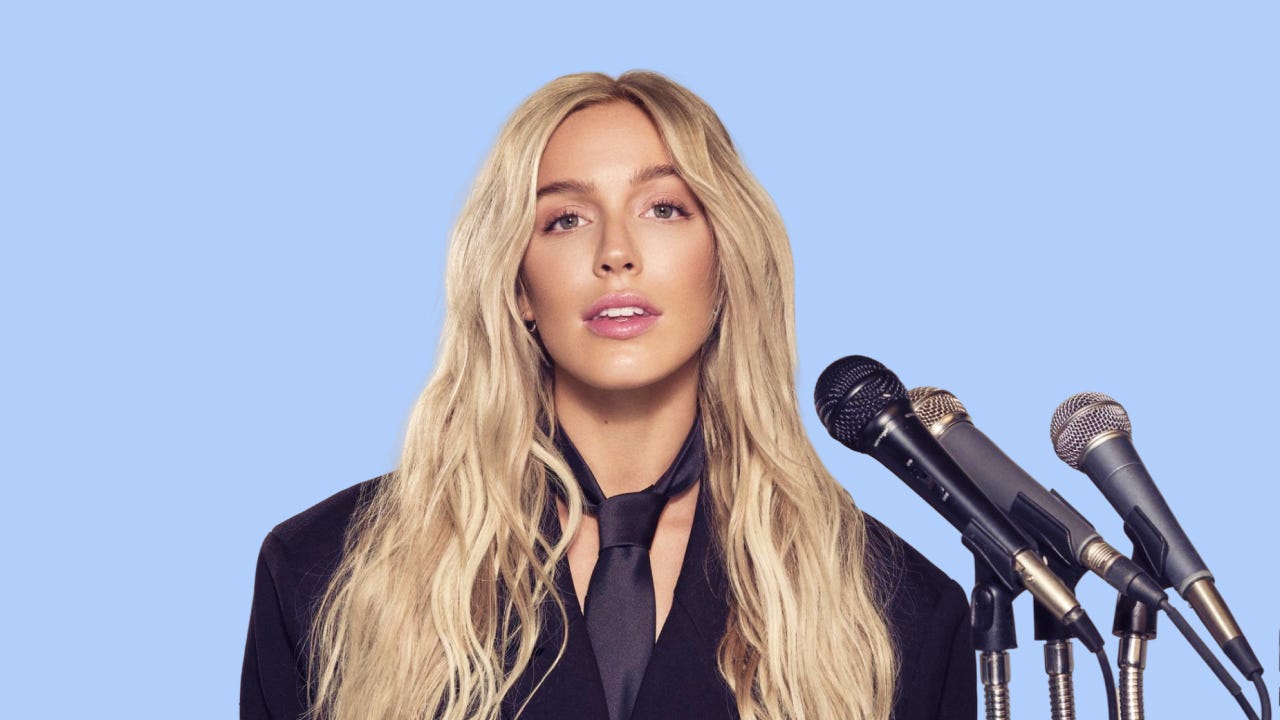
From the outside, that looks like a company diversifying, and it is not. Every one of those lines is the same audience being served in a different format, which is a completely different exercise from a company entering unrelated categories and hoping something works. The podcast is the relationship. Everything else is another way to spend time inside it.
The subtraction proves the same point. Cooper’s first reported move after taking the investment was shutting down the hydration line she had built with Nestlé, a partnership with one of the largest food companies in the world, which closed last week. Most founders would have kept it for the optics alone. Knowing which parts of a business are actually assets and which are a distraction also speaks to the focus this team has.
The piece of this I would watch most closely is Unwell Creative Agency, which the company launched less than eight months ago.
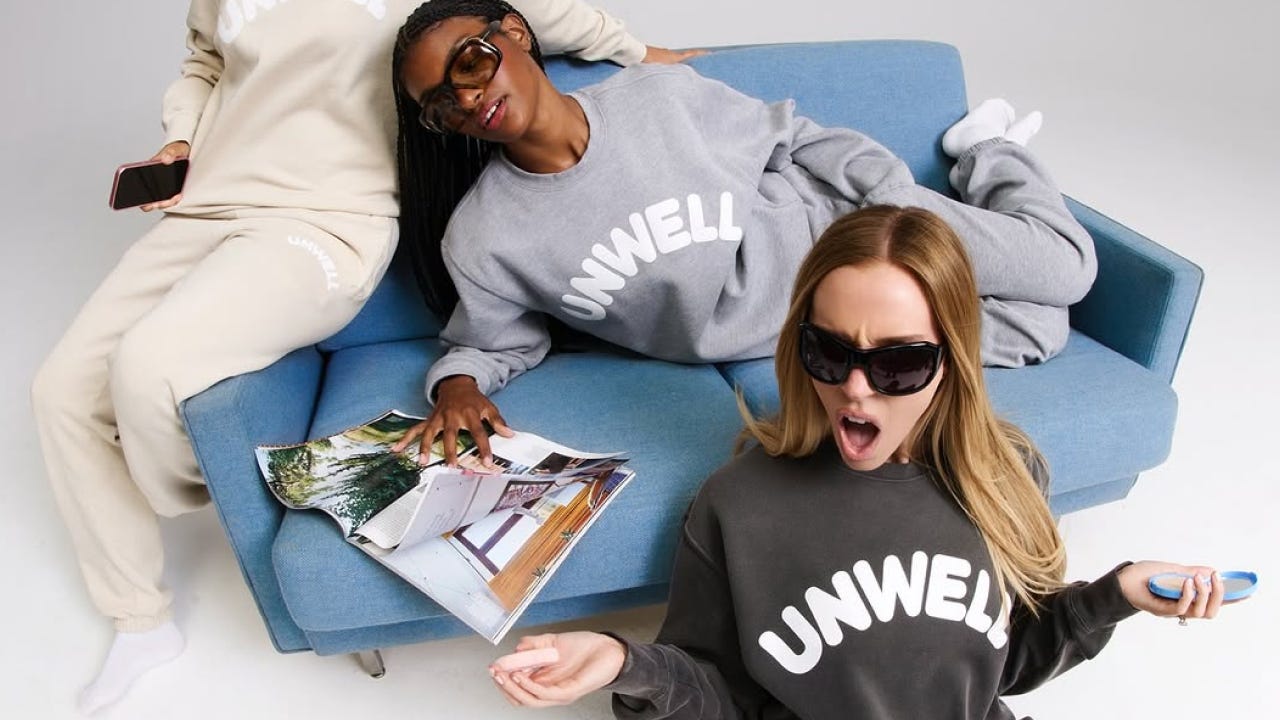
An agency inside a media company could sound like a side business. But rather, Unwell Creative is selling the capability rather than the audience. Its first major campaign was Get Lost for Google in October 2025, which Google has said was one of its most successful advertising campaigns of that year. It followed with Moving On, a microdrama series made with Google Pixel, i.e., short-form scripted episodes built for phones rather than television. Sephora and Polymarket are also clients.
Kaplan said it plainly, i.e., brands have realized that buying paid advertising or influence is no longer enough in a media landscape this fragmented, and that it is hard to find a platform that meets Gen Z on their own terms. So the company that figured out how to earn attention is now selling that skill to the companies that cannot. It is a better product than advertising space; it carries better margins, and neither legacy agencies nor legacy media have been able to build it, because the skill was developed under conditions neither of them has ever worked in.
Start thinking media-first. Not content-first, which is what most brands mean when they say this, and which produces a calendar of posts nobody wants. Media-first means building a relationship with an audience that exists whether or not they are buying from you that week, because that relationship is the only asset that appreciates.
So what can you learn from Unwell?
Build it before you need it. This is the part founders get wrong most often. Attention cannot be bought anymore, and the companies that start building an audience at the moment they need one are the companies that pay the most and get the least.
Treat every new line of business as the same community served differently, rather than as expansion. Unwell did not diversify into film, live events, and an agency. It found four more ways to give the same people something they already wanted, which is why each one makes the others stronger instead of pulling the company apart.
Where this ends up is fairly clear. Producing things is about to cost nothing, and everyone will be producing constantly, which means the volume of content in the world is going to be enormous and nearly all of it will go unwatched. What survives is taste, i.e. knowing which idea is worth making, an instinct for what people actually stop and watch, and a community that turns up because it wants to. None of those three can be generated, bought, or hired away from someone else.
Thanks for reading,
Xx Camille
—
Want my team on your brand? Book a call here with Third Eye Insights, my international brand strategy and creative agency.
Apply my frameworks and teachings to your own brand with my Masterclass and Social Media & Brand Planners
Get the Friday debrief: Join my newsletter here for weekly inner circle content that keeps you winning.
Comments
Nothing yet. Say the first thing.
Sign in to join the conversation.