
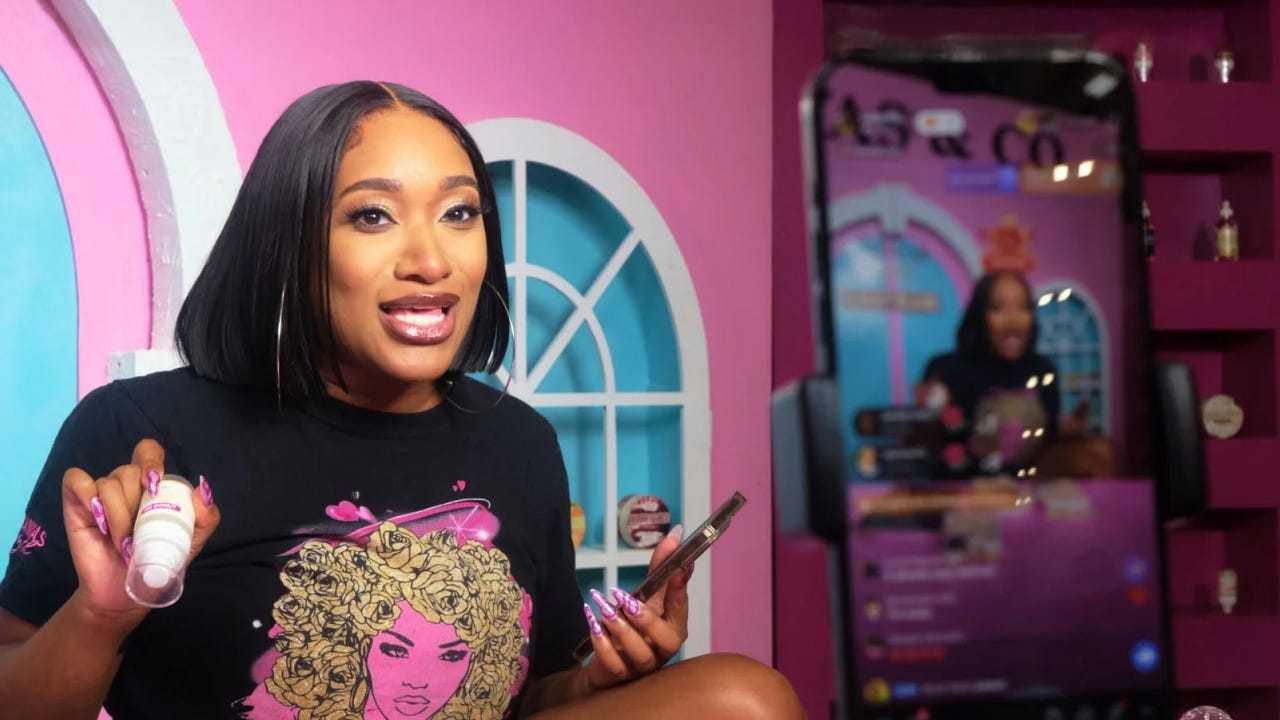
The biggest livestream in TikTok Shop history ran for 14 hours. Canvas Beauty, the haircare brand founded by Stormi Steele, watched the counter climb past $2.1 million in a single session, and the clips of that number ticking upward traveled through every founder group chat in beauty. For a certain kind of founder, one who has been fighting for shelf position, watching retail media fees climb, and staring down a customer acquisition cost that gets worse every quarter, that clip looked like an answer.
The scale underneath it is genuine. TikTok Shop generated $15.1 billion in US sales in 2025, up 68 percent from the year before, with beauty and personal care leading every category on the app. It did $4.9 billion in US sales in the first quarter of this year alone, nearly double the same period last year, and eMarketer now projects $23.41 billion for the full year, which would give a short-form video app a larger US online business than Target, Costco, Best Buy, or Kroger. Whatever else you want to say about TikTok Shop, it has earned the title of the fastest-growing sales channel in US retail history.
Then the rest of the results came in.
There are 803,500 registered stores on TikTok Shop in the US, and more than half of them recorded zero sales last year, i.e., not low sales, none. Roughly 2,000 stores cleared $1 million, which means the success story you keep seeing on your feed represents about a quarter of one percent of the platform, a group small enough to fit in a hotel ballroom.
The creator side is even more lopsided. Around 851,000 creators actively sell on TikTok Shop, and of those, 291 exceeded $1 million in sales while most generated under $10,000 for the year. That record-breaking Canvas Beauty session sits in even rarer air, because only four livestreams out of roughly four million have ever crossed $1 million. The case studies are outliers presented as a playbook, and the platform has no incentive to correct the impression, because the jackpot is what sells the tickets.
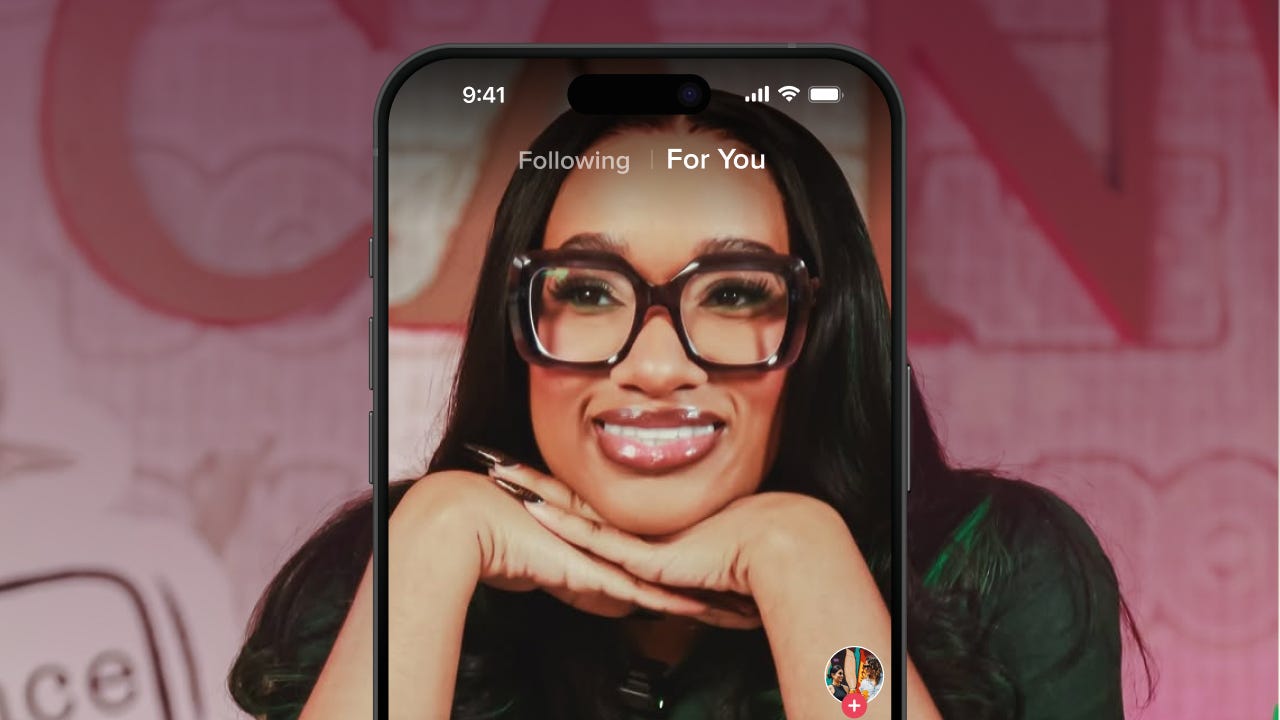
I recently sat down with Leslie, a good friend who runs Iced Media, an agency that held one of the first TikTok Shop licenses in the US, the kind of operator who pays for the full platform data and can see down to the penny what every brand and every creator sells in a given month. Her read on the channel was blunt: for most brands it runs as a loss leader, and the expectations walking through her door usually have no relationship to the economics.
Here is what she means. A brand watches Canvas Beauty break records on a live and assumes the channel produced that result, whereas the result was produced by aggressive discounting, paid media layered on top, and commission rates that reward the creator before the brand. The winners at the top of TikTok Shop are paying full price for their position. They simply arrived with the margin, the capital, and the existing demand to afford it. The revenue is public. The margin never is.
The math is available to anyone willing to run it, and almost nobody runs it. TikTok takes a 6 percent referral fee on every order. Creator commissions in beauty, the platform’s biggest and most competitive category, run 15 to 30 percent, the highest rates on the app. And as of this spring, sellers are required to use TikTok’s own fulfillment, which starts at $3.58 per unit.
Stack it up and roughly 30 percent of the selling price is gone before product cost, discounting, or ad spend enters the picture. On a $30 serum, that is about $9 to the platform and the creator before you have paid to make the thing. Now add the discount, because full price rarely survives the feed, and the media dollars that most winning brands quietly layer on top of their organic and affiliate activity. This is how a channel does $15 billion in sales while most of the brands on it lose money, and it is why the people with the clearest view of the data treat it as a loss leader rather than a growth engine.
The deeper issue is who is showing up and why. A meaningful share of the brands rushing onto TikTok Shop right now are beauty brands getting squeezed at retail, i.e., brands losing shelf position at Sephora or watching their sell-through flatten, and they are looking at the platform as a replacement for the retailer that is failing them. They are treating TikTok Shop as a Hail Mary, and the mechanism runs in the opposite direction.
TikTok Shop amplifies demand that already exists. The brands performing on the platform tend to arrive with retail heat, cultural momentum, or a product already moving somewhere else, because the algorithm rewards velocity and velocity has to start somewhere. A brand arriving with existing demand uses TikTok Shop as a multiplier, whereas a brand arriving with a demand problem is asking a checkout button to solve it. A checkout button converts the demand you bring to it, and it charges you 30 points for the privilege.
Every platform in history has sold itself on its outliers, i.e., the lottery advertises the jackpot, never the ticket holders. TikTok Shop’s economics reward brands that arrive with demand, capital, and margin to burn, whereas brands that arrive needing the platform to save them are the ones funding it. A channel’s winners tell you nothing about your odds in it. The only numbers that predict your outcome are your own, which is precisely why so few founders look at them before signing up.
Model the full cost stack against your margin at the discount level the platform expects, not at full price. Price the creator commissions at beauty rates if you are a beauty brand, not at the platform averages quoted in the pitch decks. Then decide what the channel is for before you launch, i.e., profit, volume, or visibility, because on TikTok Shop you will rarely get all three at once, and a channel that runs unprofitably can still be worth operating if you chose that outcome on purpose rather than discovered it on your P&L.
GMV is a platform metric. Margin is a brand metric. TikTok Shop reports what it sold, and it will never report what you kept. Any channel decision that starts with the platform’s numbers instead of your own is a decision the platform made for you.
TikTok Shop is an amazing platform, and it is not going anywhere. It is rewriting how discovery works, it is pulling billions of dollars into the feed, and for the right brand with the right math, it is one of the most exciting channels in retail. It is also a double-edged sword, and the edge you land on is determined before you ever post, by your margin structure, your existing demand, and whether you entered with a strategy or a prayer. Hope is not a strategy, and on a platform that gets paid whether you profit or not, hope is expensive.
The founders who win the next phase of TikTok Shop will be the ones who treated it like a business decision instead of a lifeline. If you are considering TikTok Shop, you have to understand the economics, and for most brands, the economics only start working when the platform has something to amplify, which in beauty still means distribution in stores.
Look at who is winning. Color Wow sits in Sephora, Ulta, and Amazon, and that shelf presence is exactly why its Dream Coat can move more than 137,000 units on TikTok Shop, because the platform multiplies demand the shelves already validated. Tarte, the number one beauty brand on TikTok Shop at $4.9 million in a single month, sells its hero product at the same $30 it commands at Sephora and Ulta and sweetens the offer with a free brush instead of a discount, which is only possible when retail has already established what the product is worth. Even the retailers have read the mechanism correctly while the struggling brands read it backwards, i.e., Ulta and Sally Beauty are opening their own TikTok Shop storefronts to amplify their retail businesses at the very moment independent brands are fleeing retail for the platform.
The creator system enforces the same law. TikTok Shop ranks its creators in levels based on how much they sell, and the top-level creators, the small group who drive the majority of creator sales, choose what they promote. Their level depends on conversion, so they pick products with proven velocity, recognizable names, and offers their audience already trusts. A brand nobody has heard of cannot book the creators who actually sell, which leaves it paying commissions to the creators who cannot. Distribution is what breaks that loop, because the shelf gives the creator proof, and the creator gives the algorithm the velocity that produces the numbers everyone screenshots.
So run the math, and then ask the harder question, which is whether you have given the platform anything to amplify. TikTok Shop is not a replacement for distribution. It is a reward for it.
In case you missed it, I am hosting an exclusive Zoom tomorrow giving live brand audits and answering questions for your brands and socials. If you want to join, all you have to do is purchase my Social Media and Brand planner here. We have literally 20 left. If you already have one and didn’t receive our emails, respond to this email, and I’ll get you in!
Last piece of house keeping– my weekly newsletter is going out today because my digital lead Alex is taking some much needed time off. If you haven’t joined that, click here.
Thanks for reading!
Xx Camille
—
Want my team on your brand? Book a call here with Third Eye Insights, my international brand strategy and creative agency.
Apply my frameworks and teachings to your own brand with my Masterclass and Social Media & Brand Planners
Comments
Nothing yet. Say the first thing.
Sign in to join the conversation.