
Philip and I pulled up the Prime numbers while prepping for last week’s podcast (which you can listen to here), and they read like a typo. $1.2 billion in sales at peak, and its Australian distributor is now in administration with $85,000 in the bank. A collapse that fast usually means fraud or scandal, and Prime had neither, which is why I wanted to write about this case study. The Prime story is such a good example of when you have a business and not a brand. A billion dollars in sales looks like proof that you’ve built something durable, but revenue only tells you that people bought. A brand is what makes them buy again. Prime had a business, an enormous one, and it was missing the one thing that would have turned it into a brand.
If you’re new here, I audit every brand through four pillars:
Product
Story
Experience
Consistency
Prime had three of these working at a level most brands never reach. The one it was missing is what took the business down.
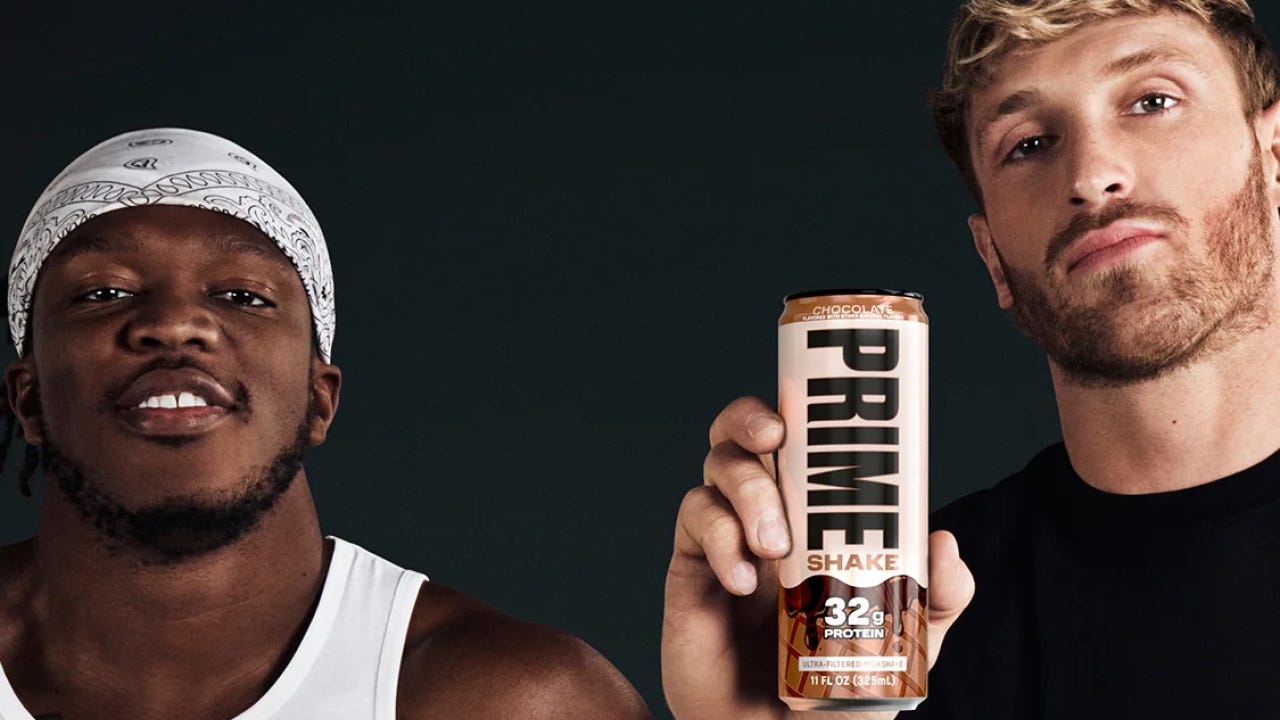
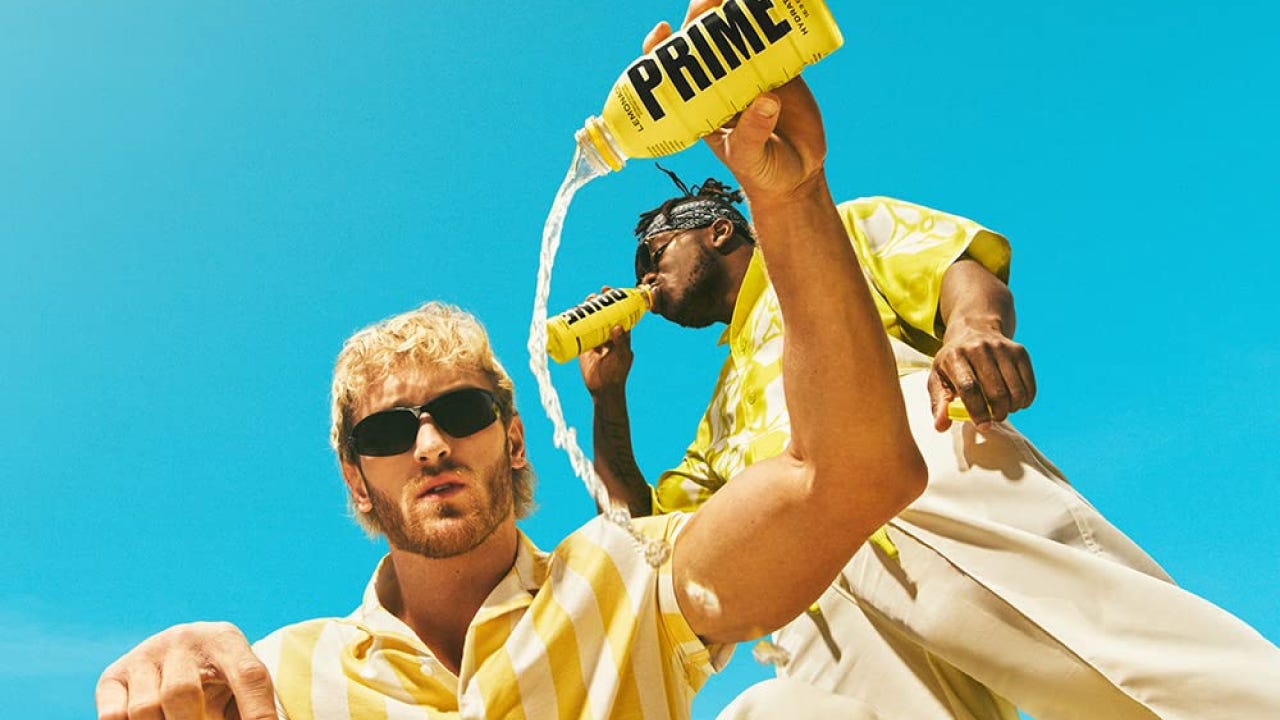
Prime was launched in January 2022 by Logan Paul and KSI, two men who had spent the previous four years as each other’s nemesis. Paul is the American YouTuber who was, for a period, one of the most disliked people on the internet after filming a body in Japan’s Aokigahara forest in 2018, and who spent the following years rebuilding himself as a boxer, a wrestler, and a businessman. KSI is his British counterpart, a YouTuber turned rapper turned fighter with an audience of comparable size. They boxed each other twice, drew the first fight and split the second, and then did the far more lucrative thing, which was to stop fighting and start selling. Between them they had somewhere north of 40 million subscribers and no need to buy a single impression.
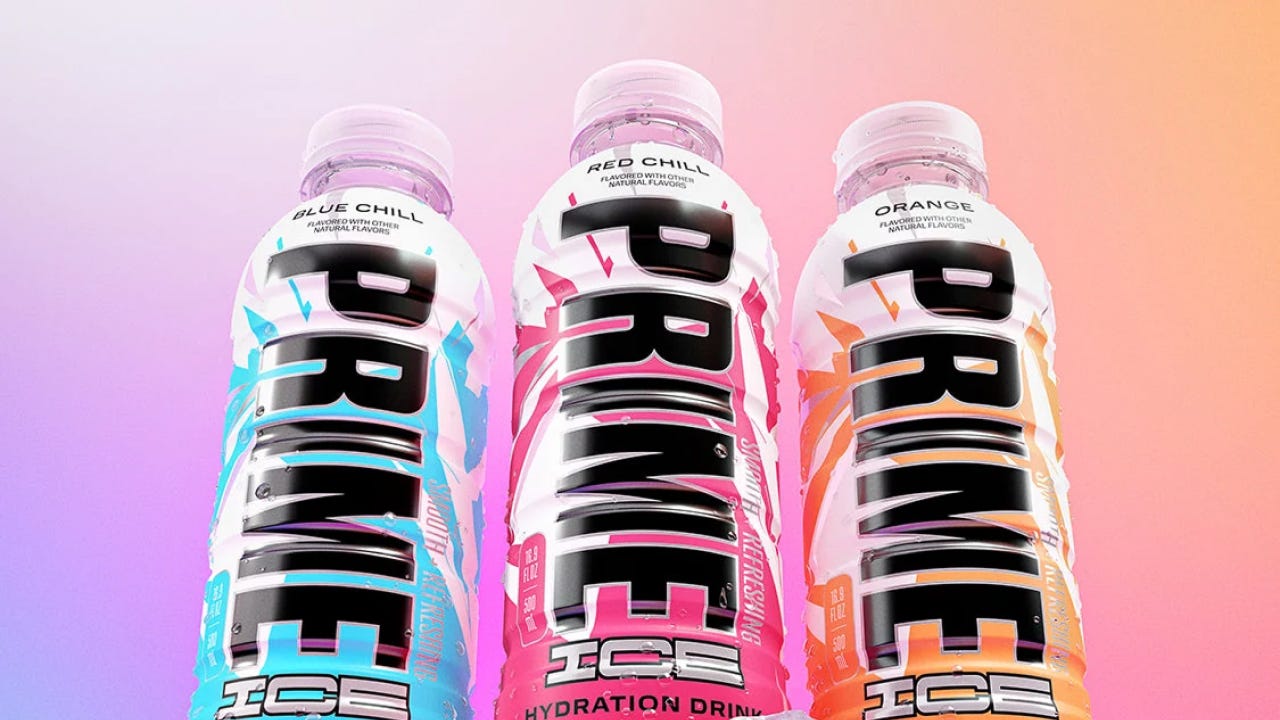
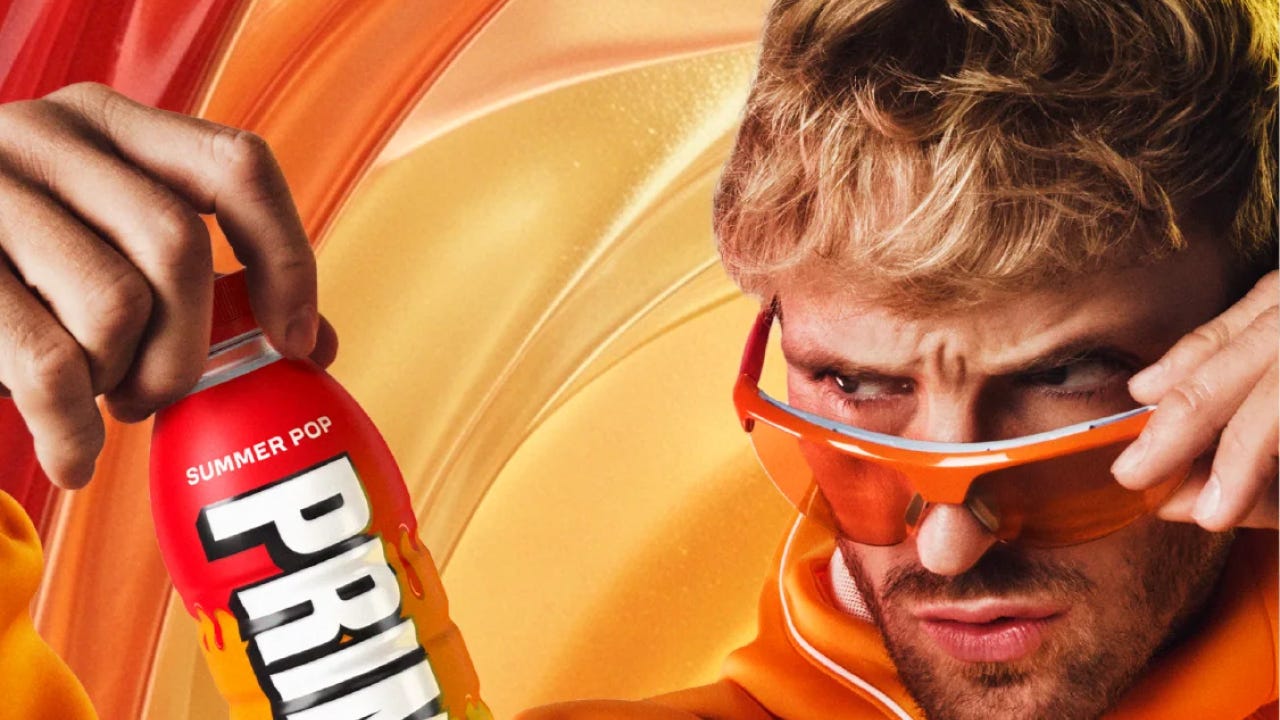
Prime, the product, is a “hydration” drink in a brightly coloured plastic bottle priced around $2.50 at retail. What the brand sold was proximity. There was a stretch in 2022 when a bottle of Prime was the hardest thing in America for a twelve-year-old to acquire. Gas stations resold bottles for $15. Kids filmed stock hunts the way a previous generation hunted Beanie Babies. Scarcity did a lot of the work here. An empty shelf made the drink feel more desirable, a restock became a small event, and buying a bottle was less about thirst than about having found one. Owning it mattered more than drinking it, which, in hindsight, hinted at the problem to come.
The numbers followed the mania. $250 million in retail sales in the first year, second-largest hydration brand in the world within two years. The pair secured major brand deals including advertising at UFC and Arsenal games, paired with worldwide distribution across Europe and the Americas. At its peak, Prime did $1.2 billion in sales. What’s interesting is how fast it grew and how fast it crashed. Worldwide sales are down 75%. The Australian distributor went into administration owing $7.92 million, and the Canadian bottling subsidiary was placed into receivership last year.
But the question is why?
The answer is that nobody liked the drink. Prime tasted, by broad consensus, like Fun Dip mixed with water, and the less generous reviews said coolant.
The problem was product-market fit, and Prime is a rare case where you can watch a company solve for everything except that.
Product-market fit is the point at which a specific group of people wants a specific product enough to keep buying it. Prime never had one, because it never had a specific group. The drink was labeled 18-plus for its caffeine content and bought predominantly by 16- and 17-year-olds collecting bottles that looked like candy. Too sweet for the adults it was marketed to, too caffeinated for the children actually paying for it. A product built for nobody in particular, sold to everybody, once. When parents got around to reading the label, the regulators followed, starting in Australia… and the buyers went with them.
None of that is an awareness problem, which is relevant to your business. Prime reached 100% brand awareness among Gen Z and 12% of them bought it twice.
I raise this because almost every founder I speak to wants to go viral, and Prime is the strongest argument available that virality is not a strategy. It can get people to show up, but it doesn’t guarantee they’ll like the product once they get there. If the product isn’t strong enough to hold them, attention only gets you so far. Virality decides how many people show up. The product decides whether they come back. Paul and KSI understood attention better than almost any beverage company on earth, but everything that expertise bought them was trial.
But the first purchase only matters if you can bring the customer back. Going viral without something worth returning to does not build a business. It just accelerates how quickly everyone finds out.
The reason Prime is an interesting case study is that it proves that strong brands can only be built on having strong products. Consumers can buy a product on hype, but they won’t stay blindly loyal. Most businesses don’t struggle with a bad product; in fact, you often have a great product and story and obsess over wanting to go viral. Yet studying Prime through the four pillar framework is very helpful for focusing on where to improve your business.
Let’s go back to the four pillar framework…
Product. This is where Prime failed, and it failed here first. A drink that no one liked. Does the thing you sell earn a second purchase without any help? Not whether people like you, but whether they reorder. If you do not know your repeat rate, that is the number to pull this week, because it is what tells you whether you have a business or a moment.
Story. Do people understand why your brand exists before they know what you sell? Prime’s story was a four-year rivalry that turned into a partnership, which meant the launch arrived with a reason attached. Most brands have a founding story and never make it mean anything commercially.
Experience. Is buying from you an event or a transaction? Prime turned a $2.50 bottle into a small victory you could film, and that is available to you at any size, i.e., the drop, the unboxing, the packaging, the note in the box, the way you handle a return.
Consistency. Do you show up often enough that people know what to expect from you? Paul and KSI posted for three years without missing. Most founders post for eleven weeks and conclude that content does not work.
The order matters more than the list. Story, experience, and consistency are what build a brand. Product is what earns a second purchase; it’s the only pillar that allows brand building to matter. Prime did well on the three that get someone to try you and fell short on the one that brings them back. And the better those first three perform, the sooner a weak product gets found out. Prime’s marketing didn’t fail the brand; it just sped up how quickly people discovered the product.
And yet the lesson still hasn’t landed. Prime’s initial success led a ton of other celebrities to follow suit. The numbers were crazy, and everyone wanted in. Messi launched a drink that failed the same way, in a bottle so close to Prime’s that both sides threatened to sue over copying before both claims were dismissed.
Kylie Jenner launched Sprinter as a canned vodka soda in 2024 and pivoted this April into k2o, a collagen hydration powder, which is a smart read on where consumption is going and still a bet that her name closes the sale.
Overall, It’s the same bet Prime made, and the outcome was clear: a famous name can fill shelves, spike a launch, and get a product into millions of hands exactly once. Fame buys the first purchase. Only the product earns the second. It’s why focusing on vitality alone is not a strategy. My favorite saying tied to virality is “clowns don’t sell.” It doesn’t matter how many followers you have; you can’t cut corners on the stuff that matters.
I hope this case study helps you think about your brand and being obsessed with the core things that matter. Customers have never been smarter and more frustrated by shortcuts.
Looking forward to heading home and being back to my regular schedule. If you want to join my weekly newsletter, subscribe here!
xx Camille
—
Want my team on your brand? Book a call here with Third Eye Insights, my international brand strategy and creative agency.
Apply my frameworks and teachings to your own brand with my Masterclass and Social Media & Brand Planners.
Comments
Nothing yet. Say the first thing.
Sign in to join the conversation.