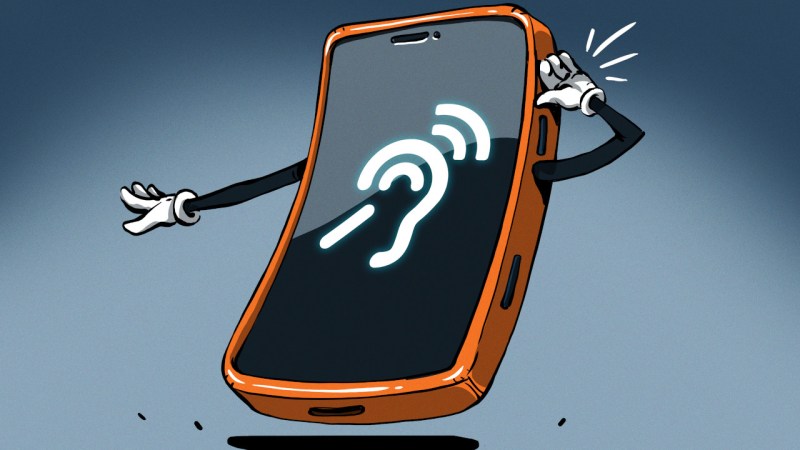
Smartphones And The Next Generation Of Hearing Aids

If you don’t actually need one, you’d be forgiven for thinking a hearing aid just makes everything louder for the wearer. Especially since there are plenty of shady products out there which will do exactly that for just four easy payments of $29.99. But the reality is considerably more complex, as a proper hearing aid needs to be capable of selectively enhancing certain frequencies while squashing down others.

The technical challenges involved in pulling that off in a device small enough to fit inside the human ear and run off of a tiny battery are considerable — and while there’s undoubtedly been some degree of artificial price inflation going on over the years, there’s a reason proper hearing aids have been so much more expensive than their “As Seen on TV” counterparts. These same challenges are also why DIY and open source hardware hearing aids have struggled to gain much traction.

But over the last few years the situation has changed. In 2022 the United States Food and Drug Administration (FDA) established the framework by which hearing aids could be sold over the counter (OTC). Although they’re generally less capable than their prescription counterparts and not suitable for individuals with profound hearing loss, the wide commercial availability of OTC hearing aids has kicked off a competition between manufacturers to deliver more affordable devices.

That competition entered a new phase earlier this month when the FDA granted approval for Samsung’s Galaxy Earbuds to fall under the same category. This follows a similar decision made about Apple’s AirPods back in 2024. The two biggest players in the smartphone market being able to offer their earbuds as OTC hearing aids represents a unique value proposition. Not only are they priced for mass market consumption, but many individuals who would be interested in purchasing an OTC hearing aid will already own them and need only to enable the feature with a software update.

Given how different the situation is today than even just five years ago it’s worth asking just what qualifies as a over-the-counter hearing aid, and how the shifting definition of these devices can inform the community’s efforts to develop open hardware solutions.

Continue reading “Smartphones And The Next Generation Of Hearing Aids”

Hackaday Europe 2026: Is Your Blood Pressure Monitor Lying To You?

Blood pressure is one of the so-called “vital signs” that medical practitioners use to determine the basic state of a patient in any given moment. It’s exactly what it sounds like—a measurement of the pressure of the blood flowing through the body, with some complications to account for the pulsatile nature of human blood flow.

You might think measuring blood pressure is a solved concern, and it mostly is. With that said, some blood pressure monitors out there aren’t quite doing their job properly, and [Milos Rasic] came to Hackaday Europe 2026 to spell out the problem.

Continue reading “Hackaday Europe 2026: Is Your Blood Pressure Monitor Lying To You?”

The Pacemaker Patch

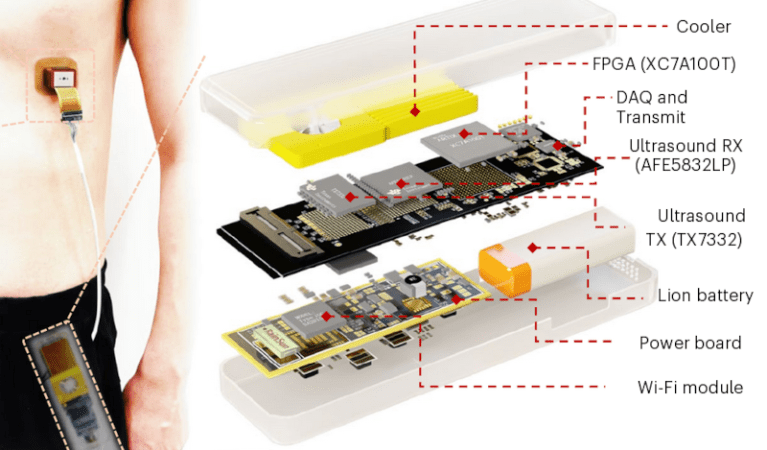
A pacemaker is implanted to send signals that regulate a patient’s heartbeat, and to do that, you need power. That means they require battery changes, and when the device in question happens to be inside your chest, that means surgery. Sometimes as often as every five years. [Alex Music] writing in Spectrum notes that researchers have a new paper discussing a possible alternative: a tiny patch stuck to the outside of the chest that uses ultrasound to pace the heart rhythm.

Rats, pigs, and human heart cell samples have all responded to the system. You might wonder how ultrasound could make your heart beat, but the new pacemaker relies on gene therapy to sensitize your heart cells to the high-frequency waves. The therapy is delivered by a simple injection.

In addition to the chest patch, the patient would need a data and power module that they could keep in their pocket. The gene therapy doesn’t alter your DNA but introduces RNA to make heart cells produce a sound-sensitive protein in the cell’s ion channels. When stimulated, the ion channels admit calcium, which causes the heart to beat.

Pacemakers are nothing less than a modern technological marvel. Maybe if this catches on, cheap junked pacemakers will show up on the surplus market. They could be useful.

LIPS Is An Open Source Sip-And-Puff Interface

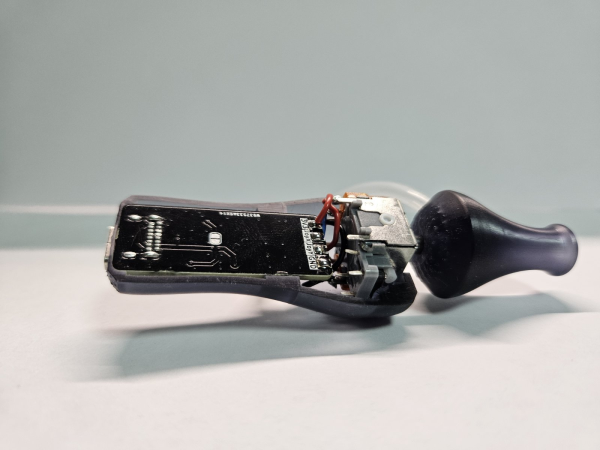
Lots of us have– thanks to repetative stress injuries– developed mobility issues that we have to work around when using computers. Maybe it’s a trackball instead of a mouse, or a split keyboard, or mechanical keys with very specific force requirements– but those are small potatoes compared to people with such severe movement issues such as quadriplegia who need to fall back on things like a sip-and-puff device to control the computer with their mouths. Commercial options of course come with absurd price tags, but a DIY option is a different story. [DanielYordanov]’s L.I.P.S project can be built for only a couple percent of what the big boys want, and it’s fully-open source.

So you might think a sip-and-puff device is a two-bit interface, only slightly more advanced than the morse terminal we featured earlier. While Morse code might be an option, these devices also act as pointers, as the lips and chin can be used to point the mouthpiece. Thus there are a few sensors needed: a hall-effect joystick for pointing info, and one or more pressure sensors to detect the breathing interface for ‘clicks’. [Daniel] has single and dual-sensor versions, creating at minimum a four-button mouse. In reality this hardware can distinguish long and short pulses, or combinations of breath to run some nice macros. With operating-system features like an on-screen keyboard, L.I.P.S. can provide someone with digital freedom– and at a tiny fraction of the cost of a ‘real’ medical device.

Despite the DIY nature, for the end-user control and config is easy enough thanks to a webserial portal run on the CH552 that you can preview on the official website. Code, ki-cad and STL files are all on his GitHub repository. If you’re interested in the design process, we’ve embedded his video about that below.

Thanks to [Daniel] for the tip! Do you know of a hack to make life better for someone, disabled or otherwise? Send us a tip!

From one-handed typing to open-source prosthesis, this sort quality-of-life hack may be the best thing about our community. Continue reading “LIPS Is An Open Source Sip-And-Puff Interface”

Medication Reminder Uses Only One Button

As anyone who takes medicines regularly will attest to, the days have a tendency to blur together, making it hard to remember if you did something like take that day’s dose or not. There are plenty of products available to help keep track of medication reminders but many are overly complicated, so [Jeroen] built this one which keeps simplicity and usability as its core design principle.

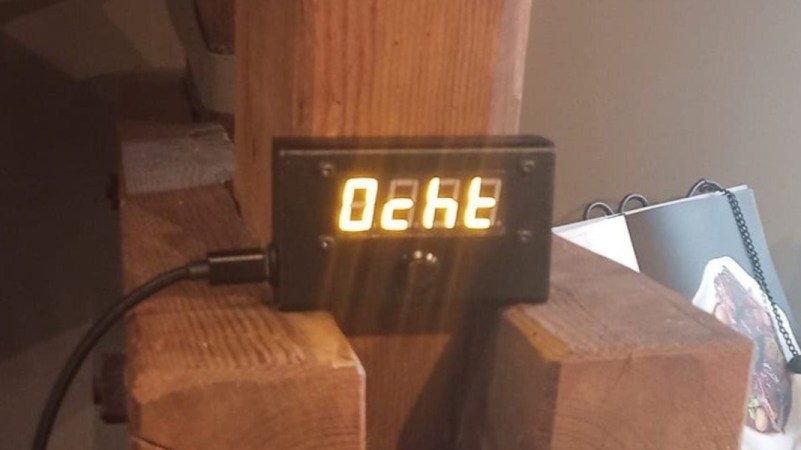
[Jeroen] calls it the MedMinder, and it’s a small, compact, rectangular device with a four-character display meant to sit on a countertop. When it’s time to take a medicine, the display will show that medicine’s four-letter code until the user pushes the single button under the display, signalling that they’ve taken their dose. If many different medications have to be taken at the same time, it displays the first priority until the button is pushed, and then displays whichever one is next after that.

Programming is a little less straightforward, as the medications need to be added to the source code and uploaded to the Arduino that sits at the center of this build, but with the source code available this isn’t too difficult for someone with minimal experience with microcontrollers.

In an idealized world, technology should make our lives simpler or easier, and this small device goes a long way towards helping with that goal. Especially for an important but mundane task that can be surprisingly easy to lose track of. Although we glossed over the accuracy of this device’s clock in this article, we do have a comprehensive guide for selecting the right real-time clock for microcontrollers like this.

How Pulse Oximetry Figures Out Your Blood Oxygen Levels

If you’ve ever had a medical team investigating cardiac issues, you’ve probably had a bunch of electrodes stuck all over your chest and been hooked up to an electrocardiogram. This is the gold standard when it comes to understanding electrical activity in the heart and can diagnose a great many conditions. However, sometimes doctors just need the basic information—your pulse rate, and whether or not there’s actually any oxygen in your blood.

Thankfully, there’s a cheap and simple device that can offer that exact information. It’s the pulse oximeter, and it’s a key piece of equipment that’s just about vital for monitoring vitals. Let’s learn how it works!

Continue reading “How Pulse Oximetry Figures Out Your Blood Oxygen Levels”

Biofeedback Butterfly Beats With A Pulse

Biofeedback is the idea of making one conscious of a biological process or feature, and then using this to try and exert control over the very same. [Mariia Hruntes] demonstrates this ably with a fluttering build of her own design.

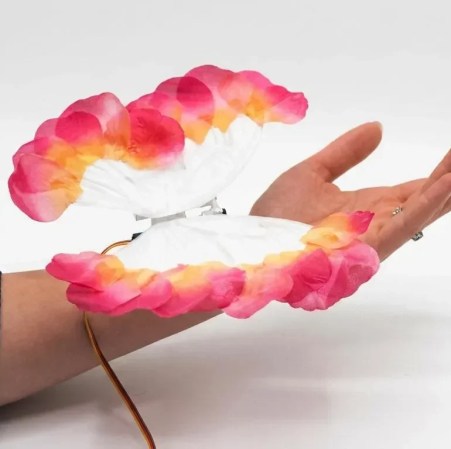
In this case, the biological process being made clear is that of the user’s heartbeat. This is tracked with a MAX30102 pulse oximetry sensor, which can be used to measure both heart rate and blood oxygen levels if so desired. It’s hooked up to an Arduino Uno, which polls for pulse rate data, and then actuates an SG90 micro servo in turn. This operates the wings of a 3D printed butterfly, such that they flap in pace with the wearer’s pulse. The goal is to observe this, and then try and calm one’s self to relax and slow the flapping through the power of the mind.

It’s a simple build, but one that clearly demonstrates the concepts of biofeedback in action. We’ve seen similar principles applied to everything from aiding sleep to improving the practice of mediation. If you’re working on your own neat biofeedback project, be sure to let us know on the tipsline.