
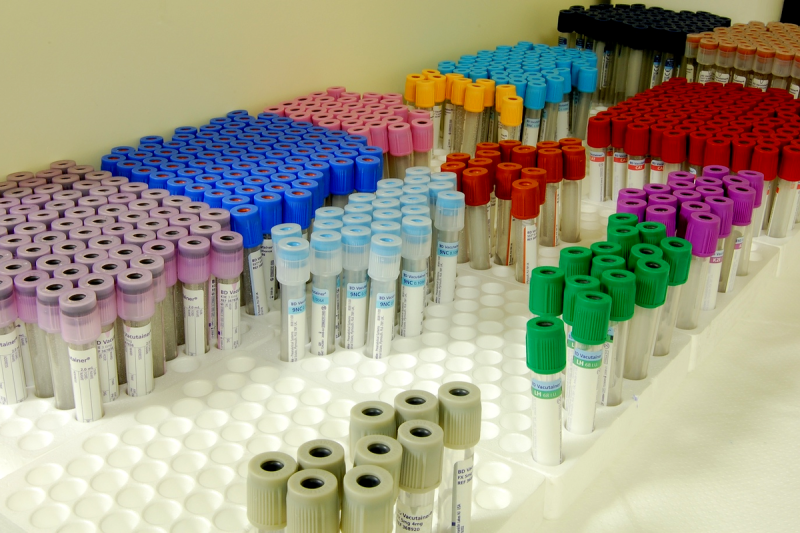
If you’re blessed enough that you haven’t had blood drawn in a while, you might not have thought much about the process. You might imagine that a needle goes in, a syringe is drawn back, and the venous blood is thusly collected. Indeed, it can be done that way.
However, there is an altogether niftier and more efficient method of fast blood collection for pathology testing. It’s all about using vacuum and smart design to ease the work of phlebotomists, while maintaining a sterile and safe environment.
Vacuum, Contained
These days, if you get blood collected for testing, there’s a plenty good chance you’ll have it drawn into a vacutainer. It’s named as a portmanteau of “vacuum” and “container” because that’s fundamentally what the system relies upon. A vacutainer is a glass or plastic tube which holds a vacuum inside, sealed with a stopper. That vacuum can be used to help extract fluids to be stored inside the container—namely, blood, in most cases.
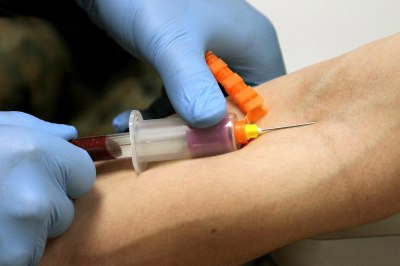
The method of use is relatively straightforward. A vacutainer needle is inserted into a patient’s vein to access the blood. The vacutainer needle does not have a typical syringe draw. Instead, the back end of the needle sits inside a plastic housing which accepts vacutainer tubes. There is a flexible rubber seal on the back end of the needle so blood doesn’t leak out when no tube is connected.
When a vacutainer tube is inserted into the housing, the vacutainer needle pierces the stopper of the tube. The vacuum inside then draws blood from the vein into the tube for collection. When full, the tube can be removed and it self-seals as the needle comes out of the stopper. Another tube can be quickly clipped into the vacutainer needle housing to draw further blood if more is needed, without leaks or mess causing contamination issues.
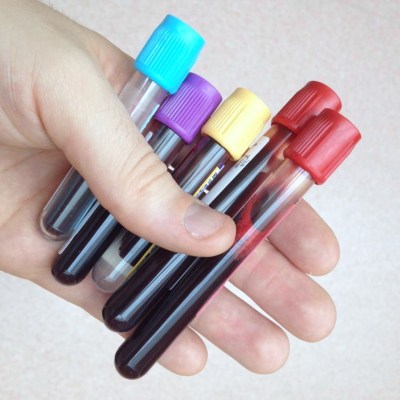
Vacutainer tubes are, by design, single use. They’re manufactured to capture a set quantity of blood for testing, based on the level of vacuum in the tube at the time it is sealed, and are disposed of after use. Labels are often included on the tubes allowing patient information to stay with the blood itself. Tubes have a shelf life, as with most medical paraphernalia, in particular since they may not maintain vacuum indefinitely.
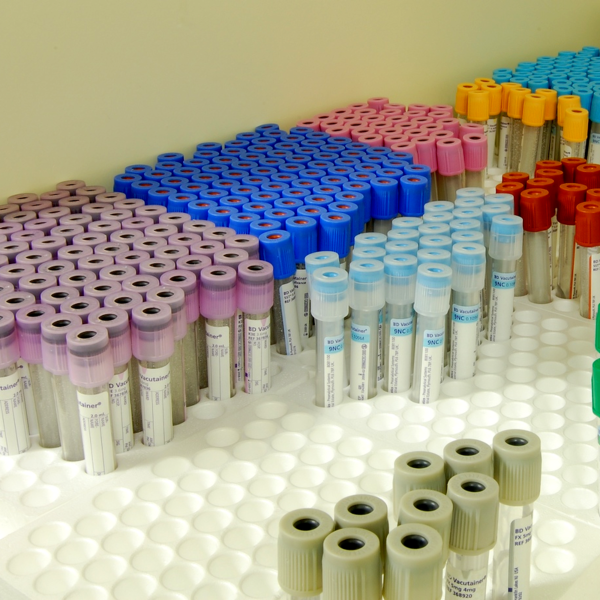
The tubes are also typically filled with various additives in order to best preserve and prepare the blood while it awaits testing, and stoppers are color-coded to indicate this. The precise additives used are highly dependent on the testing required. A tube for a standard blood culture draw will typically be filled with sodium polyanethol sulfonate, which acts as an anti-coagulant, with growth media also present for microorganisms.
Coagulation tests will use tubes with sodium citrate inside, while a test for lead will often use a tube with sodium EDTA chelator inside. Some basic blood component tests will use a plain tube with no additives, while others are highly specific—tuberculosis testing often uses purpose-made tubes with antigen additives ready to go. Some tubes include special serum-separating agents which help with splitting blood into its component parts when shaken or centrifuged, useful for certain tests that look at different blood cell types individually.
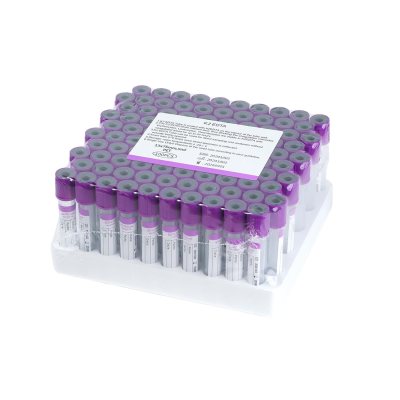
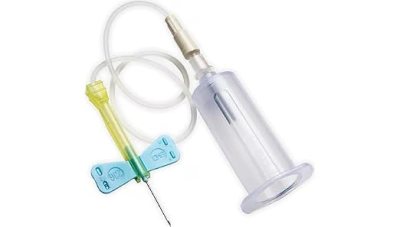
If you’ve ever dared to watch while having your blood drawn in this manner, the technology can look quite swish. The tubes are easy to hotswap without leaking any blood and several tubes can be filled in under a minute once the phlebotomist has found an appropriate vein.
However, the technology is not particularly new. It was developed all the way back in 1947 by Joseph Kleiner, though other vacuum-based blood draw techniques existed previously. His goal in developing the technology was to ease patient discomfort and reduce the spillage of blood. This stemmed from his experience seeing his terminally-ill wife suffer multiple needle punctures whenever multiple blood tests were required, and seeing the mess caused when syringes were emptied into test tubes for processing and testing. His inspiration was seeing vacuum-sealed tubes used by the military to transport blood during World War II; the product he developed would later reach the market in 1949. They had the benefit of keeping the blood from exposure to air, reduced the number of punctures required along with the chance of needle stick injuries and infection, and ensured blood was collected in standard volumes and conditions, which aided clinical accuracy. Plastic versions were developed by medical supplier Becton Dickinson in the 1960s, and have become widely popular in the phlebotomy field since.
If you’re not in the medical field, and you’ve managed to avoid regular blood tests, you probably haven’t even noticed vacutainers. Alternatively, you might simply live in an area where their use is uncommon, or you’ve just been intently looking away while your blood has been drawn. In any case, they remain a neat little bit of technology that makes a messy, hazardous, medical process as clean and tidy as possible.
Featured image: “Drawing Test tubes different colors” by [Goldmund100].









The most unusual blood draw I’ve ever had was for a highly specialized rheumatological test (don’t remember the specifics) where the vacutainer was immediately put into a cryogenic container and then shipped off to a specialized lap somewhere else in the US.
“…the technology can look quite swish.”
Maybe gen-X brain just isn’t up on the slang of the current generation, but I really don’t know what the author means here.
It probably means “swell” :-)
Oh, like “the bees knees”, or “peachy keen”, or “neat-o”, or “boss”, or “sick”, or “rad”? Okay, yeah, that’s cool then but I don’t use slang in writing.
“that’s cool”
It’s a poor choice. “Swish” carries an implication of homosexuality.
Does it? Here in the the UK it’s a normal, if slightly outdated, bit of slang to infer ‘cool and clever’.
Don’t read too deeply into “swish”-ing mouthwash then.
Shooting hoops, nothing but net. AKA a swish.
Combine with mosquito inspired needles.
I remember seeing the stinging nettle patch type in development decades ago, it’s odd that it’s still not really taken off that much.
“If you’re blessed enough that you haven’t had blood drawn in a while,…”
If you’re blessed enough that you have had blood drawn every 56/84 days for a voluntary blood donation, you think about this process every time.
FTFY
But blood donations work without vacuum don’t they?
Pretty sure at least mine were “just” a bigger needle and then letting the blood flow on its own into a blood bag on a “shaker” that weights the bag and “stops” the draw when it has the ~0,5l (notifies the donor / staff with a beeping noise).
When I donate (In Canada) they have a port for vacutainers on the line, and they fill vials for testing in addition to your main donation.
Hmm – it’s been some years since my last donation and I don’t remember the staff/nurses filling any vacutainers.
What I do remember is a small bag along the line used to divert the first few(?) ml of blood.
Then again the tube had more stuff to it. Maybe I just forgot or the samples for testing were diverted from the bag after filling it?
I mean some people even faint when just seeing blood so maybe they were trying to not “handle” it even more during the donation (fill the vacutainers afterwards out of seeing eyes?).
Yep. Can’t donate blood any more thanks to an auto-immune disease, but there were always two or maybe three vials taken at the same time, for testing. You can answer all the questions they ask but there are still some things that have to be tested before the blood is made available
Platelet, double red cell, and plasma donations definitely use suction, but it’s from pump action rather than pre-drawn vacuum.
Plasma donations, yes! And two needles? One for pulling the blood and the other for pushing blood-minus-the-plasma back in.
But just blood donations? No pumps around here I’m pretty sure (unless that tiny thingumabob on the blood-bag shaker machine the tube gets inserted in is in fact a very small peristaltic pump?).
Yes, but every time you donate they also take samples to test for, eg., communicable diseases.
Oh I know they test the blood. But many/most tests are done one a bunch of donations at once. Meaning if one test is positive the whole batch needs to be tested individually or thrown out(?) and the donors need to be informed (and get tested by their normal doctors?).
So I think maybe vacutainers really aren’t a thing around here during blood donations.
Hell, I/we always had to fill out a length form before any donation. One question was if we were in GB/UK before or since (?) 1996 because of BSE/CJD.
The donation itself into the bag, sure, but they pull off several sample vials for testing. Everywhere I’ve done it the bag is packaged with a set of these vacutainer tubes that the phlebotomist fills from a little side reservoir once the blood is flowing.
Ah, okay then maybe the small extra bag attached to the tube is for that? But if so I’m very surprised I can’t remember staff filling vacutainers from that…
https://cdn.unitycms.io/images/4l1yAwmEqsH9chmlCIlVSH.jpg
Technically there’s probably no need to do it while standing next to you or even while you’re hooked up, as long as there’s enough in that little side bag. So maybe in some centers they do it after you’re disconnected and off to the cookie station so squeamish donors don’t have to see as much blood squirting around. But in the five cities and three blood networks I’ve donated in, they’ve always done it immediately once they’ve confirmed everything is flowing right. ¯_(ツ)_/¯
My donations in the US always have a few sample vials as you’re describing in addition to the main collection.
Thank you for taking the time to donate.
Honestly always wondered how the pull on these was so quick and how exactly it works. Great article!
They are very neat, the order of use also matters.
The classic ones are the light blue used for clotting tests uses a specific amount of additives. If you try to fill them first then they under fill since they need to take up the air in the line.
But you can also risk contamination, so you can also find plain tubes partly to go first and empty the line before you start your draw.
The other classic is blood cultures often you’d want aerobic and anaerobic draws.
You obviously would not want to draw the anaerobic one first and find it full of air and oxygen! You also need to of course be sterile with the draw to avoid contamination.
For whatever reason the culture bottles are big glass bottles.
Sometimes its just colour coding for specific tasks and they might be otherwise identical. Purple is EDTA and Lilac/pink K2 EDTA. The purple is probably also K2 EDTA (or well could be).
But the pink is for the specific task of cross matching blood for transfusion and you don’t want that to happen by accident hence splitting it away from the often used purple. It will be bigger usually and have stricter labeling requirements.
I’m so proud of myself! I read the whole thing and I didn’t throw up or pass out!
“The human body can be drained of blood in 8.6 seconds given adequate vacuuming systems.” -River Tam, “Firefly”
I had forgotten about that line. Did you have to remind me?
“while a test for lead will often use a tube with sodium EDTA chelator inside.”
The EDTA complexes calcium, preventing clotting. Sodium EDTA is mostly obsolete, potassium EDTA being more common. It’s chelating activity has nothing to do with testing for lead.
You are confusing it with chelating therapy.
Whenever I have to get blood drawn, I always have a fear in the back of my mind that one of those tubes is accidentally pressurized
old tech… really old
So they still use vacuum tubes? Can’t we do the same thing now with a 555?
Explain how you grew up not stepping on a DIP-8 package or sticking one under a nail when pulling it out crooked? Clearly 555s are superbly adapted to the task of drawing blood. Don’t need an article to tell me that.
I use vacutainer tubes for storing tiny screws and parts salvaged from old laptops.