
A few years ago, my day-to-day looked very different: dialing CFOs, sending cold emails, tracking pipelines in Salesforce, and managing outreach cadences in HubSpot. That was the rhythm of Web2 business development - structured, scalable, predictable.
Then I stepped into Web3.
The rules didn’t just change; they were rewritten. Cold calls became irrelevant, Telegram groups replaced sales funnels, and conferences weren’t just networking opportunities; they became the single most important sales channel. What felt like a pivot turned into a re-education in how business development works when the entire trust model shifts.
The Web2 Playbook: Tried & Tested
In traditional industries like finance, SaaS, or enterprise technology, the BD formula is clear:
Channels of choice: cold calling, email sequences, LinkedIn InMail.
Metrics-driven: open rates, reply rates, pipeline velocity.
CRM as backbone: tools like Salesforce or HubSpot keep the process repeatable.
HubSpot reports that 37% of sales reps get most of their leads through phone-based outreach, and 24% of companies still rely heavily on cold calls as a primary channel. Predictability is the advantage here; structured inputs lead to structured outputs.
That doesn’t mean every conversation converts, but the system ensures volume eventually translates into wins.

The Web3 Shift: What Moves, and What Doesn’t
Step into Web3 and those assumptions collapse.
Cold calling vanishes: Nobody answers their phone for unsolicited outreach.
Telegram, Twitter, and Discord dominate: they’re where founders, investors, and builders live.
In-person matters more: conferences, side events, and casual meetups drive trust faster than any digital message.
Warm introductions are gold: they open more doors than any DM.
Identity and reputation replace job titles: your on-chain activity, Twitter presence, and ecosystem credibility are part of your sales collateral.
PwC describes Web3 as “decentralized, community-driven, and reputation-based”. That ethos changes how business relationships are built.
Deep Dive: Outreach in Web3
Telegram: The Algorithm Is Watching
If your Telegram account is brand new, outreach messages often get throttled or shadow-banned. Telegram looks for accounts that exist only to push messages. Copy-paste outreach increases your odds of being flagged or blocked. The fix? Warm up your account; join groups, engage organically, and build activity before you ever DM.
Twitter: Broadcasting > DMing
Twitter is fantastic for building presence, but less effective for outreach. People go there to consume content, not negotiate deals. That said, if you’ve already built rapport through threads, replies, or mutual connections, a DM can still land.
LinkedIn & Email: Still Valuable
Especially when targeting infrastructure providers, crypto funds, or enterprise-adjacent partners. LinkedIn helps you map org charts and validate people’s backgrounds, and email remains useful when there’s some existing familiarity.

The Power of Context: Warm Intros and Shared Spaces
The best way to break through noise is still a warm introduction. Nothing builds instant credibility like a trusted referral.
But if that’s not possible, even the smallest context makes a difference. Many Web3 conversations start in groups spun up around conferences or hackathons. A simple opener like, “I saw you in the ETHTokyo group and noticed we share an interest in validator infrastructure…” is miles better than a generic pitch.
It signals you’re part of the same conversation, not parachuting in with an agenda. And in an industry hyper-aware of scams and opportunism, that authenticity is non-negotiable. People in Web3 are sharp and skeptical, but they respond well to genuine interest and real value.
Don’t Let Tech Do the Talking
At Riverstone, we deliberately avoid using AI agents for outreach. Why? Because in such a noise-sensitive ecosystem, authenticity matters more than speed.
Messages generated by bots tend to blur into the background hum of spam in Web3. They might generate quick wins, but they usually attract lower-caliber customers, transactional, short-term, and quick to churn.
By contrast, genuine, compassionate outreach (a thoughtful email, a personalized Telegram note, a real conversation at a conference) consistently brings in higher-quality clients. These relationships last. They’re grounded in trust, not just a transaction.
At the end of the day, people don’t just want service providers. They want colleagues and friends. They want to enjoy the work they’re doing and the people they’re doing it with. That human touch is what makes business sustainable and, frankly, more fun.

How We Track, Monitor, and Collaborate
Outreach is only half the battle. The other half is tracking and collaboration, making sure nothing slips through the cracks.
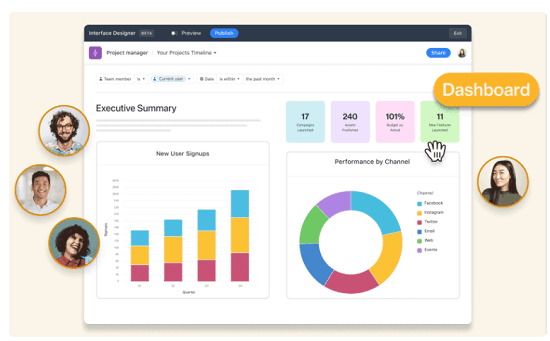
At Riverstone, we use a CRM not just internally but also custom-built for each client. Internally, our Airtable-based system allows us to transparently log every lead, track cadence, and capture responses in real time. For clients, we spin up dedicated CRMs tailored to their outreach goals. This way, both our team and the client can collaborate closely on wording, strategy, and follow-ups, ensuring that every touchpoint is intentional.
While we don’t use AI agents for outreach itself, we do use AI to maintain clean data hygiene, enrich lead information, and keep workflows smooth. The result? A clear, collaborative picture of the pipeline, with the added benefit of being able to cross-pollinate contacts and opportunities across verticals.
It’s a process built on the same philosophy as our outreach: personal, transparent, and designed for long-term relationships.
Overarching Truth: Channels Are Secondary - Relationships Are Primary
The deeper I’ve gone into Web3, the more I’ve realized: channels don’t close deals, people do.
Who delivers the message matters more than the platform.
How you deliver it (tone, relevance, empathy) determines whether someone listens.
The context you bring (shared groups, warm intros, mutual friends) makes it feel natural.
And most importantly, the quality of the relationship defines the quality of the customer.
Automation may fill a pipeline, but authenticity fills a portfolio with people worth working with.
Conclusion
If you’re trying to build in Web3, don’t just copy-paste Web2 sales playbooks. Yes, discipline, testing, and tracking still matter. But the way you build relationships has to evolve.
Lean into conferences and shared groups.
Value warm intros, but when they’re not available, create context.
Avoid blending into the noise - your human touch is your edge.
Remember that authenticity doesn’t just help you win deals, it helps you win the right deals.
In Web3, business development isn’t about filling quotas. It’s about weaving yourself into a network where trust, reputation, and relationships are currency. And if you do it right, not only will you grow faster, you’ll enjoy the process a whole lot more.
— Riverstone Team
Get in touch: riverstone.one | Follow us on X: @Riverstone_one
Comments
Nothing yet. Say the first thing.
Sign in to join the conversation.