
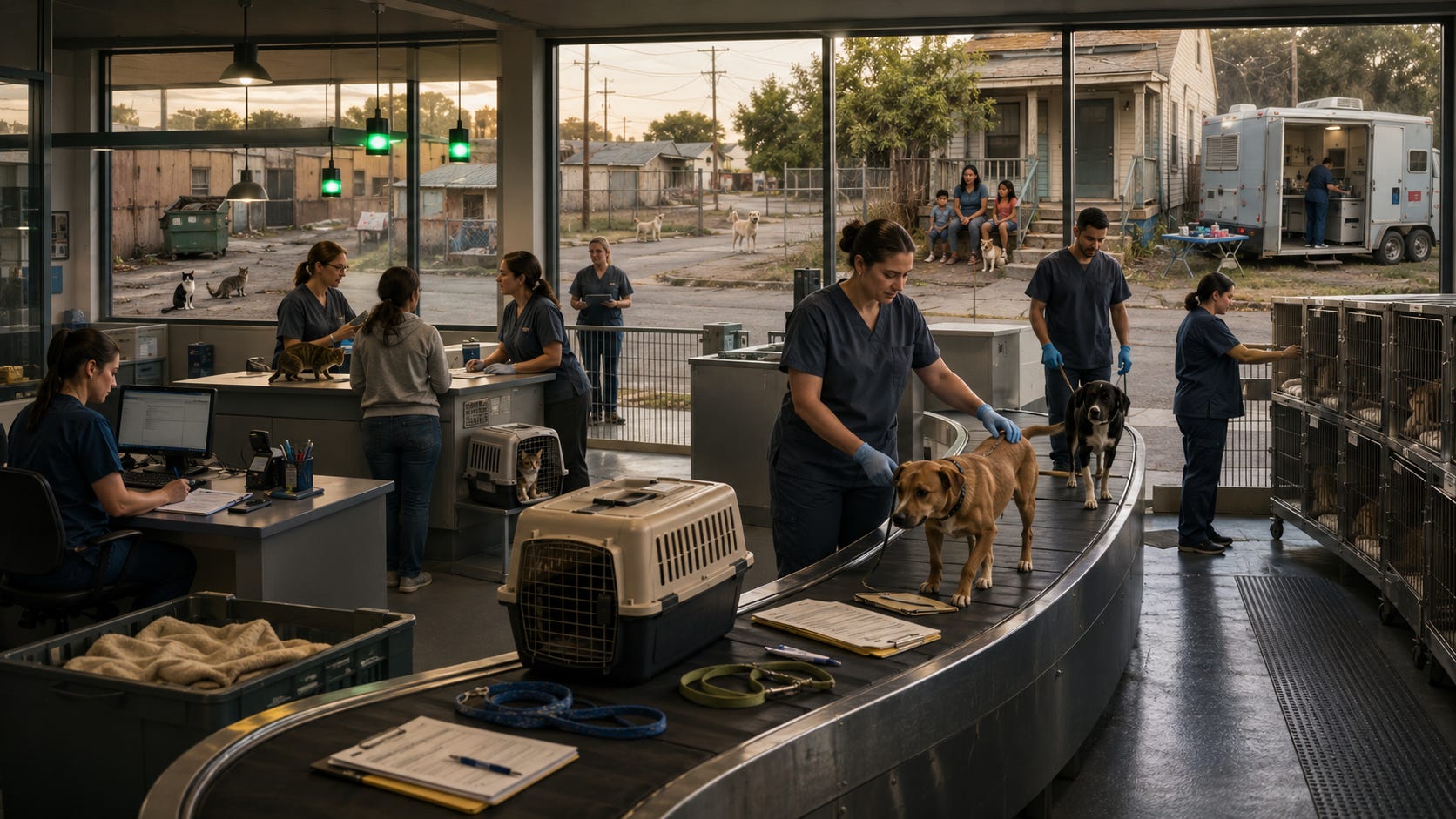
The no-kill debate has matured. We no longer need to debate whether no-kill is the right goal. The question now is whether our measurements and incentives are sustainably reducing shelter dependency in our communities.
Within animal welfare, however, the tension has not disappeared. Many supporters of no-kill have grown skeptical of the way the term has been institutionalized, measured, and used. The disagreement is often not about whether healthy and treatable animals should be saved. It is about whether the modern no-kill framework still serves that goal, or whether it has become a benchmark that rewards national organizations more reliably than local long-term population reduction.
Best Friends Animal Society reaches a different conclusion. Brent Toellner, Senior Director of National Programs, and Julie Castle, Chief Executive Officer, argue that the public has embraced no-kill as both a moral expectation and a community goal. Toellner argues that “no-kill“ has become the public’s language for lifesaving and, in his words, “good marketing.” Castle argues that public support for no-kill shelters is broad and politically meaningful.
If they are right, then the debate has changed. The question is no longer whether no-kill is the right aspiration. It is whether the measurements, incentives, and investments attached to that aspiration are producing the upstream conditions that make fewer animals dependent on shelter intervention in the first place.
Branding and Governance
Words matter. Public support matters. A movement that cannot communicate its values will struggle to build the political and financial support needed to save lives.
Branding can rally supporters, raise resources, and change public expectations. But those achievements do not, by themselves, tell us whether the movement’s incentives are reducing community shelter dependency.
But branding is not the same as governance. A slogan can inspire a movement. It cannot measure whether the movement is succeeding.
Marketing is valuable. But marketing cannot substitute for measurement.
That distinction has become increasingly important as “no-kill” has evolved from an aspiration into a performance metric. Today, communities are often judged by annual save rates, and organizations celebrate reaching the 90 percent benchmark as evidence of success. Those numbers have value. They tell us something about what happened inside the shelter.
They do not tell us what happened outside the shelter.
Did fewer animals enter the shelter because targeted prevention reduced unwanted litters? Did relinquishments decline because families received the help they needed? Did shelter dependency decrease? Or did the community simply become more efficient at moving animals through an already overloaded system?
Los Angeles illustrates the distinction. In 2021, the city announced that it had achieved “no-kill” status after recording a 90.49 percent save rate in 2020. By 2024, however, the city shelters were experiencing chronic overcrowding, rising euthanasia, and mounting operational strain. The benchmark reflected one moment in time. It did not tell us whether the community itself was becoming less dependent on shelter intervention.
If “no-kill“ is good marketing, what ensures that the metrics attached to that benchmark continue to reward the behaviors that reduce future shelter dependency?
Those questions matter because incentives matter.
The metrics we choose determine the behaviors we reward.
Over time, they also define the mission itself.
When success is measured primarily by a save rate, organizations naturally devote greater attention and resources to the factors that improve that rate. More transports. More foster homes. More adoptions. Better marketing. These are worthwhile efforts that save individual lives.
By themselves, they do not necessarily reduce the number of animals who will need saving next year. They respond to demand more than they reduce it.
That is the difference between managing a crisis and reducing the conditions that create it.
This is not an argument against no-kill.
It is an argument for taking no-kill seriously enough to measure it honestly.
If a community celebrates a 90 percent save rate while intake continues to rise, shelters remain chronically overcrowded, and shelter dependency remains unchanged, has it solved the problem or simply become better at managing it?
Ultimately, that is not a marketing question.
It is a policy question.
The public has largely settled the moral expectation. Healthy and treatable animals should not die for lack of space.
But the responsibility of animal welfare is larger than that. It is not enough to save today’s animals. We must also reduce the number who need saving tomorrow.
Much of today's disagreement is not about the destination. It is about the road map. The question is which strategies, investments, and measurements are most likely to make that goal sustainable: upstream or downstream.
Strategy and Prevention
Over the past decade, many national organizations have shifted significant attention and investment toward downstream interventions such as transport, foster expansion, managed intake, and shelter operations. Those efforts save lives and often remain necessary.
The unresolved question is whether they have displaced the upstream investments that historically reduced shelter dependency in the first place.
If the movement wants to reduce polarization around no-kill, one place to begin is where there has historically been the broadest agreement: reducing shelter intake through prevention.
Targeted High-Quality, High-Volume, Spay/Neuter (HQHVSN), especially in high-intake communities, has long attracted support across philosophical and organizational lines because it reduces the need for both euthanasia and rescue.
It works best alongside access to veterinary care, owner support, and other upstream investments that keep animals from entering shelters in the first place.
Rebuilding that shared commitment would not eliminate every disagreement, but it would refocus the movement on reducing future shelter dependency rather than competing over how best to manage it.
What We Should Measure
That requires looking beyond branding and beyond annual save rates. It requires measuring whether our investments are reducing future shelter dependency, not merely improving our ability to manage it.
Annual save rates tell us how shelters performed. Community indicators tell us whether the community is becoming less dependent on shelter intervention.
Both matter. Neither is sufficient alone.
That means pairing annual save rates with community indicators such as intake per 1,000 residents, relinquishment trends, kitten intake, return-to-owner performance, and other indicators of shelter dependency in the community.
The goal of no-kill has never been to become more efficient at responding to an endless crisis.
The goal is to consistently make the crisis smaller.
That is the measure by which every strategy, every grant, every partnership, and every claim of success should ultimately be judged. High save rates matter. They are necessary, but they are not sufficient.
No-kill is more than a promise about how animals leave a shelter. It is also a commitment to building communities that are less shelter dependent in the first place.
The Next Chapter
The next chapter is about demonstrating, with measurable evidence, which strategies sustainably reduce shelter dependency.
That conversation should unite, not divide, the movement. It asks every organization, regardless of philosophy, to answer the same question: Which investments make next year’s shelter population smaller than this year’s?
If no-kill is more than a benchmark, its greatest champions should also champion upstream investments and the measurements needed to evaluate whether they reduce shelter dependency over time.
We should judge the movement not only by how many animals leave shelters alive, but by how many never need shelter intervention at all.
Ed Boks is the former executive director of animal care and control agencies in New York City, Los Angeles, and Maricopa County, and a past board member of the National Animal Control Association. His work has appeared in the Los Angeles Times, New York Times, Newsweek, Real Clear Policy, Sentient Media, and now on Animal Politics, a lively community spanning 49 states and 75 countries.
Animal Politics is reader-supported. If this reporting matters to you, a paid subscription is the most direct way to keep it going.
Comments
Nothing yet. Say the first thing.
Sign in to join the conversation.